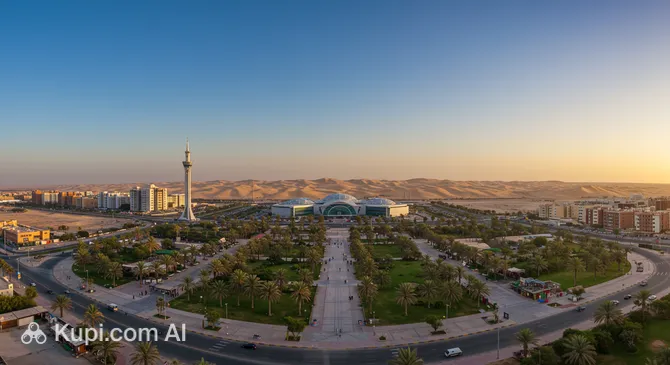
Al-Kharj is a dynamically developing city in the central part of Saudi Arabia, located just 77 kilometers south of the country's capital, Riyadh. The city serves as the administrative center of the governorate of the same name and is the vital agricultural heart of the kingdom. Thanks to an abundance of groundwater, this area has transformed into a green oasis amidst the desert, supplying the country with dairy products and cereal crops.
The city's geographic location within the Riyadh Region makes it a significant transport hub. With a population of over 376,000, Al-Kharj offers the atmosphere of a bustling yet cozy suburb, where modern residential developments harmoniously coexist with industrial and agrarian zones.
Al Kharj. Illustration.
Source: Kupi.com AI
Although the city is primarily oriented toward industry and agriculture, it possesses its own unique charm. The rich history of Al-Kharj is reflected in its architectural monuments, such as the ancient royal palace and unique natural wells. Visiting this city allows you to see a "different" Saudi Arabia—industrious, fertile, and hospitable.
Weather Overview
Al-Kharj is dominated by a hot desert climate typical of the central Arabian Peninsula. Summers here are long and extremely hot: from May to September, the mercury often rises to +45°C, and on peak days in July and August, it can reach +50°C. Precipitation during this period is virtually non-existent, and the air remains very dry.
Winter brings long-awaited relief—it is mild and comfortable. In January, the average daytime temperature is around +15°C...+22°C, though it can cool down to +9°C at night. Most of the rare rainfall occurs during the winter months and early spring. To better plan your visit, we recommend studying the detailed Al-Kharj climate.
Spring and autumn in the city are fleeting, but it is during these times that the most pleasant temperatures for sightseeing occur. When packing, remember that air conditioning is actively used indoors even during the hottest periods, so a light sweater or scarf will not be out of place.
Average monthly temperature
Average monthly precipitation
Interesting Facts
Al-Kharj is home to the Prince Sultan Air Base, a major aviation facility where modern F-15 Eagle fighter jets are stationed.
The city is considered the "dairy capital" of the country—the headquarters of the largest agro-industrial companies that supply milk to all of Saudi Arabia are located here.
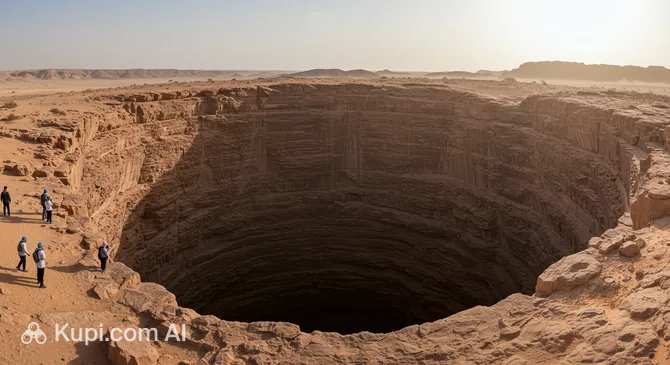
The Ayun Al-Seih natural wells are so deep and vast that for a long time, they were the sole source of life for the entire region in desert conditions.
One of the country's few active railways passes through the city, connecting the capital with the east coast.
King Abdulaziz Palace in Al-Kharj was one of the first buildings in the region to use advanced engineering solutions for its time to cool the rooms.
How to Get There
Al-Kharj boasts excellent road accessibility, being just an hour's drive from the capital. Most travelers arrive here by car or taxi from Riyadh via modern multi-lane highways. You can find more details about routes and logistics on the page describing how to get to the city.
The nearest major air hub is King Khalid International Airport in Riyadh, located about 100 kilometers away. It receives flights from all over the world and is connected to Al-Kharj by a high-quality highway. The journey from the airport by taxi or rental car takes about 1.5 hours.
The city also has a railway connection. Trains on the Riyadh–Dammam route pass through the local station. This is a convenient way to travel for those who want to comfortably reach the country's eastern provinces or the capital while avoiding potential traffic jams.
Station
Passenger traffic
Distance
Riyadh railway station
4
81 km
Main Attractions
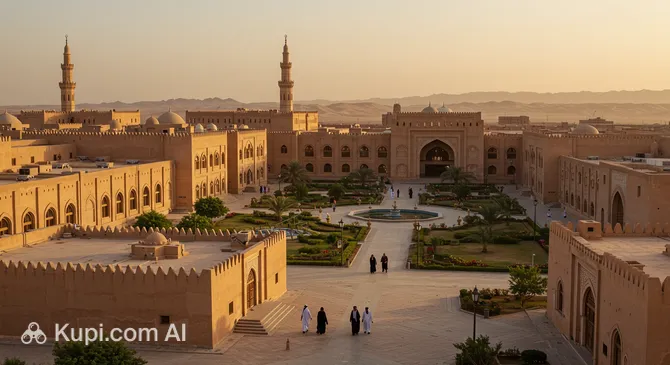
While Al-Kharj is best known as an agrarian center, it hides several historical treasures. One of the most significant sites is the King Abdulaziz Palace. This majestic building made of clay and brick was built in the mid-20th century and served as the summer residence for the kingdom's founder. The palace architecture reflects the traditional Najdi style, attracting history buffs and lovers of authentic Eastern architecture.
King Abdulaziz Palace. Illustration.
Source: Kupi.com AI
Traveller photos:
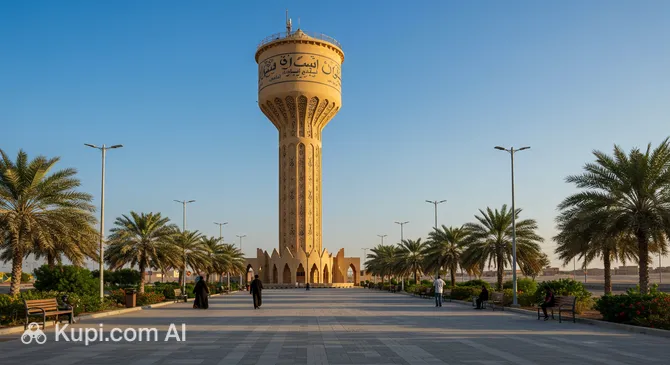
A modern symbol of the city is the Al-Kharj Water Tower. This futuristic structure, resembling a giant mushroom or a space object, dominates the city skyline. The tower not only serves a utilitarian function but is also a popular landmark, looking particularly impressive under evening illumination.
Al Kharj Water Tower. Illustration.
Source: Kupi.com AI
Traveller photos:
For lovers of nature and mysteries, the Ayun Al-Seih karst sinkholes, known as the "Eyes of Al-Seih," are a must-see. These enormous natural wells served as a water source for irrigating local farms for centuries. Looking into their deep waters, one can feel the power of the natural forces that sculpted this landscape.
Local Cuisine
The gastronomic culture of Al-Kharj is a true feast for fans of Arabic cuisine. The local menu is based on hearty meat and rice dishes, such as kabsa and mandi. Thanks to the developed agriculture, you can always find the freshest dairy products, dates, and vegetables straight from local farms.
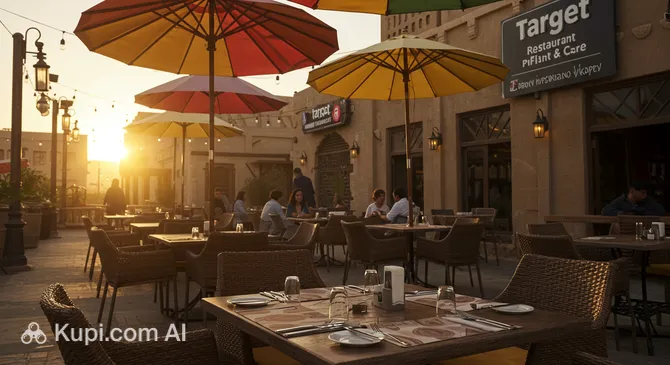
To experience traditional flavors, visit Al Romansiah, which serves hallmark Middle Eastern dishes. If you are looking for variety, Target Restaurant and Cafe offers a more international menu with modern presentation. Locals also highly value coffee culture, spending time over a cup of strong Arabic coffee with cardamom.
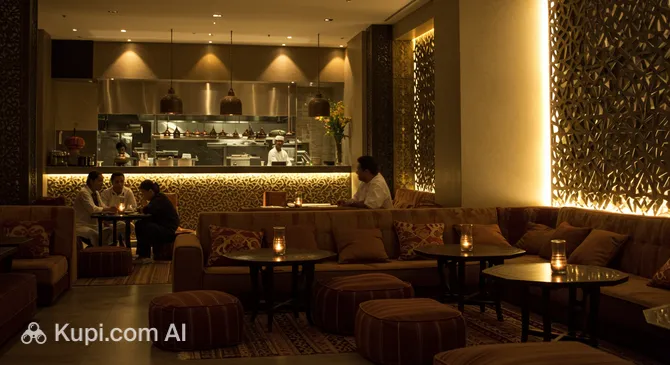
Lavia Lounge. Illustration.
Source: Kupi.com AI
Traveller photos:
The city also features popular international chains and specialty venues like Lavia Lounge, where you can try exquisite desserts. Street food is represented by the familiar shawarma and falafel, prepared here with special skill. Be sure to try the local dates—they are considered some of the best in the region.
Travel Tips
A trip to Al-Kharj will be a pleasant and comfortable experience if you consider a few practical features of life in this region beforehand.
Clothing and Dress Code: Choose light clothing made of natural fabrics (linen, cotton). Despite the relaxation of rules, it is recommended to stick to a modest style: shoulders and knees should be covered. Women may need a headscarf to visit historical mosques.
Transport: The best way to get around is via the Uber or Careem apps. Public transport is limited, so taxis will be your primary aid. You can use the train for trips to the capital.
Finance: The official currency is the Saudi Riyal (SAR). Cards are accepted almost everywhere, from malls to small cafes, but it is worth having some cash for markets and small purchases.
Health: In the summer months, the heat can be extreme, so always carry water and use sunscreen. Pharmacies are common and well-stocked.
Connectivity: You can buy a local SIM card (STC, Mobily, or Zain) at Riyadh Airport or in the city's shopping centers. Wi-Fi is available in most hotels and major cafes.
Local Etiquette: Greet people politely and respect prayer times (many establishments close for 20-30 minutes). Do not photograph locals, especially women, without their explicit permission.
What to Avoid: Do not plan long walks on foot in the middle of the day during summer. Also, avoid discussing political or religious topics in public places.
When to Visit: The ideal time to visit is from November to March, when the weather is suitable for walking and exploring palaces.
Al-Kharj is a hospitable city that rewards the attentive traveler with an authentic Arabian atmosphere and a surprising blend of antiquity and modernity.
Entertainment & Nightlife
The entertainment scene in Al-Kharj is primarily focused on family recreation and leisure. The centers of social life are large shopping complexes, such as Jaw Mall. Here, residents and visitors can find not only shops but also children's play areas and a variety of food courts.
Evening life in the city moves at a leisurely pace. A popular spot for walks is the King Salman Walk Way—a well-maintained area where locals gather during the cooler evening hours. For those looking for atmospheric venues, it is worth stopping by Lavia Lounge or Target Restaurant and Cafe, where you can enjoy coffee and light snacks in a pleasant setting.
Target Restaurant & Cafe. Illustration.
Source: Kupi.com AI
Traveller photos:
Nature enthusiasts might enjoy the local Al Kharj Zoo, which is very popular with families. However, it should be noted that nightlife in the Western sense, with clubs and bars, does not exist here due to local traditions. For more vibrant nighttime entertainment and international-scale cultural events, travelers usually head to neighboring Riyadh.
Parks & Museums
The park zones of Al-Kharj are a true escape from the desert heat. While there are few large-scale national parks within the city itself, the King Salman Walk Way acts as the main green artery. This well-kept promenade with walking paths and resting spots is immensely popular with locals during the pre-sunset hours.
The city's historical heritage is represented primarily by the King Abdulaziz Palace. This building is an open-air museum in itself, offering a glimpse into Saudi Arabia's past and how the country's rulers lived in the middle of the last century. The palace's interiors and architectural details speak of the traditions and daily life of that era.
Al Kharj Water Tower. Illustration.
Source: Kupi.com AI
Traveller photos:
For a deeper immersion into museum culture and art, travelers often take a short trip to Riyadh, home to the National Museum of Saudi Arabia and numerous galleries. However, Al-Kharj itself, with its natural "Eyes of Al-Seih" and ancient quarters, provides a sense of authentic, non-touristy history of the region.
Getting Around
The transport system in Al-Kharj reflects the general trend of the region: the car is the primary and most convenient way to get around. Wide avenues and clear city planning make driving comfortable, although congestion can occur on main thoroughfares during morning and evening rush hours.
For tourists and residents without a personal vehicle, taxi services are the optimal solution. The mobile apps Uber and Careem are active in the city, allowing you to call a car with a fixed trip cost and route tracking. This is the most reliable way to move between shopping centers and attractions.
Intercity connections are provided by the railway, linking Al-Kharj with Riyadh and Dammam. This is an excellent alternative to driving for long-distance travel. As for city buses, their network is limited and mainly oriented toward workers, so tourists are advised to rely on taxis or car rentals.
Accommodation
The hotel sector in Al-Kharj offers a mix of modern apart-hotels and budget accommodation options catering to both business travelers and those planning long-term stays. As the city is an important economic hub, furnished apartments are widely available, providing a home-like feel and kitchen facilities.
Among the popular options is the Marahel Kharj Aparthotel, which offers comfortable conditions at affordable prices. For those looking for a resort-style stay, Mooyah Resort is a good choice, while budget-conscious travelers should consider Nozul Al Tout Furnished Apartments. Most hotels are concentrated in the central part of the city, near shopping malls and major road junctions.
Bahr Al-Takhfiyat. Illustration.
Source: Kupi.com AI
Traveller photos:
It is recommended to book accommodation in advance, especially if your trip coincides with major business events or holidays. Main international booking systems work reliably, and the polite staff at local hotels are always ready to help guests find their way around the city.
Nearby Cities
Al-Kharj serves as a convenient base for exploring the kingdom's central region. Proximity to the capital and other historical settlements allows for planning interesting day trips, returning in the evening to the cozy atmosphere of the city.
The main destination is certainly Riyadh, located just 90 km away. The capital offers an endless array of museums, skyscrapers, and world-class entertainment centers. It is also worth visiting the historical city of Ad Diriyah, a UNESCO World Heritage site, where you can see the cradle of the first Saudi dynasty.
For those seeking quieter and more authentic spots, trips to small settlements like Al-Ha'ir, known for its natural landscapes and historical sites, are ideal.
Each of these destinations reveals a different facet of desert life: from ultra-modern metropolises to quiet oases preserving ancestral traditions. Traveling around the Al-Kharj area will give you a complete picture of this region's diversity.
Shopping & Souvenirs
Shopping in Al-Kharj is a harmonious blend of modern malls and traditional Eastern markets. The city offers excellent opportunities to buy both international brands and locally produced goods, especially agricultural products and folk crafts.
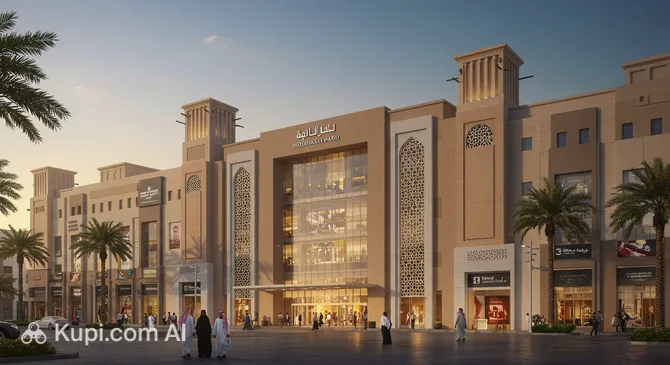
The main attraction for shoppers is Jaw Mall, where clothing stores, electronics, and perfumery are gathered under one roof. Hodaithi Mall is also popular, offering a similar range and excellent lounge areas. If you are looking for goods at great prices, stop by Bahr Al-Takhfiyat—this place is known for its budget-friendly deals.
Jaw Mall. Illustration.
Source: Kupi.com AI
Traveller photos:
Lovers of authenticity should visit the local markets (souks), where you can purchase high-quality dates, aromatic spices, and traditional Arabic clothing. Shops are usually open from morning until noon and from 4:00 PM until late evening, closing during prayer times. Most malls and large shops accept international bank cards.