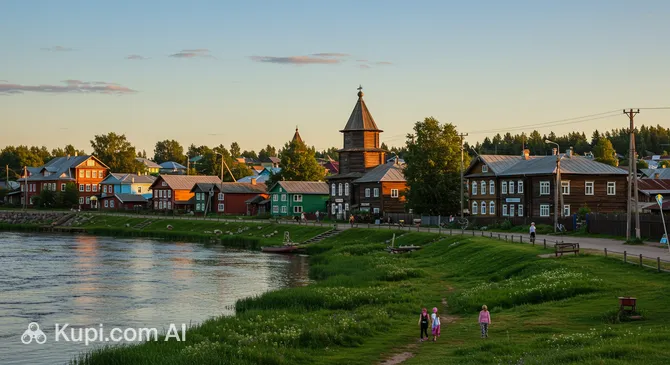
Ust-Tsilma is a unique corner in northern Russia, hidden among the endless taiga and the majestic waters of the Pechora River. It is a place where time seems to slow down, and the traditions of a rich cultural heritage are carefully preserved by the local residents. The village serves as the administrative center of its district in the Komi Republic and has a population of about 8,000, creating an atmosphere of a cozy and close-knit northern community.
Ust-Tsilma. Illustration.
Source: Kupi.com AI
The geographical position of Ust-Tsilma defines its unique character: surrounded by forests and water, it feels like a world of its own. Tourists are primarily drawn here by the authenticity of the traditional Russian North and the opportunity to experience a way of life that has changed little over the decades. The history of the foundation and development of this settlement is closely linked to the exploration of northern territories and the preservation of ancient customs.
The main features of the town are its natural harmony and measured pace of life. Ust-Tsilma is ideal for those seeking solitude, enthusiasts of ecotourism, or those who want to see the real, non-touristic northern taiga. We invite you to take a journey to this land of bright nights and fresh air to feel the spirit of the genuine North.
Weather Overview
The climate in Ust-Tsilma is classified as subarctic continental, which implies long, frosty winters and short but fresh summers. A typical winter here starts early and is characterized by temperatures often dropping below -20°C, with snow cover lasting for several months. Winter precipitation falls mainly as snow, and winds from the river can increase the feeling of cold.
The summer period in these latitudes is fleeting: the warmest month is July, with an average temperature of about +17°C. However, the weather can be changeable — hot days with temperatures up to +30°C can be followed by sudden cold snaps. Precipitation is distributed fairly evenly throughout the year, with a small peak in the summer months due to the influence of the Pechora River. To plan your visit more accurately, it is useful to study a detailed forecast and the climatic features of Ust-Tsilma.
Average monthly temperature
Average monthly precipitation
Interesting Facts
Ust-Tsilma is located on the banks of the mighty Pechora River, which historically served as the main communication route in this hard-to-reach region.
The local weather station has been conducting regular meteorological observations for many decades, making an important contribution to the study of the Far North's climate.
The village has its own airport with the international IATA code UTS, which is a rarity for settlements of this size.
The majority of the population consists of people who carefully preserve ancient folklore traditions and a unique dialect characteristic of this region of Komi.
The coordinates of Ust-Tsilma confirm its status as a northern outpost: the village is located at the 65th parallel north, in the northern taiga zone.
How to Get There
Transport accessibility to Ust-Tsilma is highly seasonal, so it is worth planning your trip in advance. The main and most reliable way to reach this northern village is by air. Regular flights connect the local airport with regional centers, ensuring a stable connection with the "mainland" even during periods when roads are impassable.
A key facility is Ust-Tsilma Airport (IATA: UTS), located just a couple of kilometers from the center of the village. It serves small aircraft, with flights mainly arriving from Syktyvkar. This is the fastest and most convenient option for tourists. If you want to know more details, we recommend studying the section on how to get to Ust-Tsilma by various means of transport.
In summer, Ust-Tsilma can be reached by water. The Pechora River becomes a busy transport artery, with motor ships and boats running from Pechora or Naryan-Mar. In winter, water routes are replaced by "zimniks" — temporary roads over frozen ground and ice, accessible for off-road vehicles and buses traveling from the capital of Komi.
Main Attractions
The Pechora River is rightfully considered the main natural attraction of Ust-Tsilma. It is not just a waterway but the center of all life in the village. Tourists come here for first-class fishing, quiet walks along the banks, and the chance to take a short boat trip while admiring the rugged northern landscapes.
The surrounding taiga is another magnet for lovers of outdoor activities and nature. The vast forest tracts offer ideal conditions for picking mushrooms and berries during the summer and autumn seasons. Walking through the untouched forests allows you to completely disconnect from the city bustle and enjoy the silence that is only possible in such remote corners.
Within the village itself, the traditional wooden houses are of great interest. This architecture reflects centuries of experience living in harsh climatic conditions and preserves the spirit of old northern life. A walk through the streets of Ust-Tsilma turns into a kind of open-air tour, where every building tells its own story of the settlement of these lands.
Local Cuisine
The culinary identity of Ust-Tsilma is inextricably linked to the riches of northern nature. The basis of the local diet is fresh fish caught in the Pechora. You should definitely try the ukha (fish soup) made from whitefish, burbot, or grayling. Fish is also prepared on the grill, salted, and dried according to ancient recipes, preserving its unique taste.
Another traditional dish valued by both locals and guests is hearty game dumplings (pelmeni) filled with wild meat or potatoes. Moose or venison gives the dishes a characteristic "forest" aroma that is rarely found in large cities. The cuisine here is simple but very high in calories, dictated by the harsh living conditions in the North.
Among drinks, the favorites are aromatic herbal teas and fruit drinks (mors) made from wild-growing berries: cranberries, cowberries, and cloudberries. These drinks not only quench thirst perfectly but also serve as an excellent source of vitamins. There are practically no specialized restaurants in the village, so you will find the best local cuisine in guest houses or small cafes serving homemade food.
Travel Tips
A trip to Ust-Tsilma requires thoughtful preparation to ensure your introduction to the Russian North is as comfortable as possible and leaves only pleasant impressions.
Clothing and gear: In summer, bring windproof clothing and definitely insect repellents. In winter, specialized warm equipment for temperatures below -20°C and comfortable waterproof footwear are necessary.
Transport: Within the village, it is most convenient to move on foot. For long-distance trips, book plane tickets or boat seats in advance, as the number of spots is limited.
Finance: The main currency is the Russian ruble. Cards are accepted in shops, but for payments in guest houses or at the market, always keep cash with you.
Health and Safety: There is a pharmacy point in the village, but it is better to bring specific medications with you. When heading into the forest, be sure to inform local residents of your route.
Communication: The main language of communication is Russian. Mobile connection works stably, but the signal may disappear deep in the taiga. It is better to purchase a SIM card in a large city beforehand.
Local Etiquette: Residents of the north value directness and politeness. Always say hello when entering houses and small shops — it is a norm of good neighborliness here.
What to avoid: Do not leave trash on the riverbanks or in the forest. The nature here is fragile, and taking care of it is the main rule for every guest.
Extra tip: Try to visit Ust-Tsilma during local traditional holidays to see ancient rituals in their authentic performance.
This harsh but hospitable land will surely reward you with unforgettable views and peace of mind if you show it respect and interest.
Entertainment & Nightlife
Entertainment in Ust-Tsilma is geared towards outdoor enthusiasts and nature lovers. The primary leisure activities for locals and visitors are tied to the river and the forest: fishing on the Pechora, hiking through the surrounding taiga, and gathering wild plants. In winter, snowmobiling gains popularity, serving not just as a fun activity but as the main means of transportation across the snowy expanses.
Traditional nightlife in the form of clubs and discos is virtually non-existent in the village. Evenings here are usually spent more quietly: in the family circle or having conversations by a fire. The local cultural center occasionally hosts festive events and folk dance evenings, which allow tourists to get a closer look at the region's folklore traditions.
The riverbank areas are also suitable for daytime relaxation, where you can arrange a picnic. Despite the absence of a typical urban entertainment industry, Ust-Tsilma offers a rare opportunity to enjoy natural relaxation in harmony with nature, making a stay here truly restorative.
Parks & Museums
There are no city parks in the traditional sense in Ust-Tsilma; however, the entire village is surrounded by natural areas that successfully replace them. The picturesque banks of the Pechora River serve as the main place for walks, outdoor relaxation, and picnics. The northern taiga landscapes, starting right beyond the outskirts, offer tourists endless opportunities for eco-walks.
The cultural life and history of the region are represented in local ethnographic corners. Although there are no large state galleries in the village, interesting exhibitions on Komi culture are often organized in local schools or village clubs. There you can see items of ancient everyday life, national costumes, and learn about the traditional crafts that the inhabitants of these lands have lived by for centuries.
The lack of formal museums is more than compensated for by the atmosphere of Ust-Tsilma itself. The entire village, with its wooden buildings and careful preservation of traditions, can be perceived as a living open-air museum. The main "exhibits" here are nature and the lifestyle of people who have managed to maintain their identity far from big cities.
Getting Around
The public transport system in Ust-Tsilma is minimalistic. Rare buses run through the village and to the nearest settlements, but their schedule can be unstable and depends heavily on weather conditions. The main way of moving around for locals and tourists within the settlement remains walking, which allows you to fully enjoy the peaceful atmosphere of the North.
In summer, bicycles become a popular mode of transport, and the Pechora River turns into the main highway, where motorboats and cutters are actively used. In winter, the situation changes drastically: boats are replaced by snowmobiles, which allow for quick movement over frozen roads and the river.
Taxi services in the sense of modern aggregators are not developed here, so it is better to arrange private transportation in advance through local residents or guest house administrations. For long trips outside the village, it is recommended to use a personal off-road vehicle, considering the quality and specifics of the road surface in the region.
Accommodation
The hotel infrastructure in Ust-Tsilma is modestly developed, which is perfectly in line with the spirit of a secluded northern village. The main accommodation option for tourists is small guest houses or private mini-hotels offered by local residents. Such housing allows you to fully immerse yourself in the local way of life and enjoy home comfort and traditional northern hospitality.
The areas located in close proximity to the Pechora River are considered the most convenient for staying. They offer picturesque views, and access to the village's main facilities and piers remains very easy. Comfort in such houses is usually basic, but home-cooked meals made from natural local products are often included in the price.
As the number of accommodation spots is limited, we strongly recommend booking your stay in advance, especially if your trip coincides with local holidays or the active fishing season. Direct communication with the owners of guest houses or through the local administration remains the most reliable way to guarantee a place to stay.
Nearby Cities
Ust-Tsilma serves as an excellent starting point for exploring the remote but incredibly beautiful expanses of the Komi Republic. Despite the significant distances typical of the north, the surroundings offer several destinations that will help you better understand this rugged land.
One of the key neighbors is the city of Pechora. Reaching it in the summer is easiest by water on a motorboat, which is an exciting adventure in itself. Also worth noting is Ukhta — a larger industrial center with developed infrastructure. For those ready for a flight further north, the path is open to Naryan-Mar, the capital of the Nenets Autonomous Okrug, where you can learn about the culture of reindeer herders.
Each such trip requires careful transport planning but rewards the traveler with unique views of the northern taiga and tundra. Exploring neighboring cities will allow you to see the diversity of life in the northern latitudes of Russia.
Shopping & Souvenirs
Shopping in Ust-Tsilma is practical and down-to-earth, reflecting the needs of the northern village residents. You won't find large shopping malls here, but local shops offer everything necessary — from food to hunting and fishing gear. Main trading activity is concentrated in the center of the village and near the pier.
The main souvenir worth bringing back from this trip is folk handicrafts. Local craftsmen are masters at working with wood, creating unique utensils and souvenirs. Gastronomic gifts are also very popular: dried and salted fish, as well as homemade jams and preserves made from northern berries such as cloudberries and cowberries.
Shops usually operate on a standard schedule, closing in the evening. Most retail outlets accept bank cards, however, when planning purchases at markets or from private craftsmen, it is better to have a supply of cash. Tax Free benefits do not apply here, as it is an internal region of the country.