Support

Szczytnicki Park

About

Szczytnicki Park (Szczytnicki Park) is one of the largest and oldest parks in Wroclaw, a true green oasis in the eastern part of the city. Spanning a vast area of about 100 hectares, it is a gem of landscape art in Poland and a favorite place for walks and recreation for both locals and tourists.

The park's uniqueness lies in its founding in 1783 in the English style, making it one of the first parks of its type on the European continent. As a result, today you can admire not only picturesque landscapes but also numerous dendrological rarities—around 400 species of trees and shrubs grow in the park.
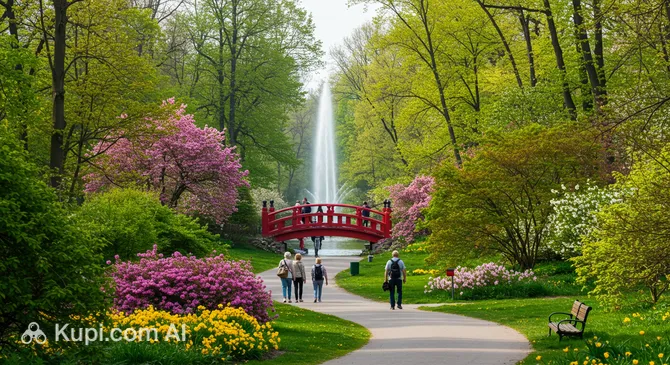
Szczytnicki Park. Illustration.
Source: Kupi.com AI

Traveller photos:

Szczytnicki Park offers many leisure opportunities: from quiet walks along shaded paths to exploring attractions like the Japanese Garden or the ancient wooden Church of St. John of Nepomuk. It is a place where you can escape the hustle and bustle of the city and enjoy the harmony of nature without leaving the borders of Wroclaw.

Contacts

Since Szczytnicki Park is a large public space, it does not have a single administration or visitor information service. For all current information regarding events, visitor rules, or temporary changes to specific sites within the park, such as the Japanese Garden, it is best to check the official tourism portal of the city of Wroclaw. You can reach the park by public transport: numerous trams (e.g., lines 2, 4, 10) and buses (e.g., lines 115, 145, 146) run here, many of which stop at the iconic landmark — the Centennial Hall (Hala Stulecia).

How to contactContact
Address51-618 Wrocław, Poland
Websitewww.wroclaw.pl

What to Do

The main thing to do in Szczytnicki Park is to take leisurely walks along its picturesque alleys, where you can enjoy the peace and see rare species of trees and plants. However, the park offers much more than just contemplating nature. One of its main jewels is the Japanese Garden—a unique corner of Eastern culture in the heart of Wroclaw. Created for the 1913 World's Fair, it was meticulously restored and today allows visitors to immerse themselves in the atmosphere of harmony inherent in Japanese gardening art.

While exploring the park, be sure to find the ancient wooden Church of St. John of Nepomuk. This late 17th-century church was moved here from another location and is a valuable architectural monument that adds a historical touch to your walk. History and architecture enthusiasts will also appreciate the park's proximity to another iconic landmark in Poland—the monumental Centennial Hall (Hala Stulecia). Built in 1913, it is a UNESCO World Heritage site and impresses with its scale and engineering solutions that were innovative for their time.

Thus, a visit to Szczytnicki Park can easily turn into a full, eventful day. You can combine quiet relaxation in nature with an educational tour, visiting the Japanese Garden, the historical church, and the outstanding architectural monument, Centennial Hall. Nearby, you will also find the famous Wroclaw Multimedia Fountain, which hosts impressive light and music shows during the warmer months, making this location attractive in the evening as well.

Getting There

Szczytnicki Park is conveniently located in the eastern part of Wroclaw, making it easily accessible for both residents and tourists. Thanks to its proximity to the center, reaching this green expanse is quite simple, and there are several ways to do so.

The most popular and convenient way to get to the park is by using Wroclaw's well-developed public transport system. Numerous tram and bus routes run to the park regularly. The nearest stops, such as "Hala Stulecia" or "Park Szczytnicki," are just a few minutes' walk from the park entrances. For example, from the city center, you can take a tram to the stop near Grunwald Square (Plac Grunwaldzki) and then enjoy a pleasant walk to the park.

For those who prefer traveling by private vehicle, driving is also a good option. There are several parking lots near the park where you can leave your car while you walk. Additionally, you can always take a taxi — a trip from central Wroclaw to Szczytnicki Park will be fast and comfortable, taking you directly to one of the entrances.

Nearest city: Wroclaw

History & Facts

The history of Szczytnicki Park dates back to the early Middle Ages. The first written records of these lands date to 1204, when Duke Henry I the Bearded gifted the village of Stitnic to a monastery. The park owes its name to this settlement, as it was inhabited by craftsmen who made shields for the ducal troops. Later, in 1318, the area was sold to the city council and became the first estate of Wroclaw located outside the city walls.

The modern history of the park began in 1783 when the Prussian military commander Friedrich Ludwig Hohenlohe-Ingelfingen purchased the area and established one of the first English-style parks on the European continent. Unfortunately, during the Napoleonic Wars and the siege of the city by French soldiers, this landscape masterpiece was almost completely destroyed. However, the park was later carefully restored, laying the foundation for its future splendor.

Another significant stage in the park's development occurred at the beginning of the 20th century. A key event was the 1913 World's Fair, for which the monumental Centennial Hall (Hala Stulecia), now recognized as a UNESCO World Heritage site, was built on the park grounds. Another famous feature, the Japanese Garden, was also created specifically for this exhibition and remains one of the main gems of both the park and the entire city today.

Throughout its centuries-long history, the park has shown remarkable resilience. It has survived not only wars but also natural disasters, including the severe flood of 1997, which caused significant damage, including to the Japanese Garden. Nevertheless, thanks to subsequent restoration work, the park was not only saved but also renewed, maintaining its status as one of the most picturesque and historically significant places for recreation in Wroclaw.

Time Needed

When planning a visit to Szczytnicki Park, it is worth setting aside 2 to 4 hours for your exploration. This will be enough time to stroll leisurely along the main alleys, enjoy the natural beauty, and get to know the park's key attractions. In a couple of hours, you will have time to visit the famous Japanese Garden and see the old wooden church, immersing yourself in the peaceful atmosphere of this green corner of Wroclaw.

If your plans are more extensive and you also want to visit the monumental Centennial Hall located nearby, feel free to add another 1–2 hours to your walk. Thus, a full exploration of Szczytnicki Park and its iconic neighbors can take up most of the day. This allows you to unhurriedly combine relaxation in nature with a visit to one of the most important architectural monuments in Poland, a UNESCO World Heritage site.

Working Hours

Szczytnicki Park, like most large public parks, is open to visitors year-round and practically 24/7, making it an ideal place for a walk at any convenient time. Entry to the main area of the park is free, and no prior booking or ticket purchase is required.

However, it is important to remember that certain attractions within its territory, such as the famous Japanese Garden, operate on their own seasonal schedule and require an entrance ticket. The Japanese Garden is typically open to visitors from April 1 to October 31. To avoid inconvenience and plan your visit in the best way possible, it is highly recommended to check current opening hours and admission fees for specific sites on the official Wroclaw tourism portal before your trip.

Open 24/7

Nearby

Visiting Szczytnicki Park is just the beginning of exploring this landmark-rich area of Wroclaw. A walk through its surroundings will allow you to discover many other interesting places located within walking distance. Such a comprehensive exploration will not only enrich your experience but also help you form a more complete picture of the city's cultural and historical heritage.

Due to the park's convenient location, iconic sites that attract tourists from all over the world are concentrated nearby. From unique architectural monuments to modern entertainment complexes, everything is very close and waiting for your visit.

NameDistance
Centennial Hall0.9 km
Wroclaw Zoo1.1 km
Wroclaw Aquarium1.2 km
Kilimanjaro1.3 km
Hydropolis2.1 km
Wroclaw Trampoline Park2.4 km
National Museum in Wrocław2.4 km

Reached the bottom of the page?

Looks like you know this route inside out