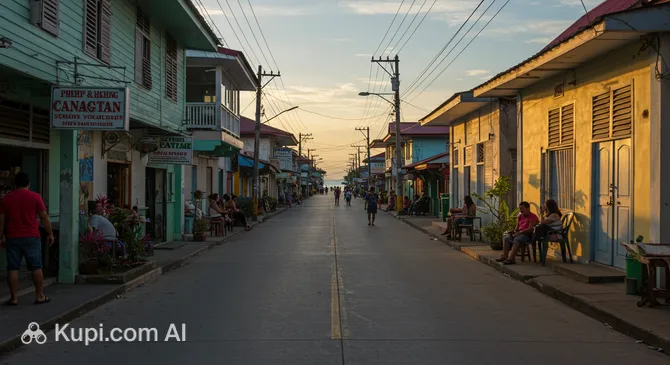
Kanagatan is a charming corner of Cagayan Province, located in the north of Luzon Island in the picturesque valley of the Philippines’ longest river—the Cagayan. The city is permeated with an atmosphere of provincial comfort and harmony, where the ancient traditions of the Ibanag people are closely interwoven with the colonial past. Today, more than 1.27 million people live here, making the region an important cultural and economic hub in the northern part of the country.
The areas where the modern city stands have been inhabited for over two millennia. Archaeological finds, such as the famous Neolithic shell middens, bear witness to the prosperity of ancient civilizations here. If you are interested in the history of the city's foundation and development, it is worth recalling the year 1581, when Spanish conquistadors turned this place into the administrative center of Nueva Segovia, laying the foundation for its unique Baroque-style architecture.
Canagatan. Illustration.
Source: Kupi.com AI
Kanagatan attracts tourists not only with its historical monuments but also with its modern engineering achievements, such as the majestic bridges spanning the river. This is a city where you can feel the true hospitality of the Philippine province, enjoy the silence of the riverbanks, and touch the heritage of the ancestors. A visit to this region will be a true discovery for those seeking authenticity and natural beauty away from the bustling metropolises.
Weather Overview
A classic tropical climate dominates Kanagatan, typical of the Cagayan River valley. Warmth prevails here year-round, but the weather is clearly divided into two main periods: the dry season and the rainy season. The average temperature throughout the year ranges from 23°C to 29°C, while in the hottest months (May and June), the daytime maximum can reach 33°C.
For those planning excursions and outdoor walks, the most favorable time is the period from December to May. During these months, there is significantly less precipitation, and the humidity becomes more comfortable. If you want to study the climate of Kanagatan in detail before your trip, keep in mind that from June to November, refreshing showers often occur in the region, making the local nature incredibly lush and bright green.
Particular attention should be paid to high humidity, which persists almost all year round, especially in the rainy season (from July to December), when rainfall can exceed 300 mm per month. During this time, rains are usually short-lived but very intense, which is typical for the Philippines. In the winter months, such as January, a pleasant coolness arrives with minimum temperatures around 20°C, which is ideal for long walks around the city.
Average monthly temperature
Average monthly precipitation
Interesting Facts
Archaeological finds in the city's outskirts—shell middens—date back to the Neolithic period (over 2,000 years ago), making this region one of the oldest cradles of civilization in the Philippines.
In 1581, the conquistador Juan Pablo de Carrión founded the outpost of Nueva Segovia here, which served for a long time as a key administrative center for the Spanish Crown in northern Luzon.
The local St. Peter's Cathedral is unique because it is built entirely of red fired brick, which is not very common in the colonial architecture of the region.
Buntun Bridge, located nearby, is one of the longest bridges in the country, symbolizing the power of engineering and providing a vital link across the wide Cagayan River.
Magapit Bridge is officially recognized as an aesthetic symbol of the province; its design was inspired by famous suspension bridges around the world.
How to Get There
Kanagatan's accessibility is ensured by a developed road network and proximity to the major transport hubs of northern Luzon. The city serves as an important link in the Cagayan Valley, and modern bridges such as Buntun and Magapit make traveling through the region comfortable and fast. If you are planning a trip, study the current information on routes and tickets in advance.
The main aviation hub for tourists is Tuguegarao Airport (IATA: TUG). It handles regular domestic flights from Manila, allowing you to reach the province in just an hour's flight. From the airport to the city center, you can easily travel by taxi, minivan, or traditional Philippine jeepneys, which run quite frequently.
For those who prefer ground transport, there is a regular bus service from Manila. The journey by comfortable bus takes between 10 to 12 hours, passing through picturesque mountain passes and plains. Private transfers and shuttles from neighboring provinces are also available, arriving at the region's central bus terminal.
Main Attractions
One of the region's most majestic landmarks is St. Peter's Cathedral. This monumental 18th-century structure is considered the largest church in the north of the country. Built from characteristic red brick, the cathedral serves as a benchmark for Spanish Baroque and impresses tourists with its massive architecture and preserved interior details that transport visitors back to the era of colonial prosperity.
For those who appreciate the aesthetics of modern engineering, the Magapit Suspension Bridge in Lal-lo is a must-visit. It is often called the local "Golden Gate" for its elegant lines and functionality. The bridge offers stunning panoramic views of the Cagayan River, which are particularly impressive in the rays of the setting sun, making it a favorite spot for photo shoots.
Lovers of deep antiquity should head to the Shell Midden Sites. These unique Neolithic archaeological monuments hold traces of the lives of people who lived here more than 2,000 years ago. This site literally allows you to touch human history and understand how settlements in the Cagayan Valley developed long before the arrival of Europeans.
Local Cuisine
Kanagatan's culinary traditions are inextricably linked to the fertile lands of the valley and the bounty of the Cagayan River. The city's gastronomic scene is based on fresh vegetables, rice, and fish. Be sure to try pinakbet—a flavorful stew made from local vegetables seasoned with signature shrimp paste—as well as laing—tender taro leaves simmered in thick coconut milk with the addition of chili peppers.
Meat lovers will enjoy the local interpretation of Philippine pork and chicken dishes, which are often prepared here using traditional spices of the Ibanag people. Street food also deserves attention: in the markets, you can find a variety of rice cakes and snacks that locals love to buy for a quick bite. Dishes made from river fish caught in the Cagayan occupy a special place in the diet.
Leading the way as refreshing drinks are freshly squeezed juices from ripe mangoes and cool coconut water straight from the nut. For those who prefer something stronger, the famous local San Miguel beer is always available. It is best to dine in restaurants overlooking the river, where the calm atmosphere and authentic taste of the dishes create a unique feeling of tropical hospitality.
Travel Tips
Planning a trip to the northern part of the Philippines requires attention to detail to ensure your journey to Kanagatan goes as smoothly as possible and brings only pleasant emotions. These practical tips will help you navigate the specifics of local life and culture.
Clothing and Essentials: Choose light clothing made of natural fabrics, as the region experiences tropical heat. For visiting churches, such as St. Peter's Cathedral, be sure to bring items that cover shoulders and knees. Don't forget sunscreen, insect repellent, and comfortable walking shoes.
Transport: The most convenient way to travel short distances is by tricycle. For trips between cities, use jeepneys or minivans. It is better to agree on the cost of a tricycle ride with the driver in advance.
Finances: The official currency is the Philippine peso (PHP). Cards are accepted in hotels and large stores, but cash is necessary for markets and transport. ATMs are available in Tuguegarao, but it is better to have a reserve of money with you. Tipping is welcome but remains at your discretion.
Health and Safety: Use only bottled water for drinking. Pharmacies are easy to find in the city center, but it is better to bring specific medications with you. The region is generally safe, but observe basic precautions in crowded places.
Communication: The main languages are Filipino and local Ibanag; however, English is widely spoken, especially among young people and hotel staff. It is useful to learn a couple of phrases: "Salamat" (thank you) always brings a smile.
Local Etiquette: Filipinos are very polite and friendly. Greet people with a smile. Respect the religious feelings of the locals; be quiet in temples and during ceremonies.
What to Avoid: Avoid criticizing local traditions and showing outbursts of anger in public—this is considered extremely tactless. You should also not drink tap water, even in good hotels.
Best Time to Visit: Try to plan your trip for the dry season (from December to May), when the weather is most favorable for sightseeing and walks by the river.
Kanagatan awaits you with an open heart and is ready to surprise you with its unique heritage. Follow these simple recommendations, and your adventure will be truly unforgettable!
Entertainment & Nightlife
Entertainment in Kanagatan and its surroundings is oriented toward lovers of peaceful relaxation and natural beauty. During daylight hours, the main activity is centered around the Cagayan River: walks along the embankments, picnics with views of the bridges, and boat excursions are popular. During local festivals, you can see colorful performances featuring the folk dances and music of the Ibanag people, allowing for a deeper immersion into the ethnic flavor of the region.
The city's nightlife is low-key but cozy. The center of attraction is the bars and restaurants in nearby Tuguegarao, where you can spend time in a relaxed setting. These venues serve tropical cocktails and traditional Philippine snacks accompanied by live music from local performers. The dress code in most establishments is casual, and the atmosphere is friendly and safe for tourists.
For more active leisure, you can visit modern cinemas or public spaces where young people gather in the evenings. Safety in the city is at a good level; however, for nighttime travel, it is recommended to use official taxis or trusted ride-hailing apps. This is an ideal place for those who want to take a break from the hustle and bustle of noisy discos and enjoy the silence of a tropical night.
Parks & Museums
The cultural heart of the region is the Cagayan Provincial Museum, located in Tuguegarao. Its halls house unique exhibits telling the history of the valley: from ancient paleontological finds and Neolithic artifacts to items of liturgical art from the Spanish period. This is a must-visit place if you want to understand how the heritage of the Ibanag people was formed and the influence colonizers had on northern Luzon.
For those who prefer outdoor strolls, the banks of the Cagayan River offer picturesque park areas. Especially popular are the spaces near the bridges, where rest areas with views of the river surface are set up. Here you can enjoy the tranquility and observe the slow pace of provincial life. Also in the city's vicinity are eco-zones near the ancient shell middens, which combine the value of an archaeological monument with the beauty of untouched nature.
The Historical Research Center is also of interest to tourists, where you can learn more about the preservation of the cultural traditions of indigenous peoples. These sites allow you not only to see rare collections but also to feel the deep connection across time that is so vividly expressed in Kanagatan. The combination of informative museums and cozy green areas makes a holiday here balanced and fulfilling.
Getting Around
The public transport system in Kanagatan reflects typical Philippine flavor. The main means of transportation here are jeepneys—brightly painted shuttles that connect the city center with neighboring districts and Tuguegarao. Riding them is very inexpensive, and the routes pass along all key roads. You can stop a jeepney almost anywhere with a wave of your hand.
For faster and more individual trips around the city and its surroundings, tourists often choose tricycles—motorcycles with a covered sidecar. This is the ideal option for moving short distances along narrow streets. Comfortable minivans (V-hire) and intercity buses also run between settlements, departing from central terminals and following a strict schedule.
If you prefer independence, you can find scooter or bicycle rental points in the city. This is a great way to explore the Cagayan Valley at your own pace, stopping at picturesque bridges and historical monuments. Payment on public transport is made in cash to the driver or conductor, so it is always useful to have small change (coins and small denomination bills) with you.
Accommodation
Accommodation options in Kanagatan and neighboring Tuguegarao can satisfy the needs of various travelers. The core of the housing stock consists of budget guesthouses and cozy mid-range hotels, many of which are located near historical sites, such as St. Peter's Cathedral. This is an excellent choice for those who want to be in the center of things and have easy access to transport hubs.
For those wishing to enjoy nature and seclusion, countryside resorts are open in the Cagayan Valley. Such hotels often offer rooms with panoramic views of the river, their own swimming pools, and landscaped green areas. These are ideal places for a quiet family vacation or a romantic weekend surrounded by tropical greenery.
When planning a visit, it is worth considering that during local festivals and the dry season (from December to May), the demand for housing increases significantly. It is recommended to book rooms in advance through popular online services to guarantee the best conditions and prices. The general price level for accommodation here remains very democratic compared to popular beach resorts in the Philippines.
Nearby Cities
Kanagatan is an excellent starting point for exploring the northern territories of Luzon Island. The city's surroundings are rich in both natural attractions and small settlements that have preserved the spirit of the old Philippine province. A journey through the Cagayan Valley will allow you to see a variety of landscapes and get to know the lifestyle of local communities.
Just a few kilometers away is Baggao, which attracts eco-tourism enthusiasts with its water resources and green hills. It is also worth stopping by Iguig, known for its historical sites, or visiting Peñablanca, home to the famous cave complexes. Each of these destinations is suitable for a comfortable day trip by rented transport or local jeepney.
City
Population
Distance
Baggao
87,753
9 km
Amulung
50,336
11 km
Gattaran
58,874
18 km
Iguig
30,060
20 km
Penablanca
50,300
26 km
Don't miss the opportunity to broaden your horizons and visit these distinctive towns. The roads in the region are of quite good quality, and the short distances between settlements allow for a rich and interesting itinerary for independent exploration of the Philippines.
Shopping & Souvenirs
Shopping in Kanagatan is primarily an introduction to authentic products by local artisans. The city and its surroundings are famous for the craft traditions of the Ibanag people. In local markets, you can find magnificent woven goods made of rattan and bamboo: baskets, hats, and mats, which make excellent and practical souvenirs. Hand-carved wooden items and religious attributes reflecting the deep piety of the local residents are also popular here.
For those looking for modern goods, there are shopping centers in Tuguegarao offering clothes from popular brands, electronics, and cosmetics. However, for true local flavor, you should head to the food markets. This is the ideal place to buy the freshest tropical fruits, local coffee, and sweets. Be sure to look out for textile products with the traditional patterns of the Cagayan region.
Shops usually operate from 9:00 AM to 7:00 PM, while markets open from early morning. Major retail outlets accept bank cards, but for purchases at markets and in small shops, you will definitely need cash Philippine pesos. Bargaining in markets is appropriate and is part of the local culture, so don't hesitate to interact friendly with the sellers.