Support

Borno - Maiduguri Airport

About the Airport

For many travelers, their acquaintance with the northeastern region of the incredible country of Nigeria begins right here.
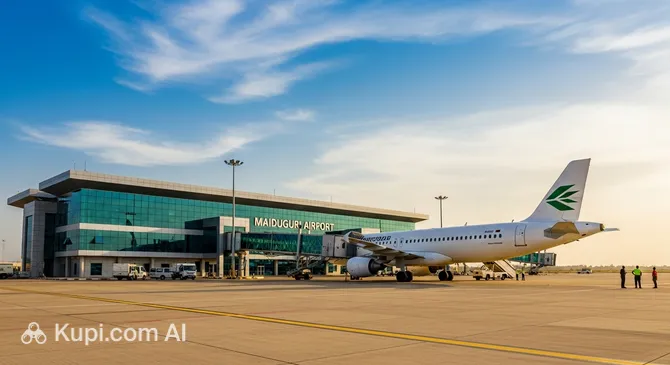
Maiduguri Airport. Illustration.
Source: Kupi.com AI
Maiduguri Airport is more than just a transport hub; it is a vital air gateway connecting Borno State with the country's largest metropolises and the wider world. Despite its compact size, this facility plays a key role in ensuring mobility for both local residents and visitors to the region.

Located just a few kilometers from the center of Maiduguri, the airport offers convenient logistics for those who value their time. The harbor serves regular domestic flights, turning hours-long road trips into comfortable flights lasting just over an hour. The atmosphere here is permeated with the hospitality characteristic of the northern states, which immediately sets a positive tone for your visit.

PropertyValue
IATA CodeMIU
ICAO CodeDNMA
CityMaiduguri
CountryNigeria
TimezoneAfrica/Lagos
ScheduleOnline Timetable

One of the main features of this airport is its strategic importance for pilgrimage missions. Every year, thousands of people passing through MIU terminals embark on sacred journeys, which leaves a certain mark on the organization of airport services during peak seasons. During these times, the infrastructure operates in an enhanced mode, ensuring a seamless flow of passengers and baggage.

The airport's runway is capable of receiving medium-haul airliners, making it accessible to major Nigerian carriers. Technical equipment is constantly being improved, with modern security and air traffic management systems being implemented, which is crucial for maintaining high aviation standards in modern conditions.

Basic amenities are provided for passengers waiting for their flights, allowing them to spend time comfortably. Here you can find both business travelers and families returning home. The terminal complex is designed to intuitively guide the flow of people from the check-in desk to the gates, minimizing the chance of getting lost in navigation.

In the future, further expansion of the airport's capabilities is planned, which could turn it into an even more significant logistics hub. Maiduguri Airport continues to be a symbol of the region's connection with the rest of the country, providing reliable and safe air communication at any time of year.

Contact Information

  • Official airport website: faan.gov.ng
  • Information desk phone: +234 803 000 0000
  • Airport address: Maiduguri Airport Road, Maiduguri, Borno State, Nigeria
  • Email: info@faan.gov.ng
  • Airport social media: twitter.com/faan_official
  • Lost baggage information: Contact the "Lost and Found" desk in the arrivals hall
  • Passenger support services: +234 810 111 2222

How to Get to the Airport

Getting to Maiduguri Airport (MIU) from the city center is quite simple, as it is located only 8–10 kilometers away. The main and most convenient way to travel for tourists is by taxi. A trip from central areas, such as Ramat Square, will take about 15–20 minutes, provided there are no heavy traffic jams. The cost of the trip varies from 2,000 to 4,000 Nigerian Naira, depending on your negotiation skills with the driver.

For those who prefer more budget-friendly options, three-wheeled motor taxis, known as "Keke Napep," are popular in the city. This is a specific type of transport that allows for faster maneuvering through city traffic, although it may not be the most convenient for traveling with large luggage. The price for such a trip will be significantly lower than in a regular car, but it is worth discussing the possibility of entering the airport grounds in advance.

Car rental services in Maiduguri are often provided with a driver. This is a recommended option for those unfamiliar with local traffic patterns. Such transport can be ordered through major city hotels or specialized agencies. The airport itself has a secured parking lot where you can leave a private car for a short trip; the parking fee is calculated on a daily basis.

Public transport in the form of large buses to the airport is irregular, so it is better not to rely on it when planning your departure time. Most travelers choose pre-booked transfers organized by local hotels. This eliminates the need to find transport at the last moment and guarantees a timely arrival for the start of registration.

When planning your trip, keep in mind that the road to the airport passes through several checkpoints, which is a standard security measure in the region. It is recommended to leave your hotel at least 2–2.5 hours before your flight to have extra time for all procedures. If you are traveling from other cities in the region, remember that there are no direct rail links to the airport, and road transport remains the only reliable option.

It is worth noting that Maiduguri Airport is a key hub, but travelers sometimes use nearby airports in neighboring states if tickets for desired dates are unavailable. However, due to the distances between Nigerian cities, MIU remains the most comfortable option for visiting Borno State.

Terminals and Layout

Maiduguri Airport (MIU) features one main passenger terminal that efficiently handles the flow of both domestic and seasonal international flights. The building's compact structure allows passengers to navigate quickly, with arrival and departure zones within walking distance of each other. This significantly saves time and eliminates the unnecessary bustle characteristic of massive aviation hubs.

The Check-in area is equipped with several counters assigned to the country's leading airlines. Information boards are also installed here, displaying the status of your flight in real-time. Check-in usually begins two hours before departure. It is recommended to approach the counters early to drop off your luggage and receive your boarding pass without haste, especially during holiday or pilgrimage periods.

Aviation security and screening procedures at the airport are conducted very thoroughly. Travelers should be prepared for double security screening of both checked baggage and carry-on items. Despite the strictness, staff strive to act professionally and politely. After passing all formalities, passengers enter the airside departures zone, which features waiting halls with seating and small shops.

The arrivals hall is located on the first floor and includes the baggage claim area. Modern baggage carousels are installed here, ensuring quick delivery of bags. Near the terminal exit, you will find desks for official taxi services and representatives from local hotels. Navigation inside the terminal is duplicated in English, helping foreign guests feel confident.

The terminal's infrastructure is constantly being updated. Recently, air conditioning systems were improved, which is critically important for Borno's hot climate. Special attention is paid to cleanliness and order in public areas. For those traveling in first or business class, separate boarding gates are provided, making the process of moving through the terminal even more comfortable.

The terminal layout is intuitive, but if you have any questions, you can always contact the support staff in bright vests. They will help you find the right gate or point you toward restrooms and rest areas. Maiduguri Airport is an example of how a small regional terminal can provide a decent level of service and safety.

Airport History

The history of Maiduguri Airport is inextricably linked to the development of aviation in West Africa in the mid-20th century. Originally, it was a small airstrip used primarily for postal and administrative needs during the colonial period. With Nigeria's independence, the significance of this hub increased sharply as the city required a reliable connection to Lagos and the then-capital, Kaduna.

In the 1970s and 80s, the airport underwent a series of significant modernizations. The runway was lengthened, allowing it to accommodate heavier types of aircraft, including jetliners. During this period, Maiduguri Airport officially received international status, paving the way for pilgrimage flights to Saudi Arabia. Annual flights to Mecca became a hallmark of the airport, making it one of the most important centers for the country's Muslim population.

An important stage in the life of the airport was the construction of a new passenger terminal, which significantly increased MIU's capacity. The building's architecture sought to combine functionality with elements that respond to the climatic characteristics of the Sahel region. The introduction of new navigation systems in the 90s made flights safer, even during seasonal dust storms coming from the Sahara.

In the early 21st century, the airport faced the need for another reconstruction of its security systems. Fencing was updated, the runway lighting system was improved, and waiting rooms were modernized. Maiduguri Airport has repeatedly served as a base for humanitarian missions by the UN and other international organizations, confirming its critical role in the logistics of the entire Lake Chad Basin region.

Today, MIU continues to evolve, adapting to new technological challenges. Despite historical challenges, the airport maintains its reputation as a reliable transport link. Every year, new pages are written into its history, whether through the opening of new domestic routes or the implementation of modern environmental standards in aircraft servicing.

Services and Facilities

Maiduguri Airport provides all the necessary conditions for a comfortable and productive passenger experience. One of the most sought-after services is the business lounge, where travelers can relax in peace, enjoying comfortable seating and light snacks. This is especially relevant for those whose flights are delayed or who prefer to prepare for meetings in a quiet environment.

To stay connected with loved ones and handle work matters, Wi-Fi is available throughout the terminal. The connection speed allows for checking email and using messaging apps. Special charging stations for mobile devices are provided in the waiting halls, saving passengers from having to search for free outlets. It is recommended to carry a universal adapter, as plug standards in Nigeria may differ from what you are used to.

Financial services are represented by currency exchange points and ATMs from several local banks. Here you can get cash in Nigerian Naira, which is needed for paying taxis or small purchases. However, it is worth considering that queues can form at ATMs during peak hours, so it is better to take care of cash in advance or allow for extra time.

Travelers with children will appreciate the presence of mother and child rooms, where they can change or feed a baby in a calm environment. The airport is also fully adapted for passengers with disabilities: there are ramps, widened doorways, and special seating in the waiting areas. Airport staff are always ready to provide assistance during boarding and disembarking upon prior request.

The airport's medical point operates 24/7 and is ready to provide first aid in case of illness. Small stalls selling newspapers, books, and souvenirs can also be found at MIU. If you need to stay overnight, facilities such as City Star Restaurant & Accommodation are located in the immediate vicinity of the airport, offering comfortable rooms for transit passengers.

For those traveling on government or official business, protocol services and conference facilities are available at the airport. Maiduguri Airport strives to meet international service standards, constantly expanding its range of available services and improving staff qualifications to ensure that every visit leaves only pleasant impressions.

Dining

Dining options at Maiduguri Airport are represented by small but cozy establishments where you can grab a bite before your flight. These are mainly cafes and snack bars offering classic Nigerian dishes and familiar European snacks. Most food outlets are concentrated in the public access area before security, but beverage and light snack kiosks can also be found in the airside departures area.

Fans of local cuisine should pay attention to traditional snacks, such as meat pies or suya — flame-grilled meat with spices, which is extremely popular in the northern regions. These dishes are prepared from fresh ingredients and allow you to experience local flavor right inside the terminal building. For those who prefer something lighter, fresh fruit and bottled water are always available.

While international fast-food chains may not be present here, local establishments strive to maintain a high level of service. The menu often includes vegetarian options such as rice with vegetables or local flatbreads. Airport prices are slightly higher than in the city but remain affordable for most travelers, averaging from 2,000 to 5,000 Naira for a full meal.

If you have enough time before check-in, you can visit nearby places like Hebron Foods or use the services of the cafes inside the terminal. Operating hours are usually tied to the flight schedule: they open a couple of hours before the first departure and close after the last plane leaves. This ensures that no passenger goes hungry, even for early morning flights.

For business travelers and those seeking a quiet environment, some waiting areas offer beverage and dessert service. Here you can enjoy a cup of aromatic Nigerian coffee or tea while watching the planes being prepared on the apron through panoramic windows. Maiduguri Airport strives to create a welcoming atmosphere where every guest feels at home.

Travel Tips

Traveling through Maiduguri Airport requires some preparation to ensure your trip goes smoothly. The most important tip is to arrive at the airport at least 2 hours before your domestic flight. Despite the terminal's small size, security procedures can take considerable time due to the thorough inspection of every passenger and their personal belongings. Patience and politeness when interacting with security staff will help speed up the process.

When packing, remember the rules for carrying liquids in your hand luggage — they are standard: containers no larger than 100 ml, packed in a transparent bag. Nigeria also has strict rules regarding the transport of certain food products and cultural heritage items. If you are carrying souvenirs, it is best to check at the information desk beforehand if they require a special export permit.

Choosing a seat on the plane can significantly affect your comfort. When flying to Maiduguri from Abuja or Lagos, try to book a window seat on the left side of the aircraft — spectacular views of the landscapes of northern Nigeria often open up during the landing approach. However, remember that due to high air temperatures in the region, daytime flights can experience slight turbulence, so always keep your seatbelts fastened.

To save time and money, we recommend booking a transfer through your hotel in advance. In Maiduguri, this often turns out to be cheaper and more reliable than looking for a taxi on the spot. Always carry cash Naira in small denominations to pay for porter services or to buy water. Cashless payments are not available everywhere in the airport, and having cash will save you unnecessary trouble.

In case of flight delays, which sometimes happen due to weather conditions (for example, because of the Harmattan — a dry, dusty wind), do not panic. Airline representatives usually provide up-to-date information on departure times. At such times, it is best to spend time in one of the terminal's cafes or in the business lounge. And don't forget to take a light sweater into the cabin — air conditioners on planes and in the airport building often run at full power.

Customs control in Nigeria can be detailed, so keep all travel documents, including your passport and yellow fever vaccination certificate (if you are a foreigner), in an easily accessible place. Following these simple recommendations will turn your visit to Maiduguri Airport into a pleasant start or end to your journey through Borno State.

Attractions

Reached the end of the page?

That means the route is fully explored