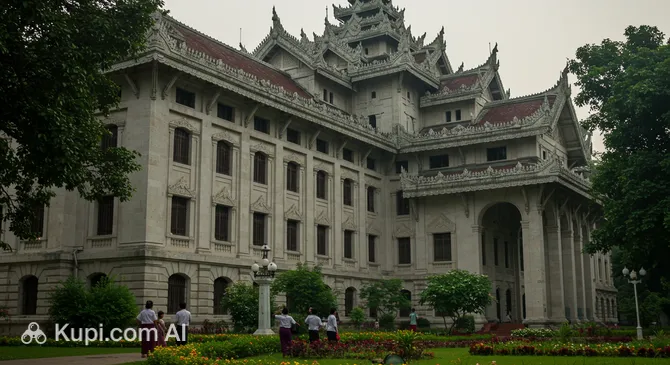
Navigating the bustling streets of Yangon offers a genuine glimpse into the daily rhythm of the city. Unlike many other metropolises in Southeast Asia, Yangon does not currently have a metro or subway system. Instead, the public transport network relies heavily on a comprehensive bus system, a historic railway loop, and an abundance of taxis, making it relatively easy for visitors to get around once they understand the basics.
The backbone of the city's public transportation is the Yangon Bus Service (YBS). These buses, typically red or yellow, cover nearly every corner of the city and are by far the most economical way to travel. While the route maps can be complex for newcomers, the buses are numbered (often with Western numerals) and modern air-conditioned vehicles are becoming the standard. To use the bus, you simply board at the front and pay the fare by dropping exact cash into the box next to the driver. There are no conductors to give change, so carrying a supply of small banknotes is essential.
For a truly unique experience that serves as both transport and a sightseeing activity, tourists should take a ride on the Yangon Circular Railway. This commuter train loops around the city and its outskirts, connecting the urban center with rural villages. A full loop takes approximately three hours, offering a slow-paced, fascinating window into local life as vendors sell fruit and snacks in the aisles. Tickets are incredibly cheap and can be purchased directly at the platform of the Yangon Central Railway Station or any smaller station along the route. While not the fastest way to get from point A to point B, it is a "must-do" for the atmosphere alone.
When it comes to comfort and convenience, taxis are the preferred option for most international travelers. You can hail taxis on the street, but they do not use meters, so you must negotiate the fare before getting in. To avoid the language barrier and the need to haggle, it is highly recommended to use the Grab app. It functions similarly to other ride-hailing services, providing a fixed price and tracking your journey, which adds a layer of safety and ease to your trip.
A distinctive feature of Yangon's transport landscape is the strict ban on motorbikes within the municipal city limits. You will not find motorbike taxis or scooter rentals in the downtown area, which significantly changes the flow of traffic compared to cities like Hanoi or Bangkok. Consequently, tourists cannot rent scooters to explore the city center; you must rely on four-wheeled vehicles or walking.
For crossing the Yangon River to visit the rural township of Dala, public ferries are the primary mode of transport. The ferry terminal is located near the Pansodan Street Jetty. The ride is short, scenic, and offers a stark contrast between the busy city center and the quiet, village-like atmosphere on the opposite bank. Tickets for foreigners are sold at a dedicated counter at the jetty.
Regarding payment, cash is king in Yangon's transport system. While a card system (YPS) exists for locals on buses, it is not widely used by short-term visitors. Fares for buses and trains are very low, typically ranging from 200 to 500 Kyat. Always keep a stash of 100, 200, and 500 Kyat notes handy. Be aware that public transport generally stops running earlier than in Western cities, with many bus routes winding down around 9:00 PM or 10:00 PM, so plan your late-night returns via taxi.