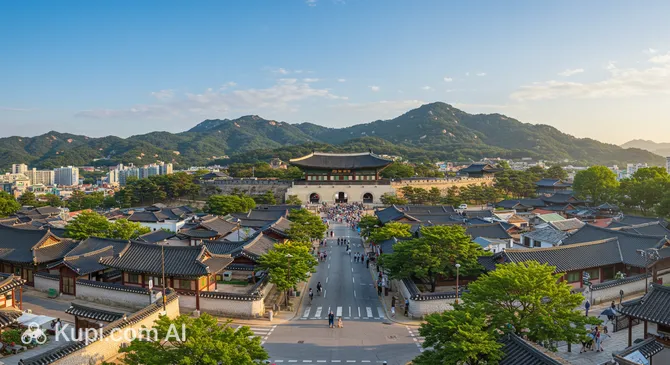
Suwon is a dynamic metropolis that harmoniously combines the majesty of ancient history with the power of modern technology. As the administrative center of Gyeonggi-do Province, this city is considered one of the most important cultural and economic hubs of South Korea. Located just 30 kilometers from Seoul, it maintains a unique atmosphere as a "city for people," where urban comfort exists alongside the carefully preserved heritage of the Joseon Dynasty.
Geographically, the city occupies a favorable position in the northwestern part of the peninsula, attracting more than 1.2 million residents with its developed infrastructure and abundance of green spaces. Suwon's rich history is inextricably linked to the ambitious project of King Jeongjo, who planned to move the capital here at the end of the 18th century. A testament to those times is the magnificent Hwaseong Fortress, whose powerful walls and elegant pavilions are now listed as a UNESCO World Heritage site.
Suwon. Illustration.
Source: Kupi.com AI
The city's modern appearance is defined not only by historical monuments but also by its status as a global electronics center—it is home to the headquarters of the tech giant Samsung. Travelers can expect an amazing contrast: in the morning, you can walk along ancient bastions, and in the evening, enjoy the lights of futuristic districts and try the legendary fried chicken at local markets. We invite you to personally get to know this multifaceted city, which is sure to surprise you with its hospitality and diversity.
Weather Overview
Suwon is characterized by a humid continental climate with four distinct seasons. Winters here are usually cold and dry, with an average January temperature of about -1.7°C, although the thermometer can drop to -6°C at night. Summer, on the other hand, can be hot and humid: in July and August, the air warms up to +29°C, and high humidity brings the monsoon rain season.
The best time to visit the city is considered to be spring (April–May) and autumn (September–October). During these periods, the weather is mild and sunny, ideal for long walks along the fortress walls. In autumn, the city is especially transformed by the bright colors of the foliage, and in spring—by the blooming of cherry blossoms and azaleas. Current data on the weather in Suwon will help you choose the right wardrobe before your trip.
It is worth considering that most of the precipitation falls in the summer months, so you should always have an umbrella with you when planning a visit in July or August. Snow does not fall often in winter, but the frosty air and northern winds require warm outerwear. During the shoulder seasons, air quality is usually good, but on certain days, episodes of haze characteristic of all large cities in the region are possible.
Average monthly temperature
Average monthly precipitation
Interesting Facts
UNESCO Heritage: The famous Hwaseong Fortress, built between 1794 and 1796, is one of the best-preserved examples of Far Eastern military architecture of its time. The length of its walls is about 5.7 km.
Electronics City: Suwon is home to the global headquarters and a massive research and production cluster of Samsung Electronics, making the city a vital technological center of the world.
Culinary Brand: The city is considered the Korean capital of fried chicken. There is an entire "Suwon Fried Chicken Street" here, where foodies from all over the country come to try the signature marinade and crispy crust.
Royal Ambitions: In the 18th century, King Jeongjo seriously planned to move the state capital from Seoul to Suwon to establish an ideal city and strengthen royal power.
Special Status: In 2022, Suwon officially became a "Special Case City"—a unique status in the Korean administrative system given to municipalities with a population of over one million.
How to Get There
Due to its proximity to the capital, the city's transport accessibility is exemplary. Most travelers arrive here from Seoul, choosing the most suitable option for their time and budget. You can find more details on how to get to Suwon by studying the schedules of high-speed trains and suburban subway routes that connect the city with all key points of the metropolitan area.
The main air hub for guests is Incheon International Airport (ICN), located about an hour and a half away. Comfortable limousine buses run between the airport and Suwon, delivering passengers directly to central hotels and stations. You can also take the Airport Express (AREX) to Seoul and then transfer to the subway or a train.
The railway service is the pride of the region. The main Suwon Station accepts both regular suburban trains and high-speed KTX trains. A KTX trip from central Seoul takes only about 25–30 minutes, making the city an ideal destination even for short day trips. The station is a major transport hub where subway lines and numerous bus routes intersect.
Station
Passenger traffic
Distance
Suwon Station
12
0 km
Beomgye Station
12
14 km
Pyeongchon Station
12
15 km
Indeogwon Station
12
15 km
Jungang Station
12
15 km
Main Attractions
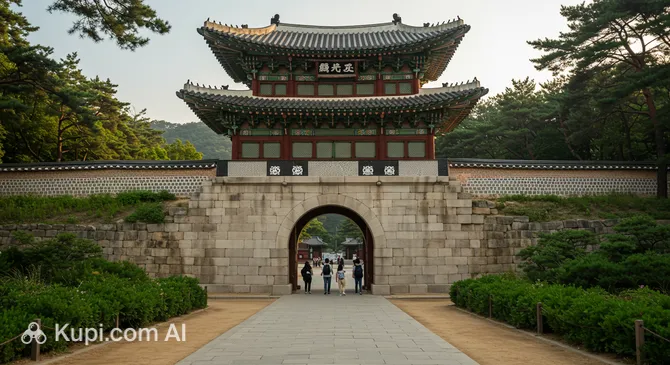
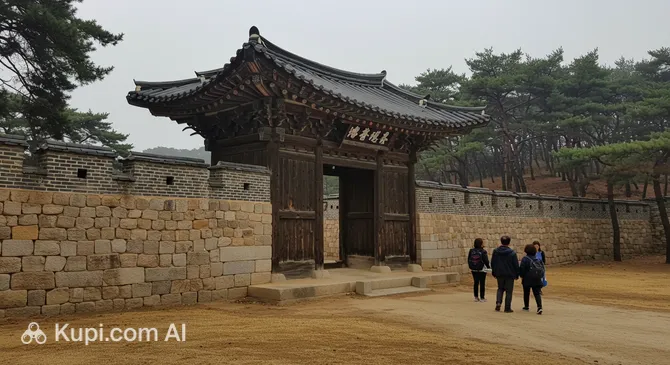
The main symbol and pride of the city is the monumental Hwaseong Fortress, built by King Jeongjo at the end of the 18th century. Its walls stretch for almost 6 kilometers, uniting defensive towers, observation platforms, and majestic gates into a single ensemble. One of the most impressive points of the fortification is the Janganmun Gate, which served as the formal northern entrance to the city and impresses with its massive architecture and elegant multi-tiered roof.
Janganmun Gate. Illustration.
Source: Kupi.com AI
Traveller photos:
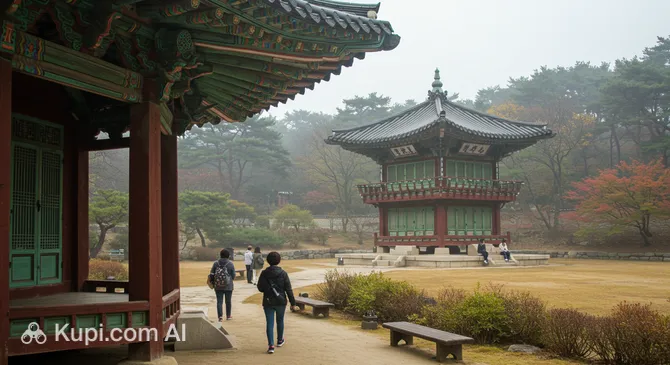
For those seeking peace and aesthetic pleasure, the Banghwasuryujeong Pavilion is a must-visit. Located on a hilltop by a picturesque pond, it is considered one of the most beautiful structures in the fortress complex. This place is perfect for taking a break during your walk and admiring panoramic views of the surroundings, especially in the evening when the artistic lighting is turned on.
Banghwasuryujeong Pavilion. Illustration.
Source: Kupi.com AI
Traveller photos:
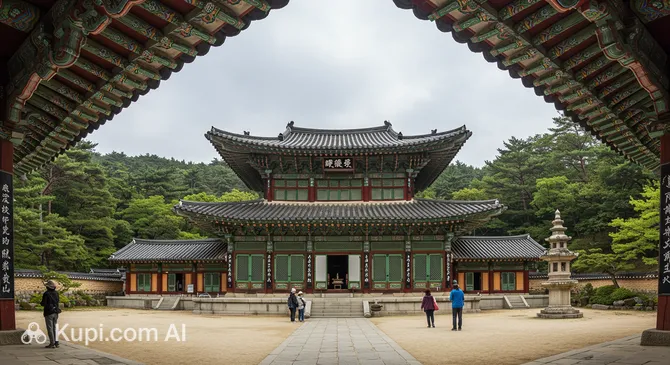
In addition to fortifications, Suwon is rich in spiritual sites. Bonnyeongsa Temple is a quiet oasis of Buddhist culture surrounded by lush greenery. The temple is known for its educational activities and a school for nuns. Visitors can explore traditional Korean architecture, see elegant Buddha statues, and enjoy the silence that contrasts sharply with the noisy business districts of the metropolis.
Bongnyeongsa Temple. Illustration.
Source: Kupi.com AI
Traveller photos:
Local Cuisine
A gastronomic journey through Suwon is unimaginable without its main hit—Suwon Fried Chicken. Local fried chicken is famous for its special preparation method in large cauldrons, which gives it an incredible crunch. On the famous "Chicken Street," there are dozens of establishments where this dish is served with traditional sauces and pickled radish.
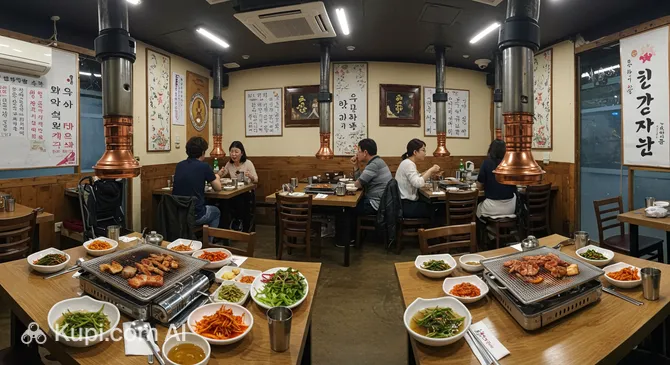
Another pride of the city is Suwon Galbi (marinated grilled beef ribs). The local recipe differs from the classic Seoul version by using salt instead of soy sauce in the marinade, which better highlights the flavor of the meat. To taste the best meat delicacies, you can stop by Mapo Bong-ga (Main Restaurant), which is very popular with locals due to the consistent quality of its dishes.
Mapo Bonga Main Branch. Illustration.
Source: Kupi.com AI
Traveller photos:
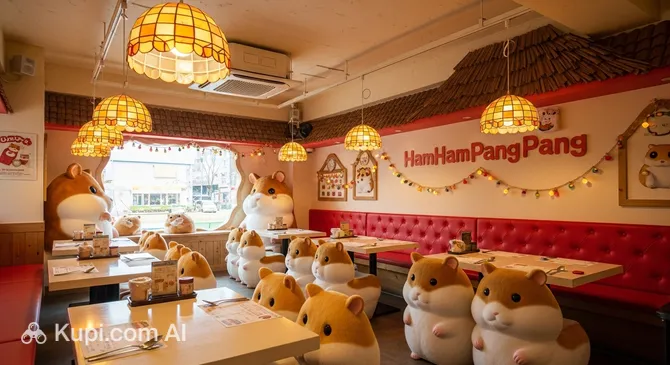
For those looking for modern interpretations of Korean and international cuisine, stylish cafes and bistros are open. An example of such an establishment is HamHamPanPan, where a cozy atmosphere is combined with an original menu. In addition to your meal, be sure to try the local makgeolli (rice wine) or a refreshing cold citron tea.
HamHamPangPang. Illustration.
Source: Kupi.com AI
Traveller photos:
The food culture in the city is excellently developed: from bustling traditional markets where food is prepared right in front of you, to elegant restaurants in new districts like Gwanggyo. Suwon is a place where every meal turns into an introduction to the rich traditions and modern trends of Korean cuisine.
Travel Tips
Preparing for a trip to this amazing Korean city will be easier with our practical recommendations, which will help you feel confident and comfortable.
Clothing and Footwear: Choose clothes according to the season: light fabrics and an umbrella for rain are essential in summer, and a warm jacket in winter as it can be windy. Be sure to wear comfortable shoes with a good sole if you plan to walk along the walls of Hwaseong Fortress—there are many steep climbs and stone steps.
Transport: Buy a T-money card immediately upon arrival (at the airport or any GS25/CU store). It works on the subway, buses, and taxis throughout the country. For navigation, use Naver Maps or KakaoMap, as Google Maps does not always work correctly in Korea.
Finances: The official currency is the Korean Won (KRW). Cards are accepted almost everywhere, but it's worth having a small amount of cash for street markets or topping up your transport card. Tipping is not customary in Korea and can sometimes even embarrass the staff.
Connectivity: The city has excellent Wi-Fi, but for convenience, it's better to buy a local SIM card or rent a portable router (Pocket WiFi) at the airport. This will allow you to always stay connected and use online translators.
Etiquette: Koreans are very polite. Greet people with a slight bow. When passing money or objects, use both hands—this is a sign of respect. In restaurants, you often need to remove your shoes before entering a room with low tables.
Safety: The city is considered very safe at any time of day. Pharmacies (Yakguk) are easy to find by the red or green "약" sign. Drinking tap water is not recommended; it is better to buy bottled water.
Language Barrier: English is spoken in tourist areas, but it is rare in small shops. Learn basic phrases: "Annyeong-haseyo" (Hello) and "Kamsa-hamnida" (Thank you)—this always wins the sympathy of the locals.
What to Avoid: Do not stick your chopsticks vertically into a bowl of rice (this is associated with funeral rites) and try not to talk loudly on public transport.
By following these simple rules, you can fully immerse yourself in the local culture and get only the most pleasant impressions from your journey!
Entertainment & Nightlife
In the evening, Suwon offers entertainment for every taste, with most activity concentrated in the Ingye-dong area and around the central station. Life is buzzing here in numerous karaoke bars (noraebangs), game centers, and cinemas. Unlike the louder Seoul, the atmosphere here is more local and cozy, allowing tourists to feel the true rhythm of life in a Korean metropolis without the extra fuss.
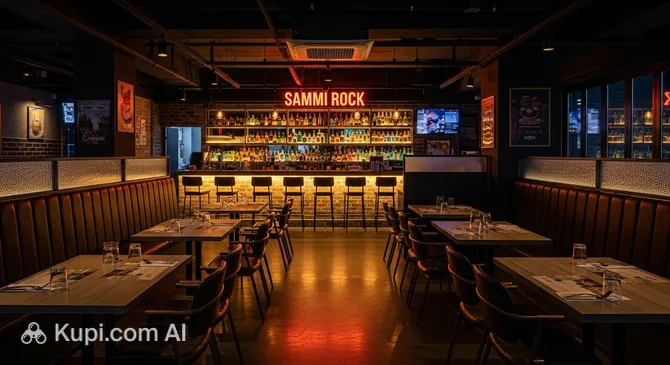
Fans of quality music and craft drinks should check out the Sammy Rock bar. This place is famous for its relaxed atmosphere and stylish interior, attracting both local youth and foreign guests. If you are looking for a more modern and dynamic establishment, look into Wonderwall Suwon Ingye—a popular bar in the heart of the entertainment district where you can enjoy signature cocktails with friends.
Sammi Rock. Illustration.
Source: Kupi.com AI
Traveller photos:
For a more peaceful holiday, evening walks along the illuminated walls of Hwaseong Fortress are ideal, offering stunning views of the city at night. Safety in Suwon is at a very high level, so even late walks along the lit streets are not a cause for concern. To get to your hotel at night, it is easiest to use a taxi via the Kakao T app, which works quickly and reliably.
Parks & Museums
The city's cultural landscape is inextricably linked with its historical core, which is itself a huge open-air park. An important point on this route is Seojangdae (Western Command Post). Located at the top of Paldalsan Mountain, this historical site once served as the place from which King Jeongjo observed military exercises. Today, it offers the most breathtaking view of the entire city and the straight rows of fortress walls.
Seojangdae (Western Command Post). Illustration.
Source: Kupi.com AI
Traveller photos:
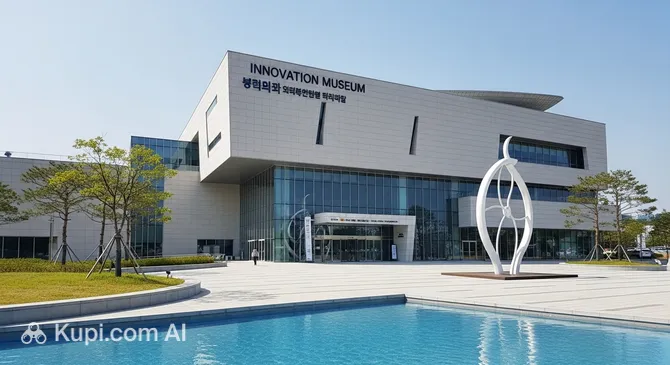
The modern side of the city is represented by the Samsung Innovation Museum. This is a must-visit for anyone interested in the history of technology. The museum's exhibition covers the development of electricity and electronics: from the first inventions of Faraday and Edison to the latest semiconductors and displays of the future. The museum vividly demonstrates how Korean technologies have changed the world.
Innovation Museum. Illustration.
Source: Kupi.com AI
Traveller photos:
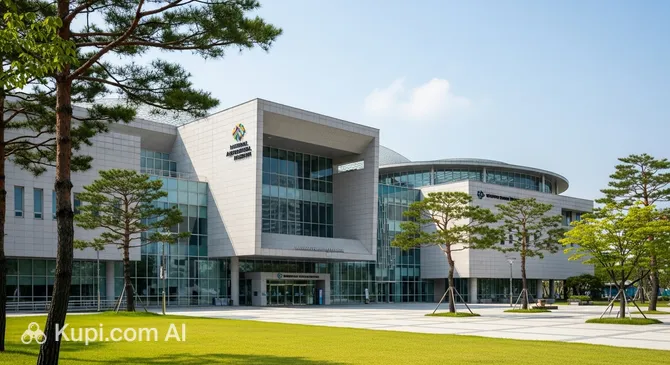
For those who prefer more traditional but equally important aspects of Korean life, the National Agricultural Museum is open. In this modern complex, you can learn about centuries-old traditions of Korean farming and see how high technologies are applied in agriculture today. The combination of educational programs and interactive exhibitions makes it an excellent place for informative leisure.
National Agricultural Museum. Illustration.
Source: Kupi.com AI
Traveller photos:
Getting Around
The city's transport system is fully integrated into the overall infrastructure of the metropolitan region, making travel simple and clear. The main form of transport is the subway—Seoul Subway Line 1 passes through the city, connecting it with the capital's center. This is a convenient and budget-friendly way to get around, especially if you plan long-distance trips.
Inner-city communication relies on an extensive network of buses. There are different types of buses in Suwon: blue and green ones run within the city, while red ones (expresses) connect it with key areas of Seoul. To pay for travel, it is most convenient to use a single transport card like T-money or Cashbee, which can be bought and topped up at any convenience store. Don't forget to tap your card against the reader not only when entering but also when exiting the bus to receive a transfer discount.
Taxis are an affordable alternative to public transport, especially for trips in the evening. All cars are equipped with meters, and payment is possible by cash, bank card, or transport card. For those who prefer active recreation, there is a bicycle rental network in new districts and around the fortress. All city transport runs on a clear schedule, which can be tracked in real-time through mobile applications such as KakaoBus or Naver Maps.
Accommodation
The city's hotel sector caters to both business travelers and tourists visiting for historical attractions. The bulk of hotels are concentrated in two key areas: around the central Suwon Station, which is convenient for transit trips, and in the Ingye-dong district, known for its proximity to business centers and restaurants.
For those who value business-class comfort, the city offers chain hotels with high levels of service, fitness centers, and conference rooms. Budget-conscious travelers will find numerous guesthouses and apartments located within walking distance of the fortress walls. This allows you not only to save money but also to fully immerse yourself in the atmosphere of the old city, waking up with a view of the ancient bastions.
If your goal is to explore the fortress and participate in festivals, we recommend booking accommodation in advance, especially in October when the large-scale Hwaseong Cultural Festival takes place. The price range in Suwon is generally lower than in Seoul, while the quality of accommodation remains at a decent level. Most properties can be easily booked through international online platforms that support card payments.
Nearby Cities
Suwon serves as an excellent starting point for exploring the surroundings and neighboring cities of Gyeonggi-do Province. Thanks to the developed network of subway and suburban trains, many interesting destinations are available in just a 15–30 minute trip.
One of the closest neighbors is the city of Uiwang, famous for its picturesque Baegun Lake and theme parks that are ideal for family holidays in nature. It is also worth paying attention to Gunpo, where magnificent fields of azaleas bloom in spring, attracting thousands of photographers. For those interested in the history and culture of the southern suburbs, Osan will be an interesting destination.
The region around the city offers many options for day trips: from modern shopping clusters and nature reserves to folk villages. We recommend not limiting yourself to the center and boldly setting out to explore neighboring municipalities to see the full diversity of the Korean province.
Shopping & Souvenirs
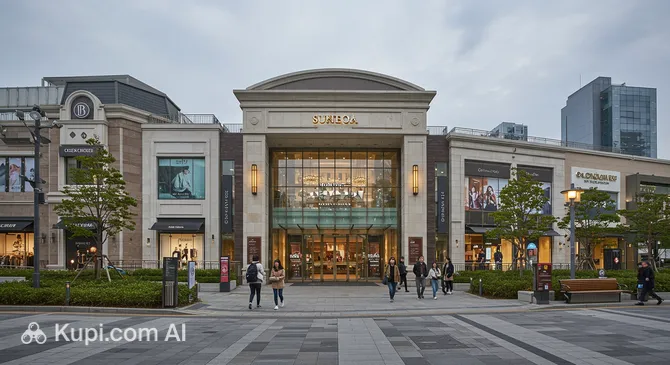
Shopping in the city is represented by two contrasting directions: ultra-modern lifestyle centers and traditional markets with their unique local color. If you are looking for fashionable clothes, popular cosmetics brands, or just want to spend time in a stylish space, head to the Gwanggyo district. Here you will find Avenue France Gwanggyo—an elegant open-air shopping street styled after a European quarter with many boutiques and cafes.
Avenue France Gwanggyo. Illustration.
Source: Kupi.com AI
Traveller photos:
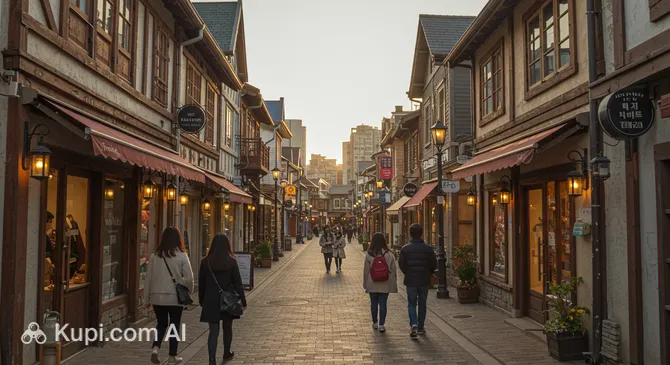
An equally interesting place for walks and shopping is Alleyway Gwanggyo. This shopping complex offers a more democratic and youthful atmosphere, where art exhibitions and local fairs are often held. It's a great place to find original accessories, designer stationery, or simply enjoy modern Korean architecture.
Alleyway Gwanggyo. Illustration.
Source: Kupi.com AI
Traveller photos:
Tradition lovers should visit the Paldalmun Market, located near the fortress gate of the same name. Here you can buy high-quality fabrics, household goods, and, of course, local delicacies. Items with symbols of Hwaseong Fortress, high-quality Korean cosmetics, and gourmet gift sets, including famous BBQ sauces, are often brought back as souvenirs from Suwon. Most shops are open from 10:00 to 21:00, cards are accepted everywhere, and large centers provide a Tax Free service for foreign tourists.