Support

계룡산 거제수용소유적지

About

Imagine a place where time stands still, allowing you to touch the complex pages of the past. The Historic Park of Geoje POW Camp in the city of Geoje is a unique open-air memorial complex located in South Korea. Established on the site of one of the largest camps during the Korean War, it serves as a powerful reminder of the value of peace and human resilience.
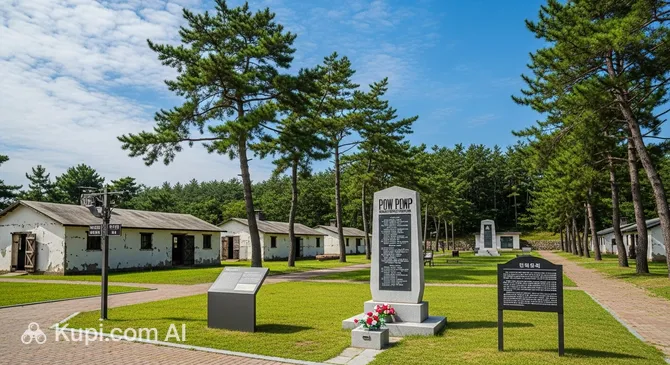
Geoje POW Camp Historical Park. Illustration.
Source: Kupi.com AI

Traveler photos:

Today, the park is a tangible cultural heritage site and functions as a museum, educational platform, and recreation area. Located at the foot of the scenic Gyeryongsan Mountain, fragments of original barracks, watchtowers, and roads built decades ago have been preserved. Visitors can see realistic reconstructions of prisoner life, rare archival photos, and documents.

This destination is ideal for those interested in dark tourism and wishing to gain a deeper understanding of the region's history. Beyond its historical sites, the park attracts tourists with its natural beauty and the opportunity to ascend the mountain peak via monorail, offering breathtaking views of the city and the coastline.

Contacts

To get up-to-date information on events or group tours, you can contact the city tourism center. The main contact details are provided below.

How to contactContact
AddressЮжная Корея, Gyeongsangnam-do, Geoje-si, 상동동

What to Do

A visit to the park is a deep dive into history. You can walk through themed zones where camp living conditions—barracks, kitchens, and even headquarters—have been recreated. Be sure to stop by the museum pavilion, which displays chronicles of events, military uniforms, and personal belongings of those held here in the 1950s. Interactive exhibits, updated after a recent renovation, allow you to literally feel the atmosphere of that era.

For those who prefer active recreation and beautiful scenery, a tourist monorail starts at the park. It will take you to the top of Gyeryongsan Mountain, where observation decks offer a magnificent panorama of Geoje Island and the Geoga Bridge. This is a great spot for photography, where stark history meets serene nature.

Walking enthusiasts should check out the hiking trails and the nearby restored Gohyeonseong Fortress. A stroll through the park grounds also invites quiet reflection or a family picnic in designated rest areas. The combination of educational exhibits and natural beauty makes this place suitable for tourists of all ages.

Getting There

Getting to the park is quite simple, as it is located within the city limits, near the Geoje City Hall. If you are coming from Busan or Masan, it is most convenient to take an intercity bus to the Geoje Bus Terminal (the trip takes about 1–2 hours) and then transfer to local transport.

Regular buses No. 1, 10, or 20 run from the city bus terminal or the port to the park. You should get off at the "Gohyeon" or "Gyeryongsan" stop. You can also use taxi services—the ride from the city center is short and comfortable. For those who prefer walking, the path from Geoje City Hall takes only 10–15 minutes.

If you are traveling by rental car, follow Route 12 across the Geoje Bridge. Free parking is available on the complex grounds. For precise navigation in apps, you can use the coordinates at the foot of Gyeryongsan Mountain.

Nearest city: Geoje

History & Facts

The history of this site began in 1951, at the height of the Korean War. The island was chosen for the camp because of its natural isolation, which provided security in the rear while remaining accessible by sea. At its peak, the camp held up to 173,000 people, including prisoners of war from North Korea and China.

After the armistice was signed in 1953, the camp was closed, and the area remained abandoned for many years. It wasn't until 1983 that the remains of the structures were officially designated as Tangible Cultural Heritage of Gyeongsangnam-do province. This decision helped preserve historical artifacts and transform the former restricted zone into a space for remembrance and education.

In 1999, the park opened as an open-air museum. Today, you can see authentic photographs from the 1950s, documents, and personal items donated by journalists and eyewitnesses. Following a major renovation completed in 2023, the exhibits have become even more informative, emphasizing the importance of peace and historical reconciliation.

Time Needed

To explore the main museum exhibition and the camp ruins at a leisurely pace, you will need approximately 1.5–2 hours. This is enough time to walk through the themed zones and read the information boards.

If you plan to use the monorail and ascend to the top of Gyeryongsan Mountain for the panoramic views, you should budget at least 3–4 hours for your visit. A full itinerary that includes hiking mountain trails or visiting the nearby Gohyeonseong Fortress could take up half a day.

Working Hours

The park is generally open to visitors daily from 9:00 AM to 6:00 PM. During the winter period (November to February), operating hours may be shortened to 5:00 PM, so it is recommended to plan your visit for the first half of the day.

As the schedule may change depending on the season or technical maintenance on the monorail, it is advisable to check for current information on the official website of the Geoje Tourism Department before your trip.

Nearby

A visit to the memorial park can easily be combined with exploring other interesting city locations, as numerous historical and cultural sites are concentrated within a few kilometers. This will allow you to dive deeper into the island's atmosphere and learn more about its ancient and modern heritage.

The surrounding area offers a variety of experiences, from walking along ancient fortress walls to visiting traditional Korean schools and modern aquariums. Below are the nearest attractions to include in your itinerary.

NameDistance
Dokbongsan Well-being Park2.3 km
Kim Soonhee Oyster Soup & Nutritious Rice3 km
Geoje Hotel Restaurant3.4 km
Geoje Botanical Garden3.4 km
Mundong Falls4.6 km

Reached the end of the page?

That means the route is fully explored