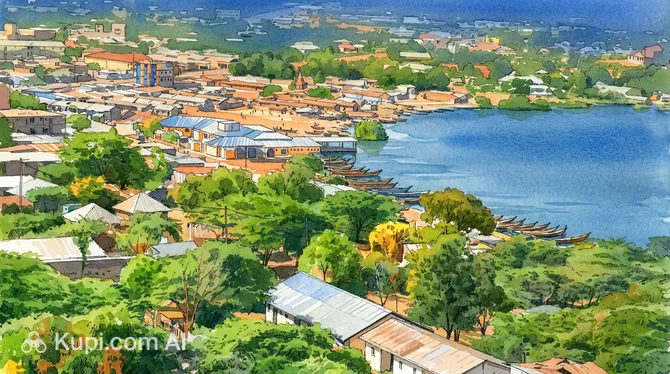
Karungu is a small, authentic settlement in Kenya, nestled on the picturesque shores of Lake Victoria. Located in Migori County, right next to the Tanzanian border, this village preserves the atmosphere of traditional rural Africa. There is no bustle of big cities here, and life flows at a calm pace dictated by the proximity of the great lake.
Karungu. Illustration.
Source: Kupi.com AI
The village's geographical location makes it an important transit point for locals and fishermen. With a population of just over 2,300, Karungu is a typical lakeside settlement where fishing and agriculture remain the primary occupations. The surrounding landscape is characterized by flat terrain with abundant greenery and mango trees, which provide natural shade on hot days.
While there are no large shopping malls or skyscrapers, Karungu attracts those who want to explore the settlement's history and see the real life of the Luo people. A visit to the local market or a walk along the Lake Victoria shoreline allows you to experience the region's unique character. We recommend Karungu to travelers seeking seclusion and wishing to see Kenya without the tourist gloss.
Weather Overview
The climate in Karungu is defined by its equatorial position and proximity to a vast body of water. It is warm here all year round, with average temperatures hovering around +23°C to +28°C. Lake Victoria softens the heat, bringing a refreshing breeze; however, it also contributes to increased humidity, which travelers should take into account.
There are two distinct rainy seasons in the region: the "long" rains from March to May and the "short" rains in October-December. During these times, downpours can be very intense, washing out dirt roads. Detailed information about the weather in Karungu suggests that the best time to visit is the dry period from June to September, when humidity is lower and the sky remains clear more often.
A typical day in Karungu consists of a sunny morning and possible short-lived rains in the afternoon or at night. Thanks to stable temperature indicators, there are never frosts here, and the nights remain comfortably warm (around +20°C). Clothing made of light materials and a raincoat are your standard kit for visiting this region.
Average monthly temperature
Average monthly precipitation
Interesting Facts
Lake Region: Karungu is located on the shores of Lake Victoria — Africa's largest lake and the second-largest freshwater lake in the world.
Transit Point: Due to its proximity to the Tanzanian border, the village serves as an important hub for travelers following overland routes across East Africa.
Ethnic Flavor: The main population of the region consists of the Luo people, known for their hospitality and rich cultural traditions.
Fishing Hub: Karungu is a key location for harvesting Nile perch and tilapia, which are supplied from here to other regions of Kenya.
Time Zone: The village operates on East Africa Time (UTC+3), making it convenient to plan trips from neighboring countries without significant time acclimatization.
How to Get There
The transport accessibility of Karungu can be a real adventure for a tourist. It can be reached primarily by land. Most travelers arrive from Nairobi or nearby Kisumu by bus or local minivans known as "matatus." The trip from Kisumu takes about 2–3 hours, though part of the route may be on dirt roads that require a high-clearance vehicle after rain.
If you plan to get there by car, the main route follows the A1 highway through the town of Migori. The drive from Kenya's capital, Nairobi, takes about 8–10 hours. Details on how to plan ways to get to Karungu will help you avoid surprises on the road related to the irregularity of public transport.
For those who prefer air travel, the nearest major hub is Kisumu International Airport. There are no direct railway lines to the village, so after a flight or a train trip to the major centers, you will still need to transfer to local transport.
Although Karungu is not a major tourist hub, you can find charm in simple things. The main "attraction" of the village is rightfully the shore of Lake Victoria. This is the largest freshwater lake in Africa, and its endless waters create the feeling of being at sea. Here, you can watch local fishermen head out for their catch in traditional boats at dawn.
Another interesting place is the Karungu local market. It is the heart of social life, bustling with the trade of fresh fish, exotic fruits, and essential goods. The market provides an opportunity to see the daily lives of local residents and purchase authentic handmade items. For those interested in logistics and cross-border travel, the border post with Tanzania, located nearby, is a curious site.
If you have time, it is worth taking a short walk around the outskirts to see traditional African huts and agricultural land. The landscapes around the village, filled with tranquility and natural beauty, are perfect for those who want to capture rare shots of the untouched Kenyan countryside. For larger attractions and museums, travelers usually head to the nearby major cities of the region.
Local Cuisine
Culinary traditions in Karungu are inextricably linked to Lake Victoria. The main dish you must try is freshly caught fish. Tilapia and Nile perch are expertly prepared here: most often, they are deep-fried until golden brown or stewed in a fragrant tomato sauce with onions and local spices.
A traditional accompaniment to any meal is ugali — a dense cornmeal porridge eaten with the hands, using it to scoop up pieces of fish or vegetable stew. Dishes made from sukuma wiki (collard greens) and legumes are also popular. The influence of Indian cuisine is evident in the love for masala tea and chapati flatbreads, which are often served for breakfast.
As for drinks in Karungu, it's worth trying the local tea with milk and sugar or a refreshing Kenyan-made beer. In the markets, you can find vendors selling homemade juices or traditional fermented drinks. The food culture here is simple: most establishments are small street kitchens where food is prepared right in front of you, ensuring the freshness of the products.
Travel Tips
A trip to Karungu will provide you with unforgettable impressions if you prepare for the specifics of rural life in East Africa. Here are some tips from seasoned travelers to make your visit comfortable and safe.
Health first: Karungu is located in a lakeside region, so malaria prevention and a yellow fever vaccination are mandatory. Always use repellents and sleep under a mosquito net.
Drinking water: Use only bottled water, even for brushing your teeth. Water from the lake or local sources is not suitable for drinking without boiling.
Clothing and gear: Choose light clothing made of natural fabrics, but don't forget covered items for protection against the sun and insects. Comfortable, sturdy shoes are a necessity for walking on dirt roads.
Finance: Bring enough cash in Kenyan shillings. Cards are not accepted here, and the nearest functioning ATMs are in Migori.
Connectivity: For stable internet, it is better to buy a local operator's SIM card (e.g., Safaricom) in advance. Wi-Fi is extremely rare in Karungu guesthouses.
Respect for traditions: The local Luo people are very friendly. Always greet people when you meet them — this is an important part of etiquette. Ask for permission before taking photos of people or their homes.
Water safety: Be careful on the shore of Lake Victoria at dusk. In addition to wild animals, the shore can be slippery, and there is almost no lighting.
What to avoid: Do not engage in political arguments and avoid open displays of wealth to prevent attracting undue attention.
May your journey to this quiet corner of Kenya be filled with only pleasant discoveries and warm encounters!
Entertainment & Nightlife
Entertainment infrastructure in Karungu is practically non-existent, making it an ideal place for those seeking peace and an early sleep to the sounds of nature. You won't find night clubs, cinemas, or modern bars here. The evening life of locals usually centers around home gatherings or small street cafes where the day's news is discussed.
Daytime leisure in the village is limited to simple pleasures. The main entertainment for guests can be fishing on Lake Victoria or watching local football matches, which often take place on dusty fields and draw many spectators. This is a great way to meet local youth and feel the region's sporting passion.
For active nightlife and cultural events, tourists are recommended to head to the city of Kisumu, located a few hours away. That is where the main restaurants with live music, bars, and shopping centers are concentrated. In Karungu itself, safety after dark is ensured by the general tranquility of the community; however, due to the lack of street lighting, nighttime walks are not recommended.
Parks & Museums
Since Karungu is a small rural settlement, there are no organized city parks in the traditional sense. However, natural landscapes serve as recreational areas. The village's greenery consists of dense mango trees and banana plantations that surround residential buildings and create picturesque green corridors along the roads.
The main place for walking and relaxing in nature is the Lake Victoria shoreline. Here, you can find secluded spots for bird watching or simply enjoy the breeze from the lake. The absence of museums in the village itself is compensated for by living history: the daily life of the Luo people and traditional fishing methods are unique cultural heritages available for real-time observation.
If you are interested in classic museums, it is worth planning a trip to Kisumu, home to the famous Kisumu Museum, which features an exhibition dedicated to the region's ethnography. Nevertheless, for ecotourism lovers, Karungu is valuable for its untouched nature and the opportunity to see everyday life in the African countryside without museum display cases.
Getting Around
The public transport system in Karungu is as simple as possible and oriented toward local needs. The main means of travel between the village and the nearest cities are matatus — microbuses that depart as they fill up. This is the most affordable way to travel, although it may not be very comfortable due to heavy passenger loads.
Within the village itself and for short-distance trips, boda-bodas (motorcycle taxis) and motor rickshaws are popular. Motorcycles are the fastest way to get around Karungu's dirt roads, especially during the rainy season when regular cars may find it difficult to pass. You should always agree on the price of a boda-boda ride in advance.
There is no bus station as such; it is usually just a lot in the center of the village where transport gathers. Fare is paid in cash to the conductor or driver. Tourists are recommended to plan all movements for daylight hours, as the number of trips is sharply reduced after sunset, and the condition of the roads requires caution.
Accommodation
Accommodation options in Karungu are quite modest and primarily aimed at transit travelers, traders, and fishermen. You won't find luxury hotel chains or spa resorts here. The main housing stock consists of small guesthouses and simple rooms in local homes that offer basic amenities at a low price.
The cost of living in such places usually ranges from 10 to 20 dollars per night. Despite the simplicity, it is an excellent opportunity to immerse yourself in the local environment. If you value comfort and modern hotel standards, it is best to consider staying in neighboring cities like Migori or Homa Bay and visiting Karungu as a day trip.
When planning a trip to this region, it is recommended to book accommodation in advance, especially during holidays or major fairs on the lake. Booking methods are often limited to direct contact with owners or finding a place upon arrival, as many small accommodation facilities may not be listed in international online booking systems.
Nearby Cities
Karungu serves as an excellent starting point for exploring the eastern shores of Lake Victoria and the surrounding areas. Due to its location near the border, the region offers interesting routes for short trips to the neighboring administrative and cultural centers of Kenya and even neighboring Tanzania.
Just 43 kilometers away is the city of Migori, the administrative center of the county. It is a lively city with developed infrastructure, where you can find more housing options and banking services. Another attractive destination is Homa Bay, located 47 kilometers away. This city is famous for its bay views and proximity to Ruma National Park, where you can see rare roan antelopes.
For those wishing to cross the border, the nearest point in Tanzania is the town of Sirari. A trip there will allow you to compare the culture and daily life of the two neighboring countries. We recommend exploring the surroundings to fully appreciate the variety of landscapes and traditions of the Nyanza region.
Shopping opportunities in Karungu are limited but unique in their own way. There are no modern shopping centers or brand boutiques, and all trade is concentrated at the central village market. This is the place where you can buy the freshest products: from fish just caught in the lake to tropical fruits ripened under the African sun.
As souvenirs from this region, it is worth bringing back folk crafts. Local artisans weave durable and beautiful sisal baskets and items from water plants, and they also make simple but original household utensils. You can also purchase traditional handmade fishing gear, which can serve as an unusual interior decoration.
Shops in Karungu typically operate from early morning until sunset. Payment is made exclusively in cash in Kenyan shillings, so it is advisable to exchange money in advance in larger cities. ATMs in the village are rare, so having a sufficient supply of cash is a prerequisite for a comfortable stay.