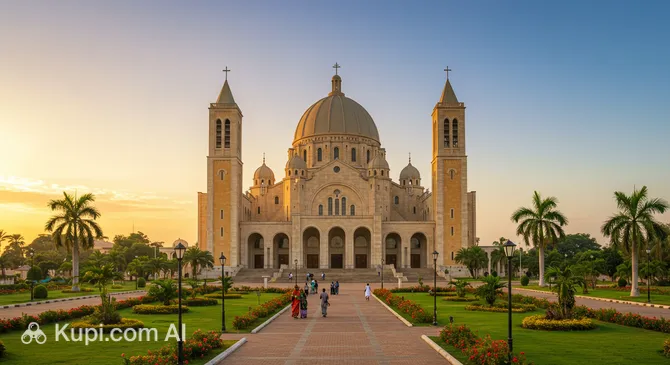
Yamoussoukro is the official and surprisingly peaceful capital of Côte d'Ivoire, which stands in stark contrast to the bustling and overcrowded Abidjan. Located in the central part of the country, this city was envisioned as a symbol of a new era of state development. Today, it greets travelers with wide, nearly empty avenues, monumental government buildings, and the atmosphere of an administrative center where life flows at a measured and unhurried pace.
Yamoussoukro. Illustration.
Source: Kupi.com AI
Geographically, the city is situated in the savanna zone, far from the ocean coast. With a population of about 355,000, Yamoussoukro maintains its status as a political and educational hub. Its historical heritage is particularly significant for understanding the city's character: the decision to move the capital in 1983 transformed a small village into an ambitious project with unique architecture that blends African traditions with European scale.
The main point of attraction here is the colossal Basilica of Our Lady of Peace, which is visible from almost anywhere in the city. Additionally, Yamoussoukro is famous for its educational institutions and the Presidential Palace. Visiting this "capital by status" offers an opportunity to see Côte d'Ivoire from an unusual perspective, appreciating the contrast between the grand symbols of state power and the daily life of the country's central regions.
Weather Overview
Yamoussoukro is dominated by a typical tropical savanna climate, characterized by hot weather throughout the year. Average air temperatures usually range between 26–30°C. When planning your trip, keep in mind that the weather in Yamoussoukro largely depends on the alternation of dry and rainy seasons.
The main rainy season lasts from May to October, peaking in September when rainfall can be quite intense. The dry period, occurring in December and January, is accompanied by the Harmattan wind, which brings dust from the Sahara but makes the heat more bearable. Expect a humid, hot summer and drier, sunnier winter months, which are considered the most comfortable for sightseeing.
Average monthly temperature
Average monthly precipitation
Interesting Facts
Yamoussoukro officially became the capital of Côte d'Ivoire in 1983, replacing Abidjan at the initiative of the country's first president.
It is home to the Basilica of Our Lady of Peace, which is officially recognized by the Guinness World Records as the largest church in the world by area, even surpassing St. Peter's Basilica in the Vatican.
The city was designed on an enormous scale: its eight-lane avenues and giant squares often appear deserted, as they were built in anticipation of a much larger population.
Despite its status as the capital, Yamoussoukro remains an administrative center, while most foreign embassies and business activities are still concentrated in Abidjan.
Sacred crocodiles live in the lakes surrounding the Presidential Palace; for many years, their feeding was a popular, albeit unsafe, spectacle for locals.
How to Get There
The accessibility of Yamoussoukro is largely defined by its central location in the country. The easiest way to get here is from Abidjan, the largest city in Côte d'Ivoire. You can find all ways to get to Yamoussoukro on specialized transport resources, but ground transportation remains the primary option for most travelers.
The city is served by Yamoussoukro Airport (IATA: ASK), though regular domestic flights are limited. The airport is most frequently used for government purposes or charter flights. Most tourists prefer to fly into Abidjan International Airport and then continue their journey by car or bus.
The main way to reach the capital is via the modern highway connecting it to the southern coast. Intercity buses and shared taxis (known as "sept-place") run regularly between cities. The travel time from Abidjan is usually around 3–4 hours, although it is wise to allow more time during the rainy season due to potential road conditions.
Station
Passenger traffic
Distance
Bouaké railway station
2
100 km
Gare ferroviaire Treichville
2
218 km
Main Attractions
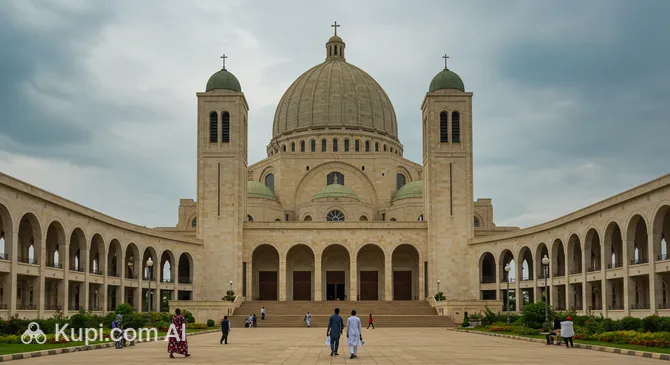
The main and undoubtedly most famous attraction in the city is the Basilica of Our Lady of Peace. This grandiose structure is often called the largest church in the world. Its scale and monumentality, unusual for the West African region, are truly breathtaking: the massive dome and sparkling stained-glass windows make the basilica an architectural wonder and a must-see for any tourist.
Basilica of Our Lady of Peace. Illustration.
Source: Kupi.com AI
Traveller photos:
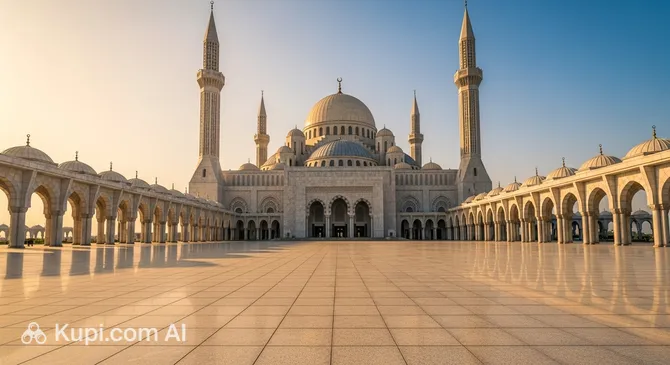
Another significant site is the Grand Mosque of Yamoussoukro, an elegant example of Islamic architecture. Located near the Presidential Palace, it harmoniously complements the city's landscape, highlighting the country's cultural diversity. A walk to the mosque allows you to better experience the calm rhythm of life in the capital.
Yamoussoukro Grand Mosque. Illustration.
Source: Kupi.com AI
Traveller photos:
For those interested in the state's administrative structure and history, the Presidential Palace (Palais Présidentiel) is an important landmark. Although access to the interior is usually closed to tourists, the building itself and its surrounding grounds—featuring large artificial lakes where, according to local legends, sacred crocodiles live—are an essential part of the urban landscape. A trip to Yamoussoukro is primarily about encountering these symbolic giants rising above the African savanna.
Local Cuisine
The culinary scene in Yamoussoukro is a vibrant reflection of Ivorian traditions with a noticeable French influence. The local diet is based on hearty dishes made from cassava, yams, and plantains. Be sure to try attiéké—a side dish made from fermented cassava pulp, which has a texture similar to couscous and is typically served with fried fish or chicken and a spicy sauce.
Small street cafés and more formal establishments like Chez Mario are popular in the city, where you can enjoy both national cuisine and European classics. Sauces hold a special place in the gastronomy: peanut sauce known as mafé or palm nut sauce called graine. These rich, spicy additions turn ordinary rice into a true delicacy loved by locals and visitors alike.
Among drinks, fresh tropical fruit juices, local ginger beer, and bissap juice (made from hibiscus flowers) are worth highlighting. While Yamoussoukro does not claim to be the region's gastronomic capital, its honest and authentic cuisine combined with French culinary techniques leaves a pleasant impression. To find the freshest food, head to the local markets, where the aromas of spices and grilled meat create a unique city atmosphere.
Travel Tips
A visit to the official capital of Côte d'Ivoire promises to be peaceful and enlightening if you take a few practical nuances into account beforehand. These tips will help you feel confident in Yamoussoukro and get the most out of your trip.
Clothing and Dress Code: Choose light clothing made from natural fabrics, as the climate is hot and humid. For visiting the Basilica of Our Lady of Peace and other religious sites, a modest dress code is mandatory: shoulders and knees must be covered.
Transport: The best way to get around the city is by taxi. Always agree on the price with the driver before starting the trip. For intercity travel, use the services of reputable bus companies.
Finances: The main currency is the CFA franc. Cards are only accepted in large hotels and some restaurants like Chez Mario, so always carry a sufficient supply of cash. ATMs can be found in the city center.
Health: Don't forget sun and insect protection. Use repellents and drink only bottled water. It is recommended to consult a doctor regarding malaria prophylaxis before your trip.
Communication: The official language is French. English is not widely spoken, so learn a few basic phrases or use an offline translator. Locals are very friendly and appreciate a polite greeting.
Etiquette: Always ask for permission before photographing people or government buildings. Show respect for local traditions and religious feelings.
What to Avoid: Do not walk alone in deserted areas after dark. Avoid discussing political topics and do not rely on random hitchhiking.
Extra Tip: Try to visit the Presidential Palace during daylight hours to see the famous crocodiles in the lakes, but keep a safe distance from the water.
Plan your route in advance, and Yamoussoukro will reveal itself as one of the most unusual and majestic places in West Africa. Have a great trip!
Entertainment & Nightlife
Entertainment and nightlife in Yamoussoukro are moderately developed and tend to be local in nature. Since the city primarily serves administrative functions, it lacks the noisy bar and disco districts found in the country's economic hub, Abidjan. Evening activity is typically centered around major hotels and a few popular restaurants.
For those seeking a pleasant dinner in a cozy setting, Chez Mario is an excellent choice. Such establishments offer a blend of local and European cuisine, becoming focal points for expats and city guests. In Yamoussoukro, leisure time is more often spent in quiet conversation at a café or strolling along the well-lit central avenues rather than exploring a massive club scene.
Daytime entertainment includes visiting the majestic Basilica of Our Lady of Peace or exploring local markets to experience the city's authentic flavor. If you are looking for a vibrant nightlife with dancing until dawn and a wide selection of clubs, locals recommend heading to Abidjan, as Yamoussoukro is better suited for a peaceful and thoughtful getaway.
Parks & Museums
Yamoussoukro is a city of vast landscapes, where a sense of open space is created by wide boulevards and a lack of dense construction. While there aren't many traditional museums, the city's main landmarks are themselves objects of museum-quality interest. This is especially true for the Basilica of Our Lady of Peace, whose interior decor and massive stained-glass windows represent outstanding artistic value.
Fans of architecture and history will find it interesting to explore the area around the Presidential Palace. Despite access restrictions, this site, with its artificial lakes and gardens, is a key part of the city's ensemble. In terms of architecture, the Grand Mosque of Yamoussoukro is also noteworthy, serving as a striking example of religious architecture in the region.
The urban landscape is complemented by the areas surrounding major hotels and restaurants, such as Chez Mario, where well-kept grounds serve as substitutes for traditional parks. Yamoussoukro will not disappoint those who appreciate quiet walks without the hustle of a metropolis, offering travelers an aesthetic of monumentality combined with the tranquility of the African provinces.
Getting Around
The public transport system in Yamoussoukro reflects the character of a quiet administrative city. There are no metros or trams; the primary mode of transportation for locals and tourists alike is taxis and minibuses. Thanks to the wide avenues, traffic jams are rare, making trips around the city fast and comfortable.
Taxis in Yamoussoukro are easily recognized by their distinctive color. It is customary to agree on the fare in advance, as meters are rarely used. For traveling between districts, minibuses that run along main routes are also popular. This is a budget-friendly option, but it requires some knowledge of the city and a willingness to handle the lack of a fixed schedule.
An alternative to public transport is renting a car with a driver, which is particularly convenient for visiting more remote sites. For short distances within central neighborhoods, you can get around on foot, enjoying the peace and spaciousness of the streets. Keep in mind that transport activity decreases in the evening, so it’s best to arrange your return to the hotel in advance by calling a taxi through a restaurant or hotel receptionist.
Accommodation
The choice of accommodation in Yamoussoukro largely reflects its status as the administrative capital. The scene is dominated by classic hotels and guest houses catering to government officials, business travelers, and those visiting for a quick tour of the main attractions. While there are few luxury resort complexes, the service level in the central hotels is quite decent.
For ease of movement, tourists are recommended to choose hotels located near the main highways and the administrative center. One of the city's most famous areas is the neighborhood around the majestic Basilica of Our Lady of Peace—staying here allows you to enjoy views of the dome at sunset. It is also worth considering establishments near popular restaurants like Chez Mario, where you can spend a comfortable evening.
It is best to book accommodation in Yamoussoukro in advance, especially if your trip coincides with public holidays or major conferences. Mid-range room prices remain stable, and budget travelers can always find small private guest houses. Unlike the coastal areas, the tourist apartment market is less developed here, so a traditional hotel remains the most reliable option.
Nearby Cities
Yamoussoukro serves as an excellent starting point for exploring the central regions of Côte d'Ivoire. Although the capital itself draws the most attention, nearby towns offer a deeper understanding of life in the country beyond the grand avenues and government quarters.
Just 41 kilometers to the south lies the town of Toumodi, which is convenient for a short visit. A bit further away are Oumé and Bouaflé—typical Ivorian settlements where you can see the traditional way of life and the agricultural lands for which this region is famous. Traveling to these towns by car or intercity bus provides an opportunity to enjoy the savanna landscapes.
The region around the capital offers travelers an authentic experience and a chance to change pace, switching from the monumental architecture of Yamoussoukro to the lively energy of small trading towns. Exploring the surroundings will help complete your picture of Côte d'Ivoire and make your trip truly enriching.
Shopping & Souvenirs
Shopping in Yamoussoukro is mainly practical and centered around local markets and small shops. You won't find giant shopping malls with global brands here, but you can purchase authentic Ivorian goods instead. Handcrafted items such as wooden masks, textiles with traditional patterns, and jewelry are of primary interest to tourists.
The city's main souvenir theme is religious. Near sites like the Basilica of Our Lady of Peace, you can always find stalls with commemorative souvenirs reflecting the temple's grandeur. It is also worth checking out the areas near the Grand Mosque, where products by local artisans, including woven baskets and leather accessories, are sold.
For groceries and local delicacies, it is best to head to the central city markets. Here you can buy fresh tropical fruits, cashew nuts, and the famous Ivorian coffee or cocoa. Shops are usually open from morning until early evening, and cash is the most common form of payment. Remember that in Yamoussoukro, shopping is not just about buying things, but an opportunity to interact with locals and bring home a piece of authentic Africa.