Support

Cervia

About

Cervia is a charming "city of salt," nestled comfortably on the Adriatic coast in the sunny region of Emilia-Romagna. Travelers are welcomed here by a unique atmosphere where ancient heritage harmoniously coexists with modern resort comfort. With a population of about 28,700, the city is famous for its endless sandy beaches, the scent of centuries-old pine forests, and the hospitality characteristic of all Italy.
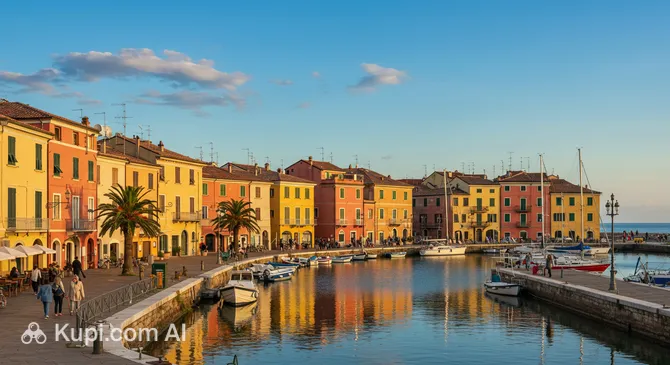
Cervia. Illustration.
Source: Kupi.com AI

The city's geographical position determined its destiny: situated between the lagoon and the sea, it lived for centuries through the extraction of "white gold." The history of Cervia, which was known as Ficocle in ancient times, is inextricably linked to the salt trade. The local "sweet salt" was so valuable that it defined the architectural look of the center, where monumental salt warehouses and defensive towers still stand today.

Today, Cervia attracts tourists not only with its past but also with its impeccable ecology. The city is regularly awarded the prestigious Blue Flag for its water purity and high level of beach service. Walks through shady pine groves, wellness treatments based on healing mud, and tastings of local cuisine make this city an ideal destination for those seeking a balance between active recreation and total relaxation. We invite you to discover this amazing corner of the Adriatic, where every breath is filled with the salty sea breeze and pine needles.
Weather Overview

The climate in Cervia is typical for the central Adriatic and is characterized as moderate Mediterranean. The city delights guests with mild winters and truly warm, sunny summers. The proximity of the sea and extensive pine forests creates a unique microclimate here, where even on hot days the air remains fresh and easy to breathe.

Summer in the city is long: as early as June, the air temperature warms up to a comfortable +23°C...+28°C, and in the peak months—July and August—it often stays at the +30°C mark. This is an ideal time for a beach holiday, although one should consider the possibility of short thunderstorms. Winters here are quite mild, with average temperatures around +6°C...+9°C, allowing for long walks through the historical center while avoiding the tourist crowds. You can study the detailed city climate before planning your trip to choose the perfect time for your visit.

Spring and autumn in the Emilia-Romagna region are times of variable weather, when sunny days can be replaced by rainy ones. September is considered the "velvet season": the sea still holds its summer warmth, and the average air temperature is a pleasant +21°C. However, it is during this time and in late spring (especially in May) that the highest amount of precipitation falls, so an umbrella in your suitcase definitely won't be redundant.

Average monthly temperature

Average monthly precipitation

Interesting Facts

Cervia is a city with a fascinating past, where legends intertwine with unique natural riches. Here are a few facts that will help you see this resort in a new light:

  • A Legendary Name: The city owes its name to a beautiful legend. It is said that once a bishop from Lodi, walking in a local grove, met a deer. The animal, struck by the traveler's holiness, knelt before him (in Latin, cerva means deer, hence Cervia).

  • Sweet Salt: The local salt is considered unique and is called "sweet" due to the absence of bitter potassium salts. Since 2004, it has been protected by the international Slow Food movement as an exceptional product.

  • The Relocated City: The city was originally called Ficocle and was located in a different, swampier place. At the end of the 17th century, due to harsh living conditions and malaria, Pope Innocent XII ordered the entire city to be literally moved to its current, healthier location by the sea.

  • Milanese Roots: The prestigious Milano Marittima district was founded in 1911 by entrepreneurs from Milan who wanted to create a "garden city" for the elite leisure of the Milanese bourgeoisie.

  • Healing Mud: The healing properties of the local lagoons were first discovered by the salt mine workers themselves. They noticed that the black mud they had to work in quickly healed wounds and relieved joint pain.

How to Get There

Cervia is located in one of Italy’s most accessible regions—Emilia-Romagna. Thanks to a well-developed transport network, reaching this seaside resort is easy by plane, train, or car. The city is located just a few dozen kilometers from major administrative and cultural centers such as Ravenna and Rimini.

The nearest major air hubs include the Bologna Guglielmo Marconi Airport (BLQ), which accepts flights from all over the world. You can also consider the Federico Fellini Airport in Rimini, located much closer. From these airports, the most convenient way to reach the city center is by rental car, transfer, or by using regional bus lines.

AirportPassenger trafficDistance
Luigi Ridolfi134 00023 km
Miramare Airport321 55234 km
Guglielmo Marconi Airport10.8 mln90 km
Firenze-Peretola Airport3.5 mln104 km
Ancona Falconara Airport600 065109 km

Rail travel is one of the most convenient ways to travel around the region. Cervia’s railway station is located in close proximity to the historical center. Trains regularly arrive here from Bologna, Ravenna, and Rimini. In the summer season, the number of services increases to ensure a comfortable flow of tourists. Detailed information on routes can be found in the section on how to get to Cervia.

StationPassenger trafficDistance
Bologna Centrale Station58 mln84 km
Firenze Campo di Marte Railway Station1.8 mln101 km
Firenze Santa Maria Novella Station59 mln103 km
Venezia Santa Lucia Station30 mln131 km
Padova Centrale Station18.5 mln134 km

For those who prefer to travel by car, the city is connected to the country's main highways. The A14 (Adriatica) motorway passes nearby, allowing for a quick drive to the resort from any part of Italy. Remember that during peak season, parking in the city center may be limited, so it is worth checking in advance with your hotel regarding parking availability.

Main Attractions

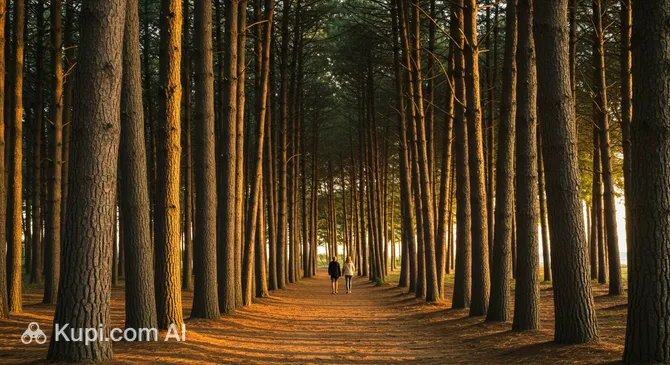
The main treasures of Cervia are concentrated in its historical center and natural surroundings. One of the most picturesque spots is the Pineta di Milano Marittima. This vast natural area serves as the resort's natural "lungs"—here, trails are laid out for walking and jogging under the shade of century-old pine trees.

Pine Forest of Milano Marittima. Illustration.
Source: Kupi.com AI

Traveler photos:

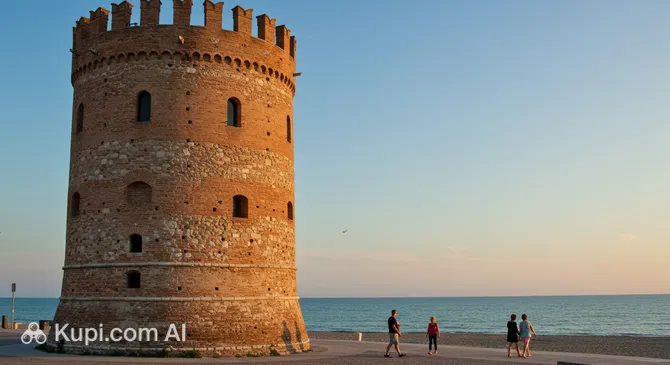
In the very heart of the city stands the San Michele Tower, built at the end of the 17th century. This powerful fortification was originally intended to protect salt reserves from pirate raids. Today, it is a symbol of the city, and its upper platforms offer a beautiful view of the canal and historical quarters.

San Michele Tower. Illustration.
Source: Kupi.com AI

Traveler photos:

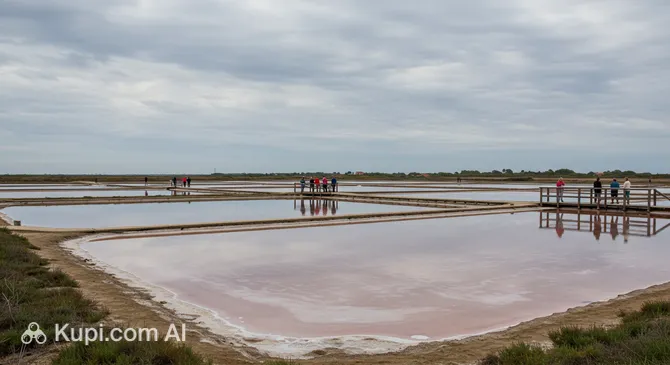
For those who want to understand the city's soul more deeply, a visit to the Cervia Salt Pan Park is a must. This unique nature reserve on the outskirts of the city still extracts salt using traditional methods. Here, you can see flocks of pink flamingos and learn about the healing properties of the local black clay.

Cervia Salt Pan Park. Illustration.
Source: Kupi.com AI

Traveler photos:

The architectural ensemble is completed by the Cathedral of Santa Maria Assunta (Duomo), erected in 1702, and the majestic Town Hall on the central Piazza Garibaldi. Each of these buildings holds a piece of the region's rich history and pleases the eye with the harmony of classic Italian forms.

Local Cuisine

A gastronomic journey through Cervia is a feast of flavors, where the famous "sweet salt" plays the starring role. Local cuisine is a sophisticated mix of seafood delicacies and traditional dishes from the Emilia-Romagna region. Be sure to try cappelletti (small stuffed pasta) and the famous Piadina Romagnola flatbread, which is often served here with soft squacquerone cheese and fresh herbs.

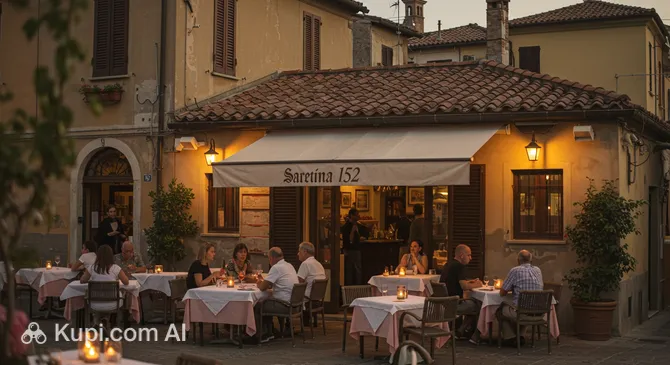
Fish dishes form the basis of the menu in most establishments. Seafood grilled using local salt acquires a unique, delicate aroma. For an exquisite dinner, the Le Ghiaine restaurant is perfect, where classic recipes receive a modern interpretation. Another interesting spot is Saretina 152, popular with both tourists and locals for its cozy atmosphere and excellent food quality.

Saretina 152. Illustration.
Source: Kupi.com AI

Traveler photos:

Special attention should be paid to "sand wines" (vini delle sabbie), made from grapes grown in close proximity to the sea. These wines have a characteristic mineral taste that perfectly complements a meal. For dessert, try the local gelato or sweets to which chefs sometimes add a pinch of that very sweet salt to enhance the flavor accents.

The food culture in the city is excellently developed: from casual street food kiosks to restaurants with high environmental certifications. Locals value leisurely lunches, so don't be surprised if a meal lasts a couple of hours—in Cervia, they know how to enjoy the moment and the food.

Travel Tips

Preparing for a trip to Cervia will be easier if you consider a few practical nuances. We have gathered tips for you that will help make your holiday on the Adriatic as comfortable and pleasant as possible.

  1. Clothing and Essentials: For a summer holiday, choose light clothing made of natural fabrics and definitely bring comfortable shoes for walks in the pine groves. If you plan to visit cathedrals, don't forget a wrap to cover your shoulders and knees. Adapters are usually not needed (Type C and F Euro outlets are used).
  2. Transport: The best way to get around the city is by bicycle. It's fast, eco-friendly, and allows you to enjoy the sea breeze. For trips to neighboring cities, use trains—it's cheaper and faster than a taxi.
  3. Finances: The official currency is the Euro. Cards are accepted almost everywhere, from hotels to small cafés, but it's worth having a little cash for buying souvenirs at markets or paying for small expenses. Tipping culture is moderate: 5–10% will be accepted with gratitude, but often a service charge (coperto) is already included in the bill.
  4. Health and Safety: The city is very safe. Pharmacies (Farmacia) are easy to find by the glowing green cross. The main tip is to use sunscreen, as the Adriatic sun is deceptively gentle.
  5. Communication: The primary language is Italian. Staff in hotels and restaurants usually speak English, but a couple of phrases like "Buongiorno" (Good day) or "Grazie" (Thank you) will immediately endear you to the locals.
  6. Local Etiquette: It is customary to say hello when entering small shops. Remember the siesta—many shops and public offices close for a break in the middle of the day (roughly from 13:00 to 15:30).
  7. What to Avoid: Do not attempt to swim in fountains and do not enter the historical city center in swimwear or shirtless—this is considered bad manners and may result in a fine.
  8. Eco-tip: Cervia is proud of its ISO 14001 environmental certifications. Try to keep the beaches and pine forests clean to help preserve this unique environment.

By following these simple rules, you will be able to fully immerse yourself in the atmosphere of Italian hospitality and enjoy every minute in this beautiful city of salt.

Entertainment & Nightlife

Life in Cervia doesn't slow down after sunset, especially during the summer season. The main entertainment is concentrated along the coast and in the adjacent district of Milano Marittima, which is considered the center of social life. Here you will find the trendiest bars and nightclubs, attracting a stylish crowd from all over Italy. Evenings often begin with a traditional aperitivo on the waterfront, which smoothly transitions into open-air dinners and dancing until dawn.

Fans of nocturnal dance floors should check out the 125 Ron club, known for its energetic parties. For those who prefer a more laid-back atmosphere, the Hotel Mazzanti is a great choice, where bars offer sophisticated cocktails with sea views. The atmosphere in these establishments is usually friendly and relaxed, although an elegant dress code may be observed in the elite clubs of Milano Marittima.

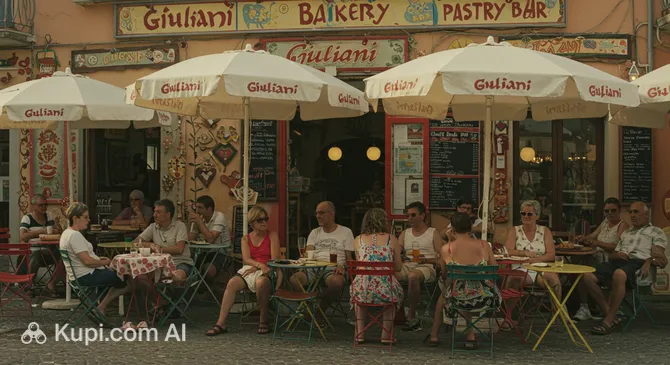
If you're looking for something more local and soulful, stop by a place like Pasticceria Bar Giuliani. In the evening, you can enjoy drinks in the company of locals, and during the day, try their magnificent pastries.

Giuliani Bakery & Pastry Bar. Illustration.
Source: Kupi.com AI

Traveler photos:

Safety in the city is high, and walking through the center or along the promenade at night is quite comfortable. If you plan to move between districts late at night, it is most convenient to call a taxi through the hotel reception or a special app. During the day, the entertainment program can be supplemented by visiting local theaters or participating in themed festivals, such as Sapore di Sale (Taste of Salt), which regularly take place in the square by the salt warehouses.

Parks & Museums

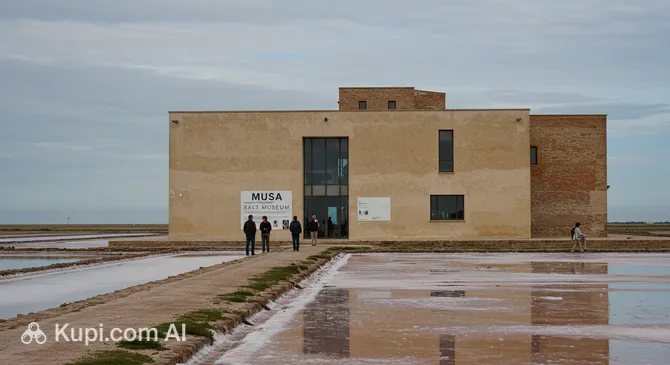
Cervia’s cultural and natural components are inextricably linked to its "salty" past. The most significant site here is MUSA – Salt Museum. It is located within the walls of the ancient "Torre" warehouse and houses unique exhibits, tools, and photographs telling the story of the salt workers' hard labor. Visiting the museum is the best way to understand how a small settlement transformed into a thriving resort.

MUSA – Salt Museum. Illustration.
Source: Kupi.com AI

Traveler photos:

Equally interesting are the Salt Warehouses and Darsena. These monumental structures from the 17th-18th centuries today serve not their original purpose, but as centers of cultural life. Exhibitions, festivals, and fairs are regularly held here, turning the historical walls into a living space for communication and art.

For outdoor enthusiasts, the shady park adjacent to the Cathedral is a real escape from the summer heat. It is a popular meeting spot, offering some of the best views of the city streets. Meanwhile, the centuries-old pine forests surrounding Cervia offer endless routes for walking and cycling, filling the air with healing phytoncides.

It is also worth checking out small but cozy art galleries, such as Galleria Maceo Casadei, where you can get acquainted with the works of local masters. The combination of historical industrial monuments and nature reserves makes walks through the city truly educational.

Getting Around

The public transport system in Cervia is organized as conveniently as possible for vacationers. The main way to move between city districts and neighboring resorts is by bus. Routes connect the historical center, the beach area, and the prestigious Milano Marittima district. In the summer months, the number of services increases, and the operating schedule is extended until late at night.

Bus tickets can be purchased at tobacco shops (Tabaccheria), newsstands, or via special mobile apps. The cost of a single trip is usually around 1.30–1.50 euros, but it is more economical to buy a multi-day pass if you plan to move around a lot. Don't forget to validate your ticket immediately after boarding—inspections in the region are quite strict.

Since Cervia is a compact and flat city, the most popular and eco-friendly transport here is the bicycle. Cycle paths are laid out across the entire city and stretch along the coast under the shade of pine trees. Many hotels provide bicycles to their guests for free, or they can be rented from one of the numerous rental points.

For trips to neighboring cities like Ravenna or Rimini, suburban trains are the most convenient option. The railway station is within walking distance of the main attractions. Taxis are also available and can be called by phone or found at special ranks at the station and in the center; however, city trips can be significantly more expensive than the bus.

Accommodation

Cervia offers a wide range of accommodation options capable of satisfying the requests of any traveler. Here you can find classic family pensions, modern apartment hotels, and luxury resort complexes. The city's infrastructure is historically divided into two zones: the cozy and authentic historical center and the more fashionable Milano Marittima district, where the most prestigious hotels are concentrated.

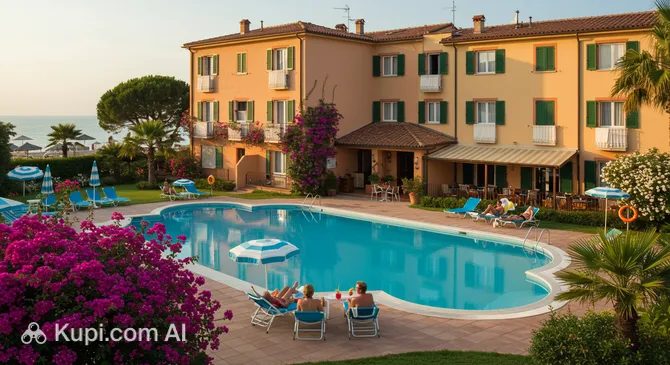
For those looking for a comfortable stay near the beach, the Adriatico Cervia Easy Village is an excellent choice. This complex offers modern holiday facilities and convenient access to the coast. Also popular in the city is the Hotel Rudi Cervia, known for its hospitality and quality service. Many hotels here have a long history, preserving the charm of the early 20th century when the resort was just beginning its development.

Adriatico Cervia Easy Village. Illustration.
Source: Kupi.com AI

Traveler photos:

If you are planning a trip for July or August, we strongly recommend booking your accommodation several months before your visit. This is the peak season when the best value-for-money offers are taken very quickly. The price range varies from budget-friendly options at 40–60 euros per night in small B&Bs to several hundred euros in five-star hotels on the front line.

When choosing a place to stay, pay attention to the distance from the pine forest or the salt warehouses if you plan to walk a lot. Many hotels in Cervia also offer their guests special packages that include visits to thermal complexes, making the holiday not only pleasant but also beneficial for health.

Nearby Cities

Cervia serves as an excellent starting point for exploring the rich heritage of the Emilia-Romagna region. Its proximity to the Adriatic coast and excellent transport accessibility make it easy to plan exciting trips to neighboring cities, each with its own unique character.

Just 8 kilometers to the south lies picturesque Cesenatico. This town is famous for its port canal, designed by Leonardo da Vinci himself. Here you can visit the unique Floating Museum of ancient ships and enjoy a walk along the waterfront with its colorful houses. A bit further, 16 kilometers from the coast, is Cesena, which attracts tourists with its magnificent Malatesta Fortress and one of the oldest public libraries in the world—the Malatestiana Library.

CityPopulationDistance
Cesenatico25 9598 km
Cesena96 76016 km
Gambettola10 70416 km
Gatteo8 98817 km
San Mauro Pascoli11 92918 km

One cannot overlook Ravenna, the provincial capital, located just a few minutes' drive away. Ravenna is a treasure trove of early Christian art, with eight monuments listed as UNESCO World Heritage sites. A day trip here will allow you to see the world-famous mosaics that have retained their brilliance after fifteen hundred years.

The region around the city offers endless opportunities for discovery: from cozy settlements like Gatteo to cultural centers like San Mauro Pascoli. We recommend not limiting yourself to just a beach holiday and dedicating at least a couple of days to exploring these amazing places.

Shopping & Souvenirs

Shopping in Cervia is primarily about finding authentic local products and quality Italian goods. Although the city doesn't have huge shopping malls, its streets are filled with charming boutiques and specialized shops where you can find exclusive items.

The main souvenir that is definitely worth bringing back from your trip is the famous "sweet salt" of Cervia. It can be purchased in beautiful gift packaging, as well as in cosmetic products—soaps, scrubs, and bath salts. Also, look out for the folk crafts of the Emilia-Romagna region, such as fabrics with traditional hand printing (stampe romagnole) in characteristic rusty-brown tones.

For larger-scale shopping and branded items, tourists often head to the neighboring Milano Marittima district. Its central streets, such as Viale Gramsci, are famous for their fashionable clothing and shoe stores by well-known Italian designers. It is pleasant to stroll here in the evening, combining window shopping with a break at a café.

Don't miss the chance to visit the local markets. The weekly food and clothing market is an excellent place to buy the freshest cheeses, meat delicacies, and inexpensive clothing. Shops in the city usually operate from 9:00 to 12:30 and from 15:30 to 19:30, but during the height of the tourist season, many retail outlets on the waterfront stay open until late at night. International bank cards are widely accepted for payment.

Nearby cities

Reached the end of the page?

That means the route is fully explored