Support

Basilica of Saint Nicholas

About

The Basilica of Saint Nicholas (Basilica di San Nicola) is one of the most important and most revered shrines not only in the city of Bari but in all of Italy. This grand temple, located in the heart of the old town, was built in the 11th–12th centuries specifically to house the relics of Saint Nicholas the Wonderworker. The relics were transferred here from the city of Myra (modern-day Turkey) in 1087, after which the basilica became a key pilgrimage center for Christians worldwide, uniting believers of both Western and Eastern traditions.

The architecture of the basilica is a striking example of the Apulian Romanesque style. Its austere and monumental facade, resembling a castle with two massive towers on the sides, hides a surprising interior that has preserved the atmosphere of the Middle Ages. Inside, you will see massive granite columns, intricate carvings, and the main shrine—the crypt, where the saint's relics rest in a sarcophagus. This place possesses a special spiritual power and attracts many pilgrims for prayer.
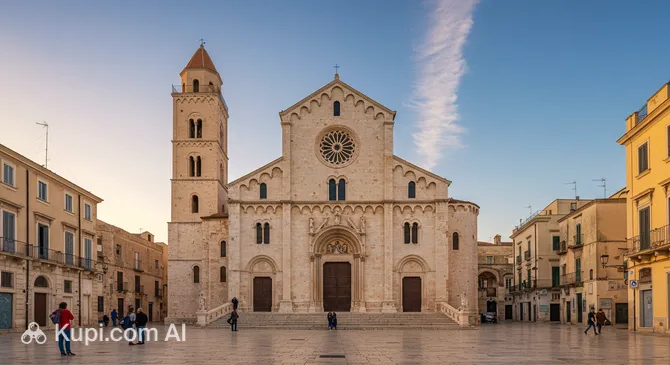
Basilica of Saint Nicholas. Illustration.
Source: Kupi.com AI

Traveller photos:

A visit to the Basilica of Saint Nicholas is not just about exploring an outstanding historical monument, but an opportunity to touch centuries of spiritual history. For many travelers, this is the main purpose of visiting Bari, a place where you can feel a unique union of cultures and faith. It is no surprise that the temple attracts not only pilgrims but also lovers of ancient architecture and art from all over the world.

Contacts

To check the current service schedule, opening hours, or obtain other information, you can contact the basilica representatives. This is especially helpful if you are planning a pilgrimage or want to learn about special events.

How to contactContact
AddressLargo Abate Elia, 13, 70122 Bari BA, Italy
Phone+39 080 573 7111
Websitewww.basilicasannicola.it

What to Do

A visit to the Basilica of Saint Nicholas offers a unique experience combining spiritual pilgrimage and an introduction to art. The main goal for thousands of pilgrims from all over the world is the crypt—the underground part of the temple, where the relics of Saint Nicholas rest beneath the altar. This place has a special atmosphere of peace, and visiting it becomes the central event for many believers. Both Catholic and Orthodox services are held in the basilica, making it a unique place of Christian unity.

In addition to the spiritual component, the basilica impresses with its architectural and artistic heritage. It is considered one of the finest examples of the Apulian Romanesque style. Inside the church, you can see masterpieces such as the 12th-century marble Bishop's Throne and the richly decorated gold ceiling. The building's facade is adorned with various sculptural decorations, including reliefs and capitals, some of which were borrowed from older Byzantine structures.

To dive deeper into the history and cultural significance of this site, visitors can join guided tours. During the tour, you can learn in detail about Saint Nicholas, the history of the temple's construction, and its numerous relics. There is also a museum at the basilica which houses valuable religious exhibits and historical documents. Visiting the basilica is an opportunity not only to touch an important Christian shrine but also to appreciate the greatness of medieval art and architecture.

Getting There

Getting to the Basilica of Saint Nicholas is quite easy, as it is located in the very heart of the old town of Bari, within walking distance of key tourist routes. The city itself has convenient transport links to major Italian metropolitan areas such as Rome, Naples, and Milan, which can be reached by train or bus.

If you are already in Bari, your main landmark will be the central railway station. From there, you can walk to the basilica in about 20–25 minutes, enjoying the atmosphere of the southern city. Alternatively, you can use city buses or taxis, which will take just a few minutes. For those traveling by car, paid parking is available in the old town area where you can leave your vehicle.

Nearest city: Bari

History & Facts

The history of the Basilica of Saint Nicholas is inextricably linked to one of the most significant events in the Christian world—the translation of the relics of Saint Nicholas the Wonderworker. In 1087, Bari sailors brought the relics from the city of Myra (modern-day Turkey) to Bari. This event marked the beginning of the construction of a grand church that was to become a worthy place for keeping such a revered shrine. Initially, the relics were temporarily placed in the Monastery of San Benedetto, but it soon became clear that a separate, special home was required for them.

The construction was initiated by Abbot Elia, who managed to convince the city and church authorities of the need to build a new basilica. A symbolic site was chosen for the temple—the ruins of the former palace of the Byzantine governor, known as the Catapan’s citadel, which had been destroyed after the arrival of the Normans. Construction began in the same year, 1087, and on October 1, 1089, the consecration of the church crypt took place, where the saint's relics were moved. The construction and decoration of the basilica were fully completed only by 1197.

Since its foundation, the basilica has become not just the main religious center of the city, but its heart, where the most important historical events took place, including knightly ceremonies and major assemblies. Its uniqueness lies in the fact that it was originally conceived as a place of unity for Christian denominations, which today makes it one of the key pilgrimage centers for believers from all over the world. This church in Italy is a living witness to centuries of history, preserving the spirit of the medieval city and becoming its main symbol.

Time Needed

When planning a visit to the Basilica of Saint Nicholas, you should allow for a duration of one to two hours. This amount of time is generally sufficient for most visitors. During this period, you can leisurely explore the main nave of the basilica, admire its austere yet majestic Apulian Romanesque architecture, and, of course, descend into the crypt—the heart of the temple, where the relics of Saint Nicholas rest.

If you want to delve deeper into the history of this place, it's worth setting aside additional time. For example, a visit to the museum adjacent to the basilica, which houses valuable historical exhibits and church treasures, can take about another hour. Art and architecture lovers will surely want to linger longer to examine details such as the famous 12th-century Bishop's Throne, the carved capitals of the columns, or the richly decorated ceiling. It should also be considered that participating in a service, whether Orthodox or Catholic, will require separate planning and will significantly increase your time at the temple.

Working Hours

The Basilica of Saint Nicholas is open to visitors year-round, allowing pilgrims and tourists to visit the shrine at any time. As a rule, the church is open daily from early morning until late evening, approximately from 7:15 AM to 8:30 PM. However, please note that opening hours may vary depending on the season, religious holidays, and the service schedule, and there may be a break in the middle of the day. To avoid surprises, it is highly recommended to check the current schedule on the basilica's official website before planning your visit.

Entry to the basilica itself for individual sightseeing and prayer is usually free, and no advance booking is required. You can freely enter the church during its opening hours. Nevertheless, if you want to delve deeper into the history of this unique place, you can book a guided tour. Participation in such tours may require advance registration, especially during the peak tourist season.

DayOpening hours
Monday6:30 – 20:30
Tuesday6:30 – 20:30
Wednesday6:30 – 20:30
Thursday6:30 – 20:30
Friday6:30 – 20:30
Saturday6:30 – 20:30
Sunday6:30 – 22:30

Nearby

A visit to the Basilica of Saint Nicholas is an immersion into the heart of old Bari. However, to truly feel the spirit of this place, it is worth taking time to explore its surroundings. The old town, or Bari Vecchia, is a labyrinth of narrow streets where cozy squares, ancient churches, and authentic courtyards filled with daily life are hidden around every corner. A walk through this area will allow you not only to discover architectural treasures but also to experience the unique atmosphere of southern Italy.

Exploring the attractions located within walking distance of the basilica will enrich your experience and help you get a more complete picture of Bari's rich history and culture. Just a few minutes' walk away, you will find other significant monuments, museums, and simply charming corners, perfect for leisurely strolls and vibrant photos.

NameDistance
Regional Museum Directorate of Apulia0.1 km
Archaeological Museum of Santa Scolastica0.2 km
La Cantina dello Zio0.2 km
Antò – Traditional Apulian Cuisine0.2 km
Bari Cathedral0.2 km
Bari City Museum0.3 km
Largo Albicocca (Lovers' Square)0.3 km

Reached the bottom of the page?

Looks like you know this route inside out