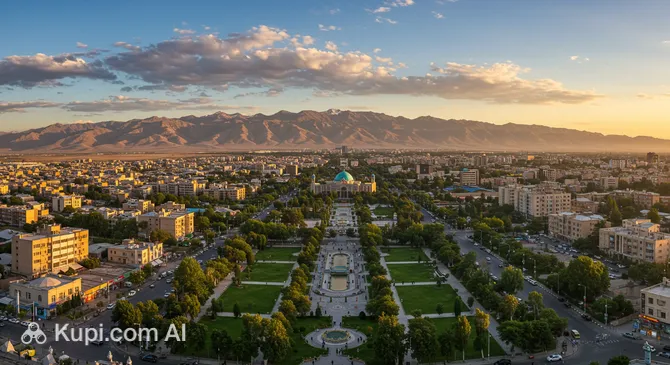
Karaj is a dynamically developing metropolis and an important industrial center in Iran, located just a few dozen kilometers west of Tehran. As the administrative capital of Alborz Province, the city is nestled at the foot of the mountain range of the same name. Thanks to its location, it serves as a "gateway" to the mountains and an important transport hub connecting the capital with the western regions of the country.
Despite its status as a major industrial satellite, the city retains its charm thanks to an abundance of green zones and proximity to natural attractions. With a population exceeding 1.9 million people, Karaj is one of the largest cities in the country. The city's appeal to tourists lies in its harmonious blend of the city's historical heritage and modern recreational opportunities, such as spacious parks and proximity to famous ski resorts.
Karaj. Illustration.
Source: Kupi.com AI
Among the key sites worth visiting are the ancient Shah Abbasi Caravanserai and the exquisite Soleimaniyeh Palace. The city is also famous for its gardens, which offer cool shade during the summer months. A visit to Karaj is an excellent addition to a journey through Iran, offering a glimpse into the life of a modern Iranian metropolis closely connected to the majestic nature of the Alborz Mountains.
Weather Overview
The climate in Karaj is classified as semi-arid, significantly influenced by the proximity of the Alborz mountain range. Thanks to this proximity, the weather in Karaj is usually somewhat milder and fresher than in the lowland areas of the country. The city clearly distinguishes four seasons: a hot dry summer, a mild autumn, a cool winter, and a blooming spring.
The summer months, especially July and August, are characterized by high temperatures reaching an average of +33°C during the day, while humidity remains minimal. Winter brings a noticeable cooling: in January, the thermometer can drop to -5°C, and snowfalls are common, especially in the northern parts of the city. The best time to visit is considered to be spring (from March to May) and autumn (September-October), when comfortable temperatures around +15...+23°C are established, ideal for walking through the city's famous gardens.
Average monthly temperature
Average monthly precipitation
Interesting Facts
Karaj is officially recognized as the administrative center of Alborz Province — the smallest province by area but one of the most densely populated and dynamically developing in Iran.
The city is home to the famous "Pearl Palace" (Shams), designed by the Frank Lloyd Wright Foundation in the 1960s. The building has a unique spiral shape resembling a shell and is considered a masterpiece of modernist architecture.
Karaj is an important scientific center: it houses the country's oldest Agricultural University, on whose grounds the historical Qajar-era Soleimaniyeh Palace is preserved.
The city serves as the main transit point for winter sports enthusiasts heading to the Dizin resort — one of the highest and most prestigious ski centers in the Middle East.
The historical Shah Abbasi Caravanserai, located in the city center, was built of brick back in the Safavid era and served as a key resting point on the Great Silk Road for a long time.
How to Get There
Thanks to its location at the intersection of major highways, Karaj enjoys excellent transport accessibility. The city is situated on the main route connecting Tehran with the country's western borders, making it a strategically important hub. Travelers have various ways to get to Karaj, including highways, railways, and proximity to the capital's infrastructure.
The city does not have its own major international airport for regular passenger flights. Most tourists use Imam Khomeini International Airport (IKA) or Mehrabad Airport in Tehran. From there, Karaj can be reached by taxi, intercity buses, or the suburban metro, which connects the two metropolises in a single network.
Rail travel is one of the most convenient and budget-friendly ways to get around. The main railway line leading to western Iran (towards Qazvin and Tabriz) passes through Karaj. The city station handles both suburban trains from Tehran and long-distance services. Taking the train allows you to avoid the famous traffic jams on the Tehran-Karaj highway that often occur during rush hours.
Station
Passenger traffic
Distance
Tepe Sefid Railway Station
5
40 km
Tehran Railway Station
12
44 km
Qom Railway Station
7
133 km
Rasht Railway Station
1
197 km
Sari Railway Station
2
204 km
Main Attractions
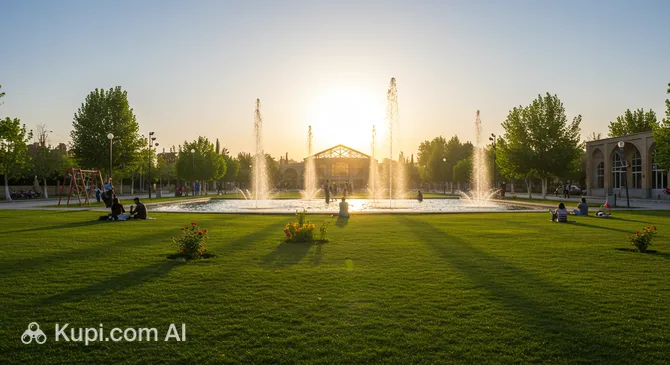
One of the most popular recreation areas among locals and tourists is Iran Zamin Park. This modern space for walking attracts visitors with its well-maintained alleys, artificial ponds, and family leisure areas. The park is especially beautiful in the evening when the decorative lighting comes on, creating a cozy atmosphere for relaxing after a busy day.
Iran Zamin Park. Illustration.
Source: Kupi.com AI
Traveller photos:
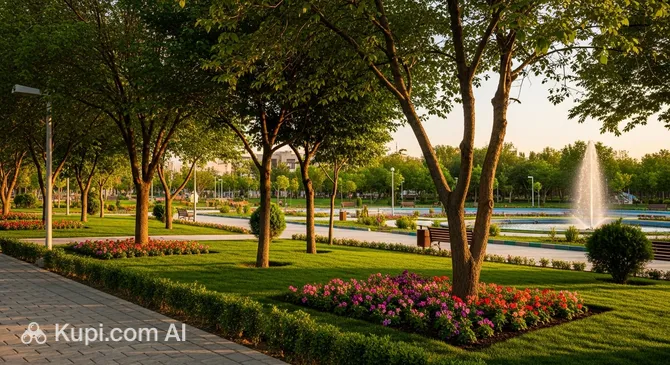
For those seeking peace and the shade of centuries-old trees, Fateh Garden is ideal. This historical garden, named after the famous philanthropist Mohammad-Sadegh Fateh Yazdi, is considered the "green lungs" of the city. Here, you can enjoy a stroll along paths among fruit trees and flowers, making the garden an excellent place for quiet contemplation and an introduction to the traditions of Iranian garden art.
Fateh Garden. Illustration.
Source: Kupi.com AI
Traveller photos:
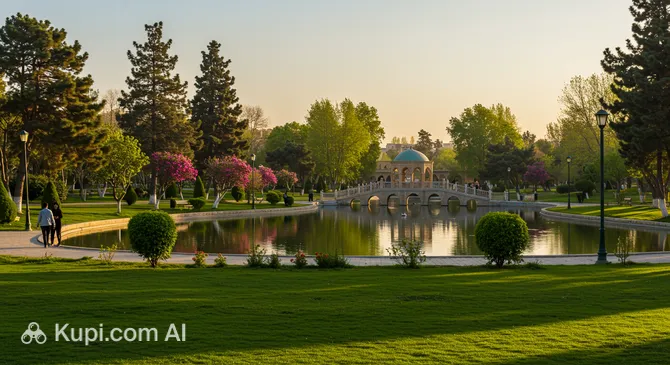
Another gem of city landscaping is Chamran Park. It is famous for its flower exhibitions and spacious lawns where locals often enjoy picnics. The park provides all the conditions for active recreation, including playgrounds and sports areas. In addition to natural beauty, in Karaj, you should pay attention to Soleimaniyeh Palace, located on the grounds of the local university, and the unique Morvarid Palace (Pearl Palace), built in a futuristic style.
Chamran Park. Illustration.
Source: Kupi.com AI
Traveller photos:
Local Cuisine
The gastronomic scene in Karaj is a true paradise for lovers of authentic Persian cuisine. The core menu in most local establishments consists of classic rice and meat dishes. Be sure to try various types of kebabs, such as the juicy "koobideh" or "joojeh kebab" (grilled chicken), served with aromatic saffron rice and roasted tomatoes. Thick stews — khoreshs — like "fesenjan" (with pomegranate sauce and walnuts) or "ghormeh sabzi" (with herbs and beans) are also popular.
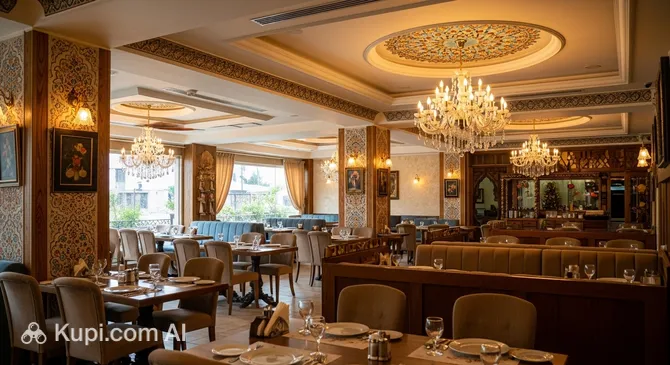
The city features many restaurants where you can experience fine Persian cuisine. For example, Chenin Restaurant offers guests a cozy atmosphere and a wide selection of traditional dishes prepared according to ancient recipes. For those who prefer variety, Roma Restaurant combines classic hospitality with a modern approach to service, offering both Iranian delicacies and popular international dishes.
Roma Restaurant. Illustration.
Source: Kupi.com AI
Traveller photos:
The food culture in Karaj is closely linked to outdoor recreation. Locals love spending time in tea houses, where they can drink strong black tea with dates or traditional sweets like sohan and pashmak. Among non-alcoholic drinks, doogh — a refreshing yogurt-based drink with mint — is found everywhere. Street food is represented by small stalls selling sandwiches, falafel, and hot boiled corn in the parks, creating a relaxed, democratic atmosphere.
Travel Tips
Preparing for a trip to Karaj requires attention to detail, but our tips will help you make this journey comfortable and enjoyable. Remember that you are traveling to one of the most hospitable regions in the world, where knowledge of local characteristics significantly simplifies life.
Clothing and Dress Code: Respect Iran's modest dress standards — women are expected to wear a headscarf and clothing that covers the arms and legs; shorts are not recommended for men. Since the city is near the mountains, bring layered clothing, as it can be significantly cooler in the foothills in the evening than during the day.
Transport: Use the metro (Line 5) for trips to Tehran to save time. Within the city, download the Snapp app — it is the most reliable and transparent way to get around by taxi.
Finance: Visa and Mastercard do not work in Iran. Bring cash Euros or Dollars and exchange them at official exchange offices (Sarrafi). Be aware of the difference between the Rial and Toman (1 Toman = 10 Rials); always clarify the price.
Connectivity: Buy a local SIM card (e.g., Irancell) immediately upon arrival at the airport. You may need a pre-installed VPN to access familiar social networks.
Etiquette (Taarof): Be prepared for "Taarof" — a complex system of politeness where a seller or driver might initially refuse payment. This is just a form of courtesy; always insist on paying and pay the required amount.
Safety: Karaj is a safe city, but follow standard precautions: watch your belongings in crowded places and only use official taxis.
What to Avoid: Never photograph military facilities, government buildings, or police officers. Also, avoid public discussions of political and religious topics.
Health: Drink bottled water, although the city's tap water is technically considered safe for drinking. Be sure to use sunscreen during the summer.
By following these simple rules, you can fully immerse yourself in the atmosphere of Karaj and gain only positive emotions from experiencing Iranian culture and hospitality.
Entertainment & Nightlife
Nightlife in Karaj, as in the rest of Iran, has its own specific character and differs significantly from European standards. You won't find typical bars or nightclubs serving alcohol here; however, the city offers many alternatives for evening leisure. Most activity after sunset is concentrated in numerous cafes, restaurants, and city parks, where life buzzes until late at night. Families and young people gather in popular spots like Roma Restaurant or Chenin Restaurant to enjoy delicious food and socializing in a pleasant atmosphere.
Popular spots for night walks are the illuminated alleys for which Chamran Park and Iran Zamin Park are famous. On warm evenings, a lively atmosphere reigns here: amusement rides operate, kiosks selling sweets and street food are open, and locals set up traditional picnics right on the grass. For fans of more active pastimes, the city has gaming clubs like Levelup Game Club and modern cinemas in major shopping centers.
The city's safety level is high, and walking through central districts and well-lit parks in the evening is quite comfortable. For moving around at night, it is best to use official taxi services or popular Iranian ride-hailing apps, which guarantee a fixed price and reliability. If you are looking for louder entertainment or large-scale cultural events, the proximity to Tehran makes it easy to reach the capital's theaters and concert halls.
Parks & Museums
The green zones of Karaj are its main pride. One of the most notable places for walking is Fateh Garden, where you can hide from the summer heat in the shade of sprawling trees. No less popular is Chamran Park, which regularly hosts flower festivals. These parks are not just walking areas but centers of social life where citizens relax with their families and play sports.
Chamran Park. Illustration.
Source: Kupi.com AI
Traveller photos:
To experience modern park architecture, visit Iran Zamin Park. Picturesque artificial landscapes have been created here, and some platforms offer great views of the surrounding Alborz Mountains. The park is perfect for both active running and quiet contemplation of nature within the metropolis.
The cultural and historical side of the city is represented by its museums and palaces. The main site is Soleimaniyeh Palace — a monument of the Qajar era with unique wall paintings preserved inside. Also worth noting is Morvarid Palace (Pearl Palace), which impresses with its unusual architecture and mid-20th-century interiors. Although Karaj does not have as many museums as Tehran, its historical monuments and caravanserais allow for a deep appreciation of the rich heritage of the Alborz region.
Getting Around
The transport system in Karaj is closely integrated with the infrastructure of Greater Tehran. The most convenient and fastest way to connect with the capital is the metro (Line 5). The ground-level metro line allows you to reach the center of Tehran in 40-60 minutes, bypassing multi-kilometer traffic jams. Within the city itself, the metro network is also being developed, and existing stations are conveniently linked to residential and business districts.
The main burden of passenger transport within the city is carried by buses and shuttle taxis. The bus network covers almost all districts; however, taxis may be a more familiar and faster option for tourists. Shared taxis ("savari") are very popular in Iran, running along specific routes and departing as they fill up, which is a very budget-friendly way to get around.
For individual trips, it is best to use official taxi services or the Snapp mobile app (the local equivalent of popular global services). The app allows you to call a car with a fixed cost, eliminating the need to haggle. Public transport fares are paid using electronic cards that can be topped up at metro stations, while taxis and shuttles mostly accept cash.
Accommodation
The choice of accommodation in Karaj is mainly geared towards business travelers and transit tourists heading to the mountains. Mid-range hotels and apartments predominate here. Since the city is a major suburb of Tehran, many guests prefer staying in standard city hotels, which offer a decent level of comfort at more affordable prices than in the capital itself.
The central parts of the city are considered the most convenient areas for staying, providing quick access to transport interchanges and the main parks. If the purpose of your visit is winter sports, you might consider accommodation options closer to the outskirts for easier access to the Dizin ski resort, or look for specialized lodges in the foothills.
It is recommended to book accommodation in Karaj in advance, especially if your visit coincides with national holidays or the ski season. Keep in mind that international booking systems may work with restrictions in Iran, so it is often more convenient to contact hotels directly or use local services. The overall price range remains very democratic, making the city an attractive option for budget travelers.
Nearby Cities
Karaj serves as an excellent starting point for exploring the surrounding areas, offering travelers convenient access to interesting cities and natural zones in Alborz Province and the neighboring capital region. Proximity to the mountains and a developed road network make it easy to plan fulfilling day trips in various directions.
Just a few kilometers away are cities such as Kamalshahr and Mohammadshahr, which have effectively merged with Karaj into a single urban area. A bit further away is the city of Qods, known for its industrial enterprises and park zones. For those interested in history, a trip to Qazvin — the ancient capital of the Safavid Empire with magnificent mosques and an old bazaar — is an excellent option, reachable by car in just over an hour.
Active leisure enthusiasts should head towards the village of Meshkin Dasht or higher into the mountains to the famous ski slopes. The region around Karaj is rich in picturesque valleys and mountain rivers, making it an ideal place for those who want to swap city noise for the tranquility of nature without traveling too far from civilization.
Shopping & Souvenirs
Shopping in Karaj is a fascinating mix of traditional oriental markets and modern shopping complexes. As a major industrial center, the city offers a wide range of goods, from high-quality textiles and leather products to modern electronics. Most commercial activity is concentrated along the main city thoroughfares and in the districts adjacent to central squares.
For those who prefer the comfort of modern malls, several large shopping centers operate in Karaj, featuring both Iranian brands and international labels. These complexes often house food courts and entertainment centers, making them popular family destinations on weekends. If you want to feel the local flavor, head to the city markets, where you can find the freshest fruits, nuts, and famous Iranian spices.
Local artisan crafts, traditional sweets, and dried fruits are often brought back as souvenirs from Karaj. Look out for high-quality saffron and pistachios — they are always in abundance here. Shops usually operate from morning until late evening with a short break in the afternoon. Only local cards or cash Iranian Rials are accepted for payment, so you should arrange currency exchange in advance.