Support

Sacred Monkey Forest Sanctuary

About

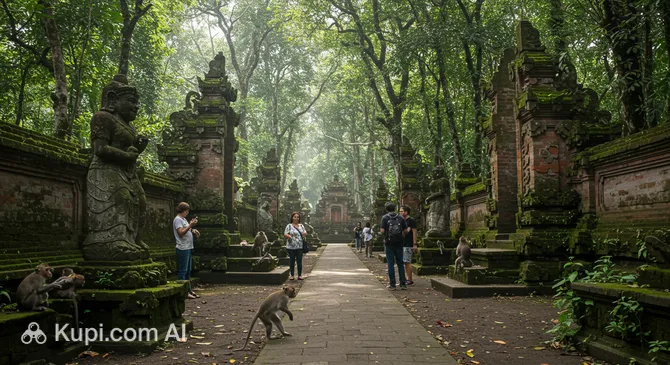
The Sacred Monkey Forest is more than just a picturesque natural spot near Denpasar; it is a deeply spiritual place for the people of Indonesia. Officially known as Mandala Suci Wenara Wana, this sanctuary is a unique symbiosis of dense tropical jungle and ancient Hindu temples, creating an atmosphere of mystery and tranquility.
\n
Sacred Monkey Forest Sanctuary. Illustration.
Source: Kupi.com AI

Traveler photos:

\n

The sanctuary's territory, covering about 12 hectares, is home to more than 1,200 long-tailed macaques. In local culture, these animals are revered as sacred, and the forest itself is an embodiment of the Balinese philosophy "Tri Hita Karana," which preaches harmony between gods, people, and the environment.

\n

Strolling along shaded paths past moss-covered statues and centuries-old trees, visitors can see three majestic 14th-century temples. This place draws travelers from all over the world with its pristine beauty and the opportunity to come into close contact with the exotic nature and rich architectural heritage of Bali.

Contacts

When planning a visit to the Sacred Monkey Forest, it is recommended to check the latest information in advance to ensure your trip is as comfortable as possible. Below are the primary contact details and useful information to help you get your bearings before visiting this iconic Denpasar attraction.

How to contactContact
AddressJl. Monkey Forest, Ubud, Kecamatan Ubud, Kabupaten Gianyar, Bali 80571, Индонезия
Phone+62 857-3700-0080
Websitemonkeyforestubud.com

What to Do

A visit to the Sacred Monkey Forest offers guests of the island a rare opportunity to observe primates in their natural habitat. You can wander along winding paths laid through thick jungle greenery, admiring small waterfalls and streams. The main stars here are the long-tailed macaques; watching their social interactions—whether playing or caring for their young—will be one of the highlights of your trip to Indonesia.

\n

Special attention should be paid to the sanctuary's architectural ensemble. Explore the three ancient Hindu temples: Pura Dalem Agung Padangtegal, Pura Beji, and Pura Prajapati. These structures, decorated with intricate stone carvings and covered in emerald moss, look like movie sets for films about the discovery of ancient civilizations. Don't forget to look into the more secluded corners of the forest for quiet contemplation of nature and to visit the statue of the monkey god Hanuman.

Getting There

The Sacred Monkey Forest is conveniently located in the Ubud district, which is administratively part of the Denpasar region. The exact address is Jl. Monkey Forest, Ubud. If you are staying in central Ubud, the main entrance to the sanctuary is an easy walk, allowing you to enjoy the atmosphere of the colorful local streets along the way.

\n

For those traveling from other parts of the island, the most comfortable option is a taxi or a private car with a driver. The journey from Ngurah Rai International Airport takes approximately 1–1.5 hours, depending on traffic. Renting a scooter is also a popular way to get around Bali, allowing you to bypass traffic jams more easily and park right at the entrance.

Nearest city: Denpasar

History & Facts

The history of this mystical place in Denpasar dates back to the 14th century. The foundation of the sanctuary is closely linked to the village of Padangtegal, whose residents have considered these lands sacred since ancient times. According to local beliefs, the forest is the abode of benevolent spirits, and the macaques act as their protectors, symbolizing the balance between various forces in Balinese Hinduism.

\n

The architectural core of the forest—three main temples—was established around 1350 during the Pejeng dynasty. Each temple has its own purpose: the main one is dedicated to the god Shiva, the second serves for purification rites in honor of the goddess Ganga, and the third is traditionally associated with cremation rituals. For centuries, these structures have remained important spiritual centers for the local population, and religious ceremonies are still held there today.

\n

In the modern era, the Sacred Monkey Forest was granted protected status. In 1982, the local community officially designated the area as a sanctuary, beginning large-scale work to preserve the unique ecosystem and rare plant species. Today, the site is recognized as an important international research center and a benchmark for the careful preservation of Indonesia's cultural and natural heritage.

Time Needed

To leisurely explore the Sacred Monkey Forest, visit all three temples, and take memorable photos, most travelers need between 1.5 to 3 hours. This is usually enough time to walk the main trails and observe the macaques' behavior at the primary gathering spots.

\n

If you wish to fully immerse yourself in the peaceful atmosphere or plan to head to the more remote parts of the forest where the primates' lives flow at a more relaxed pace, it is better to set aside 3–4 hours. The morning hours are particularly good for those who want to see the animals at their most active while avoiding the midday heat.

Working Hours

The Sacred Monkey Forest welcomes guests daily, opening its doors at 09:00 and closing at 18:00. The schedule remains consistent throughout the week, including weekends and public holidays, making it easy to fit a visit to the sanctuary into any Indonesia travel itinerary.

\n

Experienced guides recommend arriving at opening time or in the first half of the day, before 11:00. At this time, there are fewer visitors in the forest, and the macaques are most active, making a walk through the shaded alleys near Denpasar even more engaging.

09:00–18:00

Nearby

Exploring the surroundings of the Sacred Monkey Forest allows for a deeper connection with the island's culture and makes your journey through Indonesia even more rewarding. The Ubud area is famous for its concentration of art galleries, cozy cafes, and architectural monuments located in the immediate vicinity of the sanctuary.

\n

Nearby, you will find the magnificent Ubud Palace, which hosts traditional dance performances in the evenings, and the elegant Saraswati Temple, famous for its lotus ponds. After a walk through the jungle, it is pleasant to relax at one of the popular local spots, such as Watercress Ubud, to discuss your impressions of meeting the forest's inhabitants.

NameDistance
Setia Darma House of Mask and Puppets2.7 km
Bali Zoo8 km
Bali Bird Park9 km
Bali Reptile Park9 km
Hidden Mini Zoo Bali10.6 km
CitraLand Waterpark14.1 km
Jro Kuta Royal Palace15.7 km

Reached the end of the page?

That means the route is fully explored