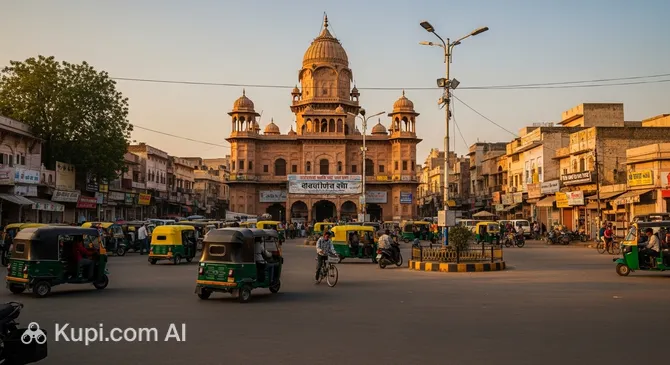
Navigating Bareilly is an experience that relies heavily on informal road-based transport rather than a centralized rapid transit network. Unlike major metropolitan hubs, the city does not currently have an operational metro system. Instead, the public transport landscape is dominated by a mix of auto-rickshaws, battery-operated e-rickshaws, and shared tempos. These vehicles form the lifeline of daily commuting, weaving through the narrow lanes of the old city and the broader avenues of the newer districts with equal agility.
The most ubiquitous mode of transport for short to medium distances is the e-rickshaw. These silent, battery-powered three-wheelers have largely replaced traditional cycle rickshaws and are an eco-friendly way to travel. They are ideal for short hops within neighborhoods or connecting to main roads. For longer distances across the city, larger shared auto-rickshaws, often referred to locally as Tempos or "Vikrams," run on fixed routes. These operate much like a bus service, stopping at major intersections to pick up and drop off passengers. While efficient and very affordable, they can get quite crowded during peak hours.
Regarding payment, the system in Bareilly is predominantly cash-based. There are no integrated travel cards, smart passes, or digital ticketing systems for local public transport. Passengers pay the driver directly at the end of the journey. Fares for shared tempos are fixed and generally very low, ranging from approximately INR 10 to INR 20 depending on the distance. For private e-rickshaws or autos where you hire the entire vehicle, prices are not fixed and must be negotiated before you step in. While digital payment apps are gaining popularity in shops, most drivers still prefer physical currency, so carrying small denominations is essential.
For those seeking a more comfortable or private travel experience, app-based cab services like Ola and Uber are available in the city. They offer the convenience of booking a car with a transparent, upfront fare and air-conditioning, which is a relief during the hot summer months. However, availability can sometimes be inconsistent compared to larger cities, especially late at night or in remote areas. Traditional private taxis can also be hired from stands near the railway station or arranged through hotels for full-day excursions.
Tourists should be aware that public transport operating hours are generally from early morning, around 6:00 AM, until about 10:00 PM. Late-night transport can be scarce, so it is advisable to pre-arrange a taxi if you plan to be out past this time. When using auto-rickshaws that do not run on a shared basis, always agree on the fare before starting the trip to avoid disputes later. If you are unsure of the standard rate, asking a local shopkeeper or your hotel reception for a rough estimate is a good strategy.
While there are no trams or cable cars, the experience of riding a shared tempo offers a unique glimpse into local life. It is a raw and authentic way to see the city, often accompanied by local music playing from the driver's cabin. For intercity travel, the Uttar Pradesh State Road Transport Corporation (UPSRTC) operates buses from major terminals like the Satellite Bus Stand and the Old Bus Stand, which also serve as key nodes for finding local transport options upon arrival.