Support

Wilhelma Zoological and Botanical Garden

About

Wilhelma is a truly unique destination in Stuttgart, Germany, representing a stunning combination of a zoological and botanical garden set within a magnificent palace complex. It is one of the city's main gems and a true green oasis in the heart of an industrial region, where history and nature are harmoniously intertwined. The complex was founded in the mid-19th century by decree of King William I and was originally intended as a Moorish-style decorative park.

Across an impressive area of about 30 hectares live more than 8,900 animals, making Wilhelma one of the most species-rich zoos in Germany. It is also home to approximately 5,800 plant species from all over the globe. Visitors can spend hours wandering along picturesque alleys, discovering new wonders of flora and fauna, from Europe's largest magnolia grove to an aquarium featuring coral fish and crocodiles.
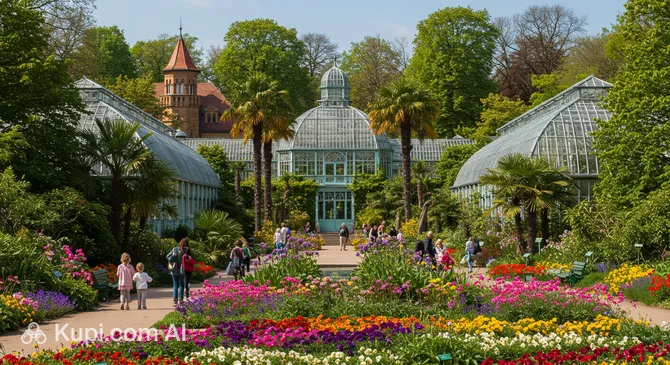
Wilhelma Zoological and Botanical Garden. Illustration.
Source: Kupi.com AI

Traveller photos:

In addition to its extensive collection of animals and plants, Wilhelma holds great historical significance and is part of the cultural heritage of the state of Baden-Württemberg. The name of the complex comes from King William I, but notably uses the feminine form—"Wilhelma." This eclectic palace complex, with its pavilions, greenhouses, and enclosures, offers an unforgettable experience for the whole family and is a must-see in Stuttgart.

Contacts

To plan your visit, check opening hours, or get additional information, you can contact the administration of the Wilhelma Zoo and Botanical Garden. Current contact details are provided below.

How to contactContact
AddressWilhelma 13, 70376 Stuttgart, Germany
Phone+49 711 54020
Websitewww.wilhelma.de

What to Do

A visit to Wilhelma is like a trip around the world through the realm of fauna. Here, you can meet a wide variety of animal species, including some quite rare ones. Squirrel monkeys attract special attention—a species not often found in European zoos due to their sensitivity to the climate. Visitors can also observe Japanese macaques, numerous bird species, and impressive African animals. The enclosures and pavilions are designed so that guests can comfortably study the habits of inhabitants from across the globe.

Beyond getting to know the animal kingdom, Wilhelma offers guests the chance to enjoy the splendor of its botanical gardens. A walk through the well-kept alleys is a pleasure in itself, thanks to the rich collection of plants gathered from different corners of the planet. Historical Moorish-style architectural structures add a special charm, serving not only as decoration but also as homes for many plants and animals. This combination of nature and architecture creates a unique atmosphere where every corner of the park looks like a work of art.

Wilhelma is perfect for family outings and educational walks—you can easily spend a whole day here discovering something new. It’s more than just a zoo or a garden; it’s a comprehensive space where you can study the diversity of flora and fauna in a beautiful historical setting. Due to this variety of experiences, many locals buy annual passes to return again and again, as it's almost impossible to take in all the splendor of Wilhelma in a single visit.

Getting There

Getting to the Wilhelma Zoo and Botanical Garden is easy, as it is conveniently located and well-connected to Stuttgart's transport system. The simplest and most popular way is by public transport. Right in front of the main entrance is the Wilhelma stop, which can be reached via metro (U-Bahn) lines U13, U14, and U16. The trip from Stuttgart Main Station takes only about 8 minutes, making it a quick and convenient option for tourists.

In addition to the direct route to the main entrance, there are other options. Nearby, about 250 meters away, is the Rosensteinbrücke stop, served by metro lines U13 and U16, as well as buses No. 52 and 56. You can also use the S-Bahn suburban rail: from Bahnhof Bad Cannstatt (lines S1, S2, S3), it's about a 1-kilometer walk to the main entrance, while from Nordbahnhof (lines S4, S5, S6), you can reach the side entrance via the scenic Rosensteinpark.

If you prefer to travel by car, look for special road signs with an elephant symbol throughout the city, which point the way to Wilhelma. Next to the main entrance, there is a large multi-story parking garage for 800 cars. Of course, taxis are always an option—the ride from the city center is fast, though more expensive than public transport.

Nearest city: Stuttgart

History & Facts

The history of Wilhelma is a fascinating tale of royal ambition, love, and remarkable transformations. It all began in 1806 when King Frederick I of Württemberg purchased a modest country house with a park by the Neckar River in Stuttgart. Ten years later, in 1816, this estate became a wedding gift for the Russian Grand Duchess Catherine Pavlovna, who married the heir to the throne, William. After a severe flood, Queen Catherine dreamed of building a new palace on the hill, but unfortunately, her plans were cut short by her death in 1819.

Keeping the memory of his wife alive, King William I built Rosenstein Palace for her, but he also desired a place for his own solitude and relaxation. A turning point came in 1829 with the discovery of a mineral spring on the grounds, which inspired the King to build a bathhouse. This is how Wilhelma was born. The complex officially opened on September 30, 1846, coinciding with another important event involving Russia—the wedding of Crown Prince Charles and Olga Nikolaevna, daughter of the Russian Tsar.

The architectural ensemble was fully completed by 1864, and by 1880, this magnificent Moorish-style park opened its doors to the general public. However, the most dramatic turn in Wilhelma's history occurred in the 20th century. After suffering severe damage during the Second World War, the complex was not just restored—in the 1950s, it was transformed into a zoo. This is how the former royal residence and private garden became a unique zoological and botanical garden, which is today one of the main attractions in Germany.

Time Needed

To fully enjoy your visit to the Wilhelma Zoological and Botanical Garden, it is highly recommended to set aside a full day for it. The complex is vast, covering about 30 hectares, home to over 8,900 animals and approximately 5,800 plant species. Attempting to see everything in just a couple of hours will result in a superficial experience and won't allow you to truly feel the unique atmosphere of the place.

When planning your visit, keep in mind that Wilhelma is not just a zoo, but a harmonious blend of nature, history, and architecture. Besides observing animals in modern enclosures, you'll want to take a leisurely stroll through the Moorish Garden, peek into the historic greenhouses, admire exotic flowers, and simply relax on a bench in the shade of century-old trees. A quick walk-through leaves no time to appreciate the variety of experiences this wonderful place in Stuttgart offers.

The fact that many locals and frequent visitors to Germany purchase annual passes speaks volumes about the scale and richness of Wilhelma. This confirms that even after several visits, it’s difficult to cover the full diversity of flora and fauna. Therefore, if you want to get the most out of your visit, allow enough time in your itinerary to explore this green oasis without rushing.

Working Hours

The Wilhelma Zoological and Botanical Garden is open to visitors year-round, but opening hours vary by season. The park usually opens at 8:15 AM. Ticket offices close at different times: during the peak season (March to October), they close after 4:00 PM, and during the winter period (November to February), after 3:30 PM. The park itself remains open until dusk, and in summer, visitors can stroll until 8:00 PM. It's important to note that animal pavilions and greenhouses close earlier than the park itself, typically 30-45 minutes after the ticket offices close.

To avoid queues, especially on weekends and public holidays, it is recommended to buy tickets online on the official website. This will save you time and guarantee entry. After the ticket offices close, tickets can still be purchased at special vending machines at the entrance. Since opening hours and visiting conditions may change, we strongly recommend checking the most up-to-date information on the official Wilhelma website before your visit.

8:15 – 20:00

Nearby

A visit to Wilhelma is just the beginning of your acquaintance with the rich cultural and natural heritage of Stuttgart. To make your trip to Germany even more fulfilling, it's worth spending time exploring the attractions located in the immediate vicinity of the zoo. This will not only save you travel time but also provide a more complete picture of the many facets of this amazing city.

The area surrounding Wilhelma offers many interesting sites, from museums and parks to sports arenas, all easily accessible on foot or by public transport. Below is a list of nearby attractions that can complement your itinerary.

NameDistance
Stuttgart Museum of Natural History – Rosenstein Palace0.4 km
Stuttgart Tram Museum1 km
State Museum of Natural History Stuttgart1.3 km
Fridas Pier2.2 km
Eliszis Fairground Theater and Tango Tent2.6 km
Mercedes-Benz Museum2.6 km
Staatsgalerie Stuttgart3.1 km

Reached the bottom of the page?

Looks like you know this route inside out