Support

German Salt Museum

About

The German Salt Museum (Deutsches Salzmuseum) is a unique cultural institution located in the ancient city of Lüneburg, in the state of Lower Saxony, Germany. The museum is entirely dedicated to the fascinating history of salt extraction, processing, and the immense importance of salt for both the region and all of Europe over the centuries.
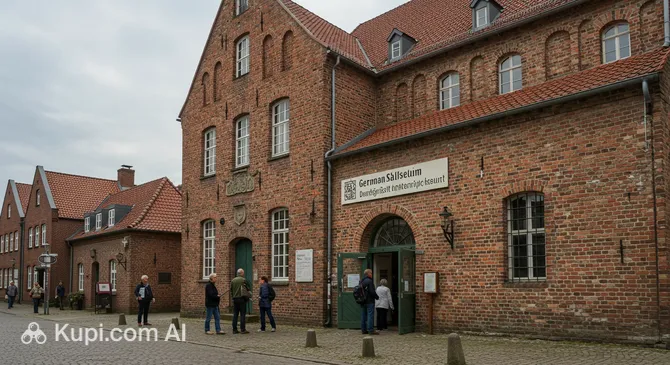
German Salt Museum. Illustration.
Source: Kupi.com AI

Traveller photos:

Opened in 1989, the museum is situated on the historical site of the former saltworks. These saltworks were the heart of Lüneburg for over a thousand years, ensuring its prosperity, and only ceased operations in 1980. Visitors can literally touch the past by exploring the preserved industrial buildings and the territory of the former salt mine, which still retain the atmosphere of a bygone industrial era.

Here, you will learn why salt was called "white gold" and how it turned Lüneburg into one of the wealthiest and most influential cities in Northern Germany. The museum's exhibitions detail salt production technologies, the hard labor of the workers, and how this valuable mineral shaped the economy and culture of the region. It is not just a museum, but a true journey through time, revealing the secrets of a vital resource.

Contacts

To find current contact information for the German Salt Museum, such as a phone number or email address, we recommend visiting the museum's official website. You can also often find useful information at the tourist information centers in Lüneburg or on the city's tourism portals.

How to contactContact
AddressSülfmeisterstraße 1, 21335 Lüneburg, Germany
Phone+49 4131 7206513
Websitewww.salzmuseum.de

What to Do

A visit to the German Salt Museum in Lüneburg promises a fascinating immersion into the history of salt production, which was once the foundation of the city's prosperity. The museum offers many interactive displays where you can not only see the ancient tools and equipment used for salt extraction and evaporation but, in some cases, even try them out. This is more than just passive observation – many exhibits are hands-on, which curious visitors will particularly enjoy.

One of the unique opportunities is the chance to taste salt and feel the difference between its various types. Visitors can also walk through an old railcar that was once used to transport this valuable mineral. This helps one better imagine the scale and significance of the salt industry for the region in the past.

In addition to the permanent exhibition, the German Salt Museum regularly hosts various themed events, engaging workshops, and city festivals. For example, it celebrates the Sülfmeister Days (Sülfmeistertage), commemorating the glorious past of Lüneburg's salt makers. For those who love capturing their travel moments, a nice bonus is the ability to take photos for free within the museum, with even tripod use being allowed.

Getting There

Getting to the German Salt Museum in Lüneburg is quite easy, as it is located in the central part of the city. If you are traveling from other cities in Germany, one of the most convenient ways to reach Lüneburg is by train. For example, it takes just 30 minutes to get here from Hamburg, making it an excellent option for a day trip.

Upon arrival at Lüneburg railway station, the German Salt Museum is easily accessible on foot. The walk takes approximately 10–15 minutes and allows you to get acquainted with the city along the way. It is a pleasant and easy route.

For those who prefer to travel by car, there are parking areas near the museum, making a visit by car equally convenient. Additionally, the museum can be reached by city bus – a public transport stop is located in the immediate vicinity of the entrance to the German Salt Museum. Thus, regardless of your chosen mode of transportation, you can easily visit this interesting attraction.

Nearest city: Lüneburg

History & Facts

The German Salt Museum in Lüneburg is not just a museum; it is a window into the city's thousand-year history, which is inextricably linked to the extraction of "white gold." For over 1,000 years, Lüneburg was one of the most important centers of salt production in Europe, and the museum meticulously preserves the memory of this unique heritage of Germany.

Salt in these parts lay at a relatively shallow depth of about 40 meters. The extraction process was unique for its time: fresh water was pumped into the salt layers to create a concentrated brine. This brine was then evaporated in huge flat vats called "pans." Between 10,000 and 25,000 tons of salt were produced here annually, which was distributed throughout Europe and even exported as far as Russia, testifying to the scale of production.

It was salt that brought Lüneburg unprecedented wealth and prosperity, allowing it to become an influential member of the Hanseatic League – the powerful trade association of medieval Europe. However, by 1980, industrial salt production was discontinued for economic reasons. Today, Lüneburg's salt springs have found a new purpose – they are used for therapeutic and wellness goals, continuing the tradition of utilizing the region's natural gifts.

The German Salt Museum itself was opened to preserve this important chapter of history for future generations. The museum's exhibits clearly demonstrate ancient salt mining technologies, the daily life of salt makers, and the economic significance of salt for the city. In 1991, for its significant contribution to the preservation of European cultural heritage, the museum was honored with the prestigious Council of Europe Museum Prize, highlighting its uniqueness and importance.

Time Needed

To fully experience the exhibition at the German Salt Museum in Lüneburg, it is recommended to set aside 1.5 to 2.5 hours. This time will allow you to walk through the halls at a leisurely pace, study the exhibits, and immerse yourself in the history of salt production, which is so vital to this region of Germany.

This time range is especially relevant if you plan not only to see the main exhibitions but also to participate in interactive activities or workshops that the museum may offer. Such an approach will make your visit even more rewarding and memorable. If your time is limited, you can try to fit into the lower end of this interval by focusing on the key exhibits, but for the most complete impression, it is better not to rush.

Working Hours

When planning a visit to the German Salt Museum in Lüneburg, it is important to check the current opening hours in advance. Generally, museums have standard schedules, but they can change depending on the season or special events. To get the most accurate information on opening and closing times, as well as possible closing days, it is recommended to visit the museum's official website or contact local tourist information centers.

While advance ticket booking is not always mandatory for many museums, it can be a good idea for popular sites like the German Salt Museum, especially if you plan to visit during peak tourist season or on weekends. This will help avoid queues and guarantee entry. Most such museums in Germany are open year-round, but hours may be reduced during the winter period or on certain holidays, so checking current information before your trip is always helpful.

DayOpening hours
MondayClosed
Tuesday10:00 – 17:00
Wednesday10:00 – 17:00
Thursday10:00 – 17:00
Friday10:00 – 17:00
Saturday10:00 – 17:00
Sunday10:00 – 17:00

Nearby

A visit to the German Salt Museum is undoubtedly a highlight, but Lüneburg and its surroundings have much more to offer. By expanding your itinerary and exploring nearby attractions, you can dive deeper into the atmosphere of this charming city and take home even more unforgettable memories.

Near the museum, you will find other interesting sites that will help you form a more complete picture of the culture, history, and modern life of Lüneburg. A short walk, and you'll be at the next stop of your exciting journey. Here are some of them:

NameDistance
East Prussian Regional Museum0.4 km
Lüneburg Old Town0.5 km
Pacos0.6 km
Kurpark Lüneburg0.6 km
St. Michael's Church0.6 km
Am Sande Square0.7 km
Feierabendkultur Bar0.8 km

Reached the bottom of the page?

Looks like you know this route inside out