Support

Michelsberg monastery

About

Rising above the tiled roofs on a high hill, Michaelsberg Abbey is one of the most recognizable landmarks that Bamberg is proud of. This former Benedictine complex, founded back in 1015, represents a unique fusion of eras: here, the austerity of Romanesque arches sits alongside Gothic elegance and Baroque splendor.
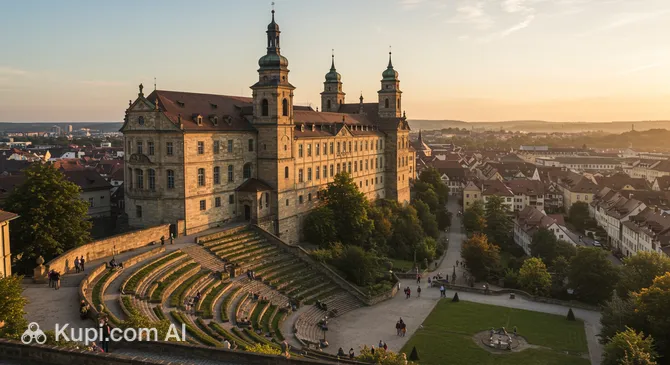
Michaelsberg Monastery. Illustration.
Source: Kupi.com AI

Traveler photos:

Today, this site in Germany attracts travelers not only for its ancient history but also for its magnificent park ensemble. Although part of the premises now houses an almshouse, the complex remains open to tourists, offering some of the best panoramic views of the historic city center, which is a UNESCO World Heritage site.

The main treasure of the monastery is the Church of St. Michael. Despite ongoing restoration work, the building impresses with its power and majestic 18th-century entrance gates. This is not just an open-air museum, but a living testament to centuries of faith and the skill of past architects.

Contacts

To confirm up-to-date visiting information or check for scheduled events, you can use the following contact details:

How to contactContact
AddressMichelsberg 10, 96049 Bamberg, Germany
Phone+49 951 872411
Websitewww.buergerspitalstiftung.de

What to Do

A walk through the complex grounds is, first and foremost, a visual treat. The first thing to notice is the Baroque gates and the exterior facades of the Church of St. Michael. Even if the interior of the temple is closed for restoration, examining the architectural details from the outside gives a full sense of the abbey's former grandeur. Be sure to climb up to the terraces to take panoramic shots of Bamberg, which are considered some of the best in the city.

An interesting experience is the ascent to the monastery along the historical Way of the Cross. Starting from the hospital church of St. Elizabeth, it leads the traveler through a series of bas-reliefs, each telling its own story. This is a great way to immerse yourself in the atmosphere of a medieval pilgrimage and set a contemplative mood before exploring the abbey.

After walking through the gardens and viewing the buildings, you can head back down to the city to round off your experience with a tasting of the famous smoked beer (Rauchbier). This local specialty perfectly complements the atmosphere of old Bamberg. Also, don't forget to check the schedule on the official website — sometimes cultural events are held on the grounds of the almshouse and are open to the public.

Getting There

To reach this picturesque spot located in the upper part of the city, the best way is to start from the historic center. A walk from the New Residence takes about 15–20 minutes. The route follows the historic Way of the Cross, which begins at the hospital church of St. Elizabeth. This climb is not only good for your health but also historically interesting thanks to the preserved 15th-century bas-reliefs.

For those who prefer comfort or want to save their strength, a taxi is always available from anywhere in the city. You can also take city buses that go to stops in the Michaelsberg hill area, followed by a short walk up. If you are traveling by car, head to Michelsberg 10; parking spaces can be found both at the foot of the hill and directly on its grounds.

Keep in mind that the terrain in this part of the city is quite steep, so comfortable shoes are highly recommended for the walk. The scenic coordinates of the site are: 49.8936851, 10.876997.

Nearest city: Bamberg

History & Facts

Founded in 1015 by Benedictine monks, St. Michael's Abbey became one of the spiritual pillars of the region almost immediately after the local bishopric was established. The original building did not last long: in 1117, a powerful earthquake destroyed the church, after which Archbishop Otto of Bamberg, later canonized as a saint, initiated the construction of a new Romanesque temple. His relics are buried here, having become an object of pilgrimage since the 12th century.

During the Middle Ages, the monastery was famous for its educational activities. It housed a renowned scriptorium (a school for scribes), where the chronicler and music theorist Frutolf of Michelsberg worked. His works made a significant contribution to the development of European culture at that time, making the abbey an important intellectual center.

The complex's history was full of trials: in 1610, it was severely damaged by a devastating fire. However, this sparked a massive renovation in the 18th century, when the buildings acquired their lavish Baroque appearance. Prominent masters of the time worked on the designs for the gates and the convent, creating the harmonious ensemble we see today. After secularization in 1803, the monastery was closed, and an almshouse was established within its walls, which continues to function to this day.

Time Needed

When planning your route, allow about 1–2 hours for a visit to this site. This is plenty of time to leisurely explore the architectural ensemble from the outside, walk along the terraces, and take bird's-eye panoramic photos of the city.

If you decide to linger in the gardens, study the bas-reliefs on the "Way of the Cross" in detail, or if you are lucky enough to attend a cultural event on the grounds, your visit may last up to 3 hours. In any case, this place is ideal for a relaxed break away from the main tourist hustle and bustle.

Working Hours

Before visiting, it is important to note that there is no fixed schedule for the entire monastery territory, as part of the complex is used for social needs. Generally, the grounds are open for free entry during daylight hours, but access to the Church of St. Michael itself may be limited due to ongoing restoration work.

To ensure your trip goes smoothly, we strongly recommend checking the current status of the sites in advance on the official Bürgerspitalstiftung website. This will help you learn about any changes in access or special events being held.

Nearby

After exploring the monastery complex and enjoying the views from the hill, be sure to explore the surrounding area. The historic city center is very close, and every corner is steeped in the spirit of antiquity. A stroll through the adjacent streets will allow you to see equally significant architectural masterpieces and feel the authentic atmosphere of old Bavaria.

NameDistance
New Residence Bamberg0.4 km
Bamberg Cathedral0.5 km
Bamberg Old Town0.7 km
Old Town Hall0.7 km
Neptune Fountain (Gabelmoo)0.8 km
St. Martin's Catholic Church0.8 km
Bamberg Natural History Museum0.8 km

Reached the end of the page?

That means the route is fully explored