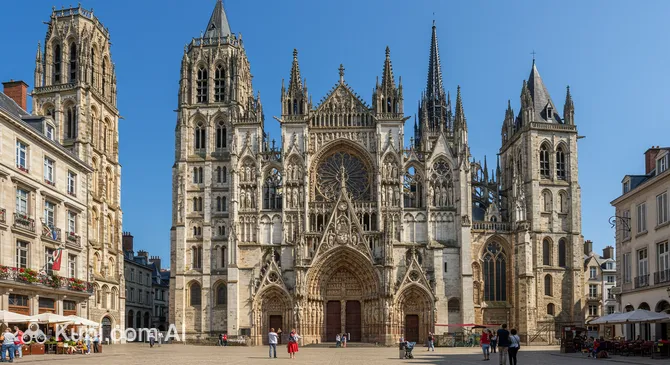
Rouen Cathedral (Cathédrale Notre-Dame de Rouen), also known as the Cathedral of Our Lady of Rouen, is a majestic Gothic cathedral located in the heart of Rouen, France. It is the main church of the Archbishop of Rouen and Normandy and is recognized as a national heritage monument. The cathedral is famous for its impressive architecture, grandiose size, and rich history, being considered one of the most striking examples of French Gothic.
The cathedral's architectural appearance was formed over several centuries, which explains the mix of styles — from early Gothic to "Flamboyant." Its west facade is considered the widest of all cathedrals in France, reaching 61 meters. The cathedral gained particular fame for its openwork cast-iron spire, which rises to a height of 151 meters. Thanks to it, from 1876 to 1880, Rouen Cathedral was the tallest building in the world. Inside are the tombs of the Dukes of Normandy, including the tomb containing the heart of King Richard the Lionheart.
Traveller photos:
This cathedral is not just a historical monument but also a source of inspiration for many creators. It is most famous for the series of paintings by Claude Monet, who captured the changing play of light on its facades at different times of day. Today, Rouen Cathedral remains an active Catholic church where services are held regularly. It is open to everyone who wishes to touch centuries of history and enjoy the splendor of Gothic architecture.