Support

Hôtel-Dieu Museum (Hospices de Beaune)

About

The Hôtel-Dieu Museum, also known as the Hospices de Beaune, is one of the most iconic landmarks not only of the city but of all France. This outstanding historical and architectural monument was founded in 1443 by Nicolas Rolin, Chancellor of Burgundy, as a hospital for the poorest residents after the Hundred Years' War. Today, it is a unique museum that allows visitors to immerse themselves in the history of medieval medicine, charity, and Burgundian architecture.

The building is a magnificent example of 15th-century Flamboyant Burgundian Gothic architecture. Its most striking feature is the famous roofs covered in colorful glazed tiles that form intricate geometric patterns. The vibrant facades, carved wooden galleries, and high spires make the Hôtel-Dieu a true architectural treasure, often referred to as a "Palace for the Poor."
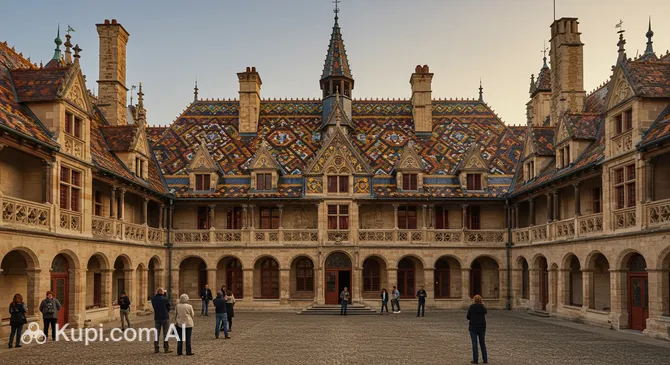
Hôtel-Dieu Museum (Hospices de Beaune). Illustration.
Source: Kupi.com AI

Traveller photos:

Inside the museum, the interiors of the medieval hospital have been recreated with striking precision. Visitors can see the main "Great Hall of the Poor" with its rows of beds under crimson curtains, an ancient pharmacy with a collection of pharmaceutical vessels, and a chapel integrated into the ward. In addition to medical exhibits, the museum houses a rich collection of art, tapestries, and everyday objects donated to the hospital over the centuries. The jewel of the collection is the "Last Judgment" polyptych by the Flemish master Rogier van der Weyden.

Contacts

To plan your visit or clarify any details, you can contact the museum administration. Up-to-date information is always available on the official website, which also offers online ticket booking. Key contact details are provided below for your convenience.

How to contactContact
Address2 Rue de l'Hôtel Dieu, 21200 Beaune, France
Phone+33 3 80 24 47 00
Websitereservation-hoteldieu.hospices-de-beaune.com

What to Do

A visit to the Hôtel-Dieu Museum is a true journey back in time. You can walk through the historical halls of the former hospital, where the medieval atmosphere is still preserved. Highlights include the kitchen with its massive fireplace, the ancient pharmacy with its collection of faience jars and medical instruments, and the chapel where patients could pray. You will see the original beds where the sick were cared for over the centuries and can imagine the daily lives of the sisters who dedicated themselves to service.

The museum's primary artistic treasure is the famous "Last Judgment" polyptych by Flemish master Rogier van der Weyden. This monumental work, created specifically for the hospital, is striking for its detail and emotional depth. Beyond this masterpiece, it's worth noting the unique architectural details: magnificent painted ceilings, bright stained glass, and skillfully crafted wooden structures that adorn the halls and galleries of this amazing "palace for the poor."

Audio guides, available in several languages, add an interactive element to the visit, providing detailed stories about the history of charity in Burgundy and the key exhibits. In addition to the permanent collection, the Hôtel-Dieu Museum in Beaune regularly hosts temporary exhibitions and cultural events, making every visit unique. This museum is an integral part of France's cultural heritage, allowing for a deep appreciation of the region's history and art.

Getting There

Getting to the Hôtel-Dieu Museum is easy, as the city of Beaune has excellent transport links with other regions of France. One of the most convenient ways is by train; for instance, the journey from Dijon takes just 20–30 minutes. For those who prefer traveling by car, the major A6 motorway leads directly to the city. Additionally, there are well-developed bus connections with other towns in Burgundy, making Beaune easily accessible for tourists exploring the region.

The museum itself is located in the heart of Beaune's historical center, making it easily accessible on foot. It’s just a 10–15 minute walk from the main train station to the Hôtel-Dieu. If you arrive by car, parking is available in the city center. Thanks to its prime location, a visit to the hospital can easily be combined with a stroll through ancient streets and visits to the local restaurants and wine shops for which Burgundy is so famous.

Nearest city: Beaune

History & Facts

The history of the Hôtel-Dieu Museum is a story of compassion and hope during one of France's darkest periods. The hospital was founded in 1443 by Nicolas Rolin, Chancellor of Burgundy, and his wife, Guigone de Salins. At that time, the city of Beaune and its surroundings were suffering from the aftermath of the Hundred Years' War, famine, and plague, which left three-quarters of the population destitute. Wanting to help the most underprivileged, Rolin created this "palace for the poor," which took about eight years to build. On January 1, 1452, the hospital opened its doors to its first patients, becoming a symbol of mercy for centuries.

The uniqueness of the Hôtel-Dieu lay not only in its architecture but also in its organization. In 1459, at the founder's initiative, the order of the Sisters of the Hôtel-Dieu was created. These women led a monastic life while dedicating themselves to nursing the sick, ensuring constant and high-quality care. Over time, the hospital began to treat not only the poor but also wealthy citizens and aristocrats. Their generous donations and gifts, including land and vineyards, allowed the hospital to not only survive but also expand and adorn its halls with works of art.

Remarkably, the hospital in Beaune fulfilled its original mission for over five centuries. It functioned continuously as a hospital until 1971, surviving numerous historical eras and changes. Only then were its medical functions transferred to a modern hospital center, and the historic building was fully converted into a museum. Thanks to this, today's visitors can see virtually untouched interiors and feel the spirit of a medieval hospital that served people for so long.

Time Needed

To fully enjoy your visit to the Hôtel-Dieu Museum, it is recommended to set aside 1.5 to 2.5 hours. This is generally enough time to leisurely explore all the main halls and exhibits. You will have time to walk through the famous "Great Hall of the Poor," peek into the ancient pharmacy, kitchen, and chapel, and carefully examine the artistic masterpieces, including the famous "Last Judgment" polyptych. Using an audio guide, available in several languages, will help you delve deeper into the history of this amazing place and ensure you don't miss any important details.

The duration of your visit may vary depending on your interests. If you are short on time, you can focus on the essentials—the courtyard with its famous colorful roofs and the "Great Hall of the Poor"—which will take about an hour. However, if you are a connoisseur of history, art, or architecture, you may need more time. Allow yourself to linger by the works of art, study the details of medieval life, and simply soak in the unique atmosphere of the "Palace for the Poor," which served as a symbol of hope and mercy for centuries.

Working Hours

The Hôtel-Dieu Museum (Hospices de Beaune) is open to visitors year-round, including holidays, making it accessible at any time. However, opening hours vary depending on the season. During the high season, which usually runs from April to mid-November, the museum is open without a break from 9:00 AM to 7:30 PM. During the rest of the year, from mid-November to the end of March, there is a lunch break, and hours are 9:00 AM to 12:30 PM and 2:00 PM to 6:30 PM. Please note that the ticket office closes one hour before the museum closes.

To make your visit to this iconic French landmark as comfortable as possible, it is recommended to check the current schedule on the official website beforehand, especially if you plan to visit on holidays when special hours may apply. It is also worth considering buying tickets online to avoid queues, especially during the peak tourist season in Beaune. This will help you better plan your day and ensure your entry.

9:00 – 19:30

Nearby

A visit to the Hôtel-Dieu Museum is a highlight of any trip to Beaune, but your introduction to the city would be incomplete without a stroll through its surroundings. The historical center is very compact, with many other points of interest just a few minutes' walk away. Exploring nearby attractions, restaurants, and parks will allow you to immerse yourself deeper in the atmosphere of Burgundy and make your journey through France even more enriching.

There are many noteworthy sites near the former hospital, ranging from other architectural monuments to the gastronomic establishments for which the region is so famous. Below is a list of places you can easily visit by continuing your walk after touring the Hôtel-Dieu.

NameDistance
L'Arche des Vins0.2 km
Au Coq Bleu0.2 km
Collegiate Church of Notre-Dame of Beaune0.2 km
Fallot Mustard Mill0.3 km
Soul Kitchen0.4 km
Bouzaise Park0.9 km
Games Factory Beaune1.5 km

Reached the bottom of the page?

Looks like you know this route inside out