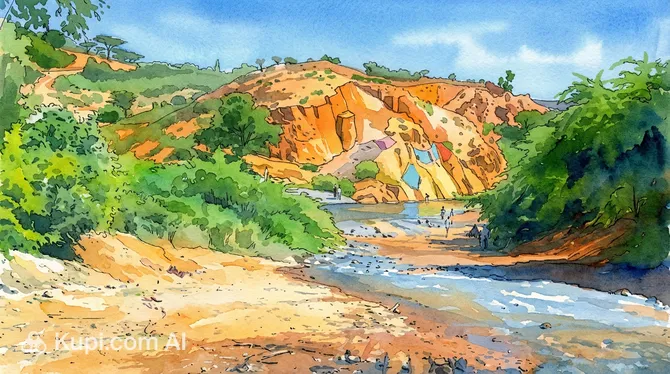
Erer Sata is a dynamic and colorful city located in the eastern part of Ethiopia. It represents a true East African kaleidoscope, where the traditions of different peoples are woven into a single vibrant pattern. The city lies at the foot of a majestic rocky plateau, combining the hot breath of the semi-desert with the refreshing aromas of spices wafting from bustling bazaars.
Erer Sata. Illustration.
Source: Kupi.com AI
Erer Sata's geographical position at a trade crossroads has defined its status as a major economic center of the region. With a population of about 649,000 people, the city is the second largest in the country and holds a special administrative status. There is no sugary tourist polish here; instead, there is an abundance of authentic African life, the energy of markets, and the sincere hospitality of the locals.
The main features of Erer Sata are its unique colonial-style architecture and incredible ethnic diversity. In the old quarters, the atmosphere of the early 20th century can still be felt, when the city originated as a key railway station. We invite you to immerse yourself in this authentic world, where every corner tells its own amazing story.
Weather Overview
The climate in Erer Sata is characterized as hot and predominantly dry, typical for the eastern regions of the country. The sun shines here year-round, creating excellent conditions for walks; however, tourists should be prepared for high temperatures, especially during daytime hours. The average maximum often exceeds 30°C, especially during the period from May to September.
Expect a warm summer with occasional rains, which are most likely in March-April and July-August. Winters in the city are dry and very comfortable: daytime temperatures stay around 27-28°C, while nights bring a pleasant coolness when the thermometer can drop to 14-16°C. December and January are considered the driest months when rain is practically non-existent.
Thanks to the influence of dry air, the heat here is easier to bear than in the humid tropics, although the city can be dusty during dry periods. It is recommended to plan excursions for morning or evening hours to fully enjoy the architecture and markets of Erer Sata under the most favorable weather conditions.
Average monthly temperature
Average monthly precipitation
Interesting Facts
Erer Sata is a city with a rich history and a unique cultural code. Here are a few facts to help you get to know this region better:
The city emerged in the early 20th century as a railway station on the route to the port of Djibouti, which predetermined its rapid development as a trade hub.
Erer Sata is the second most populous city in Ethiopia, surpassed only by the capital, Addis Ababa.
The city features a unique blend of four cultures: the languages of the Oromo, Somali, Amhara, and Afar peoples can be heard simultaneously in the local markets.
The architecture of the city's old quarters still retains its colonial style, creating a striking contrast with modern buildings and traditional huts.
Erer Sata holds a special administrative status, emphasizing its strategic importance to the economy and politics of all of eastern Ethiopia.
How to Get There
Transport accessibility to Erer Sata has historically been linked to the railway, which remains one of the most convenient ways to reach the city to this day. The railway line connects it with Addis Ababa and the port of Djibouti, offering travelers not only comfort but also scenic views of East Africa's diverse landscapes.
If you prefer air travel, the nearest major aviation hub is located in neighboring Dire Dawa. From there, you can easily reach the city center by taxi or local public transport. The flight from the capital takes very little time, making this the fastest option for tourists.
Intercity buses and shuttle taxis are also popular ways to get around. The roads in this region are in good condition, and a trip from Addis Ababa allows you to fully enjoy the beauty of the Ethiopian plateau. Bus services run regularly, connecting Erer Sata with many major cities across the country.
Station
Passenger traffic
Distance
Dire Dawa Train Station
2
43 km
Nagad railway station
5
289 km
Main Attractions
The main center of attraction in Erer Sata is undoubtedly its bustling markets. This is the heart of city life, where the trade of spices, vibrant fabrics, and handmade goods never stops for a minute. A stroll through the market stalls is not just shopping, but a full immersion into the authentic atmosphere of East Africa, where you can observe the daily life and traditions of the local residents.
For history and architecture enthusiasts, the old colonial quarters are a must-see. Walking through these streets, you can see buildings that have preserved the look of the beginning of the last century, when the city was a vital hub on the way to the port of Djibouti. The contrast between the European architectural motifs of that time and the traditional African flavor creates a unique visual experience.
If you want to enjoy the natural beauty of the region, head to the foot of the rocky plateau surrounding the city. This natural platform offers breathtaking panoramic views of the surroundings. It is an ideal place for peaceful walks and photo sessions against the backdrop of the rugged but beautiful Ethiopian landscapes, which are particularly picturesque in the rays of the setting sun.
Local Cuisine
The cuisine of Erer Sata is a true gastronomic adventure reflecting the cultural mix of the region. The basis of most meals is injera—a traditional sour flatbread made from teff flour that serves as both bread and cutlery. It is served with various wats—thick and spicy stews made from meat or legumes, generously seasoned with the local berbere spice blend.
Among the signature dishes, kitfo stands out—finely chopped raw beef marinated in spiced butter and herbs, often served with ayar-bala sauce. The city's gastronomic scene is best represented in small restaurants near the markets, where the food is always fresh and prepared according to old recipes. Here, you can experience the authentic taste of Eastern Ethiopia in a relaxed and friendly setting.
Regarding drinks, no visit to Erer Sata would be complete without participating in a coffee ceremony. Additionally, be sure to try tej—a traditional Ethiopian honey wine with a slight bitterness. Local markets are always filled with an abundance of freshly squeezed tropical fruit juices, which are a great escape from the daytime heat.
Travel Tips
A trip to Erer Sata promises to be unforgettable if you consider a few practical points in advance. Here are the main tips to help you feel confident and comfortable:
Clothing and Essentials: Choose light clothing made of natural fabrics and be sure to bring comfortable closed shoes for walking through the markets. Don't forget a hat and sunscreen, as the sun here is very active. When visiting religious sites, it is recommended to cover your shoulders and knees.
Transport: For getting around the city, it's best to use motorized rickshaws (bajajs)—they are fast and inexpensive. Agree on the price of the trip before getting into the vehicle.
Finance: The main currency is the Ethiopian Birr. ATMs are available in the center, but they do not always accept international cards, so always carry a supply of cash with you. Tipping is welcome but remains at your discretion.
Health and Safety: Drink only bottled water and avoid ice in drinks at markets. Pharmacies can be found on central streets, but it's better to bring specific medications with you.
Communication: The main languages are Amharic and Oromo; English is understood in hotels and some cafes. Knowing basic greetings in the local language is very endearing to the residents.
Local Etiquette: Greet people politely, often with a handshake. Before taking photos of locals or their goods at the market, be sure to ask for permission.
What to Avoid: You should not openly discuss political topics or show impatience—tranquility and a respectful tone of communication are valued in Ethiopia.
Extra Tip: Visit the markets early in the morning—the climate is most pleasant then, and the selection of goods is the largest.
By following these simple rules, you will be able to fully immerse yourself in the atmosphere of Erer Sata and enjoy its unique hospitality. We wish you vivid impressions!
Entertainment & Nightlife
Entertainment in Erer Sata is predominantly traditional and relaxed, closely tied to street culture and daily rituals. The city bazaars become the center of evening activity, continuing to buzz with life even after sunset. Here, you can watch the evening trade, chat with friendly locals, and enjoy the unique atmosphere of an Ethiopian evening.
A special place in the leisure time of locals and tourists alike is held by traditional coffee ceremonies. Numerous cafes throughout the city serve strong Ethiopian coffee, the preparation of which is a true art form. These gatherings are often accompanied by quiet national music and lively conversations, creating a cozy and relaxed atmosphere perfect for ending a busy day.
While classic nightlife with clubs and discos is modestly developed here, the city offers a unique experience through participation in local festivals and cultural events that often take place outdoors. For those who prefer active recreation, evening walks through the safe central areas or the surrounding hills serve as an excellent alternative to noisy parties, allowing you to feel the true rhythm of this distinctive city.
Parks & Museums
Although Erer Sata does not have massive parks in the European sense, the city is surrounded by natural green zones and rocky hills that locals use for relaxation and picnics. These natural sites at the foot of the plateau offer not only shade on a hot day but also the best panoramic views, becoming open-air parks for everyone to enjoy.
The city's cultural heritage is most vividly reflected in its architecture and small exhibits found in buildings related to the history of the railway. The old station and its adjacent structures are essentially an open-air museum, telling the story of the times when steam locomotives first connected the heart of Ethiopia with the ocean coast.
For a deeper immersion into the region's history, it is worth visiting local cultural centers, where household items of the Oromo and Somali peoples are sometimes exhibited. Exploring these small displays combined with walks through the old quarters will allow you to form a complete picture of the rich past and present of this unique African hub.
Getting Around
The public transport system in Erer Sata is mainly represented by mini-buses (vans) and traditional taxis. These nimble vehicles ply throughout the city, connecting residential areas with central markets and the railway station. The fare is low, and the routes cover almost all significant points in the city, making them a convenient choice for tourists.
A popular alternative to buses are motorized rickshaws (bajajs), which are ideal for short trips around the compact center. They allow for quick maneuvering through traffic and deliver passengers right to the doors of their destination. It is best to agree on the fare with the taxi or rickshaw driver in advance, as meters are practically never used here.
Transport is paid for in cash directly to the driver or conductor. The roads in Erer Sata are maintained in good condition, making travel comfortable even during peak hours. For those who prefer walking, it is important to consider the hot climate and plan your routes so that most of the path is in the shade of buildings or trees.
Accommodation
Accommodation options in Erer Sata are diverse, allowing you to find housing for any budget. Most hotels and guesthouses are concentrated in the central areas, close to the railway station and the main markets. This is an ideal location for those who want to be in the heart of the action and have easy access to the city's main shopping points.
For travelers who value comfort, middle-class hotels are available, many of which offer rooms with air conditioning—a vital detail considering the region's hot climate. Some hotels offer magnificent views of the surrounding rocky plateau, adding special charm to your morning coffee on the terrace. Budget travelers can find affordable options in authentic guesthouses, where they can get a closer look at local life.
During peak seasons or major regional holidays, it is recommended to book accommodation in advance. Most bookings are made through international services or directly by phone. When choosing a place to stay, look for the presence of a secure area and proximity to transport hubs for your convenience.
Nearby Cities
Erer Sata serves as an excellent starting point for exploring the eastern regions of the country, offering travelers several interesting destinations for day trips. Neighboring cities and towns allow for a deeper dive into the culture and nature of this unique land.
Just 52 kilometers away is Dire Dawa, a major transport and trade hub known for its colonial architecture and green boulevards. You should also pay attention to the small town of Bike, located very nearby, and Shinile, which provide a glimpse into life in the Somali Region.
The region around the city is famous for its natural landscapes and ancient settlements. We recommend not limiting yourself to city walks and heading out to explore the surroundings to see Ethiopia in all its diversity—from rocky mountains to bustling border markets.
Shopping & Souvenirs
Shopping in Erer Sata is primarily about visiting its legendary markets. You won't find giant shopping malls with glass storefronts here, but you can discover real treasures on the open stalls. The city is famous for its high-quality coffee trade, which makes for the best gift for connoisseurs. You should also look for the fabric stalls, which sell traditional handmade Ethiopian scarves and wraps with unique patterns.
The central bazaars are places where you can and should bargain. Local sellers appreciate friendly interaction, and with some skill, you can purchase spices, frankincense, or leather goods at very favorable prices. Markets operate from early morning until evening, but for the freshest goods, it is better to come in the first half of the day when life here is at its most active.
As souvenirs from Erer Sata, tourists often bring back woven items, traditional jewelry, and sets of Ethiopian spices like berbere. Payment in most market stalls is made in cash in the local currency (Birr), so it's worth taking care of money exchange in advance. Shops in the modern sense are located mainly on the main streets of the center, where you can also purchase essential goods.