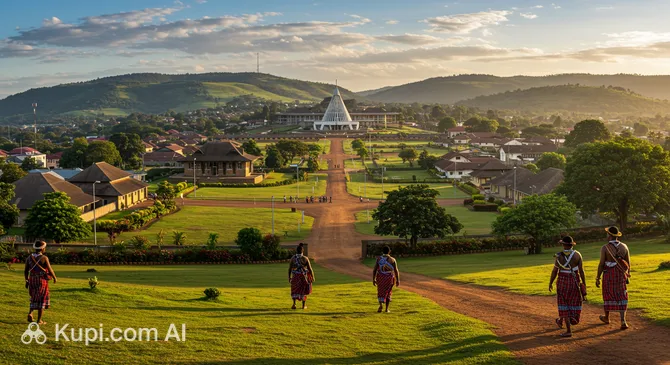
Lobamba is not just a city, but the spiritual and legislative heart of the Kingdom of Eswatini. Nestled in the picturesque Ezulwini Valley, this historical capital serves as the place where the age-old traditions of the Swazi people meet modern governance. It is home to the official residence of the Queen Mother, the Royal Palace, and the Parliament building, lending the city a unique atmosphere of solemnity and peace.
Geographically, Lobamba is located in the Hhohho District, at an altitude of 600 to 1,200 meters above sea level, providing a mild climate and stunning views of the surrounding hills. Despite its small population of about 5,800 people, the significance of this place for the country's culture cannot be overstated. It is here that the nation's historical heritage comes to life, carefully preserved in every stone and ritual.
Lobamba. Illustration.
Source: Kupi.com AI
For travelers, Lobamba reveals itself as a center for unique ethnographic experiences. The city is famous for its national festivals and its proximity to the natural beauty of the valley. A visit here offers a glimpse into the very soul of Eswatini, allowing you to feel the rhythm of life in the African kingdom and experience the hospitality of its people. We invite you to set off and personally feel the magic of this "Royal Valley."
Weather Overview
The climate in Lobamba is determined by its location on the Highveld plateau, which gives the city pleasant weather for most of the year. There are two main seasons: a wet, warm summer and a dry, mild winter. The summer months (October to March) are characterized by temperatures ranging from +20°C to +28°C, with frequent refreshing showers that make the Ezulwini Valley landscapes incredibly green.
The winter period, lasting from May to August, is ideal for excursions and festivals. During this time, the weather is dry and sunny with daytime temperatures around +18°C... +22°C. However, it is worth considering that nights can be quite cool, with temperatures sometimes dropping to +7°C, so warm clothes in your suitcase will not be superfluous. Detailed weather in Lobamba by month will help you plan your wardrobe more accurately.
For tourists, the most comfortable time is considered to be from May to September, when the risk of rain is minimal and the air remains clean and clear. Nevertheless, even in the height of summer, rains are usually short-lived and are quickly replaced by bright sun, not interfering with plans to explore this amazing "Royal Valley."
Average monthly temperature
Average monthly precipitation
Interesting Facts
Lobamba is a place full of amazing stories and symbols that make it a unique spot on the map of Africa.
The city was founded in the 20th century by King Sobhuza II as a new spiritual center for the nation, while "Old Lobamba" had existed since the mid-18th century in the south of the country.
It was here in Lobamba, on September 6, 1968, that the kingdom's independence from the British protectorate was officially proclaimed.
Every year, the city becomes the arena for the Reed Dance — one of Africa's most famous cultural festivals, gathering thousands of young women from across the kingdom.
Lobamba is considered the "navel of the earth" for the Swazi people, as all three branches of power are concentrated here: monarchical, legislative, and spiritual.
The city is located in the so-called "Royal Valley" of Ezulwini, which is famous for its fertility and is considered the most picturesque region of the country.
How to Get There
Lobamba is conveniently located in the very heart of Eswatini's transport arteries, making it accessible for most travelers. The city is just 16 kilometers from the administrative capital, Mbabane, and the journey between them via the modern MR3 highway takes no more than 20–30 minutes. Detailed information on routes and logistics can be found in the section on how to get to Lobamba.
The main aviation hub is the King Mswati III International Airport (SDW), located about 80 kilometers from the city. This is the country's modern gateway, receiving flights from Johannesburg and other major cities in the region. The trip from the airport to Lobamba by taxi or rental car will take about an hour and a half along scenic roads.
Railway communication in the region is primarily focused on freight transport, so road transport remains the most relevant for tourists. Comfortable buses and transfers regularly run from neighboring South Africa towards Lobamba. If you are planning an independent trip, remember that the country has left-hand traffic, and the roads in the "Royal Valley" area are maintained in excellent condition.
Station
Passenger traffic
Distance
Maputo Railway Station
11
146 km
Main Attractions
Getting to know Lobamba is impossible without visiting the sites that embody the country's statehood and culture. The Houses of Parliament and the Royal Palace are the city's architectural landmarks, emphasizing its status as a political center. Equally significant is the King Sobhuza II Memorial Park — a well-maintained memorial dedicated to the monarch who led the country to independence. Here, you can learn about the key moments in the formation of modern Eswatini.
The Gables. Illustration.
Source: Kupi.com AI
Traveller photos:
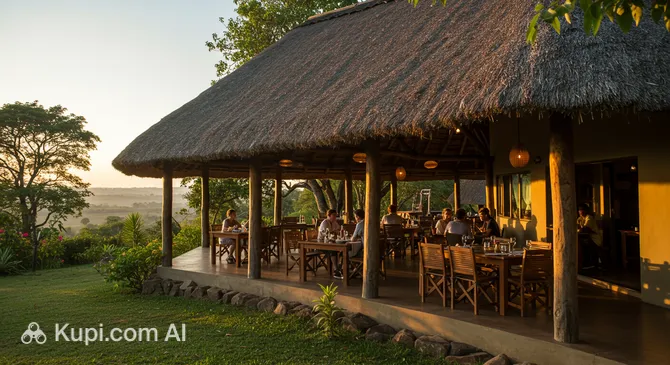
Nature lovers and those interested in authentic life should definitely visit the Mantenga Cultural Village. This is an open-air museum where traditional beehive-shaped huts have been recreated. Here, you can not only see the Swazi way of life but also watch energetic performances by dancers. Nearby is the scenic Mantenga Falls, offering excellent opportunities for outdoor recreation and memorable photos.
Mantenga Lodge. Illustration.
Source: Kupi.com AI
Traveller photos:
For those seeking modern amenities surrounded by nature, Mantenga Lodge is a wonderful choice, offering a cozy atmosphere and excellent service. If you are planning some shopping or a light snack, it's worth checking out The Gables complex, which is a major attraction for tourists and locals in the Ezulwini Valley.
Local Cuisine
The gastronomy of Lobamba is an honest and hearty reflection of Swazi culture. The basis of the diet is maize, used to make pap — a thick porridge that replaces bread. It is usually served with stewed meat (beef or goat), aromatic gravies, and seasonal vegetables. A special place on the local menu is occupied by sishwala — a traditional dish of maize and beans that provides an energy boost for the whole day.
Travelers should try local delicacies such as sambusa (crispy pastries with meat or vegetable filling) and unique salads made from local herbs, for example, from amasumbu leaves. Popular drinks include home-brewed sorghum beer — umcombotsi, which plays an important role in the city's ceremonial life, as well as refreshing juices from tropical fruits that ripen in the fertile Ezulwini Valley.
Authentic food can be found in the cultural village or at small establishments near the market. For those who prefer a more familiar cafe or restaurant format, an excellent choice would be Mantenga Lodge, which serves dishes combining African traditions and European tastes. Also, popular chain establishments such as KFC are located in The Gables shopping complex, where you can have a quick bite between excursions.
Travel Tips
Traveling to Lobamba is an immersion into a world of ancient traditions, and to ensure your trip goes smoothly and leaves only pleasant memories, we have prepared a few practical tips.
Clothing and essentials: Choose light clothing made of natural fabrics, but be sure to bring a warm sweater for cool evenings. When visiting royal sites and the parliament, observe the dress code: shoulders and knees should be covered. Comfortable shoes are a must for walks to the waterfalls.
Transport: Use "kombis" to travel between cities, but for comfort in the evening, it is better to order a taxi. Remember left-hand traffic if you decide to rent a car.
Finance: The local currency is the Lilangeni, which is pegged to the South African Rand (ZAR). Rands are accepted everywhere. Cards work in major centers like The Gables, but always keep cash with you for markets and small shops.
Health and safety: Use repellents and drink only bottled water. Lobamba is generally safe, but after dark, it is better to avoid walking alone and use taxi services.
Communication: The official languages are English and Swati. English is widely spoken in tourist areas. Learn the simple greeting "Sawubona" — it always brings a smile to the locals.
Local etiquette: Show deep respect for the monarchy and traditions. When greeting or passing items, it is customary to use both hands or to support the right hand with the left as a sign of respect.
What to avoid: It is strictly forbidden to photograph the Royal Palace, military facilities, and official motorcades without special permission. Also, do not point at people or objects with your finger — it is considered impolite.
Seasonality: The best time to visit is the dry season from May to October. If you want to see the "Reed Dance," plan your trip for late August or early September.
Lobamba will reward the attentive and respectful traveler with a unique experience that cannot be found anywhere else in the world. Have a pleasant journey!
Entertainment & Nightlife
The entertainment program in Lobamba is inextricably linked to its cultural status. The city's main events are large-scale national holidays, such as Umhlanga (the Reed Dance), which take place in August or September. During this time, the city is transformed, filled with music, songs, and thousands of participants in bright national costumes. This is a unique chance to see living traditions in their most grand manifestation.
Nightlife in Lobamba itself is quite calm and traditional. Instead of noisy nightclubs, cozy evenings with live music are valued here in places like Mantenga Lodge. The atmosphere in such establishments is friendly and relaxed, where you can often meet both travelers and local intellectuals. For more active nighttime entertainment and discos, tourists usually head to neighboring Mbabane.
During the day, entertainment shifts towards active recreation and educational excursions. You can take a walk to the local waterfalls or attend workshops at the cultural village. For those who prefer comfortable leisure with the opportunity to visit cafes and shops, The Gables shopping center is an excellent option, where life buzzes until evening.
Parks & Museums
For those who want to gain a deeper understanding of the Swazi people's history, the main stop should be the National Museum of Eswatini. Located in the heart of Lobamba, it houses rich collections of ethnographic artifacts, traditional clothing, and art. The museum's exhibition tells the story of the kingdom's journey from ancient times to independence, offering tourists an informative and visual history lesson.
Next to the museum is the King Sobhuza II Memorial Park. This is not just a memorial, but a quiet and beautiful place for walks where, among monuments and exhibits, you can feel the deep respect the locals have for their monarchy. The park is well-kept and conducive to quiet reflection on the past and future of this amazing country.
The city's natural beauty is represented by the areas around Mantenga Falls and the parklands in the valley. Here, you can enjoy a walk along shaded paths, organize a picnic, or simply observe the local flora and fauna. If you are staying at Mantenga Lodge, the nature reserve begins literally at your doorstep, offering the perfect combination of comfort and proximity to the wild.
Getting Around
The transport system in Lobamba is focused on the needs of a small but important cultural center. The main form of public transport here is minibuses, which locals call "kombis." They regularly run between Lobamba, Mbabane, and Manzini. The fare is low (about 10–20 Lilangeni), and you can catch such a bus near major landmarks like the parliament or the museum.
Within Lobamba itself, it is most convenient to move around on foot, as all key attractions are located quite compactly. For more comfortable trips between hotels in the Ezulwini Valley and tourist sites, it is better to use taxi services. They can be found at stands near shopping centers or called through the hotel reception. There are often no fixed rates, so it is worth agreeing on the price of the trip in advance.
For complete freedom of movement, many tourists choose to rent a car. This makes it easy to visit remote nature reserves and waterfalls. The roads in the city area are paved and in good condition; however, caution should be exercised when driving at night. Bicycle rental is also gaining popularity, especially for leisurely rides along the scenic trails of the "Royal Valley."
Accommodation
Accommodation options in Lobamba and its immediate surroundings allow guests to fully immerse themselves in the atmosphere of traditional Africa without giving up modern comfort. Most tourist accommodation is concentrated in the Ezulwini Valley, where you can find both luxury hotels and cozy guesthouses.
One of the most popular places to stay is Mantenga Lodge. This hotel is famous for its views of the "Execution Rock" mountain and its harmonious blend with the surrounding landscape. For those looking for a truly unique experience, the cultural village offers stays in traditional huts, styled after classic Swazi dwellings but equipped with all modern amenities.
If you prefer a more urban format or budget options, it's worth considering hotels in Mbabane, which are easily accessible by taxi or public transport. During the peak season, especially during the Umhlanga festivals, it is recommended to book accommodation in advance as the city attracts a huge number of guests. At other times of the year, the choice of housing remains stable, and prices are quite affordable for international tourism.
Nearby Cities
Thanks to its central location, Lobamba serves as an ideal starting point for exploring the most interesting corners of the kingdom. In just a few minutes, you can find yourself in the administrative and economic centers of the country, each offering its own unique attractions and atmosphere.
Just 15 kilometers away is the capital, Mbabane, located on the cool hills of the Highveld. It is a city of contrasts, where modern office buildings sit alongside bustling traditional markets. Another important destination is Manzini, the country's main commercial hub. A trip there will allow you to plunge into the real rhythm of an African city with its endless market stalls and cultural diversity.
For those ready to go a bit further, an interesting option is a trip to Piggs Peak, known for its forested landscapes and craft workshops. Exploring the surroundings of Lobamba allows you to see Eswatini in all its diversity — from misty mountains to sun-drenched valleys, making your trip truly complete.
Shopping & Souvenirs
Shopping in Lobamba is primarily a hunt for unique handmade items and traditional crafts. The city is famous for its artisans, whose beadwork, skillfully woven baskets, and wooden sculptures are known far beyond the country's borders. The best examples of such goods can be found in the shops at the National Museum and in the cultural village, where craftsmen often work right in front of visitors.
If you are looking for a more modern shopping experience, head to The Gables shopping center. This is the largest shopping hall in the Ezulwini Valley, housing supermarkets, clothing stores, pharmacies, and souvenir boutiques under one roof. Bank cards are accepted here, and the opening hours (usually from 8:00 to 18:00-19:00) allow you to comfortably plan a visit after a day of sightseeing.
For those who want to feel the local flavor, it is worth checking out the small markets near the parliament. Here you can buy fresh tropical fruits, spices, and bright lihiya fabrics, which locals use as traditional clothing. Don't forget to bring cash in Lilangeni or South African Rand, as cards are rarely accepted in the markets. Shopping in Lobamba is a great way to take home a piece of Eswatini's warmth and culture.