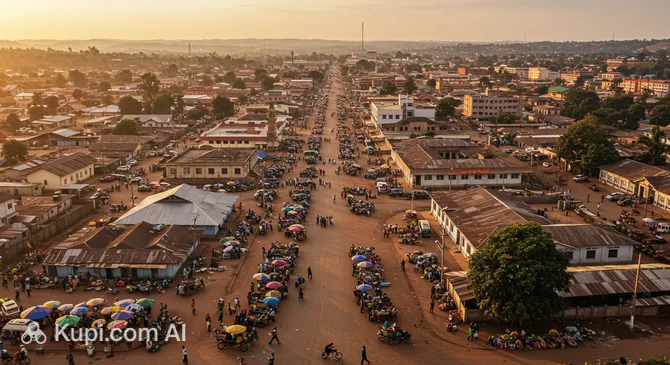
Kananga is the pulsing heart of the central part of the Democratic Republic of the Congo, a city that serves as a vital administrative and cultural crossroads for the region. Situated on a picturesque plateau more than 600 meters above sea level, it combines the atmosphere of a traditional African settlement with the dynamics of a modern transport hub. Home to about 2 million people, it is one of the country's largest metropolises.
Kananga. Illustration.
Source: Kupi.com AI
Founded in the late 19th century as the Luluabourg post, the city has undergone a long journey of transformation. Its historical heritage is inextricably linked to the Luba people, whose traditions and rich cultural influence are felt here at every turn. Its proximity to the Lulua River and important railway arteries historically promoted trade, turning Kananga into a key economic center linking different parts of the vast country.
Today, Kananga attracts travelers with its authentic energy, colonial architecture, and proximity to the natural wealth of the Congo Basin. It is a place for those seeking the real Africa—unadorned, but with a deep soul and a hospitable population. We invite you to discover this amazing city, where history meets modernity amidst tropical landscapes.
Weather Overview
Kananga is located in an equatorial climate zone, which guarantees warm and humid weather throughout the year. Cold spells are practically non-existent here: the average temperature remains stable at around +25°C...26°C. Travelers should be prepared for high humidity, which is especially noticeable between rains.
There are two distinct seasons in the city. The period from October to May is considered the rainy season, when heavy rainfall occurs, often in the form of short but powerful downpours. The peak of the rains usually falls in November (up to 195 mm of precipitation). From June to September, a relatively dry season sets in, when rain becomes rare and the sky often remains clear, making this the most favorable time to visit the city and its surroundings.
If you want to find a more detailed weather forecast in the city, pay attention to the temperature maximums: during the dry season, the air can warm up to +33°C...35°C. Nights usually bring a pleasant coolness with temperatures around +20°C. When packing, don't forget to bring both sunscreen and a light raincoat.
Average monthly temperature
Average monthly precipitation
Interesting Facts
Kananga is a city with deep roots and a fascinating destiny, hidden in the very heart of the African continent. Get to know a few curious details that reveal its unique character:
Founded by a German explorer: The city was established in 1884 by Hermann von Wissmann and was originally named Luluabourg after the river on which it is located.
Political Africanization: The city received its current name, Kananga, only in 1966 as part of President Mobutu Sese Seko's large-scale campaign to return to indigenous African names.
Railway heart: Kananga is a critical link on the Ilebo–Lubumbashi railway, which historically made it one of the main trading hubs of the entire country.
Diamond neighborhood: The city's economic prosperity for decades was closely linked to its proximity to rich diamond mining areas, which left its mark on the local market and business.
Cradle of Luba culture: The city is considered the spiritual and cultural center of the Luba people, whose art and traditions are recognized as some of the richest in Central Africa.
How to Get There
The transport accessibility of Kananga is largely determined by its status as a key hub in the center of the country. Despite its distance from the coast, the city is connected to other regions by air and rail. If you are planning a visit, it is useful to study general information on how to get to this region beforehand, as logistics here require careful planning.
The main air gateway is Kananga International Airport (KGA). It receives regular domestic flights from Kinshasa and other major cities in the Democratic Republic of the Congo. The airport is located in close proximity to the city, allowing for a quick trip to the center by taxi or private transfer.
The Kananga railway station is another important point on the city map. The station serves trains running along the strategically important Ilebo–Lubumbashi line. While a train journey can take a significant amount of time, it is an excellent way to see the changing natural landscapes of the Congo. There is also the possibility of water transport along the Lulua River, though this route is more commonly used for cargo than passenger transport.
Main Attractions
The main attractions of Kananga are closely intertwined with its history and everyday rhythm of life. One of the most interesting sites is the local museum, which houses unique collections of Luba artifacts. Here, you can see traditional masks, musical instruments, and household items that allow for a deeper understanding of the worldview and aesthetics of the region's indigenous people.
A walk through the city center will reveal preserved examples of colonial architecture, reminiscent of the times when the city was called Luluabourg. These buildings stand alongside modern structures and bustling squares, creating an eclectic look for a modern African center. A special atmosphere is created by the local markets—these are not just places for trade, but true cultural spaces where life hums from early morning.
For nature lovers, the banks of the Lulua River are a must-visit. The tributaries of the Kasai River in the city's outskirts offer picturesque views of tropical vegetation. It is an ideal place to observe local flora and fauna or simply enjoy the tranquility of the water away from the city noise. Kananga serves as an excellent base for those planning further exploration of Central Africa.
Local Cuisine
The cuisine of Kananga is a vivid reflection of the Luba people's traditions and the wealth of central Congo's natural resources. The base of most dishes consists of cassava and corn. Be sure to try fufu—a thick, paste-like porridge made from cassava flour, which is traditionally eaten with your hands, dipping it into various sauces. These sauces are made from peanuts, palm oil, or local herbs and are often quite spicy.
Thanks to the proximity of the Lulua River, fresh fish is always on the menu at local establishments. It is prepared over charcoal, fried, or stewed with vegetables. Another popular dish is pondu (cassava leaves stewed with spices), served as a side dish to meat or fish. The city's gastronomic scene is best represented in the markets, where you can try street food prepared right in front of you from the freshest ingredients.
Among the drinks in Kananga, freshly squeezed juices from tropical fruits like papaya, mango, and pineapple are popular. Locals also appreciate palm wine—a traditional drink with a unique taste. If you prefer more familiar options, you can always find local beer in the city, which is considered a point of regional pride. The overall character of local food is hearty, simple, and very aromatic, making the introduction to the city's cuisine an unforgettable experience.
Travel Tips
A trip to Kananga promises to be one of your most vivid adventures if you prepare in advance for the specifics of life in central Congo. Here are some practical tips to help make your journey comfortable and safe:
Clothing and gear: Choose light clothing made from natural fabrics (cotton, linen), as the climate here is hot and humid. Be sure to bring closed-toe shoes for walking on dusty streets and high-quality insect repellents.
Transport: To get around the city, it is best to use taxi services ordered through your hotel or to arrange with trusted local drivers. Avoid traveling in overcrowded minivans during peak hours.
Finance: In Kananga, cash is king. Carry a supply of Congolese francs and small-denomination US dollar bills. Cards are accepted very rarely, and ATMs may be unavailable or may not accept international cards.
Health: Yellow fever vaccination is mandatory, and a course of antimalarial drugs is also highly recommended. Drink only bottled water and avoid ice in drinks.
Communication: The main languages of communication are French and Tshiluba. English is not understood everywhere, so learn a few basic phrases or use an offline translator. A SIM card from a local operator can be bought at the market or the airport.
Local Etiquette: Greetings are very important—always say hello to locals before asking for anything. Residents of Kananga are hospitable but appreciate polite and respectful treatment of their traditions.
What to avoid: Never photograph government buildings, bridges, military, or police posts—this can lead to serious legal problems. Also, always ask for permission before taking photos of local residents.
Additional tip: Plan all important business for the first half of the day, as tropical downpours often occur in the afternoon, which can paralyze road traffic.
Following these simple rules will allow you to focus on exploring the unique culture of Kananga and get the maximum enjoyment from your trip to the heart of Africa.
Entertainment & Nightlife
Entertainment in Kananga is predominantly communal and traditional, offering tourists a chance to immerse themselves in the authentic atmosphere of central Congo. The city's evening life often centers around open-air venues and local establishments where live music is played. The rhythmic dances of the Luba people are an integral part of any celebration, and travelers can often witness vibrant street performances filled with incredible energy.
Nightlife in the conventional European sense is less developed here; however, a few popular bars and restaurants that stay open late can be found in the city center. Local intellectuals and youth gather in these venues to discuss the news over a bottle of local beer or fresh juice. The main areas for evening relaxation are located near the large markets and central administrative buildings, where it is always busy and relatively safe.
Daytime entertainment often includes attending cultural events or nature excursions. For those who prefer active recreation, the vicinity of the Lulua River offers opportunities for fishing or exotic bird watching. This is a calm and measured type of leisure that allows you to recharge after walking through Kananga's noisy city streets and markets.
Parks & Museums
A cultural itinerary in Kananga must include a visit to the local historical museum. This is the primary place where evidence of the rich past of the Lulua province is carefully preserved. The museum's collection includes rare Luba art pieces, including ritual masks and ancient instruments. Visiting this museum provides the key to understanding the complex social structure and deep spiritual traditions of the local people.
Although the city lacks large, developed European-style parks, the natural beauty of the Congo is displayed here in its primal form. The best place for outdoor relaxation is considered to be the banks of the Lulua River. Local residents often use the shady areas by the water for walks and family picnics. This is a natural recreational zone where tropical greenery creates a pleasant coolness even on the hottest days.
Walking along the river allows you to see exotic vegetation and enjoy views of the powerful waters of the Lulua, which play a vital role in the city's life. The combination of cultural immersion at the museum and quiet nature contemplation by the river makes a holiday in Kananga balanced and informative. This is an excellent way to get acquainted with the ecological and ethnographic heritage of the central part of the country.
Getting Around
The transport system in Kananga reflects its status as an important logistics hub, though it may seem chaotic to a European tourist. The main type of urban transport is minivans (so-called taxi-brousse) and buses. They connect the city center with remote residential neighborhoods and the airport. There is often no fixed schedule—transport departs as it fills up, so it's worth allocating extra time for waiting.
For short trips within the city, the most popular means of transport remain motor rickshaws and bicycles. This is a fast and affordable way to maneuver through the dusty streets of Kananga. You should always agree on the price of the trip with the driver in advance. Conventional taxis are also available, especially near the airport and major hotels, and they remain the most comfortable option for foreign guests.
Special attention should be paid to the railway station, which is not only a transport facility but also an important meeting place. Trains do not run frequently here, but they connect the city with other provinces. When using any form of transport in Kananga, it is recommended to have small amounts of cash for fare payment, as bank cards are practically not accepted here.
Accommodation
Accommodation options in Kananga are primarily geared toward business travelers and those who value practicality. Small hotels and guesthouses offering a basic set of services predominate here. Most mid-range hotels are concentrated in the central part of the city, within walking distance of administrative buildings and the railway station, which is very convenient for getting around.
If you are looking for more comfortable conditions, it is worth considering hotels located closer to the airport or on the outskirts, where noise levels are lower and the premises may include small gardens. Such places usually offer breakfast and Wi-Fi access, though it should be noted that internet quality in the region can be unstable.
Accommodation prices in Kananga are quite affordable, but we strongly recommend booking your stay in advance, especially if your trip coincides with major regional events or holidays. As tourism infrastructure is still developing, the best room options fill up quickly. Payment is most often accepted in cash in local currency or US dollars, so make sure to have bills ready beforehand.
Nearby Cities
Kananga serves as an excellent starting point for exploring the hinterlands of central Congo, offering access to towns and settlements that have preserved their original way of life. Despite the significant distances, several directions are quite suitable for those who want to see life beyond the provincial center.
One interesting destination is Demba, located just 48 kilometers away. This small settlement allows you to see the traditional rural life of the region. For a larger-scale journey, you might consider a trip to Mbuji-Mayi—a major center of the diamond mining industry. Although the path there is not short, this city is impressive for its scale and economic significance.
Visiting surrounding cities allows travelers to better understand the diversity of the country's cultural and natural landscapes. We recommend planning such trips in advance, using rail transport or hiring a reliable local driver, to fully enjoy the views of the Congolese savannah and forests.
Shopping & Souvenirs
Shopping in Kananga primarily involves visiting the bustling and colorful central markets, which are the heart of the city's economy. There are no massive shopping malls with global brands here, but there is a unique opportunity to purchase authentic goods. The main treasures for tourists are Luba handicrafts: carved wooden figurines, woven baskets, and traditional fabrics with bright geometric patterns.
The shopping stalls located along the railway offer a huge selection of daily necessities, but it is in the markets where you can find true rarities. Due to the proximity of diamond deposits, small jewelry shops operate in Kananga. However, when purchasing precious stones, one should exercise caution and go only to certified places to avoid problems with export.
City shops usually open early in the morning and close at dusk. The main form of payment is cash, and local sellers greatly appreciate the ability to bargain—it is an important part of the communication culture. Don't forget to bring back local spices or vacuum-packed dried fish from Kananga to preserve the taste of Central Africa even after returning home.