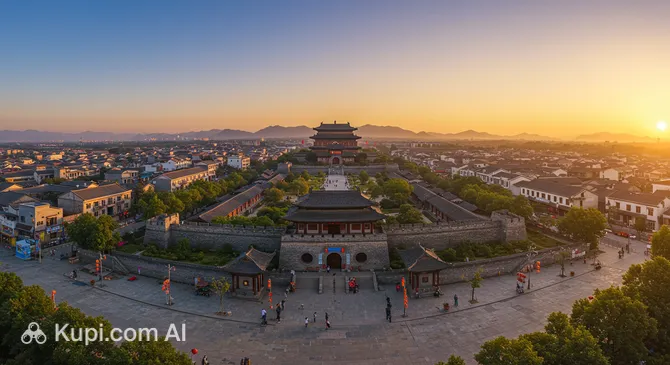
Zhongxiang is an amazing city in Hubei Province, where the great past of China comes to life. Located in the heart of the Jianghan Plain, it once served as the core of the legendary Chu state. Here, the historical grandeur of the Ming Dynasty imperial tombs blends harmoniously with a peaceful rural idyll, creating a unique atmosphere for a thoughtful journey.
With a population of over 1 million people, Zhongxiang maintains a sense of coziness and authenticity that is often lacking in modern megacities. If you are drawn to the ancient history and rich heritage of these places, the city offers an immersion into Chu culture with its unique aesthetics, traditions, and world-renowned architectural masterpieces.
Zhongxiang. Illustration.
Source: Kupi.com AI
The main magnets for tourists here are the sacred resting places of the imperial family and the picturesque landscapes of rivers and hills. Zhongxiang is ideal for those seeking a quiet getaway filled with cultural discoveries. We invite you to explore this quiet corner of the Middle Kingdom, where every stone holds the memory of great dynasties.
Weather Overview
The climate of Zhongxiang is classified as subtropical monsoon, which means distinct seasonality. Winters here are quite mild and relatively dry: for example, in January, the average temperature is about 4.3°C, and in December, rainfall is minimal. Summer, however, brings heavy rains and high humidity.
The peak of the heat occurs in July and August, when the thermometer often rises above 30°C, and the average maximum reaches 32.5°C. Due to the high humidity, this period can be quite exhausting, which is why the region is sometimes called one of the "furnaces of China." Before your trip, we recommend checking the detailed weather forecast for Zhongxiang to choose the right wardrobe.
The most favorable times to visit the city are the spring months (April-May) and autumn (October-November). At these times, a comfortable temperature is established, and the number of rainy days decreases, creating ideal conditions for touring the imperial tombs and walking through the picturesque surroundings.
Average monthly temperature
Average monthly precipitation
Interesting Facts
Ancient Capital: In 689 BC, King Wen of Chu moved the capital of the legendary Chu state to these lands, making the region a cultural and political center of antiquity.
Imperial Heritage: The city gained special significance during the Ming Dynasty as a burial place for members of the imperial family, which led to a flourish of architecture and an influx of state investment.
Birthplace of Filial Piety: Zhongxiang is considered the birthplace of Dong Yong—the hero of a famous legend who became a symbol of filial piety in China.
Poetic Mochou: Local legends about the beauty Mochou are closely linked to the ancient musical pieces "Yangchun" and "Baixue," which are still considered the pinnacle of classical art.
Cultural Autonomy: The aesthetics and traditions of Chu culture in Zhongxiang differ significantly from the northern regions of China, offering tourists a unique perspective on the country's southern heritage.
How to Get There
Zhongxiang is conveniently located in Hubei Province, about 100 kilometers west of its capital, Wuhan. Thanks to this proximity, the city can be reached fairly quickly using the region's developed transport network. You can find detailed information about routes on the how to get to Zhongxiang page.
For those traveling by air, the main hub is Wuhan Tianhe International Airport (WUH). From the airport, you can transfer to a high-speed train or bus, which will take you to your destination in about two hours. You can also consider flights through nearby regional airports if you are planning a complex itinerary through the province.
Railway communication is the most popular way to travel within the country. The Zhongxiang Railway Station operates in the city itself, accepting regional trains. Additionally, 39 kilometers away is the Jingmen Railway Station (JJL), which may also be convenient for arrival from other Chinese cities.
The main treasures of Zhongxiang are inextricably linked to its status as an important center of the Ming era. One of the most significant sites is the imperial tomb complex, which impresses with its scale and architectural perfection. These sacred sites, surrounded by hills, attract lovers of ancient architecture and history, offering a walk along the "spirit road" among stone statues.
No less charming is Mochou Village—a place steeped in legends and poetry. It is named after the famous girl Mochou, whose voice, according to legend, was as beautiful as the surrounding nature. Here you can see the Yangchun Terrace and the tower where the classical melodies of "Yangchun Baixue" once echoed, becoming a symbol of the refined Chu culture.
In addition to historical monuments, the city enchants with its natural views. The surroundings of Zhongxiang on the Jianghan Plain, with its numerous bodies of water and gentle reliefs, create an ideal backdrop for peaceful walks. It is a place where the grandeur of imperial China meets the simple and honest beauty of river landscapes.
Local Cuisine
The gastronomic identity of Zhongxiang is shaped by the traditions of Hubei Province, which is often called the "land of a thousand lakes." The basis of the local diet consists of the freshest products from the rivers and lakes of the Jianghan Plain. Travelers should definitely try the river fish dishes, which are often prepared here in fragrant and spicy sauces that emphasize the tenderness of the meat.
A special place on the menu is held by lotus delicacies—roots and seeds harvested in abundance from local waters. The general character of the cuisine can be described as moderately spicy, with a rich use of seasonal vegetables. Locals are proud of their "home-style" recipes, which can be found in small family-run inns where the atmosphere is sometimes more important than an exquisite interior.
Popular drinks in Zhongxiang include local tea varieties and traditional rice wine. Although there are few large restaurant chains in the city, street food and markets offer an authentic experience of Hubei flavors. Every dish here is a reflection of the culture of filial piety and care for which this region is so famous.
Travel Tips
Zhongxiang is a welcoming city with deep roots, and these practical tips will help you make your journey as comfortable and interesting as possible.
Clothing and Essentials: The best time to visit is spring or autumn when the weather is most comfortable. In summer, it can be very hot and humid, so be sure to bring light clothing, a hat, and comfortable shoes for long walks through historical complexes.
Transport: Within the city, it is most convenient to move around by taxi or bus. If you plan to visit remote tombs, you might consider renting a car with a driver for the day.
Finances: The main currency is the Chinese Yuan. International cards are rarely accepted, so it is best to install Alipay or WeChat Pay apps with a linked card, or carry a supply of cash.
Health and Safety: The city is safe for tourists, but standard precautions are wise. Pharmacies can be found in the center, but it's better to bring specific medications with you.
Communication: English is not widely spoken in Zhongxiang. Be sure to download an offline translator and save the addresses of your hotel and attractions in Chinese.
Local Etiquette: Locals value politeness. When visiting sacred sites and tombs, behave quietly, showing respect for history and ancestors.
What to Avoid: You should not take photos inside some temple premises or sites where prohibition signs are posted. Also, try not to plan major travel during peak hours on public holidays.
Additional Tip: Try visiting Mochou Village early in the morning—this will allow you to enjoy its atmosphere without large tour groups and take the best photos.
May your encounter with the ancient heritage of Zhongxiang bring you only inspiration and bright discoveries!
Entertainment & Nightlife
Entertainment in Zhongxiang is primarily oriented toward those who appreciate quiet and cultural leisure. You won't find noisy nightclubs or mega-malls here, as the city lives at a measured pace, preserving the atmosphere of traditional China. Evening life is centered around leisurely strolls along the main streets and visits to cozy local cafes.
For tourists, a wonderful evening activity would be traditional performances telling the legends of the region, such as the story of the girl Mochou. During the day, it is worth spending time visiting theme parks and historical zones where the tales of the ancient Chu state come to life. This is a great opportunity to see authentic costumes and hear music that inspired poets thousands of years ago.
Safety in the city is at a high level, so evening walks along the lit embankments or parks are quite comfortable. For travel late at night, it is best to use a taxi—it is convenient, inexpensive, and reliable. Zhongxiang offers a rare opportunity to enjoy silence and authentic Chinese aesthetics without the bustle typical of world-scale tourist centers.
Parks & Museums
In Zhongxiang, the line between parks and museums is often blurred, as the main attractions are vast historical landscapes under the open sky. The main site of this kind is the imperial tomb complex, which can be called a living museum of Ming history. Walking through its alleys, you not only see ancient artifacts but also immerse yourself in a natural environment carefully preserved for centuries.
For outdoor relaxation, the park areas in Mochou Village are perfect. This place combines elements of cultural heritage and landscape art. Here you can find quiet spots by the water, elegant terraces, and towers that are ideal for contemplation and learning about traditional Chu culture. It is a wonderful place for those who value harmony between human creativity and nature.
The natural areas of the Jianghan Plain around the city also offer peaceful locations with lakes and canals. Although there are few classic museum buildings in the city, local themed exhibitions dedicated to the culture of filial piety and archaeological finds of the region provide a comprehensive understanding of the rich history of this ancient land.
Getting Around
The public transport system in Zhongxiang is simple and effective for a city of its scale. The backbone of city transit is bus routes that connect the center with the outskirts and key attractions. There is no metro in the city, making buses and taxis the primary helpers for tourists moving over long distances.
For short trips across the flat terrain of Zhongxiang, bicycles and electric scooters are ideal. This is a popular way to get around among locals, allowing you to enjoy the city views at a relaxed pace. Taxis in the city are available and inexpensive; they can be called via popular apps or hailed on the street.
The city's railway station serves regional destinations, providing connections to other parts of Hubei Province. When planning trips, keep in mind that English is rarely encountered in transport, so it is useful to have the names of your destinations written in characters or use translation apps.
Accommodation
The choice of accommodation in Zhongxiang will satisfy both budget travelers and those who prefer mid-range comfort. The city features budget hostels, guesthouses, and modern 3-4 star hotels. Most accommodation options offer clean rooms with basic amenities typical of Chinese cities of this size.
For maximum convenience, tourists are recommended to choose hotels located in central areas or in close proximity to major historical sites, such as the imperial tombs. This will significantly save travel time and allow for morning or evening walks around the attractions without the rush.
During peak tourist seasons and Chinese public holidays, it is advisable to book accommodation in advance, as the city is popular with domestic tourists. The main booking methods are through international systems or major Chinese services. Prices in Zhongxiang remain very affordable, making it an excellent destination for budget cultural tourism.
Nearby Cities
Zhongxiang serves as an excellent starting point for exploring the central part of Hubei Province, offering travelers easy access to neighboring cities. The region is rich in historical monuments and picturesque agricultural landscapes that can be explored on day trips.
Just 69 kilometers away is Yicheng, and 78 kilometers away is the city of Tianmen, each possessing its own unique character. For those who want to see the life of small Chinese settlements, trips to Hejiaji or Shayan will be interesting. The largest destination is Wuhan, the provincial capital, located 100 kilometers to the east, where you can see the famous Yellow Crane Pavilion.
Exploring the surroundings will allow you to better understand the many facets of China: from the quiet streets of small towns to the dynamics of modern megacities. Thanks to the network of railways and highways, such trips will be easy and full of impressions.
Shopping & Souvenirs
Shopping in Zhongxiang is primarily a search for unique items with historical context. The city does not claim to be a fashion capital but offers tourists a wonderful selection of souvenirs related to the Chu and Ming eras. Here you can purchase high-quality replicas of ancient artifacts, local ceramics, and elegant silk items, which are traditionally valued in Hubei Province.
Shopping areas are concentrated in the city center, where everyday life hums in small markets and shops. This is the best place to buy local tea varieties and traditional delicacies. Lovers of authentic items will appreciate the small artisan workshops where you can find handmade objects reflecting the spirit of old China.
Shops usually operate from morning until late evening, and payment is most often made through popular Chinese mobile apps, although cash is also accepted in small shops. If you are looking for a memorable gift, pay attention to products related to the culture of filial piety—they are the hallmark of Zhongxiang.