Leshan is a scenic city prefecture in China's Sichuan Province, located at the confluence of three majestic rivers: the Minjiang, Dadu, and Qingyi. With a population of over 3.2 million, the city harmoniously combines the dynamics of a modern industrial center with the deep tranquility of ancient Buddhist shrines. For travelers, it is primarily a gateway to the world of China's spiritual heritage and a starting point for pilgrimages to sacred peaks.
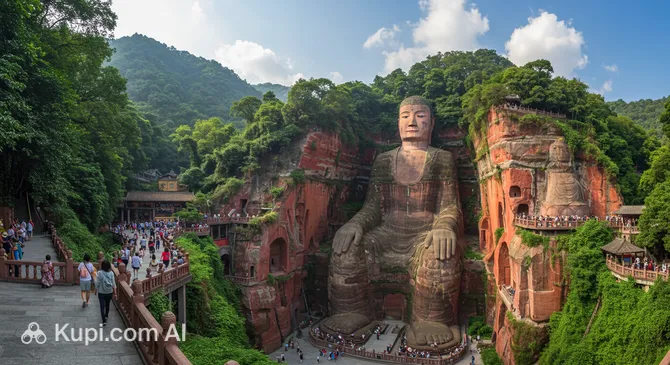
The main symbol and pride of the region is the monumental Buddha statue, which literally gazes down at the city from a rocky cliffside. The atmosphere in the center is filled with the life of Sichuan neighborhoods: narrow streets with old buildings sit alongside modern avenues, and the air is permeated with the aromas of famous local street food. The city's rich historical heritage makes it one of the most significant cultural points on the country's map.
Leshan. Illustration.
Source: Kupi.com AI
Beyond its religious monuments, Leshan attracts visitors with its natural landscapes. The city is located in the Sichuan Basin, which provides it with abundant greenery and a mild, albeit humid, climate. We invite you to embark on this amazing journey to witness the majesty of ancient architecture firsthand and experience the hospitality of one of the region's most colorful cities.
Weather Overview
Leshan is located in a humid subtropical monsoon climate zone, characterized by mild but quite damp winters and hot, very humid summers. Due to the topography of the Sichuan Basin, fog and high cloud cover are often observed in the city, creating a mystical atmosphere around the ancient cliff temples. Precipitation falls mainly in the summer and autumn months, reaching a peak in July and August.
The typical Leshan's climate means that summer temperatures often fluctuate around +25°C...+31°C, and high humidity can enhance the feeling of heat. Winters are cool but rarely freezing: average January temperatures stay in the +5°C...+11°C range. Expect a warm summer with occasional heavy rains and cloudy, foggy winters, when the sun rarely peeks through the basin's thick haze.
Average monthly temperature
Average monthly precipitation
Interesting Facts
Leshan holds many amazing secrets that make visiting it a truly exciting discovery for every traveler.
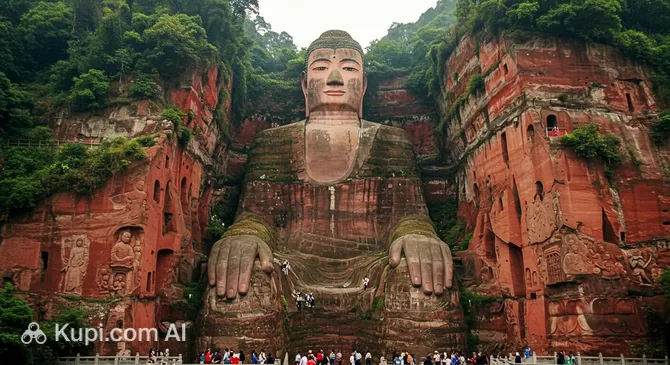
A World Record in Stone: The local Giant Buddha is officially recognized as the tallest stone Buddha statue in the world. Standing at 71 meters high, a group of tourists could easily fit on just one of its fingernails.
Ancient Engineering: Hidden inside the massive statue is a unique system of drainage channels created over a thousand years ago. It is skillfully concealed in the folds of the clothing and the Buddha's hair, protecting the stone from erosion and rainwater.
A Long-term Project of the Tang Dynasty: It took about 90 years to create the giant monument. Construction began in 713 at the initiative of a monk named Haitong, who believed the Buddha would calm the turbulent river currents that were destroying local residents' boats.
Natural Illusion: When viewing the Leshan mountain relief from the water at a certain point, the outlines of the cliffs and hills form the figure of a giant "Sleeping Buddha," where the man-made Maitreya statue ends up exactly in the "heart" area of this natural colossus.
Symbiosis with Nature: The Leshan Buddha, along with Mount Emei, forms a single UNESCO World Heritage site, emphasizing the inseparable link between human art and the majesty of nature.
How to Get There
Leshan is conveniently connected to the region's main transport hubs, making it accessible for both independent travelers and tour groups. The city is located within the sphere of influence of southwest China's largest metropolis—Chengdu, which serves as the main transit point. You can find the best way to plan your route by studying all the ways to get to Leshan.
The city currently does not have its own major airport for regular passenger flights. Travelers usually fly into Chengdu Tianfu or Shuangliu International Airports, from where they can quickly reach their destination by high-speed train or bus.
High-speed railways are the primary method of travel. The city's main station is Leshan Railway Station. High-speed trains (CRH) connect the city with the provincial capital, Chengdu, with a travel time of only about 1 hour. Trains run frequently, providing comfortable access to the sights.
There is also a well-developed bus service between cities. Intercity buses depart from Chengdu bus stations and arrive in Leshan in about 2–2.5 hours. This option can be convenient if you prefer to observe the rural landscapes of Sichuan province during the trip.
Main Attractions
The main treasure and a must-visit site is the Leshan Giant Buddha. This colossal statue of Maitreya, carved directly into the cliffside in the 8th century, reaches 71 meters in height and is a UNESCO World Heritage site. You can observe the Buddha's serene face from viewing platforms by descending narrow stairs along the cliff, or from the water by taking a river cruise to the confluence of the three rivers.
Leshan Giant Buddha. Illustration.
Source: Kupi.com AI
Traveller photos:
In the immediate vicinity of the giant is the Lingyun Temple complex. This place is filled with silence and the scent of incense; here, you can see ancient pagodas and halls decorated with intricate carvings. A walk on the hill above the Buddha not only allows you to touch spiritual traditions but also to enjoy panoramic views of the rivers and city blocks.
Another large-scale attraction is the Oriental Buddha Capital park. This is a vast cultural and landscape complex where thousands of Buddha sculptures executed in various styles are gathered in caves and open spaces. The park occupies an extensive territory lush with greenery and offers tourists a chance to immerse themselves in the diversity of Buddhist art away from the main excursion crowds.
Local Cuisine
Leshan's gastronomy is a vibrant embodiment of Sichuan culinary traditions, where heat, spice, and the famous Sichuan pepper play the leading roles. The region's cuisine is famous for its ability to combine fiery chili with refreshing notes of spices, creating the unique "ma-la" flavor. Travelers should definitely try the local types of noodles and steamed dishes, which are prized here for their tenderness and aroma.
Among the signature delicacies are various snacks that can be found at street markets and in small family establishments. "Leshan sweet skin duck" and hotpot-style dishes, where ingredients are cooked in a spicy broth right at your table, are very popular. Near attractions like the Leshan Giant Buddha, there are many restaurants where the spiciness of the dishes is often adapted for visiting tourists, making them slightly less extreme.
Tea culture occupies a special place in the lives of the townspeople. Sichuan Province is one of the centers of tea cultivation, so traditional tea houses are found everywhere in Leshan. Here you can enjoy fresh green tea for hours while watching the rivers flow. Among alcoholic beverages, local beers and traditional Chinese baijiu, which often accompanies festive feasts, are the most common.
Travel Tips
A trip to Leshan promises to be unforgettable, and to make your journey as comfortable as possible, we have prepared a few useful recommendations.
Clothing and Essentials: Choose the most comfortable shoes with good grip, as viewing the Buddha involves long walks on steep and sometimes slippery stone stairs. The climate here is humid, so a light raincoat or umbrella in your bag won't be out of place in any season.
Transport: The fastest way to get from Chengdu is by high-speed train. Within the city, use taxis or bus No. 3, which goes directly to the Buddha. For calling a taxi, it's convenient to use the DiDi app (there is an English version).
Finance: Payments via Alipay or WeChat Pay are accepted almost everywhere in China. Link your card to one of these apps in advance. It's worth having cash Yuan for small shops, but international cards (Visa/Mastercard) are only accepted in large hotels.
Health and Safety: The city is generally very safe, but in crowded places (queues for the Buddha, stations), keep an eye on your bags and wallets. Drink only bottled water and always have hand sanitizer with you.
Communication: English is not very common among local residents. We recommend downloading an offline translator and a map like Baidu Maps or Amap. Knowing simple phrases like "Ni Hao" (hello) and "Xie Xie" (thank you) always brings a smile.
Local Etiquette: When visiting temples, maintain silence and do not disturb those praying. Photography inside some halls may be prohibited—pay attention to the signs.
What to Avoid: Try not to plan your visit to the Giant Buddha during China's national holidays (e.g., "Golden Week" in October), as queues for the statue can stretch for several hours.
Additional Tip: Arrive at the ticket counters as early as possible in the morning (when they open) to see the main attractions before the main influx of tour groups from Chengdu.
By following these simple tips, you will be able to fully immerse yourself in the atmosphere of this ancient city and enjoy its majesty without unnecessary worries. Have a pleasant journey to the heart of Sichuan!
Entertainment & Nightlife
The entertainment program in Leshan is primarily focused on cultural and educational leisure. During the day, tourists spend time exploring temples and walking through picturesque parks. One of the most pleasant forms of relaxation is a river trip: the view of the Leshan Giant Buddha from aboard a boat allows you to appreciate the true scale of the ancient monument and take impressive photos against the backdrop of the river confluence.
The city's evening life is quiet and family-oriented. Locals and guests enjoy walking along the embankments, where lights come on and numerous tea houses open. Unlike major metropolises, there isn't an abundance of night clubs; however, in the center, you can find karaoke bars (KTV) and cozy restaurants with live music that are popular with residents. For those seeking a vibrant club scene and large-scale shows, it is most convenient to head to neighboring Chengdu, which is just an hour away by high-speed train.
Safety in the city is at a high level, and walking along the central lit streets is comfortable even late at night. If you need to return to your hotel after dinner, taxis are easy to call via popular apps or hail on the street. Most evening activity is concentrated around food markets, where you can sample local delicacies in the authentic atmosphere of a Sichuan city.
Parks & Museums
The green zones of Leshan are inextricably linked with its spiritual history, turning ordinary walks into a deep immersion in culture. The city's main park space is the territory around the Leshan Giant Buddha site. This is not just a park in the conventional sense, but a vast landscape complex where forest trails and steep stairs lead through ancient rock bas-reliefs to shaded viewing platforms offering views of the river confluence.
Equally impressive is the Oriental Buddha Capital park. This extensive area strikes the imagination with its abundance of greenery and numerous artificial grottoes housing thousands of recreated Buddhist statues. A walk along its alleys can take several hours, allowing tourists to enjoy the silence and the craftsmanship of the sculptors. Natural areas along the river embankments are also popular among residents and guests for quiet sunset walks.
While there are no large classical world-renowned museums in the city, their role is successfully filled by temple complexes and theme parks. The city's entire cultural exposition is presented "under the open sky"—in the form of epic rock carvings and the architecture of the Lingyun Temple. For more traditional historical or art collections, travelers usually head to the museums of neighboring Chengdu, combining a trip to Leshan with a visit to the provincial capital.
Getting Around
The public transport system in Leshan is simple and oriented toward the needs of residents and tourists. The main form of travel within the city is by bus. For travelers, Route No. 3 is particularly useful, as it connects the railway station with the main attractions, including the Giant Buddha area. Fares are inexpensive, and buses run quite frequently, although they can be very crowded during peak hours.
There is no metro system in the city, so for more comfortable and faster trips, guests often choose taxis. Cars can be hailed directly on the street or called via mobile apps. The cost of a taxi ride in Leshan is lower than in major China metropolises, making this transport a great alternative to buses, especially if you are traveling with luggage or a large group.
High-speed trains and intercity buses are used for travel between Leshan and neighboring tourist centers, such as Mount Emei or Chengdu. Electric scooter and bicycle rental services are also popular within the city, allowing you to easily explore the embankments and central neighborhoods. Remember that traffic jams are possible on bridges and approaches to tourist zones on weekends and holidays, so it's better to leave early for important sites.
Accommodation
A wide range of accommodation options is available for tourists in Leshan, from cozy family guesthouses to modern hotels. Most of the lodging options are concentrated in two key areas: in the city center near the embankments and in the immediate vicinity of the entrance to the Giant Buddha park. The choice of location depends on your goals—whether you want to be closer to transport hubs or prefer waking up with a view of the sacred cliffs.
Most hotels fall into the mid-price segment and offer a decent level of comfort. Large international chains are less common here than in major metropolises, but high-quality Chinese hotel brands are well-represented. Near tourist sites like the Leshan Giant Buddha, you can find authentic guesthouses decorated in a traditional style, which adds a special flavor to the trip.
When planning a visit, especially during China's national holidays or on weekends, it is highly recommended to book accommodation in advance. During peak season, demand for hotels near the Buddha and Mount Emei increases significantly. Mobile apps like Alipay and WeChat Pay are most commonly used for payment in hotels, although large hotels also accept international bank cards and cash in Yuan.
Nearby Cities
Leshan serves as an excellent starting point for exploring the picturesque surroundings of Sichuan Province. The city's location allows you to easily plan day trips to the region's unique natural and cultural sites, expanding the horizons of your journey.
The most popular destination is a trip to Mount Emei (Emeishan), one of the four sacred Buddhist mountains of China. It is located very close by and offers stunning trekking routes, ancient monasteries in the clouds, and the chance to see the "Golden Summit." It is also worth visiting the city of Meishan, known for its cultural traditions and beautiful parks, which is located just an hour's drive away.
For those who want to dive into the atmosphere of a metropolis, high-speed trains allow you to quickly reach Chengdu, where you can visit the panda breeding center and enjoy world-class shopping. Exploring the surroundings of Leshan will give you a complete picture of the diversity and richness of this region.
Shopping & Souvenirs
Shopping in Leshan is primarily an opportunity to purchase memorable souvenirs imbued with the spirit of Buddhism and the traditions of Sichuan Province. The main shopping activity for tourists is concentrated around the Leshan Giant Buddha area. Along the approaches to the complex and on the adjacent streets, you will find many shops offering prayer beads made from precious woods, small Buddha figurines, and amulets that will be a wonderful reminder of your trip.
In addition to religious attributes, it is worth bringing local tea and spices from the city. Specialized shops and markets offer a wide selection of the famous Sichuan pepper and spicy sauces. Leshan is also famous for its sweets and traditional pastries, which are often sold in decorative gift packaging. Local markets are a great place to feel the rhythm of everyday life and purchase fresh products or folk crafts.
Modern shopping centers and malls with chain brands are located mainly in the central part of the city and near the railway station. Shops usually operate from morning until late evening (often until 21:00–22:00) seven days a week. For payment, it is most convenient to use mobile payment systems, which have become the standard in modern China, although large centers also accept cash in Yuan.