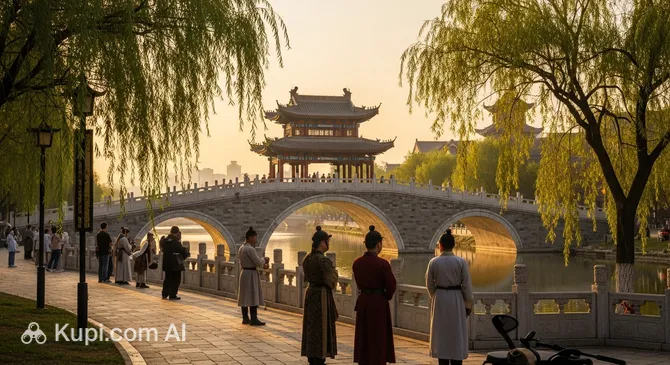
Kaifeng is one of the most colorful and significant cities in China. As one of the ancient capitals, it is steeped in the atmosphere of a grand past when trade and culture flourished here. Located in Henan Province on the southern bank of the Yellow River, the city preserves the spirit of the Song Dynasty, offering travelers a unique blend of historical depth and modern rhythm.
Kaifeng. Illustration.
Source: Kupi.com AI
Today, the city's population exceeds 800,000 people. The historical heritage of the city is closely linked to the Grand Canal, which once made it a vital hub on the trade routes of the East. Key sights include the majestic city wall and numerous temples that serve as reminders of a time when the city was considered one of the largest metropolises in the world.
Kaifeng invites anyone who wants to experience authentic Chinese history away from the noise of coastal megacities. It is a place where you can leisurely stroll through old quarters, study ancient relics, and enjoy the hospitality of the heart of the Middle Kingdom.
Weather Overview
The weather in Kaifeng is determined by a temperate monsoon climate with clearly defined seasonality. Spring and autumn are considered the ideal times for a visit, when temperatures are most comfortable for long walks. Summers in the region can be hot and humid, while winters are quite cool and dry.
In January, the average temperature is around 1.6°C, dropping to light frosts at night. The peak of the heat occurs in July and August, when the thermometer often rises above 30°C. This same period sees the highest amount of precipitation (up to 186 mm in July), which should be taken into account when planning your trip. Expect a sunny and dry start to autumn, which is perfect for exploring ancient outdoor monuments.
Average monthly temperature
Average monthly precipitation
Interesting Facts
Kaifeng is full of amazing stories and details that set it apart from other Chinese cities. Here are just a few fascinating facts about this ancient capital:
The city is officially listed as one of the seven historical capitals of China and served as the main political center of the powerful Song Empire between 960 and 1127.
During the Middle Ages, Kaifeng was considered one of the most advanced cities on the planet, serving as the cradle of many cultural and technological innovations of that era.
The history of settlements in this location dates back about 2,700 years, with the first records of significant urban construction dating to the 4th century BC.
The Kaifeng National Museum is a true treasure trove, housing relics from nearly all of China's ruling dynasties discovered in this region.
How to Get There
The city is located in the heart of Henan Province, making it easily accessible from the region's major transport hubs. To get to Kaifeng, most travelers use combined routes, flying into neighboring metropolises and continuing their journey by high-speed trains or intercity buses.
While the city itself does not have its own major international airport, the nearest air hub is Zhengzhou Xinzheng International Airport. From there, you can reach the city center by taxi or intercity train in just an hour. This is the most convenient way for those arriving from other distant provinces or from abroad.
Railway communication is the pride of the region. The city's main station receives trains from Beijing, Shanghai, and Zhengzhou. Using rail transport is considered the most reliable option, as it avoids the traffic jams on highways that often occur on the approaches to major Henan cities during peak hours.
The crown jewel of the city is the Millennium City Park. This is a large-scale reconstruction of the famous Song Dynasty panorama, where the architectural styles, daily life, and atmosphere of the ancient capital have been recreated. Here, you can watch theatrical performances, acrobatics, and demonstrations of traditional crafts, making the park an ideal place to immerse yourself in history.
Millennium City Park. Illustration.
Source: Kupi.com AI
Traveller photos:
No less impressive is the ancient city wall that surrounds the historical center. A walk along it allows you to appreciate the scale of ancient fortification art and enjoy panoramic views of the residential neighborhoods. It is also worth visiting the Kaifeng National Museum, which houses a rich collection of artifacts reflecting the city's role as a cultural and administrative center of Northern China throughout the centuries.
For those who appreciate sacred architecture, a visit to the local temples and pagodas is a must. The historical sites of Kaifeng are particularly interesting for their authenticity and lack of excessive tourist polish, allowing you to feel the true spirit of old China.
Local Cuisine
The city's gastronomic identity is inextricably linked to the traditions of Henan Province. Hearty Northern Chinese cuisine prevails here, based on dough and meat dishes. Be sure to try the famous soup dumplings (xiaolongbao) and various types of handmade noodles served in rich broths with local spices.
If you are looking for a place for a pleasant lunch in a historical atmosphere, check out the establishments near landmarks such as Millennium City Park. In this area, you can find cozy teahouses serving traditional Chinese tea with light snacks made from bean paste, nuts, and dried fruits.
Street food is a vital part of the local culture. In the evening, numerous markets open where you can try flatbreads with various fillings and sesame-based sweets. The overall character of Kaifeng's food scene is very democratic: the best flavors are often hidden in small family-run shops rather than high-end international restaurants.
Travel Tips
Preparing for a trip to Kaifeng will be easier if you consider a few important nuances of life in this historical region. These tips will help you feel confident and enjoy every moment of your journey.
Clothing and Essentials: Choose clothing according to the season: light cotton for summer and a warm jacket for winter. Be sure to bring comfortable shoes, as historical zones are best explored on foot. Don't forget an adapter for Chinese outlets (Type A/C/I).
Transport: The best way to get around the center is by taxi or ride-hailing apps. There is also an extensive bus network, but it can be difficult to navigate without a basic knowledge of Chinese characters.
Finances: The main currency is the Chinese Yuan. It is recommended to have some cash on hand, but the primary payment methods are the Alipay or WeChat Pay apps, which can be linked to an international card.
Health and Safety: The city is considered safe for tourists. Pharmacies can be found on all major streets, but it's better to bring a basic first-aid kit with you. Drink only bottled water.
Communication: English is not widely spoken. Download an offline translator and maps (such as Amap or Baidu Maps) in advance. Learn simple phrases: "Nihao" (hello) and "Xiexie" (thank you).
Local Etiquette: Residents value politeness and composure. When visiting temples, behave quietly and dress modestly—ideally with shoulders and knees covered.
What to Avoid: Try not to take photos of locals without their consent, especially in residential areas, and avoid discussing political topics.
Time Planning: Museums and historical sites often close quite early, around 17:00, so plan your main activities for the first half of the day.
Kaifeng is a city that rewards the attentive traveler with its sincerity and depth, turning every walk into a small discovery.
Entertainment & Nightlife
Evening life in Kaifeng is calm and measured, differing greatly from the bustle of megacities like Shanghai. After sunset, the main centers of attraction are the night markets and illuminated historical zones. One of the most vibrant spots is Millennium City Park, which hosts large-scale evening shows using lasers and fireworks to bring ancient scenes to life.
Night markets are the quintessence of local leisure. Here, you can not only have dinner but also observe the daily life of city residents in a relaxed atmosphere. The vibe is very friendly, with the crowd consisting mostly of local families and domestic tourists. Most establishments close by midnight, so the peak of activity is between 19:00 and 22:00.
If you are looking for classic bars or nightclubs, head to the central commercial streets and major hotels, though the selection of such places is noticeably more modest here. For safe night walks, it is best to choose well-lit areas near the city walls and waterfronts, and use a taxi—easily summoned via a mobile app at any time—to return to your hotel.
Parks & Museums
The cultural landscape of Kaifeng is centered around its ancient identity. The Kaifeng National Museum is a must-visit; its exhibits trace the city's journey from an ancient settlement to an imperial capital. It features unique examples of ceramics, exquisite calligraphy, and rare archaeological finds discovered within Henan Province.
Among the park areas, Millennium City Park stands out, representing not just a green space but a massive open-air theme complex. It is ideal for family holidays and getting acquainted with traditional architecture surrounded by picturesque ponds and gardens that recreate Song Dynasty landscapes.
While the city is not a "green capital," its waterfronts and relaxation zones near the ancient walls create a pleasant environment for leisurely walks. These spaces allow you to take a break from the urban bustle and see how modern life intertwines with the centuries-old stones of defensive structures, making the city's image cohesive and recognizable.
Getting Around
The transport system in Kaifeng is geared toward the needs of residents and tourists who prefer classic ways of getting around. The core is the city bus network, which covers almost all districts, including remote historical sites. Fares are minimal, but tourists should note that signs and announcements are often provided only in Chinese.
Taxis are the most convenient option for city guests. Cars can be hailed on the street or ordered via popular Chinese apps. This eliminates the need to figure out bus routes and allows you to quickly reach your desired attraction. During peak hours, traffic on central thoroughfares can slow down, so it's worth allowing extra time for travel.
The city also has a well-developed bicycle rental culture, which is especially convenient for exploring the areas around the ancient city wall and the waterfronts. For transport payments and rentals, it is most convenient to use mobile payment systems, which have become the standard for the entire country. This makes moving around the city a high-tech and fairly simple process.
Accommodation
The accommodation market in Kaifeng offers a wide choice of options focused on comfort and functionality. Mid-range hotels and high-quality city guesthouses predominate here. Most tourists prefer to stay within walking distance of iconic sites like Millennium City Park to have quick access to main attractions and night markets.
For those who value modern service, major chain hotels are located in the central districts and along main commercial streets. If you are looking for a more authentic experience, you can find boutique hotels decorated in traditional Chinese style, often located in restored historical buildings or stylized ancient quarters.
When booking, consider seasonality: during national holidays (early May and October), it is better to look for accommodation in advance, as demand from domestic tourists increases sharply. At other times, the choice is usually sufficient, and prices remain quite affordable. To ensure a quiet stay, we recommend choosing rooms with windows facing inner courtyards, away from busy commercial intersections.
Nearby Cities
Kaifeng serves as an excellent starting point for exploring the central part of Henan Province, which is rich in historical and natural monuments. Its favorable geographical location allows you to reach the region's key cities in a short time, each possessing its own unique character.
The most popular destination is Zhengzhou—a modern metropolis and major transport hub. A trip here takes less than an hour, making it easy to combine sightseeing of historical relics with shopping and a visit to the Provincial Museum in the regional capital. The Zhengdong business district, known for its innovative architecture, is also of interest.
If you want to see quieter corners of the region, consider cities like Xinyuan or Jiannan. These destinations are suitable for those who want to delve deeper into provincial China and see daily life away from the main tourist trails. You could also consider a visit to Erbaocun to experience local rural charm.
Exploring the city's surroundings will give you a more complete picture of the multifaceted Chinese culture, where ancient traditions harmoniously coexist with the dazzling technological progress of recent decades.
Shopping & Souvenirs
Shopping opportunities in Kaifeng reflect its historical status. You won't find giant international outlets here, but it is an ideal place for purchasing authentic items. The main souvenirs are local calligraphy works, traditional embroidery, and unique printed materials dedicated to the city's history.
The primary shopping areas are concentrated in the center, where modern stores sit alongside antique shops. Near the entrance to Millennium City Park, you can find many specialized small shops offering folk crafts. If you need modern goods or electronics, it's better to head to the large shopping centers on the main commercial streets.
Local markets are an essential part of the itinerary for any traveler. Here you can buy fresh tea, spices, and local delicacies. Shop hours are usually standard—from 9:00 to 21:00 or 22:00. Most places accept mobile payment systems, making shopping as convenient as possible for tourists.