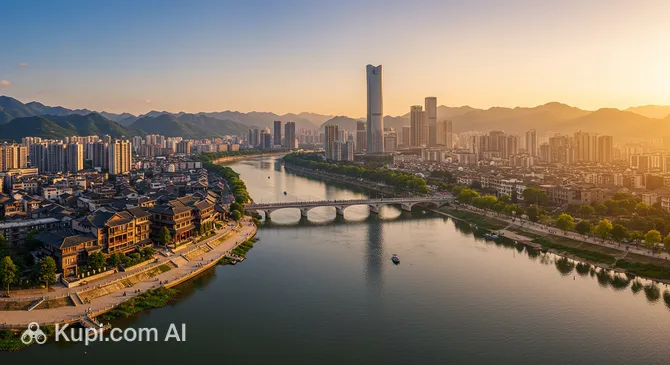
Jinhua is a dynamically developing metropolis located in the heart of Zhejiang Province in China. The city district combines the features of a modern industrial center with the rich cultural traditions of East China. Occupying a strategic position in a river valley surrounded by picturesque hills, the city serves as a vital transportation and logistics hub for the region.
With a metropolitan population exceeding 5 million people, Jinhua impresses with its scale. Although the city appears as a typical modern metropolis with dense development and wide highways, its historical heritage dates back to the era of the first Chinese empires. Strolling along the river embankments, you can feel the rhythm of life in authentic industrial China, which harmoniously blends business activity with a traditional way of life.
Jinhua. Illustration.
Source: Kupi.com AI
For travelers, Jinhua is primarily interesting as an entry point to the wonderful world of Zhejiang Province. The city is famous for its green parks, ancient temples, and unique gastronomy. Although it doesn't always make the lists of top tourist routes, its hospitality, comfortable infrastructure, and proximity to natural attractions make it an excellent destination for those who want to see the real, non-tourist China. Visit this city to feel its unique energy and discover the hidden treasures of the eastern province.
Weather Overview
The weather in Jinhua is determined by a humid subtropical climate, characterized by a clear change of seasons. Summer in the city is usually hot and humid: in July and August, the average temperature reaches +30°C, and daytime highs often exceed +34°C. Significant precipitation also falls during this period, often in the form of brief but intense downpours.
Winter in the region is mild, but due to high humidity, it can feel chilly. In January and December, the average temperature stays around +7...+8°C, while night frosts are rare. Spring and autumn are considered the most comfortable seasons to visit the city, offering pleasant warm weather with a moderate number of sunny days, which is ideal for walking in parks and exploring caves.
Average monthly temperature
Average monthly precipitation
Interesting Facts
Jinhua is a city that knows how to surprise with its scale and historical details hidden behind the facades of modern buildings.
The World Capital of Ham: Jinhua is famous throughout China and beyond for its unique dry-cured ham (Jinhua Ham), the production technology of which has remained unchanged for hundreds of years. It is considered a prized delicacy and a vital ingredient in many classic Chinese dishes.
A Hub of Speed: The city is one of East China's key railway hubs. From here, you can reach Shanghai or Hangzhou by high-speed train in less than a couple of hours, making it a strategically important point for the country's logistics.
An Administrative Giant:Jinhua's status as a "prefecture-level city" means it governs a vast territory, including several other cities, such as the world-famous trade center Yiwu.
City of Poets: Over the centuries, Jinhua has inspired many famous Chinese literati. The ancient Bayonglou Tower is considered a "literary lighthouse" of the region, as many classical poems are dedicated to it.
How to Get There
Thanks to its location in the center of Zhejiang Province, the city's transport accessibility is excellent. If you are planning a visit, it's worth exploring all the ways to get to Jinhua in advance, as the city is integrated into a powerful network of high-speed railways and highways.
The city's own airport with IATA code JHD (Jinhua) has a limited number of flights, so most travelers prefer to use the air hubs of neighboring metropolises. Most often, tourists fly into Hangzhou Xiaoshan International Airport or the airport in the neighboring city of Yiwu, from where they can quickly reach the center of Jinhua by train or transfer in 1–2 hours.
Railway travel is the most convenient way to get around. Jinhua Railway Station is a major hub receiving dozens of high-speed trains daily. Modern trains connect the city with China's largest centers, ensuring comfort and punctual schedules. Within the city, the easiest way to get from the stations to hotels is by taxi or municipal buses.
Although Jinhua is often perceived as an industrial center, the city and its surroundings hide some amazing sights. One of the region's most famous gems is Double Dragon Cave (Shuanglong Cave), located a few kilometers from the city center. This unique natural formation impresses with its stalactites and underground lakes. Entry to the cave is made on small boats where visitors must lie flat due to the low rock ceiling.
In the heart of the city, it's worth visiting Bayong Park and the historic Bayonglou Tower. This place is steeped in the spirit of antiquity: the tower, built centuries ago, has been praised by Chinese poets many times. Its upper levels offer peaceful views of the Wujiang River and modern districts, creating a vivid contrast between past and present.
Culture lovers will enjoy visiting the Jinhua Museum, which houses artifacts telling the story of the region's development. It is also worth taking a walk through the old trading streets, where elements of traditional Zhejiang architecture have been preserved. These places offer a glimpse into the city's history and showcase craft workshops that continue ancestral traditions, creating a unique atmosphere of old China amidst forests of glass and concrete.
Local Cuisine
A gastronomic journey to Jinhua is unimaginable without its main symbol—Jinhua ham. This delicacy, known for its rich aroma and salty-sweet taste, is used as a base for soups or served in thin slices. Local cuisine, being part of the Zhejiang culinary tradition, is characterized by the freshness of ingredients and mild flavor combinations, where sugar and soy sauce create a perfect balance.
In addition to the famous ham, be sure to try the river fish dishes, braised pork with vegetables, and local types of noodles. Street food in Jinhua is an adventure in itself. In morning and evening markets, you can find various steamed baozi buns, fried dumplings, and freshly brewed local tea, which is famous for its delicate aroma. The food culture here is very democratic: luxury restaurants in shopping centers sit alongside bustling family eateries.
For tourists, the most attractive lunch spots are food courts in large malls and pedestrian streets, where you can try everything at once. Establishments often serve seafood traditional to the region, even though the city is located inland. Don't forget to order a tea ceremony in one of the local tea houses—it's the best way to feel the leisurely pace of life in this ancient land.
Travel Tips
Preparing for your trip to Jinhua will help you feel confident in this major industrial and cultural center of East China. Use these practical tips for a comfortable journey.
Clothing and Essentials: Jinhua has a humid subtropical climate. In summer, bring light clothing made from natural fabrics, and in winter, layered clothing, as humidity intensifies the feeling of cold. Be sure to prepare comfortable shoes for long walks in parks and shopping centers.
Transport: The main way to get around is by bus or taxi. Install the Didi app to call a car; it will significantly simplify communication with drivers.
Finances: The official currency is the Chinese Yuan. Cards are not accepted everywhere, so set up the Alipay or WeChat Pay payment systems by linking an international card. A small amount of cash will also be useful.
Health and Safety: The city is safe, but keep an eye on your belongings in crowded places. Pharmacies are common, but medicine names may only be in Chinese, so it's better to have a basic first-aid kit with you.
Communication: English is not widely spoken. Download an offline translator and maps (such as Baidu Maps or Amap) in advance, and carry a hotel card with the address in Chinese.
Local Etiquette: Be polite; a greeting with a slight bow or a nod is quite appropriate. Avoid loud arguments in public places—it is not encouraged in the local culture.
What to Avoid: Do not attempt to discuss political topics and avoid taking photographs of military or restricted sites to prevent misunderstandings with the authorities.
Specific Tip: Be sure to try Jinhua ham, but remember that it is very salty and is most often used as an addition to other dishes rather than as a standalone snack.
May your journey to this dynamic city be filled with bright discoveries and pleasant encounters!
Entertainment & Nightlife
Nightlife in Jinhua is centered around modern shopping and entertainment centers and well-maintained embankments. At dusk, the city transforms: bridges and skyscraper facades light up with neon, and residents head out for walks along the river. The main concentration of bars, restaurants, and karaoke clubs (KTV) is in the central districts and near large shopping areas, where young people and business professionals relax after a day's work.
For those who prefer active evening leisure, numerous KTV halls are available—perhaps the most popular format of entertainment in the city. The atmosphere in local clubs and bars is usually friendly, and the dress code remains casual. If you are looking for a more peaceful pastime, head to one of the night markets or cozy tea houses where you can sample local tea varieties in a quiet setting. Prices in Jinhua establishments are significantly lower than in Shanghai or Hangzhou, making leisure here very affordable.
During the day, the city offers various recreation formats—from going to cinemas in malls to walking in theme parks. Families with children often choose play centers and amusement zones inside shopping complexes. To ensure safety when traveling at night, it is recommended to use official taxi apps like Didi, which operate 24/7 and provide transparent fares. In general, the central streets of the city remain safe for walking even late at night.
Parks & Museums
The green zones of Jinhua are true oases amidst the city bustle. Bayong Park is the city's most significant historical space. Located on the riverbank, it not only offers shady alleys for walking but also preserves the memory of great poets of the past. Here you can see traditional Chinese gazebos and enjoy views of the water, making the park a popular spot for morning exercises for locals and evening strolls for tourists.
For a deeper immersion into the region's culture, it's worth visiting the Jinhua Museum. Its exhibitions cover a vast period—from ancient archaeological finds to the achievements of modern industry. The museum is designed with modern technology in mind, making the study of history engaging even for those who don't speak Chinese. Special attention is paid to the traditional crafts and daily life of the residents of Zhejiang Province.
Another interesting site is the Ham Museum, dedicated to the city's main gastronomic brand. Here you can learn about the centuries-old history of the delicacy's production and see the entire preparation process. The combination of such diverse sites—from natural parks to specialized museums—allows you to get a complete picture of the character and traditions of Jinhua.
Getting Around
The transport system in Jinhua is geared toward the convenience of moving around a large and densely built city. The core of public transport consists of buses, with a route network covering all districts of the metropolitan area. Buses run regularly, and the fare is extremely affordable. It is convenient to use mobile apps or transport cards for payment, although cash payment (usually 1 yuan coins) is also possible.
Taxis are the most popular way for tourists to get around. Cars can be hailed directly on the street or called via the Didi app, which has an English interface. This eliminates translation difficulties since the destination is entered in advance. Taxi prices in Jinhua are moderate, making this the primary mode of transport for trips to attractions or railway stations.
While there is no classic metro in the city itself yet, there is active development of suburban rail services connecting Jinhua with neighboring Yiwu. Bike rental services are also available for short trips around the central districts. It is important to remember that during peak hours, serious traffic jams are possible on major highways, so you should plan trips to the station or airport with extra time.
Accommodation
Jinhua offers a wide range of accommodation options, primarily oriented toward business travelers and domestic tourists. In the central areas of the city and near the railway station, you'll find hotels from well-known Chinese and international mid-range and business-class chains. These establishments offer modern comfort and quality service, and they often have conference rooms.
For those looking for budget options, numerous hostels and inexpensive guesthouses are available in the city. Apartment rentals are also gaining popularity, which is especially convenient for long-term stays. The districts along the Wujiang River embankment are considered the most prestigious and convenient for tourists: here you can find housing with beautiful city views and easy access to walking areas and restaurants.
It is recommended to book hotels in advance, especially during major exhibitions in neighboring Yiwu or during Chinese national holidays, when demand for housing spikes. Most hotels support online booking through international services; however, you should ensure that the chosen accommodation is licensed to host foreign citizens.
Nearby Cities
The city of Jinhua serves as an excellent starting point for exploring the surroundings, offering travelers access to unique places within a single day's trip. The region is rich in both industrial giants and quiet historical corners, easily accessible by high-speed trains or buses.
Just 23 kilometers away is Lanxi—a charming city known for its ancient architecture and picturesque landscapes. Another must-visit destination is Yiwu, famous for its colossal commodity market, which is considered the largest in the world. For those interested in culture, a trip to Dongyang will be interesting, where you can see the wood carving craftsmanship that has made this region famous throughout China.
Exploring the surroundings of Jinhua allows you to see the versatility of Zhejiang Province: from bustling trading floors to authentic villages with centuries of history. The well-developed transport network makes such trips comfortable and full of impressions.
Shopping & Souvenirs
Shopping in Jinhua is a mix of modern retail spaces and traditional markets. The main shopping opportunities are concentrated in large shopping and entertainment centers located in the central part of the city. Here you can find both well-known international brands and popular Chinese labels for clothing, electronics, and cosmetics. These complexes also serve as leisure hubs with restaurants and cinemas.
The main souvenir that you should definitely bring back from your trip is the famous Jinhua ham. It can be purchased in specialized stores or in the gourmet sections of large supermarkets in vacuum packaging, which is convenient for transportation. The region is also famous for its tea and folk crafts, such as wood carvings or local ceramics, which make excellent reminders of your journey.
For those seeking an authentic experience, it's worth visiting local markets and shopping streets. Here you can bargain and find inexpensive household goods, textiles, and fresh produce. Shops in Jinhua typically operate from 10:00 to 22:00, and payment is most often made via the WeChat Pay and Alipay mobile apps, though cash and international cards are accepted in major retail outlets and hotels.