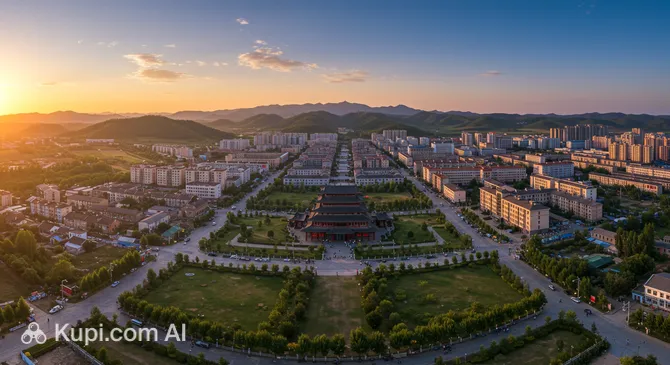
Hegang is a major industrial center located in the northern part of Heilongjiang Province, in northeastern China. The city possesses the unique atmosphere of an industrial giant while retaining the spirit of a traditional Chinese province. Nestled in a picturesque setting, Hegang offers an interesting blend of powerful energy and the calm rhythm of life characteristic of this region.
Hegang. Illustration.
Source: Kupi.com AI
The city's geographic location has largely defined its development: its proximity to the border and rich natural resources have turned it into an important economic hub. With a population of over 1 million, Hegang remains a dynamic place where modern production exists alongside the untouched nature of forests and river systems. The rich history of Hegang is closely tied to the development of the country's coal industry and energy sector.
For travelers, the city is primarily interesting for its authentic heritage. Here, you can see architectural monuments reflecting periods of industrialization and get acquainted with the unique culture of the country's northeast. Hegang offers a rare opportunity to see the "real" China away from standard tourist routes, enjoy the sincere hospitality of the locals, and explore surrounding natural parks.
By visiting Hegang, you discover a side of the Middle Kingdom that rarely makes it onto the covers of guidebooks, yet it is here that the power and scale of the region's industrial heritage are best felt in harmony with the rugged beauty of northern nature.
Weather Overview
The climate of Hegang is typical for northeastern China and is characterized as moderate continental. Here, contrasting seasons await you: a long, harsh winter and a relatively short but warm summer. Most precipitation falls during the summer and autumn months, while the winter period is marked by dryness and clear skies.
In winter, temperatures can drop to -23°C and below, so serious protection against the cold is necessary for a trip during this time. However, it is during this period that the city is covered in fluffy snow, acquiring a special charm. Summer in Hegang is pleasant, with average temperatures around +22°C, making it an ideal time for walks. To better plan your visit, check the detailed weather in the city.
The most favorable time to visit Hegang is from June to August, as well as early autumn (September). During this time, the region's nature flourishes, and temperature conditions are most comfortable for sightseeing and visiting natural parks without having to combat extreme frosts.
Average monthly temperature
Average monthly precipitation
Interesting Facts
Industrial Heart of the North: Hegang is one of the largest coal and energy industry centers in all of Northeast China, which has defined the regional economic landscape for decades.
Soviet Legacy: The city's layout and its old architecture clearly show the influence of Soviet urban planning traditions, preserved from the era of active cooperation between the two countries in the middle of the last century.
Strategic Neighborhood: The city occupies a unique geographic position in Heilongjiang Province, located in close proximity to the Russian border, which leaves its mark on local trade and culture.
Metropolitan Scale: Despite its "provincial" status, Hegang's population exceeds 1 million people, making it a significant regional hub.
Natural Wealth: The surrounding territory is famous not only for minerals but also for its rich forests and complex river systems typical of China's northern latitudes.
How to Get There
The easiest way to reach Hegang is by rail, as the city is an important transport hub in northeastern China. A developed network of tracks connects it to many major centers in Heilongjiang Province. Detailed information on routes and tickets can be found in the section describing the transport accessibility of the city.
For those traveling from afar, the most convenient option is a flight to Harbin, the provincial capital. After arriving in Harbin, you can transfer to a high-speed or regular train to Hegang. The journey by train takes several hours, during which you can observe typical northern Chinese landscapes—endless fields and forest tracts.
Hegang Railway Station receives trains from various cities in the region, ensuring stable connections with neighboring provincial centers. Train travel in China is considered one of the most reliable and comfortable ways to get around, helping to avoid delays related to weather conditions, which is especially relevant during the harsh northeastern winters.
Station
Passenger traffic
Distance
Jiamusi Railway Station
6
61 km
Obluchye Railway Station
—
193 km
Lagar-Aul Station
—
197 km
Kundur-Khabarovsky Station
—
198 km
Izvestkovaya Station
—
204 km
The city can also be reached by intercity buses that run along a developed network of modern highways. This option is convenient for shorter distances between settlements within the province. Road conditions in the region are quite good, making Hegang accessible by all types of transport.
Main Attractions
The attractions of Hegang primarily reflect its significance as an important regional industrial center. Travelers will find it interesting to explore industrial heritage sites that vividly demonstrate the path of Chinese economic development in the 20th century. Special attention should be paid to the city's architecture: Soviet-era buildings have been preserved here, bearing witness to the close historical cooperation and cultural exchange of that time.
The natural beauty surrounding the city is just as impressive as its architectural landscape. The outskirts are rich with forested hills and picturesque river valleys, ideal for eco-tourism and leisurely walks. The Amur River (Heilongjiang) and its tributaries form a unique landscape that attracts photography enthusiasts and those looking for peaceful outdoor recreation.
For those who want to dive deeper into local life, the city squares and public spaces are a must-visit. Here, you can observe the daily lives of local residents, participate in traditional street activities, and feel the true rhythm of life in northeastern China. Proximity to the border also gives Hegang a special flavor, blending various cultural influences.
Local Cuisine
The cuisine of Hegang is a prime example of northeastern culinary traditions (Dongbei), where hearty and calorie-dense dishes take center stage. Due to the cold climate, locals prefer meat, wheat, and corn. Be sure to try traditional jiaozi dumplings with various fillings and thick, rich soups that warm you up in the winter chill. The city's culinary scene is all about honest, simple food made from fresh local ingredients.
Signature regional dishes include braised meat with vegetables and river fish delicacies caught in local waters. Hegang is also known for using wild herbs and mushrooms from the surrounding forests, which adds a special northern character to the food. For breakfast, locals often choose fried flatbreads or hot hand-pulled noodles, which can be found in small family shops throughout the city.
The dining culture here is approachable: the best flavors are hidden in small restaurants and street food markets where life is in full swing. Popular drinks include traditional green tea as well as local beer varieties that perfectly complement spicy and salty snacks. Dinner in Hegang is always a bountiful meal in a friendly atmosphere, where portions are traditionally large and hospitality knows no bounds.
Travel Tips
Visiting Hegang will be a fascinating immersion into the life of China's true industrial north, and these tips will help make your trip as comfortable as possible.
Clothing and Seasons: Remember that Hegang has harsh winters, so a warm down jacket, thermal underwear, and reliable footwear are essential from November to March. Summers are warm and comfortable, but don't forget to bring an umbrella in case of rain.
City Transport: It is most convenient to get around by taxi using the Didi app. This saves you from having to explain the address to the driver—simply mark the point on the map.
Finances and Payment: The primary currency is the Yuan. Be sure to set up Alipay or WeChat Pay and link your card—cash is accepted less frequently, and international bank cards are unreliable in shops.
Language Barrier: English is practically non-existent in Hegang. Download an offline translator in advance and carry a card with your hotel's address written in Chinese characters.
Health: Pharmacies are found at every turn, but most medications are labeled in Chinese. We recommend bringing a basic first-aid kit, especially if you need specific medications.
Connectivity: For stable internet, it's best to buy a local SIM card (such as China Unicom or China Mobile) at your arrival airport or at mobile service offices in the city. Remember that a VPN is necessary to access familiar Western services.
Local Etiquette: Residents of the northeast are famous for their friendliness and directness. Be polite, and don't be surprised by loud talking in restaurants—it's part of the local social culture.
What to Avoid: Avoid engaging in political discussions and try not to photograph military or government sites without explicit permission.
By following these simple rules, you can focus on exploring the city's unique atmosphere and enjoy your trip to Hegang!
Entertainment & Nightlife
Entertainment in Hegang is primarily geared toward local residents, allowing tourists to gain a highly authentic experience. The city's evening life is concentrated in the central districts, which are home to numerous karaoke clubs (KTV). This is one of the most popular ways to spend leisure time: locals love to gather in groups to sing and socialize in a cozy setting. The city also features modern cinemas offering a wide selection of both domestic and international premieres.
Hegang's night scene is quieter than that of Shanghai or Beijing, but you can still find cozy bars and cafes where young people gather. These establishments often stay open late into the evening, offering drinks and light snacks. They are excellent places to make connections and feel the rhythm of a provincial yet energetic city. Safety in Hegang is at a high level, making evening walks along the well-lit central streets quite comfortable.
Daytime entertainment includes visiting local parks, where life bustles from early morning. You can join groups of locals practicing Tai Chi or dancing in the open air. For family vacations, small entertainment centers and play zones in large shopping complexes are suitable. Hegang invites guests to enjoy life's simple pleasures in a relaxed and friendly atmosphere.
Parks & Museums
The parks of Hegang are favorite recreational spots for residents, where the industrial landscape gives way to the serenity of nature. City parks offer well-maintained walking paths, picturesque bridges over small bodies of water, and areas for practicing traditional gymnastics. During the warmer months, these zones transform into green oases where you can escape the city noise and enjoy the quiet under the shade of trees typical of northern latitudes.
The city's museum scene is closely intertwined with its history as the energy heart of the region. Local museums are often dedicated to the development of the coal industry and the technical achievements that formed the basis of Hegang's prosperity. Exhibits include historical photographs, mine models, and industrial equipment from past years, making a visit to these museums essential for those wanting to understand the economic power of Heilongjiang Province.
Beyond the city center, travelers can find nature reserves and forest parks. These areas preserve the natural ecosystems of Northeast China and offer opportunities for hiking and bird watching. The clean air and vast forest tracts make the Hegang outskirts attractive to outdoor enthusiasts looking to swap an urban setting for the wild.
Getting Around
The public transport system in Hegang is represented by an extensive network of buses and trolleybuses that provide reliable connections between all city districts. For a tourist, the bus is the most affordable way to get around, allowing easy access to major shopping areas and administrative centers. Routes cover the entire city, and fares remain minimal, making this mode of transport extremely economical.
Taxis are very popular in Hegang due to their availability and comfort. You can always catch an available car on the street or use the popular Chinese app Didi. Taxi prices in the city are significantly lower than international standards, making it often the best choice for those who don't want to navigate the intricacies of bus routes or are traveling with luggage. A trip across the city center usually costs a nominal amount.
For traveling between Hegang and neighboring cities in the province, residents actively use rail connections and intercity buses. The city's main station is a key point from which trains depart to Harbin and other regional centers. Within the city, you can also find bike-sharing services, which become increasingly popular during the warmer months, offering an eco-friendly way to explore city streets and parks.
Accommodation
Accommodation in Hegang consists primarily of mid-range hotels and budget guesthouses, making a stay here affordable for most travelers. Housing prices in the city are noticeably lower than in China's popular tourist centers, while the service level in chain hotels remains quite decent. You can find both classic hotels with a full range of services and simpler apartments for short-term rental.
The most convenient areas to stay are the central parts of the city, located near administrative buildings and shopping zones. Proximity to the railway station or major bus routes is also an advantage, as it significantly simplifies moving around the city and planning trips to the surrounding areas. For those who prefer quiet, hotels located slightly away from the main thoroughfares are suitable.
When planning a trip to Hegang, it is recommended to book your room in advance, especially if your visit coincides with national holidays in China, when the demand for housing spikes. Most of the city's modern hotels are equipped with everything needed for a comfortable stay, from wireless internet to air conditioning, ensuring a pleasant visit regardless of the local climate's severity.
Nearby Cities
Hegang serves as an excellent starting point for exploring lesser-known but characteristic corners of northeastern China. The region around the city is rich in industrial centers and natural zones that provide a deeper understanding of life in Heilongjiang Province. Just an hour's drive away is the city of Jiamusi, an important cultural and transport hub of the region, offering travelers interesting walks along the Amur River.
For those interested in local history and the lifestyle of small settlements, trips to Jixian or Shuangyashan will be rewarding. Like Hegang, these cities are closely tied to resource extraction and industry, creating a special northern industrial atmosphere. They can be reached by train or regular bus services, making such excursions convenient for one-day trips.
A longer trip can be planned to Fujin or the picturesque Xinqing, where the nature of the northern region appears in all its glory. Exploring the outskirts of Hegang allows you to see the diversity of landscapes and architectural styles of this region, revealing new facets of life in modern China beyond its major metropolises.
Shopping & Souvenirs
Shopping in Hegang is mainly concentrated in the central part of the city, where modern shopping complexes sit alongside bustling street markets. You won't find glamorous boutiques of global brands here, but there is a vast selection of high-quality Chinese-made goods. The city's main shopping centers offer clothing, electronics, and household goods at prices that will pleasantly surprise travelers used to the costs in major metropolises.
For those seeking an authentic experience, local markets are a must-visit. These are the perfect places to feel the flavor of the country's northeast and purchase fresh produce, spices, or traditional Chinese remedies. Markets in Hegang are not just places to buy things but also centers of social life where you can see the daily routines of locals and try popular street snacks.
As souvenirs from Hegang, it's worth bringing back local textiles, ceramics, or traditional Chinese teas. River fish delicacies and forest treasures (dried mushrooms, berries), for which the region is famous, are particularly popular. Most shops operate from morning until late evening, and payment is most often made in cash (Yuan) or through mobile apps popular in China, such as WeChat Pay and Alipay.