Support

Harbin Taiping International Airport

About the Airport

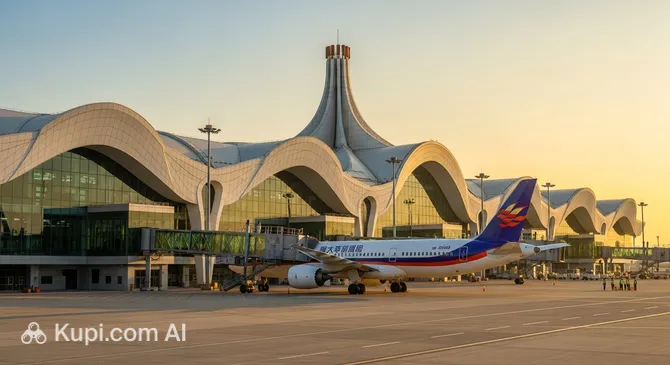
Harbin Taiping International Airport. Illustration.
Source: Kupi.com AI

Harbin Taiping International Airport is more than just the main air gateway to Heilongjiang Province; it is a vital bridge connecting China with Russia, Japan, and South Korea. Situated amidst the vast plains of Northeast China, this complex welcomes travelers with an atmosphere of hospitality and grand scale. Every year, millions of passengers pass through its terminals, many heading to see the world-famous Ice and Snow Festival in the legendary city of Harbin.

The airport is constantly modernizing, striving to meet the highest international standards of comfort and safety. Thanks to its strategic location, Taiping plays a key role in the region's development, evolving from a regional airfield into a powerful hub with sophisticated infrastructure. It embodies the dynamics of modern China, where high technology harmoniously combines with functionality and care for every visitor.

PropertyValue
IATA CodeHRB
ICAO CodeZYHB
CityHarbin
CountryChina
TimezoneAsia/Shanghai
Top AirlinesJuneyao Airlines, Air China, Shandong Airlines, China Eastern, Sichuan Airlines
ScheduleOnline Timetable

One of the airport's standout features is its ability to operate efficiently during harsh northern winters. Specialized services ensure the continuous operation of runways even at extremely low temperatures, making it one of the most reliable northern airports in the world. For tourists, this means confidence that their winter adventure will begin right on schedule, regardless of the weather's whims.

Inside the complex, passengers are met with spaciousness and intuitive logistics. Large waiting halls, plenty of light, and clear multilingual navigation make it easy to find your way, even for first-time visitors. Taiping offers excellent opportunities for pre-flight relaxation, whether it's a quiet wait in a business lounge or exploring the offerings of the local shopping galleries.

The airport actively collaborates with leading carriers, including Juneyao Airlines, Air China, and China Southern, providing a wide network of routes. This makes it a convenient starting point not only for exploring Harbin itself but also for further travels across the Middle Kingdom. The airport's modern appearance and technical equipment underscore the city's status as an important economic and cultural center of the region.

For those who value time and comfort, the airport provides a full range of necessary services: from modern self-check-in kiosks to cozy relaxation zones. Attentive staff and high service standards create a pleasant first impression of the region even before you leave the terminal building. Regardless of your purpose for traveling, Harbin Taiping will be a reliable and comfortable start to your journey.

Contact Information

To contact the administration and services of Harbin Taiping International Airport (HRB), or to obtain up-to-date flight information, you can use the following contact details:

  • Official airport website: hrbairport.cn
  • Information desk phone: +86 451 8289 4220 / +86 451 96368
  • Airport address: 150070, China, Heilongjiang Province, Harbin, Daoli District, Taiping International Airport
  • Email for general inquiries: info@hrbairport.cn
  • Social media: Official WeChat account — Harbin Airport
  • Baggage claim/Lost and found: +86 451 8289 4219
  • Passenger support and VIP service: +86 451 8289 4231

Please note that the airport information service operates 24/7; however, for international communication, it is recommended to use basic phrases in English or Chinese. Most information desks are located in the departure and arrival halls of Terminal 2.

How to Get to the Airport

There are several convenient ways to get from Taiping airport to the center of Harbin or vice versa. The most popular and economical option is the specialized Airport Express buses. Routes cover all key points of the city, including the central railway station, the Daoli district, and major hotels. A ticket costs about 20 yuan, and the journey takes from 50 to 90 minutes depending on traffic conditions.

For those who value individual comfort, official taxi services are available. The taxi stand is located directly at the exit of the Terminal 2 arrival zone. A trip to the central part of Harbin will cost approximately 100–150 yuan (including the expressway fee). It is recommended to use only official cars with a meter and to have the destination address written in Chinese.

Travelers planning active movement around the province can use car rental services. Counters of well-known rental companies are located in the arrival hall. Having a rental car gives you freedom of movement, though the specifics of winter driving in this region should be taken into account. The road from the city to the airport (about 34 km) follows the modern S1 expressway, which is kept in excellent condition.

The Harbin Taiping airport parking complex offers both short-term and long-term parking. The parking lot is equipped with a modern video surveillance system and automated payment. The first 15 minutes of parking are usually free, which is convenient for quick passenger drop-offs. For long-term vehicle storage, special rates are provided in covered areas protected from snow and wind.

It is important to remember that during major holidays or heavy snowfall, travel time can increase significantly. It is recommended to allow at least two hours for the journey to avoid being late for check-in. If you are traveling in a large group, the most cost-effective solution is to pre-book a private transfer, where you will be met with a sign in the arrival hall.

To check the current flight departure and arrival times before leaving the city, you can view the schedule on our website. This will help you adjust your departure time and avoid unnecessary waiting in the terminal. Plan your route in advance, keeping in mind the harsh but beautiful climate of China's northern capital.

Terminals and Layout

As of today, Harbin Taiping International Airport has two terminals, the primary one being the modern Terminal 2 (T2). This impressive structure, opened in 2018, took over the handling of almost all domestic and international flights. Its architecture features an abundance of glass and steel, and the interior space is organized to minimize queues and make navigation as transparent as possible.

The old Terminal 1 (T1) was temporarily closed for reconstruction following the launch of the new building or is used for special flights and cargo operations. Passengers should head to T2, which is divided into functional zones. On the upper floor, there is a spacious departure hall with numerous check-in counters, while the lower level is dedicated to the arrival area, baggage claim, and access to public transport.

Check-in and security procedures at HRB airport are organized efficiently. For passengers without checked baggage, numerous self-check-in kiosks are available, which significantly saves time. The security screening area is divided into several flows, and polite staff are always ready to point you in the right direction. It is recommended to arrive at the terminal 2-3 hours before departure, especially during the peak winter season when the number of tourists increases.

The international and domestic departure zones in Terminal 2 are clearly demarcated. After passing through customs and border control, international travelers enter a modern waiting area with Duty Free shops and a variety of cafes. Navigation inside the terminal is duplicated in English, and interactive maps are installed at key intersections to help quickly find the right boarding gate or rest area.

Walkways within Terminal 2 are equipped with moving walkways (travelators), facilitating movement for the elderly and passengers with heavy hand luggage. The entire complex is designed with a barrier-free environment in mind. Great attention is paid to the waiting areas at the gates: they are equipped with comfortable seating and panoramic windows overlooking the runway, allowing you to watch the operations of a northern airport in real time.

Airport History

The history of Harbin Taiping International Airport began in 1979 when the first runway was commissioned on the site of the former Yanjiagang military airfield. In those years, it served only a small number of domestic flights, but the rapid economic development of the region required the creation of a full-fledged transport hub. From its very beginning, the airport was strategically important for connecting China's northern provinces with the rest of the country.

A landmark event occurred in 1994 when the airport received its modern name — Taiping, which translates from Chinese as "Great Peace." During the same period, a large-scale reconstruction began, aimed at achieving international status. New terminals and an extended runway allowed the airport to accommodate heavy long-haul aircraft, opening Harbin's path to global aviation markets.

In the early 2000s, Harbin Taiping became one of the fastest-growing aviation hubs in Northeast China. An important stage was the development of international connections, especially with Russian cities, which made Harbin a key transit point in the trade and economic relations between the two countries. Gradually, the airport transformed into a modern complex capable of handling international-level cargo and passenger flows.

A new era for the airport began in 2018 with the opening of the grand Terminal 2. This multi-billion yuan project increased the capacity to 18 million passengers per year. The futuristic design of the new building, inspired by the shapes of ice crystals, became a true ornament of the city and a symbol of the technological progress of Heilongjiang Province.

Today, the airport continues to set new records for traffic volume and service quality. Over the decades of its development, Taiping has gone from a modest regional airfield to one of the ten largest airports in China. The history of this place is a story of transformation from a harsh frontier into a metropolis open to the world, ready to welcome guests from all corners of the globe.

Services and Facilities

To ensure maximum passenger comfort, Harbin Taiping International Airport offers a wide range of modern services. In the new Terminal 2, there are spacious business lounges and VIP areas where you can relax in silence, enjoy a buffet, or hold a business meeting. Free Wi-Fi is available for all visitors (authorization via phone number or WeChat is required), along with numerous charging stations for mobile devices.

The airport pays special attention to the financial comfort of travelers. Bank branches and currency exchange offices where you can purchase Chinese yuan operate in the departure and arrival halls. ATMs supporting international UnionPay payment systems are also installed throughout. If you require medical assistance, a 24-hour medical post and pharmacies with a wide range of medications are available on the premises.

Travelers with children will find everything they need for the convenience of little tourists. Specially equipped mother-and-child rooms offer areas for feeding and changing, while small playgrounds are provided in the waiting zones. This helps make waiting for a flight less tiring for the whole family. Additionally, the airport is fully adapted for passengers with disabilities, with ramps, elevators, and special restrooms installed throughout.

If your flight is delayed or you are planning a long layover, hotels located in the immediate vicinity of the terminal are at your service. Some of them provide a free shuttle from the terminal. Inside the building itself, luggage storage lockers are also available, where you can leave your suitcases for any period to go for a stroll through the city or enjoy some shopping in the Duty Free stores.

For business people, the airport offers business center services, including conference room rentals and photocopying services. It is also worth noting the high level of shopping infrastructure: from boutiques of famous brands to souvenir shops where you can buy famous Harbin honey, chocolate, and fur products. All airport staff are oriented toward providing assistance, and numerous information desks will help you quickly find the service you need.

Dining

The culinary map of Harbin Taiping International Airport offers travelers a unique blend of traditional Northeast Chinese flavors and popular international concepts. A special feature of local establishments is the presence of dishes with a "Russian accent," which have become a hallmark of Harbin. In the departure and arrival zones, you will find both upscale restaurants and cozy eateries for a quick bite.

Be sure to check out the establishments offering the famous Harbin red sausage and traditional "jiaozi" dumplings with various fillings. These local delicacies are extremely popular with tourists wishing to take a piece of local culture with them. Most of these cafes are located in the public area of Terminal 2 and in the departure zone after security.

For fans of the classics, the airport features well-known global fast-food chains such as KFC and Burger King, as well as coffee chains including Starbucks and Costa Coffee. You can always count on a familiar level of quality and a standard set of dishes here. The average price range in these establishments is quite affordable, and service is handled as quickly as possible, which is crucial before boarding a flight.

Vegetarians and healthy eating enthusiasts are offered cafes with a selection of fresh salads, vegetable-broth noodle soups, and traditional Chinese steamed "baozi" buns with greens. Most large restaurants are open from early morning until the last flight, providing hot meals even for transit passengers. Vending machines with drinks and light snacks are also installed in the waiting halls.

For those who prefer a full meal in a calm atmosphere, restaurants with panoramic views of the airfield are located on the upper levels of the terminal. Here you can order classic Cantonese or hearty Dongbei cuisine. Polite staff and menus with illustrations will help you easily make a choice, even if you do not speak Chinese.

Travel Tips

When planning a trip through Harbin Taiping International Airport, take into account the harsh climate of Heilongjiang Province. In winter months, temperatures can drop to -30°C and below. Make sure your outerwear is easily accessible, as the transition from the plane to the terminal via the jet bridge can be chilly, and you will feel the cold immediately upon exiting into the city. It is also worth checking the weather forecast: heavy snowfalls sometimes lead to flight delays due to the need for aircraft de-icing.

For check-in and all formalities in China, it is recommended to arrive at the airport 3 hours before an international flight and 2 hours before a domestic one. Chinese security standards are very strict: you must remove power banks (which must have clearly visible capacity markings), laptops, and umbrellas from your carry-on luggage. Remember that lighters and matches are strictly forbidden on board — they must be left in special containers before security.

If you have a layover in Harbin, check the transit rules in advance. Visa-free transit programs are available for some categories of citizens, but for this, you must have printed tickets to a third country. In the case of a long connection, it is better to book a hotel near the airport, as a trip to the city center and back can take a lot of time and cost more than resting at an airport hotel.

Modern technology helps save time at the airport. Use self-check-in terminals and electronic boarding passes if your airline allows it. To save money on communication, buy a local SIM card right in the arrival hall — it will be significantly cheaper than using roaming. It is also useful to pre-install a translator app that can work offline, as not all airport staff are fluent in English.

In the event of a flight delay, do not panic. Contact your airline's counter: in China, it is customary to provide passengers with food and water even for short delays. If the wait extends beyond 4 hours, you have the right to hotel accommodation. Keep all receipts and boarding passes — they may be useful for obtaining compensation or for reporting to your insurance company.

Reached the end of the page?

That means the route is fully explored