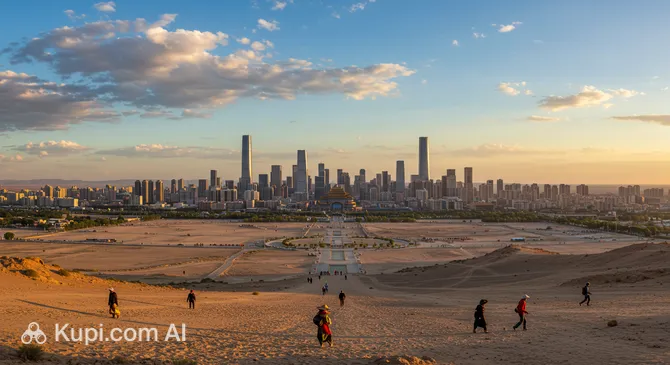
Welcome to Dongsheng — a dynamically developing district of Ordos City, located in the heart of the Inner Mongolia Autonomous Region. Situated at an altitude of about 1,300 meters above sea level, this city is a fascinating blend of ancient steppe traditions and China's rapid modern progress. With a population of over 147,000, Dongsheng maintains a cozy atmosphere while remaining an important administrative and cultural hub for the region.
Strolling through the city streets, it is impossible not to notice its unique design. City squares are adorned with original sculptures that celebrate the cultural heritage of the Mongolian people and the history of the land. The rich history of this region dates back to the 17th century when these lands belonged to Mongolian banners (hoshuns), and today Dongsheng is known as one of the most well-maintained and ecologically oriented residential areas in Inner Mongolia.
Dongsheng. Illustration.
Source: Kupi.com AI
Travelers are drawn here not only by modern architecture but also by its proximity to endless steppe landscapes and majestic temple complexes. Dongsheng serves as an ideal starting point for those who want to experience the authentic lifestyle of northern China, see grand Buddhist monuments, and enjoy vast expanses where the sky meets the earth. It is a city of contrasts that is definitely worth including in your Inner Mongolia itinerary.
Weather Overview
Dongsheng's climate is typical of the Inner Mongolian steppes: it is continental, with clearly defined seasons and significant temperature fluctuations. Thanks to the altitude of 1,299 meters above sea level, the air here is always fresh but dry. Summers in the city are moderately warm and sunny, with peak temperatures in July (average maximum around +29°C), while winters are harsh with little snow: in January, the thermometer can drop to -10°C and below.
The highest amount of precipitation falls in August, when intense but short-lived rains occur. Spring in the region is often windy, and dust storms sometimes happen, which should be taken into account when planning a trip. If you want to know in more detail what the weather in Dongsheng will be like during your visit, we recommend following short-term forecasts.
The optimal time for a visit is considered to be summer and early autumn, when the city's climate is most comfortable for walks and excursions. Expect a warm summer with occasional refreshing rains and cold, dry winters that require serious protection from the wind.
Average monthly temperature
Average monthly precipitation
Interesting Facts
Dongsheng hides many interesting details that help to better understand its unique character:
Administrative transformations: Dongsheng officially became an urban district only in 2000, and in 2016, the famous "city of the future" — the Kangbashi district — was separated from it.
Ecological leader: The district is known for creating one of the region's largest demonstration ecological residential zones, with an emphasis on sustainable development and the greening of steppe territories.
Mongolian flavor: The city actively promotes and supports the traditions of the Naadam festival, transforming the ordinary urban environment into a space for preserving nomadic culture.
Sculpture capital: The number and originality of street sculptures in Dongsheng are significantly higher than in average cities of similar size, making its appearance highly recognizable.
How to Get There
Dongsheng enjoys good transport connectivity with key cities in the region, making it accessible for travelers. The main flow of tourists arrives here via the capital of Inner Mongolia — Hohhot, located about 200 kilometers to the east. There is a regular bus service between the cities, and a car trip takes about three hours along modern high-speed highways.
For those planning to fly, the nearest air gates are located in the neighboring district of Ordos. From there, Dongsheng can be easily reached by taxi or regular shuttles. The city is also integrated into the railway system, connecting it with major hubs in northern China, allowing tourists to comfortably plan complex routes. Detailed information about routes can be found in the section about the city's transport accessibility.
The region's railway stations handle both short-distance and long-distance trains. The stations are equipped with modern navigation, and city buses and taxis run from the platforms to the central quarters of Dongsheng, providing a quick transfer to your accommodation.
Station
Passenger traffic
Distance
Ordos Railway Station
4
31 km
Baotou railway station
10
88 km
Hohhot railway station
9
183 km
Hohhot railway station
9
183 km
Qianzhai Railway Station
2
219 km
Main Attractions
One of the most majestic sights that makes this region worth a visit is the Yangshan Buddha. Located at the Dongsheng Temple on the peak of Yinshan Mountain, this colossal figure is considered the third largest Buddha statue in the country and the largest in Northern China. The sight of the golden monument against the backdrop of the rugged northern hills leaves a lasting impression on every pilgrim and tourist.
Dongsheng's urban landscape is an open-air exhibition in itself. The district's main squares are decorated with original sculptural compositions reflecting the spirit of Inner Mongolia: from depictions of galloping horses to symbolic figures dedicated to the traditional Naadam festival. These art objects create a unique city identity, turning a simple walk into a fascinating immersion into local mythology and history.
For those seeking connection with nature, the city's surroundings offer access to picturesque steppes and low mountains. The proximity to natural landscapes allows for an easy transition from urban noise to the tranquility of open spaces, where you can feel the true scale of Inner Mongolia and see traditional elements of nomadic culture carefully preserved by local residents.
Local Cuisine
Dongsheng's gastronomy is a real feast for meat lovers. As part of Inner Mongolia, the district is famous for its roasted lamb, which is prepared here with a minimum amount of spices to emphasize the natural taste of high-quality meat. Be sure to try traditional Mongolian dishes such as "nomin" — a hearty homemade noodle dish that warms you up perfectly in cool weather.
Dairy products hold a special place in the local diet: from salted milk tea to various types of hard cheese and curd. The culinary traditions of the region have also been strongly influenced by neighboring provinces, so in Dongsheng's markets and small cafes, you can always find various steamed buns, dumplings, and wheat flour dishes typical of northern China.
To experience the local flavor, it is best to head to the markets or small establishments near transport hubs where the city residents themselves eat. There is a relaxed atmosphere here, and portions are usually very generous. In addition to the meal, locals often choose strong national drinks or refreshing fermented milk koumiss.
Travel Tips
Preparing for a trip to Dongsheng requires considering the specific characteristics of northern China. These tips will help make your journey as comfortable and safe as possible.
Clothing and Equipment: Due to the 1,300-meter altitude and steppe climate, the weather can be changeable. Bring layered clothing and a mandatory windbreaker. Don't forget comfortable shoes for walking on the hills and sunscreen — the sun is very active here.
Transport within the district: Use municipal buses for moving around Dongsheng. If you plan a trip to neighboring Ordos or Hohhot, it is better to buy intercity bus tickets in advance at the bus station.
Financial matters: The primary currency is the Chinese yuan. International payment cards are rarely accepted, so always have a supply of cash or a configured WeChat Pay/Alipay wallet.
Health: The air in the region is quite dry, and dust storms are possible in the spring. Keep moisturizing products with you and drink more water. Pharmacies are common, but medicine names will be in Chinese.
Language barrier: English is not widely spoken in Dongsheng. Download an offline translator and carry a card with the hotel's name in Chinese for taxi drivers.
Local etiquette: When visiting temples, maintain silence and do not take photos inside sanctuaries unless there are signs permitting it. Be polite and respect the traditions of both the Mongolian and Chinese populations.
What to avoid: It is not advisable to criticize local customs or monuments. Also, avoid walking alone in unlit outskirts, although the district is generally considered very safe.
May your introduction to this unique land of steppes and modern technology go smoothly and bring only bright impressions!
Entertainment & Nightlife
Entertainment in Dongsheng is mostly calm and contemplative, focused on cultural leisure and family walks. In the evening, the city center is transformed by the impressive lighting of squares and sculptural groups, making the district an ideal place for a leisurely promenade. Main activities are often centered around the central squares, where locals gather for traditional dancing or socializing.
Special attention should be paid to festival periods, such as the famous Mongolian Naadam. During this time, Dongsheng and the entire Ordos region turn into a center for folk festivities, sports competitions, and cultural performances. This is the best chance to see traditional wrestling, horse racing, and archery, as well as enjoy performances by folk groups.
Daytime leisure in the city is complemented by modern cinemas and shopping and entertainment zones, where you can find playgrounds and cozy cafes. Despite the absence of a bustling club scene, Dongsheng charms visitors with its safe and friendly atmosphere, allowing for comfortable time spent outdoors even in the late hours.
Parks & Museums
The main spiritual and cultural center of the district is the Dongsheng Temple, located on the picturesque slopes of Yinshan Mountain. This place combines the functions of a religious complex and a nature park: pilgrims come here to worship the Yangshan Buddha, while tourists enjoy panoramic views of the city and surrounding hills from the temple's observation platforms.
In the city itself, spacious squares and boulevards serve as park zones. Thanks to the abundance of sculptural compositions, they turn into a kind of open-air museum. Here you can spend hours examining the details of monuments dedicated to Mongolian heroes and traditions while relaxing in the shade of trees or by fountains that create a pleasant microclimate on hot summer days.
Although Dongsheng does not have a large number of classical museums, its streets and ecological zones tell the story of the region's development. A walk through an eco-residential quarter will show how modern architects integrate natural elements into the urban environment, creating comfortable living spaces in a harsh continental climate.
Getting Around
The public transport system in Dongsheng is simple and functional. The backbone of urban transport consists of buses, whose route network covers all important districts and connects Dongsheng with other parts of Ordos. Bus stops are conveniently located, and the fare remains very budget-friendly, making this type of transport the most popular among locals and budget-conscious tourists.
For quick travel around the city and trips to neighboring districts like Kangbashi, travelers often use taxis. A car can be hailed on the street or called via a mobile app. This is especially convenient for visiting remote attractions, such as the temple on Yinshan Mountain, where public transport is less frequent.
The payment system in Dongsheng's transport is gradually moving towards digital options: QR codes for payment systems are used everywhere. Tourists are recommended to carry small change (yuan) for paying on buses or set up Chinese payment services in advance. Despite the lack of a metro, the city roads are quite clear, and traffic jams are a rare occurrence.
Accommodation
Accommodation options in Dongsheng are primarily geared towards business travelers and tourists exploring Inner Mongolia. You can find both modern hotels of major Chinese chains and more modest city hotels. Most comfortable accommodation options are concentrated in the central part of the district, in close proximity to shopping centers and main transport arteries.
For budget travelers, guesthouses and small private hotels offering a basic set of services at affordable prices operate in Dongsheng. Those seeking a luxury level of service often choose hotels in neighboring Kangbashi or central Ordos, from where Dongsheng's attractions can be reached in 20–30 minutes by taxi.
During national holidays and the Naadam festival, demand for housing increases sharply, so it is recommended to book rooms in advance. When choosing, it is worth paying attention to the availability of English-speaking staff, as communication in smaller hotels may require the use of online translators.
Nearby Cities
Dongsheng serves as an excellent starting point for exploring the surroundings, which are rich in cultural and natural monuments. Just half an hour's drive away is the administrative center of the region — the city of Ordos, which amazes the imagination with its futuristic architecture and grand monuments to Genghis Khan. This is a must-visit destination for those who want to see the "China of the future" in the middle of the steppes.
For longer trips, Baotou is ideal; it is the largest industrial and cultural center of the region, located about 90 kilometers away. There you can visit majestic Buddhist monasteries and experience the industrial power of Northern China. It is also worth considering a trip to the provincial capital, Hohhot, to dive deeper into the history and religious heritage of the region.
Each of these destinations reveals its own facet of Inner Mongolian life — from ultra-modern metropolises to quiet historical centers. The well-developed road network makes it easy to plan day trips and return to cozy Dongsheng by evening.
Shopping & Souvenirs
Shopping in Dongsheng is primarily an opportunity to purchase unique goods that reflect the spirit of Inner Mongolia. The district is not overloaded with massive mega-malls; however, central shopping streets offer a decent selection of both local brands and daily necessities. The main emphasis here is on practicality and authenticity.
If you are looking for souvenirs, pay attention to products made of high-quality wool and cashmere — the region is famous for its textiles. At local markets located near the main squares, you can find traditional Mongolian jewelry, leather goods, and national accessories that will be a great reminder of your trip.
The city's food markets are the ideal place to buy local delicacies: dried meat, Mongolian cheeses, and traditional sweets. Most shops are open from morning until late evening, and payment is most often made through popular Chinese mobile apps, although large centers also accept cash yuan.