Support

Paraty

About

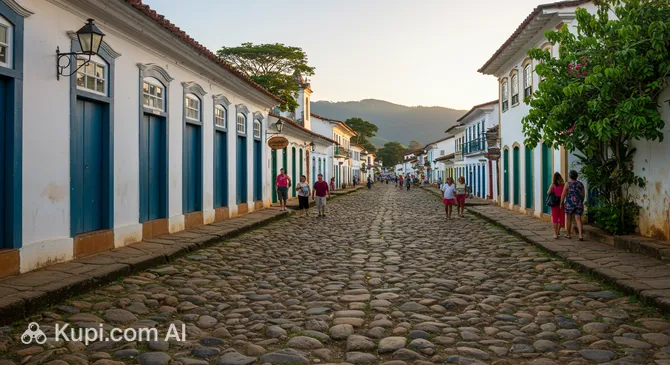
The picturesque colonial town of Paraty is a true open-air museum located in the state of Rio de Janeiro, in southeastern Brazil. Nestled on the shores of the sheltered Ilha Grande Bay, it feels like a place where time stood still several centuries ago. Its historical center is famous for its cobblestone streets, whitewashed houses with brightly colored trim, and a complete absence of cars, creating a unique, intimate atmosphere.
\n\n
Paraty. Illustration.
Source: Kupi.com AI

Traveler photos:

\n\n

Due to its exceptional preservation, Paraty was included in the UNESCO World Heritage list. The town's architectural character is defined by Portuguese Baroque-style cathedrals, such as the majestic Cathedral of Nossa Senhora dos Remédios and the ancient Santa Rita Church, built in 1722. Here, colonial aesthetics are harmoniously interwoven with the lushness of tropical nature: the town is surrounded by jungles, waterfalls, and more than 300 secluded beaches.

\n\n

The town's name comes from the language of the Guaianás Indians and means "fish river." Today, Paraty attracts travelers from all over the world not only for its history but also for its unique landscapes—mountains and the Atlantic Ocean form something akin to Brazilian fjords here. A walk through these neighborhoods, adorned with blooming bougainvillea, gives a sense of true immersion into the era of the Great Geographical Discoveries and the gold rush.

Contacts

To ensure your stroll through Paraty's historical districts is as comfortable as possible, we recommend checking the current opening hours of individual museums and exhibition halls before your visit.

How to contactContact
AddressR. Ten. Francisco Antonio - Centro Histórico, Paraty - RJ, 23970-000, Brazil
Phone+55 24 99963-3930
Websitewww.instagram.com

What to Do

Strolling through the pedestrian streets of Paraty is the main reason travelers come here. You can spend hours admiring the details of colonial buildings, ride in traditional horse-drawn carriages, or watch the tide slowly flood the coastal streets, turning them into mirrors. Be sure to visit the local churches: from the grand Cathedral of Nossa Senhora dos Remédios to small chapels, each of which was once intended for different social classes of colonial society.

\n\n

In the evening, Paraty is transformed: lights come on in cozy cafes where you should try the famous local cachaça. This sugarcane spirit has become so closely associated with the town that the name "Paraty" itself served as a synonym for the drink for a long time. Nature lovers will enjoy boat trips across the bay to numerous islands or a hike up Pedra da Tara, which offers a breathtaking panorama of tropical fjords and jungle.

\n\n

For adventure seekers and culture enthusiasts, the town offers festivals such as the Flip international literary forum, visits to old sugarcane plantations, and exploration of defensive forts. This place is perfect for those who want to combine quiet historical tourism with active recreation in one of the most beautiful corners of Brazil.

Getting There

Paraty is located approximately 250 km from Rio de Janeiro and a few hours' drive from São Paulo. The most popular and convenient way to get here is by the Costa Verde bus from Rio (the trip takes about 4 hours) or from São Paulo (the journey takes about 5–6 hours). The town's bus station is within walking distance of the historical center.

\n\n

For those who prefer the freedom of movement, renting a car is an excellent option. The route follows the winding but extremely scenic BR-101 highway, which stretches along the ocean coast past waterfalls and secluded beaches. If you prefer sea travel, you can arrive in the town by boat or motorboat from neighboring Angra dos Reis, which takes about an hour.

\n\n

It is important to remember that car access to the historical part of the city is strictly limited. Visitors are advised to leave their vehicles in parking lots on the outskirts and continue on foot. To fully enjoy the atmosphere and avoid the midday heat and crowds, it is best to plan your arrival for early morning.

Nearest city: Paraty

History & Facts

The history of Paraty began at the end of the 16th century when Portuguese colonists founded a settlement on the lands of the Guaianás Indians. It was officially granted city status on February 28, 1667. The name, which translates as "fish river," was given to the place due to the rich coastal waters and its strategic position in Ilha Grande Bay, which served as an ideal refuge for ships.

\n\n

The town's true heyday came at the end of the 17th century following the discovery of gold in the state of Minas Gerais. Paraty became a vital port on the legendary Gold Path (Caminho do Ouro)—a 1,200-kilometer road used to transport precious metals, diamonds, and coffee to the sea for shipment to Portugal. The wealth of that era was embodied in luxurious mansions, grand cathedrals, and a powerful fortress that protected the treasures from pirates.

\n\n

In the 19th century, when the main trade routes shifted to Rio de Janeiro, Paraty fell into isolation for a long time. Paradoxically, it was this period of being forgotten that helped preserve its unique architecture in its original form. In 1966, the town was recognized as a national monument and was later included in the UNESCO World Heritage list as an outstanding example of colonial urban planning.

Time Needed

For a brief introduction to the charm of Paraty's historical center and a tour of its main cathedrals, a 4 to 6-hour leisurely walk will suffice. This is enough time to soak in the atmosphere of the ancient streets and take memorable photos against the backdrop of colonial facades.

\n\n

However, if you plan to include a boat trip to the islands, a visit to remote beaches, or a hike up Pedra da Tara, you should allow at least 1–2 full days. For those who want to fully immerse themselves in the local culture, visit traditional fazendas, and tour cachaça distilleries, a three-day trip would be the ideal option.

Working Hours

The historical district of Paraty is an open urban space that is accessible 24/7. You can enjoy walking through the ancient streets at any time convenient for you, whether it's early morning when the town is just waking up or late evening under the glow of the lanterns.

\n\n

However, keep in mind that museums, churches, and art galleries located within the historical center have their own individual operating schedules. Most are open to tourists during daylight hours, but for specific exhibitions, it is recommended to check the schedule on-site or on the official pages of the establishments.

Open 24 hours

Nearby

Exploring the surroundings of Paraty can significantly enrich your trip, as many cultural and natural gems are hidden beyond the main squares. Very close by is the Sacred Art Museum of Paraty, where you can delve deeper into the region's religious heritage, while a walk to the Port of Paraty will allow you to feel the vibrant rhythm of coastal life.

\n\n

If you'd like a change of pace after your cultural program, head to the Paraty Pier, which offers classic views of the bay. The proximity of these locations makes it easy to combine historical tours with relaxation by the water or a taste of local cuisine in the cozy restaurants nearby.

NameDistance
Quintal da Vó Artisan Burger Restaurant0 km
Arte e Sabor0.1 km
Museum of Sacred Art of Paraty0.3 km
Sesc Paraty0.3 km
Port of Paraty0.4 km
Casa Viva0.7 km
Paraty Pier0.7 km

Reached the end of the page?

That means the route is fully explored