Support

Pantanal Biopark

About

Imagine a place where an entire ecosystem comes to life under one roof, recognized as the world's largest tropical wetland. Bioparque Pantanal is not just an aquarium, but a grand scientific and educational complex in the city of Campo Grande, serving as a gateway to the amazing world of Brazilian wildlife. Here, in the heart of Brazil, visitors can experience the incredible biodiversity of a region included in the UNESCO World Heritage list.
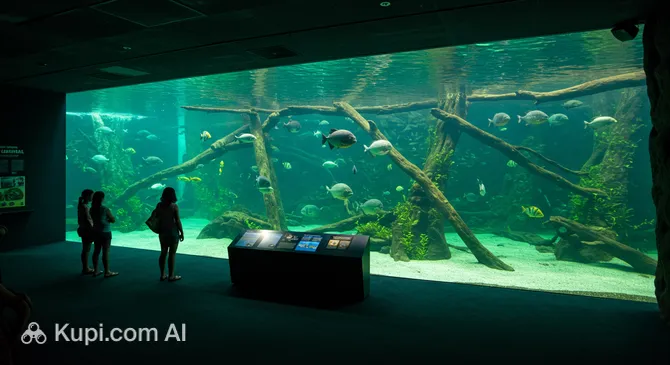
Pantanal Biopark. Illustration.
Source: Kupi.com AI

Traveler photos:

The complex is impressive for its scale and modern architecture. It was created to showcase the richness of the Pantanal, which covers an area of up to 195,000 square kilometers. Inside, you will find dozens of tanks representing the habitats of hundreds of species of fish, reptiles, and plants. It is a unique opportunity to see the hidden life of rivers and swamps without leaving the city limits.

Special attention is given here to regional symbols, such as the Jabiru stork and numerous species of exotic birds. Bioparque Pantanal is an essential starting point for any traveler wishing to understand why this region is considered one of the most biologically diverse places on the planet, home to thousands of plant species and hundreds of animal species.

Contacts

To plan your visit to Bioparque Pantanal, it is helpful to have current contact information at hand. Below are the key details to help you find your way and get in touch with the facility's administration.

How to contactContact
AddressAv. Afonso Pena, 6277 - Chácara Cachoeira, Campo Grande - MS, 79031-010, Brazil
Websitebioparquepantanal.ms.gov.br

What to Do

A visit to Bioparque Pantanal offers guests a unique opportunity to take an "underwater journey" through the planet's largest wetland region. The main activity here is observing exotic fish and reptiles in giant tanks that recreate their natural habitats in great detail. You will be able to see up close the inhabitants that are extremely difficult to spot in the wild Pantanal due to dense vegetation and the specific landscape.

Inside the complex, visitors are immersed in the study of biodiversity: from tiny, brightly colored fish to large predators. It is an excellent spot for an indoor photo safari, where each aquarium becomes a living painting. Pay attention to the educational interactive panels that explain the cyclical nature of life in the region — from the rainy season, when 80% of the territory is underwater, to the dry period.

After getting acquainted with the aquatic inhabitants at the Biopark, many tourists are inspired to take a full trip deeper into the region. In the Pantanal itself, horseback riding, canoeing, and spotting capybaras, caimans, and toucans in their natural environment are popular activities. The Biopark serves as the perfect introduction to the culture of the local people and allows you to appreciate the fragile beauty of this ecosystem before heading out to the real fazendas.

Getting There

Getting to Bioparque Pantanal is easy, as it is located on one of the city's main arteries — Avenida Afonso Pena. This makes it easily accessible for tourists staying in central areas. The most comfortable way to get around the city is by taxi or popular ride-sharing apps, which will take you directly to the entrance of the complex.

If you prefer public transport, many bus routes pass through Afonso Pena Avenue, connecting various parts of the city. For those planning further exploration of the region, remember that Campo Grande is the main "gateway" to the wild Pantanal. From here, multi-hour jeep safaris often begin into the depths of the wetlands, a journey that can take about 6 hours over rough terrain.

For travelers arriving from other regions, the city is also connected by rail to Corumbá — an important port on the upper Paraguay River. And if you want to see the scale of this unique ecosystem from a bird's-eye view, you can consider an aerial tour starting from the local airport.

Nearest city: Campo Grande

History & Facts

The history of the region to which Bioparque Pantanal is dedicated is full of amazing transformations. Research on bottom sediments shows that during the last ice age, this territory was not a blooming oasis, but a sandy desert. It was only with climate change and increased precipitation that the region turned into a giant system of lakes and rivers.

The scale of the Pantanal is staggering: it covers more than 187,000 hectares, which is nearly eighteen times the size of the famous Everglades National Park in Florida. This "spotted" landscape, consisting of wandering riverbeds and salt pans, sits at an altitude of only 50–70 meters above sea level, which contributes to its regular flooding.

The biological richness of these places is confirmed by impressive figures from years past. For example, in 1996, the crocodile population here reached 10 million individuals. Today, the Biopark serves not only as a tourist attraction but also as an important educational center, reminding visitors of the Pantanal's status as a UNESCO World Heritage site and the need to preserve this fragile ecosystem.

Time Needed

For a full exploration of Bioparque Pantanal, most visitors need between 2 to 3 hours. This is enough time to leisurely stroll through all the pavilions, observe the inhabitants of the massive aquariums, and read the information stands explaining the features of the local flora and fauna.

If you have a deep interest in biology or photography, your visit might extend to half a day. Given the attraction's popularity and the educational nature of its exhibits, it is recommended to arrive in the morning or immediately after the lunch break to avoid large tour groups and school excursions.

Working Hours

When planning your visit to Bioparque Pantanal, please note the operating schedule, as the facility is closed to visitors on Sundays and Mondays. On other days, the complex operates with a lunch break, which is important to consider when planning your route through Campo Grande.

Opening hours:
• Tuesday – Saturday: 08:30 – 12:00 and 13:30 – 17:30;
• Monday and Sunday: closed.

DayWorking hours
MondayClosed
Tuesday8:30 – 12:00, 1:30 – 17:30
Wednesday8:30 – 12:00, 1:30 – 17:30
Thursday8:30 – 12:00, 1:30 – 17:30
Friday8:30 – 12:00, 1:30 – 17:30
Saturday8:30 – 12:00, 1:30 – 17:30
SundayClosed

Nearby

Exploring the surroundings of Bioparque Pantanal will allow you to dive deeper into the city's atmosphere and learn more about its culture and history. Within walking distance or a short drive, you will find architectural monuments, cozy squares, and art objects that perfectly complement your itinerary through the capital of Mato Grosso do Sul.

NameDistance
Beers Hook Park0.5 km
Indigenous Nations Park0.6 km
Campo Grande Seafood and Grill Restaurant1.2 km
Campo Grande Shopping Mall1.3 km
Unica Club2.2 km
Pantanal Square3 km
Belmar Fidalgo Square3.2 km

Reached the end of the page?

That means the route is fully explored