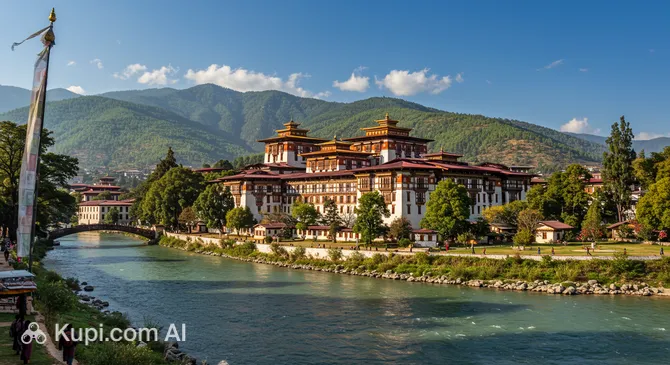
Thimphu is the amazing capital of Bhutan, located in the picturesque Wang Chhu river valley at an altitude of about 2,700 meters. Unlike bustling Asian megacities, this city preserves an atmosphere of high-mountain tranquility, where modern administrative buildings stand alongside majestic monasteries and traditional quarters.
Thimphu. Illustration.
Source: Kupi.com AI
With a population of about 104,000 people, Thimphu is the country's main political and cultural center. Its historical heritage is evident in every detail — from its unique architectural code to its leisurely pace of life. The city attracts travelers with the opportunity to see authentic Buddhist culture without sacrificing typical capital city comforts.
Visiting Thimphu is an invitation to a world where traditions and state institutions exist in harmony with the Himalayan nature. Be sure to take time to stroll through its central streets to feel the spirit of one of the most unusual cities in the world.
Weather Overview
Due to its location in a high-mountain Himalayan valley, Thimphu has a temperate and quite variable climate. Weather in Thimphu is characterized by cool summers with frequent rains and dry cold winters with clear skies. The altitude of about 2,700 meters above sea level makes the air fresh but causes temperatures to drop significantly after sunset.
During the winter period, from December to February, the average temperature is about 2°C, and at night, frosts down to -4°C often occur. Summer brings long-awaited warmth: in July and August, the air warms up to a comfortable 17°C, though this is also the monsoon season when the bulk of precipitation falls. Expect mild springs and autumns with bright sun, which are considered the best times to visit the city.
Average monthly temperature
Average monthly precipitation
Interesting Facts
Thimphu is one of the few capitals in the world that still completely lacks traffic lights. Traffic at major intersections is manually regulated by police officers in ornate booths.
The country's only international airport is located not in the capital itself, but in the city of Paro, about 65 kilometers from Thimphu.
The city is one of the highest capitals in Asia, situated at an altitude of about 2,700 meters above sea level surrounded by Himalayan peaks.
In the architecture of Thimphu, there is a strict law: all new buildings must be constructed in a traditional style with characteristic paintings and cornices to preserve the city's cultural appearance.
How to Get There
The transport accessibility of Bhutan's capital is largely determined by the mountain terrain and the country's commitment to preserving its unique environment. Currently, getting to Thimphu is only possible by land after arriving at Paro International Airport, which is about 65 km from the city. The trip by taxi or tourist bus takes about an hour and a half to two hours along winding roads with spectacular views.
Most international travelers arrive in the country via transit hubs in India, Thailand, or Nepal. It is worth considering that mountain roads require attention and extra time, especially during periods of roadwork or seasonal weather changes.
There is currently no rail service to Thimphu, as laying tracks in high-mountain conditions is a complex engineering task. Most travel within the country is done via roads that connect the capital with other valleys and regions.
Station
Passenger traffic
Distance
Rangpo railway station
2
115 km
New Cooch Behar Junction railway station
7
125 km
Jalpaiguri Road railway station
5
137 km
New Jalpaiguri Junction railway station
17
147 km
Adhikari railway station
4
176 km
Main Attractions
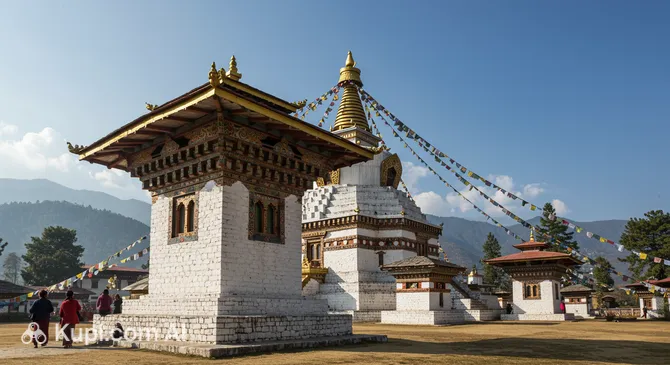
The main attractions of Thimphu are inextricably linked with the spiritual heritage and cultural code of the region. One of the city's key symbols is the National Memorial Chorten. This majestic structure with a golden spire was built in memory of the third King of Bhutan and today serves as a place of daily pilgrimage and prayer for hundreds of local residents.
National Memorial Chorten. Illustration.
Source: Kupi.com AI
Traveller photos:
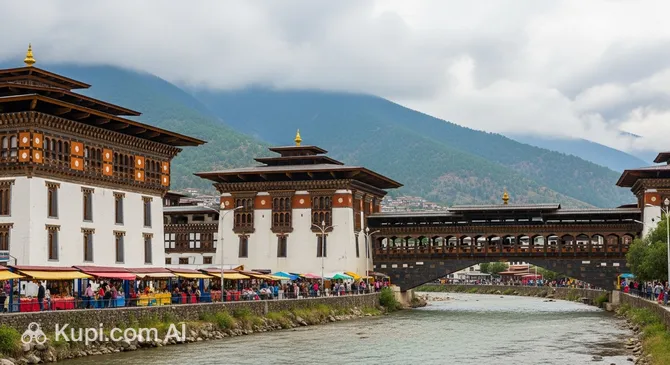
If you want to immerse yourself in the atmosphere of local life, be sure to visit the Centenary Farmers Market. This is the largest market in the capital, where you can find not only farm products and rare spices but also traditional handicrafts. For a deeper introduction to the region, tourists often turn to agencies such as Teem Travel Bhutan, which help arrange itineraries to the most hidden corners of the valley.
Centenary Farmers Market. Illustration.
Source: Kupi.com AI
Traveller photos:
The city's cultural landscape is also shaped by majestic dzongs — fortress-monasteries that serve as both religious and administrative centers. A walk through Thimphu allows you to see how ancient traditions are embodied in the architecture and daily rituals of modern Bhutanese people.
Local Cuisine
The local cuisine of Thimphu is a real feast for those who love spicy food. The main dish that every guest must try is Ema Datshi — a mixture of hot chili peppers and thick cheese sauce. In traditional establishments, it is often served with red rice, which is grown in the high-mountain valleys.
For an introduction to adapted versions of national dishes in a comfortable setting, Oro Villa Restaurant is perfect. Here you can appreciate the balance between authentic flavors and the habits of international travelers. Among the drinks, be sure to try suja — a traditional tea with butter and salt, which is indispensable in the cool mountain climate.
If you miss the usual European menu or want a cup of quality coffee, stop by the Ambient Cafe. This cozy place is popular for its homey atmosphere and fresh pastries. The capital's culinary scene, while not very large, offers a sincere and memorable experience of cultural immersion through taste.
Travel Tips
A trip to the capital of Bhutan requires some preparation to ensure your journey is as comfortable as possible and leaves only pleasant impressions.
Clothing and Dress Code: Due to the high altitude, the weather is changeable. Dress in layers, and when visiting monasteries and dzongs, be sure to cover your shoulders and knees — this is a sign of respect for local traditions.
Transport: Within the city, it is most convenient to move around by taxi. It is better to agree on the price of the trip in advance, as meters in cars are rare.
Finances: The official currency is the ngultrum, which is pegged to the Indian rupee. Cards are only accepted in major hotels and souvenir shops, so always carry a supply of cash.
Health:Thimphu is located at an altitude of 2,700 meters. In the first few days, drink more water and avoid excessive physical activity to let your body get used to the thin air.
Communication: The official language is Dzongkha, but in the capital, many people speak English well, especially in the tourism sector. The greeting "kuzuzangpo la" will help you instantly win over the locals.
Etiquette: Always walk around Buddhist shrines and chortens clockwise. Do not point your finger at Buddha statues and religious objects — use an open palm.
What to Avoid: In Bhutan, the sale of tobacco products and smoking in public places are strictly prohibited. Also, refrain from loud talking and photography inside temples without special permission.
Observing these simple rules will help you feel the harmony of this amazing place more deeply and make your stay in Thimphu truly inspiring.
Entertainment & Nightlife
Entertainment in Thimphu is predominantly calm and measured, perfectly matching the overall atmosphere of the city. The nightlife here is not like the vibrant rhythm of megacities; it is concentrated in cozy restaurants and bars, often located at hotels. For example, at Peaceful Resort, you can spend a pleasant evening enjoying views of the mountain slopes and the silence of the high-mountain valley.
For those looking for social interaction and a good cup of coffee during the day, the Ambient Cafe is a popular spot. This establishment attracts both tourists and local youth with its relaxed atmosphere and quality service. Evening hours can also be spent strolling through the central squares, where cultural events or folk performances sometimes take place.
Foodies should stop by the Oro Villa Restaurant, which serves exquisite dishes combining local traditions and international standards. Overall, a holiday in the capital of Bhutan is focused on cultural enrichment and contemplation, emphasizing quality of experience over quantity.
Parks & Museums
Thanks to its location in a valley, Thimphu seems like a remarkably green city. The mountain slopes surrounding the capital serve as natural park areas with trails for easy hiking. Open spaces along the Wang Chhu River create a sense of space and freshness even in densely built-up areas.
The city's cultural wealth is concentrated in its specialized museums. The Folk Heritage Museum and the Textile Museum of Bhutan offer a deep dive into weaving traditions and the life of rural residents. An important point of interest is the National Memorial Chorten, which, although a religious site, serves as a central public space for walking and meditation.
For those who value peace, the relaxation zones near hotels such as Peaceful Resort are suitable, where the landscape design harmonizes with the wild nature. The city's museum network is compact, allowing you to get acquainted with key exhibitions in one or two days without rushing, paying attention to every detail of traditional art.
Getting Around
The public transport system in Thimphu has its own unique features, the main one being the absence of traffic lights. Traffic in the center is regulated by police officers, whose smooth gestures have become a kind of city attraction. Due to its compact size and mountain terrain, many tourists prefer to explore the central areas on foot.
For longer trips, city buses and taxis are used. Taxis are the most popular and convenient way to get around; cars are easy to find at designated stands or hail on the street. Fares are usually fixed or negotiated, as meters are rarely used. There are also shuttle buses connecting different parts of the valley, but their schedule can change depending on road conditions.
Alternative modes of transport, such as bike rentals or car sharing, have not yet become widespread in the city due to steep climbs and the specific terrain. Travelers are advised to plan their movements taking into account that there may be slight delays on the main roads during morning and evening hours.
Accommodation
Accommodation in Thimphu is mainly represented by cozy mid-range hotels, small city inns, and guesthouses built in an authentic style. Since the city is a hub for inbound tourism, a decent infrastructure has been created here, focused on traveler comfort.
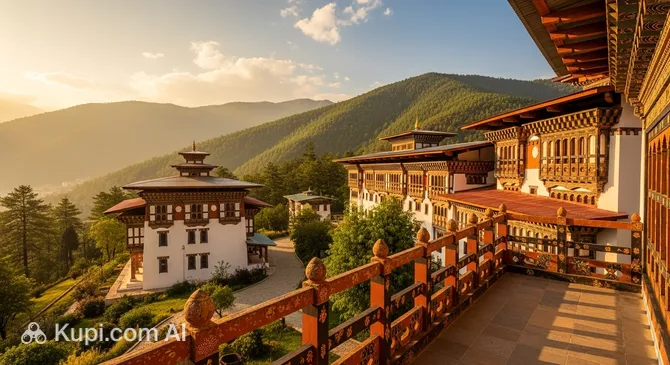
For those seeking seclusion and a high level of service, Peaceful Resort is an excellent choice. This property offers a quiet atmosphere slightly removed from the bustle of the central quarters. In the heart of the city, you can find more affordable options that are convenient due to their proximity to shops and administrative buildings.
Peaceful Resorts. Illustration.
Source: Kupi.com AI
Traveller photos:
Tourists are advised to book accommodation in advance, especially during peak seasons (spring and autumn) when major festivals take place. Choosing a hotel in Thimphu is not just about finding a place to sleep, but also an opportunity to live in a building with unique wood carvings and traditional decor.
Nearby Cities
The capital of Bhutan serves as an ideal starting point for exploring the picturesque surroundings and neighboring high-mountain valleys. Just 22 kilometers away is the city of Paro, which is famous not only for its airport but also for its majestic dzong and access to the famous Tiger's Nest monastery.
Another interesting destination for a day trip is Punakha, the former capital of the country. The road there leads through the Dochula Pass, which offers panoramic views of the Himalayan peaks on a clear day. It is also worth considering a trip to Wangdue Phodrang, known for its bamboo products and rich history.
Exploring the nearby regions allows you to see the diversity of Bhutan's landscapes: from pine forests to subtropical valleys. Traveling between cities along mountain serpentines is an adventure in itself, offering unforgettable views of terraced fields and ancient temples.
Shopping & Souvenirs
Shopping in Thimphu is primarily about discovering unique crafts and handmade textiles. You won't find huge shopping malls with international brands here, but the city is full of small shops and workshops. The most colorful place to shop is the Centenary Farmers Market, where on weekends you can buy not only rare Himalayan products but also authentic souvenirs.
Items worth bringing back from the capital of Bhutan include silver jewelry, ritual masks, or the famous postage stamps. Bhutanese textiles deserve special attention: fabrics with traditional "yathra" patterns are considered some of the best in the region. The main shopping spots are concentrated on the central street, Norzin Lam.
Most shops are open from 9:00 to 19:00, and payment in small shops is most often made in cash in the local currency — ngultrum. If you are looking for a place to rest between shopping sessions, cozy cafes like Ambient Cafe offer a peaceful setting right in the commercial heart of the city.