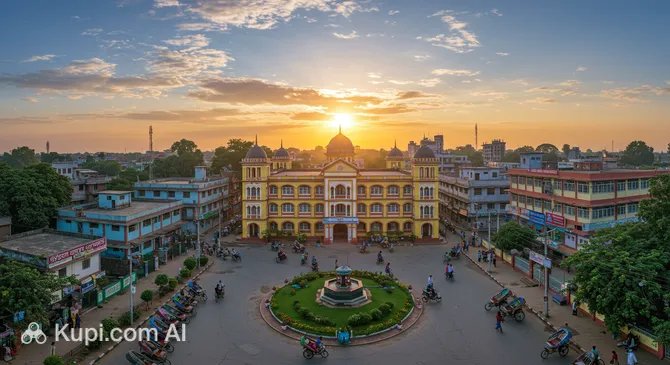
Rangpur is one of the oldest and most significant cities in northwestern Bangladesh. Situated on the banks of the picturesque Ghaghat River, it serves as the administrative center of the division of the same name and attracts travelers with its peaceful atmosphere, wide green streets, and a harmonious blend of Mughal and colonial architecture. With a population of over 1 million, the city maintains a cozy, provincial pace of life that differs greatly from the bustle of the southern metropolises.
Rangpur. Illustration.
Source: Kupi.com AI
The rich history of the city dates back to the 16th century, when the territory was conquered by the Mughal Empire in 1575. Today, Rangpur is not only an important commercial and industrial hub specializing in the production of high-quality jute, tobacco, and rice, but also the region's cultural center. Here, you can see old bungalow mansions and majestic public buildings reminiscent of the British era and Mughal heritage.
Tourists are drawn to Rangpur by its unique attractions, such as the majestic Tajhat Palace and one of the largest zoos in the country. Thanks to its fertile alluvial soils, the city is steeped in greenery, making walks here especially pleasant. We invite you to visit this hospitable land to feel the true spirit of northern Bangladesh and enjoy its authentic hospitality.
Weather Overview
Rangpur's climate is classified as tropical monsoon, which implies a clear division into dry and wet seasons. The hottest period begins in April and lasts until July, when temperatures can rise to +32°C...+36°C. During this time, humidity increases significantly, foretelling the arrival of summer rains.
Most precipitation falls between May and October. June is traditionally considered the rainiest month, with the region receiving over 500 mm of rainfall. If you plan a visit during this period, be sure to bring a reliable umbrella or raincoat. However, even during the monsoon season, rains are often short-lived, alternating with sunny hours.
The most favorable weather in the city occurs during the winter months—from November to February. During this time, Rangpur enjoys pleasant coolness with daytime temperatures around +20°C...+25°C and refreshing nights when the air can cool down to +11°C. This is the ideal time for long walks and sightseeing without the exhausting heat.
Average monthly temperature
Average monthly precipitation
Interesting Facts
According to one version, the city's name comes from the word "Rangopur", which translates as "City of Color"—this is attributed either to the vibrant local culture or the extraordinary fertility of the surrounding lands.
Rangpur officially received municipality status back in 1769, making it one of the oldest local government bodies in the region.
The city is a recognized "jute hub": thanks to the rich alluvial soils, nearly 80% of the division's territory is used for agriculture, producing a significant portion of Bangladeshi jute and tobacco.
The local central zoo has an impressive history—it was established in the 1880s and is currently the second most important zoo in Bangladesh.
The city is home to the famous Begum Rokeya University, named after the great educator and women's rights activist who was born in this region.
How to Get There
Rangpur is a key transport hub in the north of the country, making it easily accessible for travelers. The fastest way to reach the city is by air. How to get to this region in the most convenient way often depends on your current location: regular flights from Dhaka are ideal for long-distance travel.
Railway connections link the city with all major centers in Bangladesh. Trains are considered one of the most comfortable and inexpensive ways to travel, allowing you to enjoy views of endless rice fields and jute plantations along the way. Rangpur's main railway stations serve both express and local trains.
Station
Passenger traffic
Distance
Parbatipur railway station
5
36 km
New Cooch Behar Junction railway station
7
70 km
Jalpaiguri Road railway station
5
105 km
New Jalpaiguri Junction railway station
17
132 km
Adhikari railway station
4
142 km
If you prefer road transport, numerous comfortable buses run from Dhaka to Rangpur. The journey takes about 8–10 hours. The road network in this direction is in good condition, and there are stops at colorful roadside cafes along the way. The city is also connected by river transport, which, although used more for freight, adds a special charm to the region.
Main Attractions
The main architectural jewel and symbol of the city is undoubtedly the Tajhat Palace. This former Maharaja's residence, built in the early 20th century, impresses with its classical style and elegance. Today, the palace houses a museum where visitors can see unique collections of ancient coins, exquisite Mughal calligraphy, and masterpieces of Hindu stone carving collected from across the region.
For those who prefer outdoor strolls and getting to know the local fauna, the Rangpur Zoo is a must-visit. Founded in the 1880s, it occupies a vast territory and is home to nearly two hundred animals, including majestic Bengal tigers, lions, and hippos. It is an ideal place for family relaxation surrounded by shady alleys.
The central spot for walks and local gatherings is Shahid Abu Sayed Square. It reflects the modern rhythm of the city and its historical memory. In addition to these iconic spots, travelers should visit Carmichael College, whose building is a magnificent example of Indo-Saracenic style, and explore the ancient Kellaband Mosque with its characteristic three domes.
Local Cuisine
A gastronomic journey through Rangpur is an introduction to the vibrant flavors of northern Bangladesh. The local diet is based on rice and fresh vegetables grown in the region's fertile fields. Be sure to try jute-based dishes, which are prepared here according to unique recipes, as well as traditional fish curries. Fish caught in the Ghaghat River is considered particularly tasty and is often served with fragrant rice and a variety of local spices.
If you're looking for a place to have lunch in a pleasant setting, stop by the Western Cuisine Restaurant and Conference Center, where local flavor meets international culinary standards. Another popular choice among foodies is the Sky Lawn Hotel & Restaurant, which offers a wide range of both Bangladeshi and Indian dishes.
Food culture in Rangpur is unthinkable without street food and tea. Stalls with freshly prepared snacks such as shingara or puri can be found everywhere. The city's main drink is masala tea, which locals drink throughout the day while discussing the latest news in small shops. In season, be sure to try freshly squeezed mango and guava juices—they have an incredibly rich flavor here.
Travel Tips
Planning a trip to Rangpur promises to be an exciting adventure, and these practical tips will help make your journey as comfortable and safe as possible.
Best time to visit: The best time to visit is between October and March, when the weather is cool and dry. This way, you will avoid the sweltering heat and heavy monsoon rains.
Dress code: Bangladesh is a conservative country. When visiting mosques, temples, and the Tajhat Palace, choose modest clothing that covers your shoulders and knees. Lightweight cotton fabrics will be most comfortable.
Transport: Feel free to use rickshaws for short trips—it's cheap and authentic. For longer distances, use CNG auto-rickshaws, agreeing on the price with the driver beforehand.
Finance: The local currency is the Taka (BDT). Cards are only accepted in large hotels and shopping centers, so always carry cash. ATMs can be found in the city center.
Health: Drink only bottled water and avoid ice in drinks at street cafes. It is recommended to carry insect repellent and sunscreen.
Communication: The main language is Bengali. English is understood by hotel staff and educated youth. Learning a few basic phrases in Bengali will greatly endear you to the locals.
What to avoid: Avoid taking photos of people without their permission and discussing political or religious topics. Also, refrain from public displays of affection.
Local etiquette: Greet people with a slight nod or the traditional "Assalamu Alaikum." Remember that it is customary to pass food and items only with your right hand.
Rangpur is a city with a kind heart and an open soul. Show respect for local traditions, and you will discover the incredible depth of Bangladeshi hospitality.
Entertainment & Nightlife
Nightlife in Rangpur is quiet and measured, focused on family outings and friendly gatherings in restaurants. You won't find loud nightclubs in the Western sense here, but the evening hours in the city are filled with a special charm. Locals and tourists prefer to spend time in cozy establishments in the city center or stroll along the lit embankments and squares.
A popular spot for active recreation is Chiklee Water Park, which offers water rides during the day and becomes a pleasant space for walks by the water in the evening. It is also worth paying attention to cultural events regularly held at the City Hall, where you can find fairs, local musical concerts, or festivals reflecting the region's rich traditions.
For more relaxed leisure, parks like Binodon Uddyan are perfect for having a lakeside picnic. Safety in the city is generally good, and walking in the central well-lit areas in the evening is quite comfortable. For moving around at night, it is best to use official taxis or trusted rickshaws, which are always stationed near major hotels and shopping zones.
Parks & Museums
Rangpur is rich in green zones and historical monuments that allow for a deeper immersion into the region's atmosphere. The city's main cultural site is the museum at Tajhat Palace. It houses an impressive collection of Mughal-era artifacts, including stone carvings, rare coins, and ancient manuscripts, making it a must-visit for history enthusiasts.
For nature walks, the central Rangpur Zoo is ideal, essentially acting as a massive park lush with greenery. Its shady alleys and enclosures with exotic animals make it a favorite holiday spot for both locals and tourists. It is also worth visiting the Chicli vata area, where lakes surrounded by rice fields create a peaceful landscape typical of this region.
Other interesting locations include Rangpur Zero Point and the historical site of Modern More, which are important landmarks and centers of city life. Additionally, the Binodon Uddyan park, with its small lake and cozy relaxation areas, is a great place to catch your breath after a full day of sightseeing.
Getting Around
The public transport system in Rangpur is simple, accessible, and infused with local flavor. The most popular and eco-friendly way to travel short distances is by rickshaw. There are a huge number of them here, and a ride in this traditional transport is a must-try experience for every tourist. For faster travel around the city, CNGs—gas-powered three-wheeled auto-rickshaws—are ideal; they cost a bit more but save significant time.
The city's bus network connects the center with the outskirts, the zoo, and major park areas. Buses run regularly, and fares are minimal. For trips to the airport or neighboring cities, it is most convenient to order taxis, which are usually stationed near major hotels or transport hubs. It's worth remembering that traffic can be quite busy and chaotic, so it is better for tourists to trust experienced local drivers.
Fares for public transport in Rangpur are paid in cash directly to the driver or conductor. There is no unified electronic pass system here, so it is always useful to have small denominations of the local currency on hand. Despite the absence of a metro or trams, thanks to the city's compactness and the developed network of rickshaws, getting to any point in Rangpur is quite easy.
Accommodation
For tourists in Rangpur, there is a wide range of accommodation options, from modest budget guesthouses to comfortable mid-range hotels. Most hotels are concentrated in the central part of the city, especially in areas near the City Hall and the university. This is convenient for those who want quick access to the main attractions and shopping areas.
Among the most well-known establishments, the Sky Lawn Hotel & Restaurant stands out, combining cozy rooms with quality service. When choosing accommodation during the summer period (from April to October), we strongly recommend booking rooms with air conditioning, as the tropical heat can be quite intense.
Accommodation prices in the city remain very affordable: a decent room can be found starting from $20–$30 per night. During the peak tourist season, which falls in the cool winter months, it is advisable to book in advance. Most hotels offer a basic set of amenities, including Wi-Fi and breakfast, and the hospitable staff is always ready to help organize local excursions.
Nearby Cities
Rangpur serves as an excellent starting point for exploring the northern regions of Bangladesh, where nature and history intertwine. Just 16 kilometers away is the small town of Latifpur, which allows you to see the country's slow-paced rural life. For those interested in railway history and the colonial past, Saidpur—a major railway hub with a unique atmosphere—is an interesting destination.
Equally attractive for a day trip is the city of Lalmonirhat, located just 27 kilometers away. These places are famous for their picturesque landscapes and the opportunity to get acquainted with traditional crafts. Most nearby cities are easily accessible by local buses or taxis, and the trip rarely takes more than an hour.
We strongly recommend not limiting yourself only to Rangpur and setting out to explore the surroundings. You will find ancient temples, colorful markets, and vast plantations that will help you better understand the culture and traditions of this amazing part of the country.
Shopping & Souvenirs
Shopping in Rangpur is primarily an opportunity to purchase authentic locally-made goods. The city is famous for its jute products: from rugs to stylish handmade accessories. It is also worth looking for high-quality fabrics and items with Mughal motifs that reflect the region's rich artistic heritage. Most commercial activity is concentrated in the city center, especially around the old City Hall area.
For those who prefer a more modern shopping format, the RAMC Shopping Complex is an excellent choice. Here you can find both local clothing brands and everyday essentials. Another popular spot on the city's shopping map is the Zilla Parishad Super Market, which offers a wide range of groceries and household items in comfortable conditions.
Don't forget to visit the local markets to bring home fragrant spices, famous local rice, or bamboo and wooden souvenirs. Shops usually operate from morning until late evening, and moderate bargaining is welcome in small stalls and markets. Payment is most often made in cash in the local currency (Taka), although large shopping centers are beginning to accept credit cards.