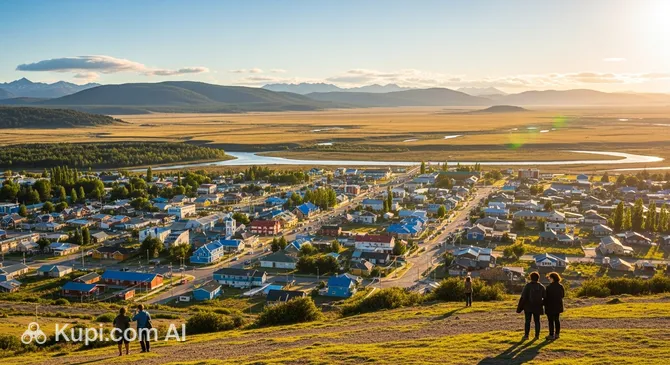
Gobernador Gregores is a cozy and unique town located in the heart of vast Patagonia. Situated in the Santa Cruz province in southern Argentina, it serves as an important link for travelers exploring the legendary Ruta 40. The town charms with its rugged atmosphere, where the tranquility of the steppe meets the hospitality of the locals.
Gobernador Gregores. Illustration.
Source: Kupi.com AI
Geographically, the settlement is nestled in the Río Chico valley at an altitude of 280 meters above sea level. With a population of just over 5,000, Gobernador Gregores is a quiet administrative and agricultural hub. The town's history dates back to 1922, when Austrian settler José Cunei Posne built the first house here, cleverly using common fuel barrels for the roof.
For tourists, the town is primarily attractive as a "gateway" to unique natural sites. From here, one can reach the famous lakes of Cardiel and Strobel, world-renowned among anglers, as well as the wild landscapes of Perito Moreno National Park. One unexpected feature of the town is the vibrant fields of tulips and daffodils, which turn the dry Patagonian steppe into a colorful oasis in the spring.
A visit to Gobernador Gregores is an excellent way to experience the authentic, non-touristy Patagonia. We recommend staying here for a couple of days to enjoy the silence, taste traditional cuisine at local estancias, and prepare for further adventures across the expanses of South America.
Weather Overview
The climate in Gobernador Gregores is typical of the Patagonian steppe: cold, dry, and characterized by constant winds. Expect moderately cool summers with frequent winds and cold winters with little snow. Rainfall is rare, with an annual average of only about 211 mm, making the landscapes around the town harsh but uniquely picturesque.
The warmest time of year is from December to February, when daytime temperatures average around +21°C, dropping to +9°C at night. In winter, during June and July, the thermometer often drops to -5°C and below. The weather in the town can be changeable, so travelers are advised to always carry windproof clothing, regardless of the season.
Average monthly temperature
Average monthly precipitation
Interesting Facts
The town was originally named Cañadón León due to the large number of pumas that inhabited the nearby ravines at the time of its founding.
The first house in Gobernador Gregores was built in 1922 by Austrian José Cunei Posne, who showed ingenuity by using flattened 20-liter fuel barrels as roofing material.
The town received its current name only in 1958 in honor of Governor Juan Manuel Gregores, who was famous for creating the region's first radio communication network and building numerous public schools.
Gobernador Gregores is known as one of the few places in Patagonia where tulips and daffodils are successfully grown, turning harsh lands into blooming plantations.
The town is an important point on Ruta 40—one of the longest and most scenic highways in the world, crossing all of Argentina from north to south.
How to Get There
Getting to Gobernador Gregores is an adventure in itself that requires planning, as the settlement is located in one of the most sparsely populated parts of Argentina. The main link is the famous National Route 40 (Ruta 40). Most tourists arrive here by rental car or intercity buses coming from El Calafate or Perito Moreno. It is best to check route details in advance, as transport does not run daily.
The Gobernador Gregores Airport (IATA: GGS) is located in the town. It is important to note that it mainly handles charter flights for sport fishing enthusiasts and small private planes. Regular air service is poorly developed here, so travelers more often use the airports of larger neighboring cities and then cover the remaining distance by land.
There is no railway service in this region of Patagonia. Due to the vast distances and specific landscape, railways were never a primary mode of transport here. Therefore, to move between settlements in the Santa Cruz province, tourists should rely exclusively on motor vehicles or scheduled buses that run along the coast and main highways into the interior.
Main Attractions
Although Gobernador Gregores is primarily considered a transit point, unique attractions are hidden within the town and its immediate surroundings. One of the most significant is Lake Strobel (Lago Strobel), known worldwide as "Jurassic Lake." It has gained fame among sports fishing enthusiasts due to the incredible size of the trout living here. Surrounded by rugged volcanic landscapes, the lake offers not only an excellent catch but also breathtaking views.
In the town itself, look out for the Church of Nuestra Señora de Fátima and the historic buildings in the center that preserve the memory of the first settlers. For those interested in regional history, an important site is the Cañadón de los Muertos. This canyon is associated with the tragic events of the 1921 labor strikes, known as "Rebellious Patagonia," and today serves as a memorial to the region's complex formative years.
Wildlife enthusiasts should definitely visit Perito Moreno National Park (not to be confused with the glacier of the same name). This park, covering 115,000 hectares, remains one of the wildest and most pristine corners of Argentina. Here, you can see turquoise glacial lakes, encounter local fauna including guanacos and condors, or hike to the summit of Cerro León, which offers panoramic views of the endless Patagonian steppe.
Local Cuisine
The culinary traditions of Gobernador Gregores are inextricably linked to the Patagonian way of life. The main gastronomic symbol of the town and the entire region is cordero patagónico—tender lamb cooked over an open fire (asado). Traditionally, the lamb is roasted whole on a cross-shaped spit, which gives the meat a unique flavor and smoky aroma. This dish is a must-try at one of the local estancias.
Thanks to the proximity to lakes Strobel and Cardiel, fresh fish often appears on local menus. Patagonian trout (trucha) is a true delicacy, prepared here in many ways: from grilled to smoked. The simplicity and naturalness of ingredients are key features of the local cuisine, where the emphasis is always on the freshness of the products.
Among drinks, mate holds the absolute lead—a stimulating tea that Argentines drink throughout the day. For tourists, participating in a mate ceremony is a great way to bond with the locals. As for alcoholic beverages, look out for regional wines from Santa Cruz province or traditional craft beer brewed in small batches in Patagonian settlements.
Travel Tips
Traveling to Gobernador Gregores is an immersion into the wild nature of Argentina, and to make your trip comfortable, we have prepared some important tips.
Clothing and Gear: Patagonia is famous for unpredictable weather and strong winds. Even in summer, bring a windproof jacket, thermal underwear, and comfortable shoes for walking on uneven terrain. Be sure to use sunscreen, as the sun is very strong at these latitudes.
Transport: The best way to get around is by renting a 4WD vehicle. Always fill up your tank at every available gas station, as the distance between them can reach hundreds of kilometers.
Finances: The main currency is the Argentine peso. While cards are accepted in hotels and large shops, you should always carry a cash reserve in the town for payments in small shops and cafes.
Health: Basic medical care and pharmacies are available in town, but it is better to bring any specific medications with you. Drink bottled water, although local water is generally considered safe.
Communication: The main language is Spanish. English is not widely spoken here, so learn basic phrases or download an offline translator. It is better to buy a SIM card in a large city beforehand, as connection can be lost in the steppe.
Local Etiquette: Patagonians are very friendly but value peace and quiet. Greet people when entering a shop or cafe with a short "¡Hola!". Tips in restaurants are usually 10% of the bill.
What to Avoid: Do not go on solo hikes or trips deep into the steppe without notifying your hotel owners or guides. Communication may be non-existent, and the climate can change abruptly.
Special Advice: If you plan to fish at Lake Strobel, be sure to obtain a special permit in advance and check the season's rules to avoid fines.
Following these simple rules will help you fully enjoy the beauty of Gobernador Gregores and make your adventure safe and unforgettable!
Entertainment & Nightlife
In Gobernador Gregores, you won't find noisy nightclubs or neon bar signs—life here flows at a steady and calm pace. The main form of leisure for locals and visitors alike is connecting with nature and rural tourism. Evenings in this corner of Patagonia are typically spent in soulful conversation in cozy hotel lounges or at estancias, often accompanied by traditional music.
The main "entertainment centers" of the region are the surrounding estancias (ranches). Here, tourists are offered not just a place to stay, but a full program: horseback riding, watching sheep shearing, and traditional outdoor lunches. It is an ideal place for those seeking solitude and a break from city life, while enjoying an incredibly starry sky that seems especially close in the steppe.
During the day, entertainment is centered on active recreation. Trekking in the nearby canyons and fishing at lakes Cardiel and Strobel are popular choices. If you crave more conventional urban pleasures, such as casinos or fine dining restaurants, travelers usually head to nearby El Calafate, which is about a 3–4 hour drive away—a short distance by Patagonian standards.
Parks & Museums
In Gobernador Gregores itself, there are almost no classic museums with glass display cases; however, the entire town and its surroundings can be called an open-air museum. The surviving houses of the first settlers are of historical interest, most notably the house of the founder, José Cunei Posne. These buildings provide a vivid image of the harsh conditions faced by the people who settled the Patagonian steppe in the early 20th century.
The main "nature park" of the town is its surrounding area. The Patagonian steppe landscape possesses a special, austere beauty. Tourists often visit the banks of the Río Chico, where they can take a quiet walk and observe local birds. Although greenery in the town center is modest due to the strong winds, the streets are transformed in the spring by private gardens where residents proudly grow bright flowers.
For those seeking grander natural attractions, a trip to Perito Moreno National Park is a mandatory part of the itinerary. This place captures the imagination with its untouched forests, snow-capped Andean peaks, and crystal-clear lakes. The park is ideal for trekking and wildlife photography, allowing you to feel completely at one with nature in one of the world's most sparsely visited reserves.
Getting Around
Public transport in Gobernador Gregores is minimally developed due to the town's small size and low population. Within the town center, locals prefer to get around on foot or in private cars. For a tourist, walking from one part of town to another is easy, as all the main infrastructure is concentrated within a few blocks.
Intercity buses are used for trips to the surroundings and connections with other cities in the province. The main terminal receives services running along Ruta 40; however, it is worth remembering that schedules can change depending on the season and weather conditions. It is recommended to purchase tickets in advance at the bus station ticket offices or through carriers' websites, as the number of seats on buses is limited.
The most convenient way for tourists to get around remains renting a car, preferably an SUV. This gives full freedom to visit remote lakes and national parks where public transport simply does not go. When planning car trips, always keep an eye on your fuel level and remember that on many side roads the surface remains unpaved, requiring caution while driving.
Accommodation
The choice of accommodation in Gobernador Gregores perfectly reflects the character of the region—cozy guesthouses and traditional Patagonian ranches predominate. The main focus is on ecotourism and fishing retreats. Tourists often stay in hosterías (small hotels) that offer a homey atmosphere and a personal touch for every guest. Prices in the town remain moderate, making it accessible for travelers with various budgets.
A special category of accommodation is the estancias (ranches) located in the town's outskirts. Places like Estancia La Angostura or Jurassic Lake Lodge offer more than just a bed—they provide complete immersion into Patagonian rural life. Staying at a ranch usually includes meals, the chance to participate in farm activities, and organized excursions to lakes and canyons. For fishing enthusiasts, these lodges are the best choice due to their proximity to waters rich with fish.
Since Gobernador Gregores is a major transit point on Ruta 40, vacancies can fill up quickly during the peak tourist season (December to March). We recommend booking your accommodation in advance, especially if you plan to visit during holidays or weekends. To find options, it is best to use international booking systems or contact estancia owners directly through their websites.
Nearby Cities
Gobernador Gregores is an excellent starting point for those who want to explore the remote corners of Santa Cruz province and get to know the true spirit of the southern lands. Despite the vast distances characteristic of Patagonia, a trip to neighboring cities will reveal a variety of landscapes: from arid steppes to the Atlantic coast.
Approximately 229 kilometers away is the famous El Calafate. This is the region's main tourist destination, from where excursions to the Perito Moreno Glacier begin. The city offers a developed infrastructure with many restaurants and shops. If you want to see the life of a port city, head to San Julián on the coast—a place of great historical significance, as it was here that Ferdinand Magellan wintered in 1520.
Another interesting option for a trip is Comandante Luis Piedra Buena, located in a picturesque spot by the Santa Cruz River. This town is known for its parks and calm atmosphere, offering a pleasant break on the way to the ocean. Each of these destinations reveals its own facet of life in Argentina, turning an ordinary trip into a full exploration of the region.
Exploring the surroundings of Gobernador Gregores requires preparation and a fuel reserve, but it rewards travelers with incredible views and a sense of discovery. Every road here leads to new findings, whether they be hidden lakes or cozy coastal settlements.
Shopping & Souvenirs
Shopping in Gobernador Gregores is practical and primarily focused on the needs of locals and transit travelers. In the town center, you will find small shops where you can restock groceries, buy quality fishing gear, or basic clothing suitable for Patagonia's changeable climate. There are no large shopping malls with global brands here, which only emphasizes the authenticity of the place.
As souvenirs from Gobernador Gregores, it is worth bringing back items that reflect the local character. Products made from sheep's wool are popular: warm ponchos, sweaters, and handmade scarves. You can also find unique leather goods and items made from guanaco fur. If you find yourself in the town during the blooming season, local tulip bulbs, for which this region is famous, can make an excellent gift.
Shops in the town typically operate with a siesta break from 13:00 to 16:00 or 17:00 and close around 20:00. Payments are most often accepted in cash in Argentine pesos, although bank cards can be used in larger shops and at gas stations. For more extensive shopping and souvenir hunting in specialized boutiques, travelers usually set aside time when visiting El Calafate.