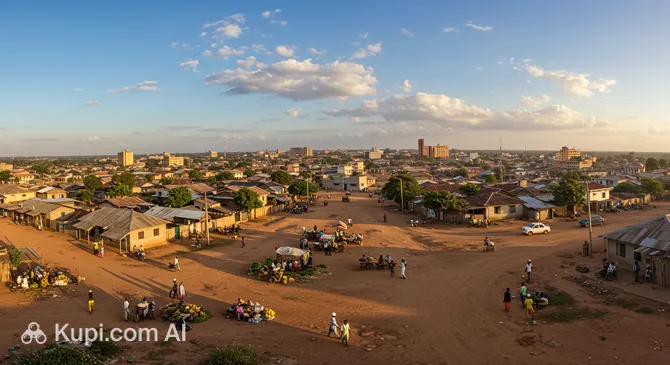
Cacuaco is a dynamically developing municipality in the Luanda province, located on the Atlantic coast of Angola. The city is a colorful suburban area where the traditional Angolan way of life harmoniously coexists with the growing infrastructure of a metropolis. With a population of about 1.28 million people, Cacuaco is an important part of the capital's metropolitan area, attracting those looking for an authentic atmosphere away from the main tourist routes.
The city's geographical location makes it an important link between the capital and the northern regions of the country. A family-friendly and calm atmosphere prevails here, and the rhythm of life is dictated by local trade and proximity to the ocean. Learning about the history of this region's development allows for a better understanding of how a small settlement turned into one of the most densely populated areas of the province.
Cacuaco. Illustration.
Source: Kupi.com AI
For tourists, Cacuaco is primarily interesting as a place to immerse oneself in the daily life of Angolans. Here you can see bustling local markets, walk through residential neighborhoods with typical architecture, and enjoy ocean views. A visit to this city will be an excellent addition to a trip to Luanda, offering a more grounded and sincere look at modern Angola.
Weather Overview
The weather in Cacuaco is determined by a typical tropical climate, characterized by consistently high temperatures throughout the year. The average annual figure is about 25.5 °C. Expect truly hot weather from December to April, when the thermometer often rises above 30 °C, and humidity increases significantly due to seasonal rains.
The most comfortable period for visiting is during the dry season, which lasts from May to September. During this time, there is virtually no rain, and the heat becomes less grueling. August is considered especially pleasant, with average temperatures around 23-28 °C. You can check detailed data about the city weather to better plan your wardrobe and itinerary.
During the rainy season, which peaks in April and November, precipitation can be brief but very intense. Despite this, Cacuaco remains a warm destination even in the "coolest" months (July and August), when nighttime temperatures rarely drop below 19 °C, making this region attractive for year-round visiting.
Average monthly temperature
Average monthly precipitation
Interesting Facts
Cacuaco is a place full of life and hidden characteristics. Here are a few facts to help you get to know this city better:
Huge population: About 1,279,488 people live in the municipality, making it one of the most populated districts in the entire Luanda province.
Tropical heat: Despite the proximity to the ocean, temperatures here can reach an impressive 36.1 °C, with the annual average staying at 25.5 °C.
Important hub: The city plays a key role in the region's economy, serving as a major logistics center connecting the port of Luanda with the northern provinces.
Pleasant August: This month is considered one of the best for visiting — daytime temperatures are a comfortable 28 °C, while nights bring a pleasant coolness of around 20 °C.
How to Get There
The transport accessibility of Cacuaco is due to its proximity to the capital of Angola. The main hub for travelers arriving from afar is Luanda International Airport, which is approximately a 40-50 minute drive from the municipality. Reaching the city center is easiest by taxi or through specialized apps, which guarantee a fixed fare for the trip.
To plan your trip, it is useful to review general information on how to get to the city and which transport options are most convenient. The main highways connecting Cacuaco with Luanda are in good condition; however, one should account for heavy traffic during peak hours, typical for this densely populated region.
Railway communication in this area is less developed than road transport; however, there are suburban lines in the vicinity of Luanda. Most tourists prefer to use buses or private transport to move between Cacuaco and neighboring settlements.
Station
Passenger traffic
Distance
Bungo station
4
11 km
Main Attractions
Since Cacuaco is primarily a residential and commercial area, it is difficult to find classic architectural monuments here; however, the city charms with its everyday energy. The main "attraction" here is life itself: a walk through the central streets allows you to see the vibrant colors of Angolan daily life and feel the true rhythm of an African suburb.
Nature lovers should head to the Atlantic coast. Although there are few developed beach areas in Cacuaco itself, the ocean views and the opportunity to observe the traditional trade of local fishermen create a unique atmosphere. This is an ideal place for those who appreciate quiet walks and want to see the ocean in its natural, non-tourist form.
Another interesting location is the local markets, which turn into real centers of life. Here you can not only purchase fresh products but also meet local artisans offering handmade items. For a deeper cultural immersion, it is worth visiting neighboring Luanda, which can be reached in just 20-30 minutes, to see the capital's historic forts and museums.
Local Cuisine
The gastronomy of Cacuaco is closely linked to the culinary traditions of all of Angola, where corn, cassava, and seafood play the leading roles. One of the most popular dishes to try is muamba — a fragrant meat stew (often chicken) with palm oil, okra, and spices. Also, in almost any establishment, you will be offered funge — a thick porridge made from corn or cassava flour, which serves as an ideal side dish for sauces.
Thanks to its location by the ocean, you can always find fresh fish and seafood grilled right on the street in Cacuaco. This is an important part of the local food culture: street grills, the aroma of smoke, and simple but incredibly delicious food. For drinks, locals prefer the refreshing Angolan beer brand Cuca or traditional palm wine called uge, which has a specific taste.
The city's restaurant scene is mainly represented by cozy eateries (quintas) and market stalls. Dining here is usually done slowly, enjoying the conversation. For tourists, visiting local food markets is a great opportunity not only to try authentic dishes at affordable prices but also to see how simple ingredients are turned into real masterpieces of local cuisine.
Travel Tips
Preparing for your trip to Cacuaco will help make your journey comfortable and avoid unnecessary worries. Here are some practical tips from experienced travelers:
Clothing and Essentials: Choose light clothing made from natural fabrics, as it is almost always hot in the city. Be sure to bring sunscreen, a hat, and quality insect repellents. Comfortable closed shoes are suitable for walking.
Transport: The most convenient way to move around is by official taxi. Install the InDrive app to see the trip cost in advance and avoid haggling with drivers.
Finances: The primary currency is the Angolan Kwanza. It is better to exchange money at banks in Luanda. Cards are only accepted in large hotels and shopping centers, so always carry a supply of cash.
Health: Use only bottled water even for brushing teeth. It is recommended to have a basic first-aid kit and insurance covering medical services.
Communication: The official language is Portuguese. English is not widely spoken, so learn a few basic phrases: "Bom dia" (good morning) and "Obrigado" (thank you). You can buy a SIM card (e.g., Unitel) at official offices in Luanda.
Local Etiquette: Angolans are very friendly and appreciate a polite greeting. Before taking a photo of a person or their market stall, always ask for permission.
What to Avoid: Do not carry large sums of money or expensive equipment on display. Avoid walking in unfamiliar areas after sunset.
Best Time: Plan your visit for the period from May to September — this is the dry season (Cacimbo), when humidity is lower and the weather is most pleasant for walking.
By following these simple rules, you can focus on exploring the unique culture of Cacuaco and get only positive emotions from your trip.
Entertainment & Nightlife
Entertainment in Cacuaco is predominantly local in character and centered around socializing and family recreation. Unlike the bustling center of the capital, you won't find an abundance of nightclubs here, but you can enjoy live music in small local cafes and bars where residents gather in the evenings.
For those looking for a vibrant nightlife with modern dance floors and cocktail bars, the best solution is a trip to Luanda. The capital is in close proximity, and that is where the most famous entertainment venues operating until dawn are located. A taxi ride takes about half an hour, making it easy to combine the tranquility of Cacuaco with the energy of capital city parties.
During the day, locals prefer to spend time in open spaces or small recreation areas. Improvised concerts and street performances are popular in Cacuaco, often taking place during local holidays. It is safest to move around the area after dark using official taxi services such as InDrive, which are widely available in the region.
Parks & Museums
Green zones and cultural institutions in Cacuaco itself are moderately developed, as the area is actively being built up. Nevertheless, walks along the coastline allow you to enjoy the natural charm of the Atlantic, which replaces traditional parks for many residents. This is a place where you can feel the primal energy of the ocean within the city limits.
To visit museums and galleries, travelers usually head to neighboring Luanda. The most important cultural sites are located there, such as the National Museum of Anthropology and the National Museum of Natural History. These places are crucial for understanding the rich heritage of the Angolan people and the history of the province's formation, of which Cacuaco is a part.
Despite the absence of large museum complexes, local craft exhibitions are sometimes held within the municipality itself. They provide an insight into the region's traditional art, including wood carving and the creation of vibrant fabrics. Observing local masters at work in their workshops can be an excellent alternative to visiting a classic museum.
Getting Around
The public transport system in Cacuaco is mainly represented by candongueiros — the famous blue and white minibuses. This is the most popular and affordable way to get around, connecting the municipality with the center of Luanda and other districts. A ride in them provides a full sense of the local flavor, though you should be prepared for crowded conditions and high traffic intensity.
In addition to minibuses, municipal buses operate in the city, with routes covering the main highways. Payment in them is usually made in cash to the driver or conductor. Fares are fixed and very affordable, but tourists are recommended to clarify the direction in advance, as navigation signs are not always present.
Alternatives to public transport include taxis and moto-taxis. The latter are particularly popular for covering short distances and bypassing traffic jams. For maximum comfort and safety, it is better to use mobile apps to call a taxi. A private car or car rental is also possible, but requires getting used to the specific driving style and heavy traffic of the capital region.
Accommodation
The choice of accommodation directly in Cacuaco may be limited, as the city consists mainly of residential neighborhoods. Here you can find small guesthouses and pensions that offer a basic level of comfort and allow for full immersion in the local environment. This is an excellent choice for budget travelers seeking authenticity.
If you prefer a high level of service and international standards, it is recommended to consider accommodation options in the center of Luanda or in the Talatona area. There you will find hotels of well-known global chains with pools, restaurants, and secured grounds. The journey from such hotels to Cacuaco will take no more than half an hour by taxi.
When booking accommodation in this region, pay attention to reviews regarding safety and the availability of autonomous water and electricity systems. It is best to book rooms in advance through verified services, especially if your trip is planned for the dry season (May-September), when demand for quality housing in the province increases.
Nearby Cities
Thanks to its location, Cacuaco is a convenient base for exploring the surrounding Luanda province. Just a few kilometers away is Luanda — the country's vibrant capital, where you can see the colonial architecture of the Fortaleza de São Miguel and walk along the modern Marginal promenade.
For those looking for modern shopping centers and a business atmosphere, a trip to the city of Talatona, located slightly to the south, is perfect. If you want to enjoy natural beauty and relax on the coast, it is worth heading to the town of Barra do Dande, which is famous for its picturesque views and proximity to the river mouth.
Exploring nearby cities allows you to get a complete impression of the region's diversity. From the bustling markets of the capital to the quiet coastal villages, each destination offers its own unique discoveries and the chance to see Angolan life from different sides.
Shopping & Souvenirs
Shopping in Cacuaco is primarily about visiting lively local markets where you can find everything from fresh tropical fruits to vibrant African fabrics. This is not a place for brand boutiques, but for finding unique handmade items. Special attention should be paid to Angolan fabrics with characteristic geometric patterns, which make an excellent commemorative gift.
As souvenirs from Cacuaco, people often bring wooden items — masks, figurines, and household objects created by local craftsmen. You can also find high-quality woven baskets and bead jewelry in the markets. If you require modern shopping centers with familiar stores, it is best to go to Luanda, where the shopping industry is much more extensively developed.
Shops and markets usually operate from early morning until sunset. Major retail outlets in Luanda accept cards, but in Cacuaco itself and at the markets, you will definitely need cash (local currency is the Kwanza). Trading here is part of the culture, so do not hesitate to politely negotiate the price when buying souvenirs or clothing.