Where to go for a weekend trip from Moscow
We've compiled a longread of ideas on where to go for a weekend trip from Moscow if you're tired of the noisy city and your soul craves new experiences.
Cities
Tula
Arriving in Tula from bustling Moscow, you'll find yourself in a cozy town with unusual museums and historical sites combined with trendy art spaces and cafes.
First and foremost, the city is associated with gingerbread: there's even a dedicated museum here — 'Tula Gingerbread'. The museum houses a whole collection of gingerbread and baking utensils of various shapes and sizes, and after the tour, you can stock up at the brand shop.
After your gingerbread hunt, head to the 500-year-old Tula Kremlin, and from there, to the Kazanskaya Embankment. The area was recently renovated and made super stylish. You can grab coffee at 'Kofe Kult' and stroll along the Upa River. The coffee shop, by the way, is also located in a trendy spot — the hipster cluster 'Iskra', nearby.
And if you want more museums, head to the Tula Museum of Weapons and the 'Tula Samovars' Museum: after all, these are local landmarks, and you'll have something to tell your relatives.

Kaluga
If you want a short change of scenery, this is the place for you: just 160 km away — and you're in Kaluga. Here, you should see the Kosmodamianskaya Church, built in 1794 — where else would you see Baroque in the provinces? After the church, take a walk along Kirov Street to see the Church of John the Baptist and the Drama Theater, and then turn onto Teatralnaya pedestrian street — it's a local Arbat with souvenir shops and cafes.
Kaluga also boasts the world's oldest viaduct — a bridge over a ravine, built in 1785. Despite its cultural heritage status, both vehicles and pedestrians still use the Stone Bridge.
Vladimir
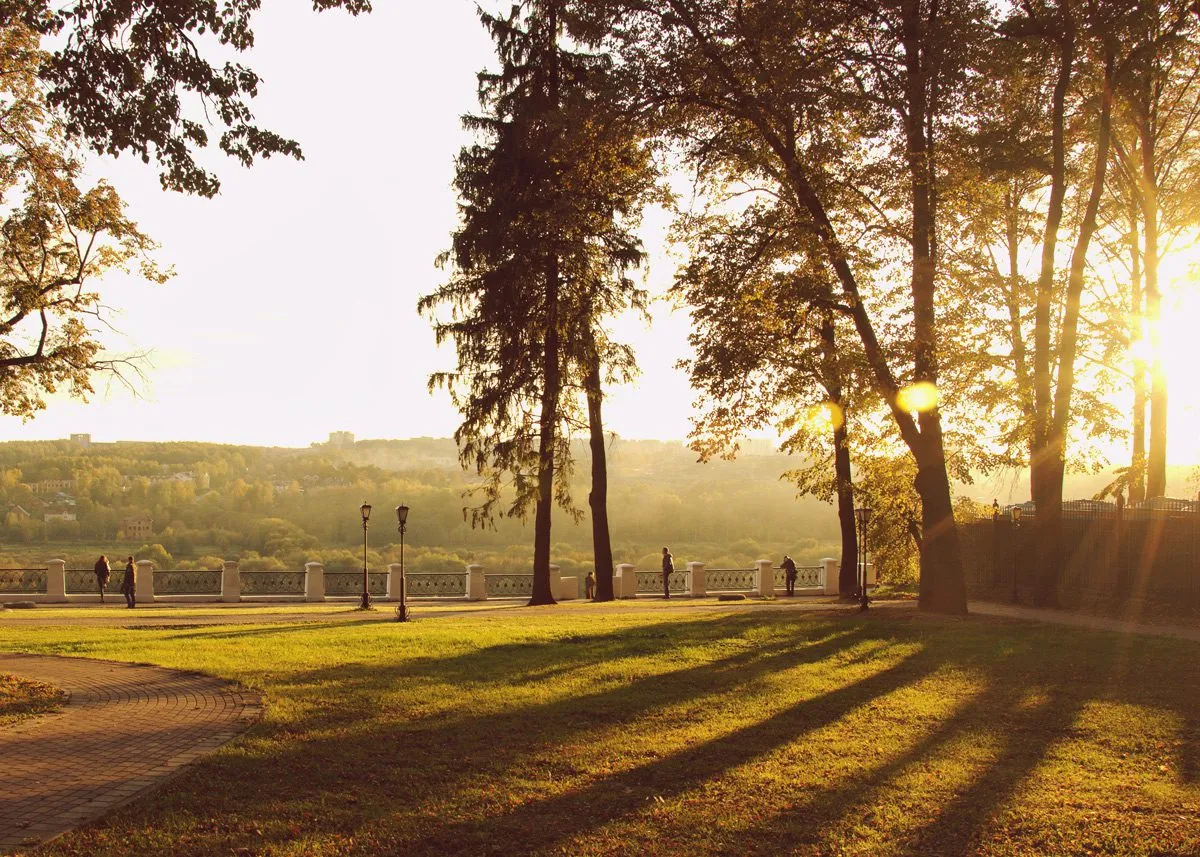
Vladimir is a small and ancient city, a UNESCO World Heritage site: you'll spend your weekend here surrounded by white-stone architecture and golden domes.
Must-see religious sites:
• Dmitry Cathedral from the late 12th century, with frescoes from that period visible on its walls;
• Assumption Cathedral — built in 1158, it still preserves fragments of Andrei Rublev's frescoes. The cathedral is active, and you can even attend a service.
What to see after you've been spiritually uplifted:
• Presence Chambers — once the administrative building of the province, it is now a museum. Inside, there's a collection of paintings from the Middle Ages to modern times, and outside, there's Lipki Park, pleasant for walks in both winter and summer;
• Vladimir Central Prison — since 1997, a museum with crafts and paintings by prisoners has been open on the site of the famous prison founded in the 18th century;
• Borodin Blacksmith Museum — hereditary blacksmiths still use ancient technologies in their work, conduct excursions and master classes;
• Historical Museum — the entire history of the city up to the 20th century with excerpts from chronicles, ancient 13th-century treasures, and Christian artifacts.
Museums
Our favorite — S. A. Yesenin Museum-Reserve
In the village of Konstantinovo, Ryazan region, where the poet Yesenin was born, a museum was created for this occasion. The complex includes several buildings within the village and a school in the town of Spas-Klepiki. But the main attraction of the complex is the meadows, fields, and banks of the Oka River, those very 'native expanses' about which the poet wrote.
In the center of the village is the house-museum where Sergei Yesenin was born. The house recreates the atmosphere of that time: a wooden bed, a chest with books, a samovar, and on the walls — photographs and a school commendation letter. The Church of the Kazan Icon, where the poet was baptized, is still active in the village, and nearby is the house-museum of the priest Ioann Smirnov, who baptized him.
Another interesting location in the village is the zemstvo school, where the poet's slate, copybooks, and textbooks are kept. After the zemstvo school, Sergei Yesenin continued his education at the Spas-Klepiki school, where he decided to become a poet. The school also recreates the interior of that time.
A song for inspiration — 'Ryazan' by the band 'Khadn-dadn', authors of the quarantine hit 'My segodnya doma' (We are home today).
Nature
Orlovskoye Polesye
The national park in the Oryol region covers 77 hectares, and 285 animal species and 940 plant species are registered on its territory (download the Seek app — it's like Shazam for animals and plants). The goal of Polesye is to preserve the population of Red Book bisons. In winter, you can watch them being fed from the observation deck. Another rare animal species found in the park is the desman, a peculiar aquatic mole.
Come to Polesye for walks along eco-trails — there are several here, each with its own charms:
• 'Springs of Polesye' — 15 km along springs and streams;
• 'Sakharov Springs' — a shorter trail (3 km), but also dedicated to springs;
• 'Pine Forest' — a small (1.5 km) trail through pines;
• 'Visiting the Bisons' — a path to rare animals.
Pleshcheyevo Lake
Pleshcheyevo Lake is the very place where Peter I staged his 'amusing' battles. And although the lake has shrunk by half in 300 years, the destination remains popular, especially if you want to escape bustling Moscow.
People come here for fishing: the lake is home to 16 fish species, including burbot and pike, while swans, herons, and gulls live along its shores. To see the birds, take a walk along the 'Visiting the Grey Heron' trail, laid out along the eastern shore of the lake. The protected area is home to over 300 animal species, including maral deer and roe deer.
Right on the lake is the Golden Ring city of Pereslavl-Zalessky — after the lake, stop by to see the Pereslavl Kremlin and the Transfiguration Cathedral. And not far from the city is the 'Peter I's Boat' museum-estate, which houses the boat 'Fortuna' — the only surviving ship of the amusing flotilla.
Vorobyov Birds Park
A fantastic location for weekend trips from Moscow with children — entertainment at 'Vorobyov' for all ages and tastes. This park in the Kaluga region is home to over 2000 bird species from around the world: domestic, predatory, exotic, waterfowl. But the interesting things here aren't just peacocks and an ostrich farm: in the park, you can ride horses or ATVs, go karting, play tennis, and ice skate. Besides birds, there's also a zoo with animals unusual for Russia, such as kangaroos, llamas, alpacas, lemurs, and peccary pigs.
Estates
Abramtsevo
In the 19th century, the Abramtsevo estate was owned by the writer S. T. Aksakov, and Gogol, Turgenev, Tyutchev, Vasnetsov, and Chaliapin came here to relax. In 1920, this Moscow region estate became a museum-reserve, but you can still find zen and inspiration here. Head here for a weekend reset: just 60 km away — and you're already surrounded by places beloved by bohemians.
By the end of the 19th century, the house's roof had rotted and the floor had sagged, but the new owner — industrialist Mamontov — put the estate in order. And even after the revolution, the buildings were not abandoned but turned into a museum. The main house of the estate has been well preserved since the 19th century. Currently, the museum has two exhibitions: one dedicated to the Aksakov family, the other to the Mamontovs.
What to see on the territory:
• Vrubel exhibition — by the way, he also came to the estate for inspiration;
• banya-teremok (bathhouse-tower) — under the Aksakovs, the building was used as a bathhouse, under the Mamontovs — as a guest house;
• miniature Church of the Savior Not Made by Hands — the last owners of the estate, the Mamontovs, are buried here;
• studio-workshop, where Vasnetsov and Repin once worked, and exhibitions are now held;
• 250-year-old oak tree, which appeared here in 1770.
Shakhmatovo
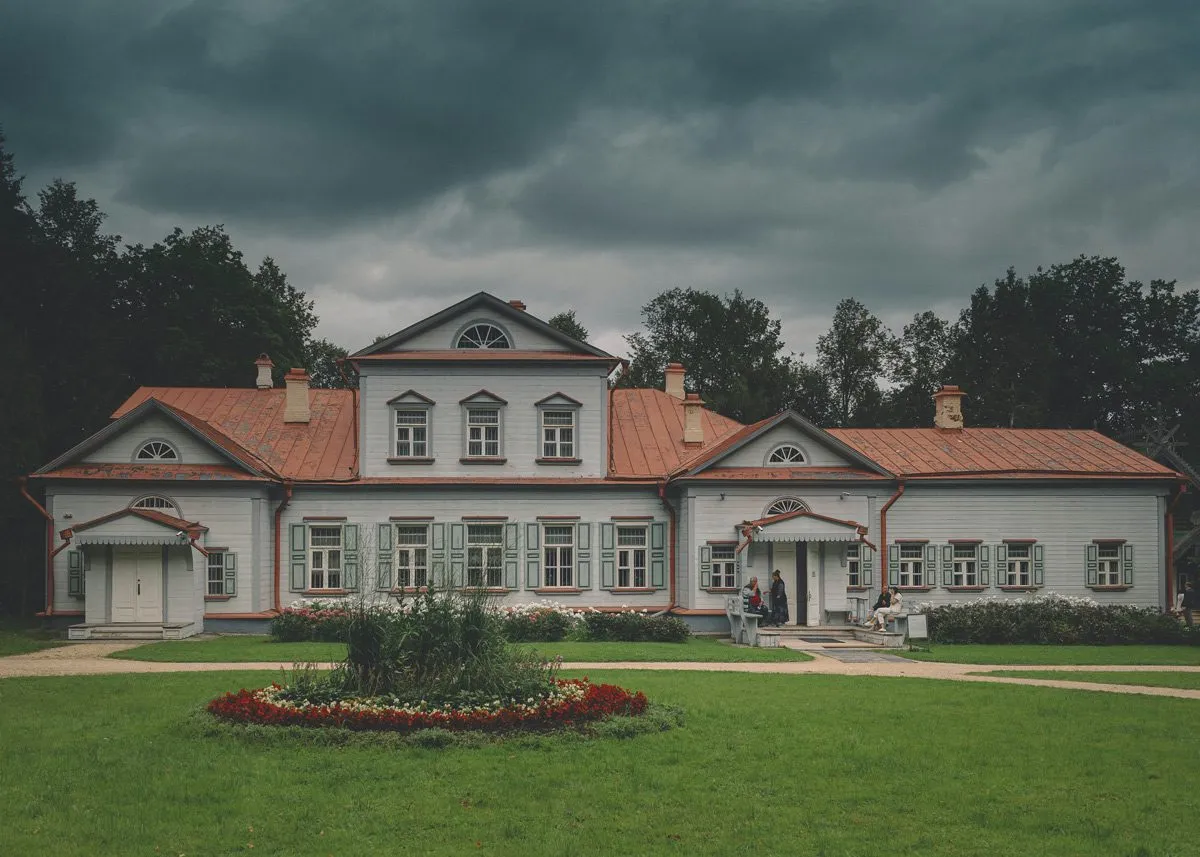
The last owner of the estate was the poet Alexander Blok: his grandfather bought the estate in these parts on the advice of the chemist D. I. Mendeleev, who owned land nearby. The poet first visited Shakhmatovo as an infant and came every summer thereafter. In 1910, Blok inherited the house and modernized it: he added a second floor where he set up a study. He lived there until he left for World War I, and his mother remained at the estate until the October Revolution. In 1921, the estate was burned down by peasants, and in 2001, it was rebuilt and opened as a museum.
You can reach the estate by car in an hour. Among the interesting artifacts here are the poet's manuscripts, Blok's correspondence with friends and relatives, photographs of the poet, and books with his autograph. Some furniture items evacuated before the fire have also been preserved: mirrors, chairs, armchairs. In total, the estate has ten rooms-halls, where not only Blok's belongings but also those of his relatives are kept. After exploring the interior, head to the stables: they have also been recreated here, and you can ride horses both saddled and in a carriage.
Arkhangelskoye
The estate was named after the Church of Michael the Archangel, built here in the early 16th century, but the estate truly flourished under Count Yusupov. He was an aesthete and built the estate in the European style. Here appeared the French Park, reminiscent of Versailles, the Italian Park, adorned with sculptures by Russian and Italian masters of the 17th–19th centuries, and a dense green English Park. In the center of the complex is the Grand House, the main building of the estate: balls and receptions were once held here in the Oval Hall.
Russian emperors often visited the estate, their visits marked by columns with eagle figures. If you go to Arkhangelskoye, look at the preserved columns of Nicholas I, Alexander I, and Alexander II — the emperors knew a thing or two about where to go for a weekend trip from Moscow. And in honor of the frequent guest A. S. Pushkin, an alley was laid out here — you can also stroll along it.
And don't forget to subscribe to our Telegram channel! There you'll find: selections of inexpensive tickets, private sales for our members, the latest news on entry rules to countries around the world, and simply interesting travel content — travel hacks, guides, and expert advice.
