What to see in Kostroma
Want to see something beautiful, but your budget doesn't allow for distant travels? Head to Kostroma: drink mead, take photos with Ivan Susanin, and admire ancient architecture. Let's figure out what to see in the city and how much time it will take.

Where is it, anyway?
Kostroma is an ancient port city located on the Volga River. It is in the European part of Russia, near Yaroslavl, and is also part of the Golden Ring cities. Moscow and Kostroma are separated by 300 kilometers, Kostroma and St. Petersburg by 650. Residents of the capital can arrange a spontaneous weekend trip by car, while for tourists from more distant regions, there are options for rail and even air transport.
The main attractions of Kostroma can be explored in a couple of days, but even with more time, you won't get bored here: despite the city's compactness, historical heritage sites are found at every turn. We'll tell you what to see in Kostroma first if you only have one day and definitely have to work tomorrow.
Museums, monuments, historical sites
- Susaninskaya Square
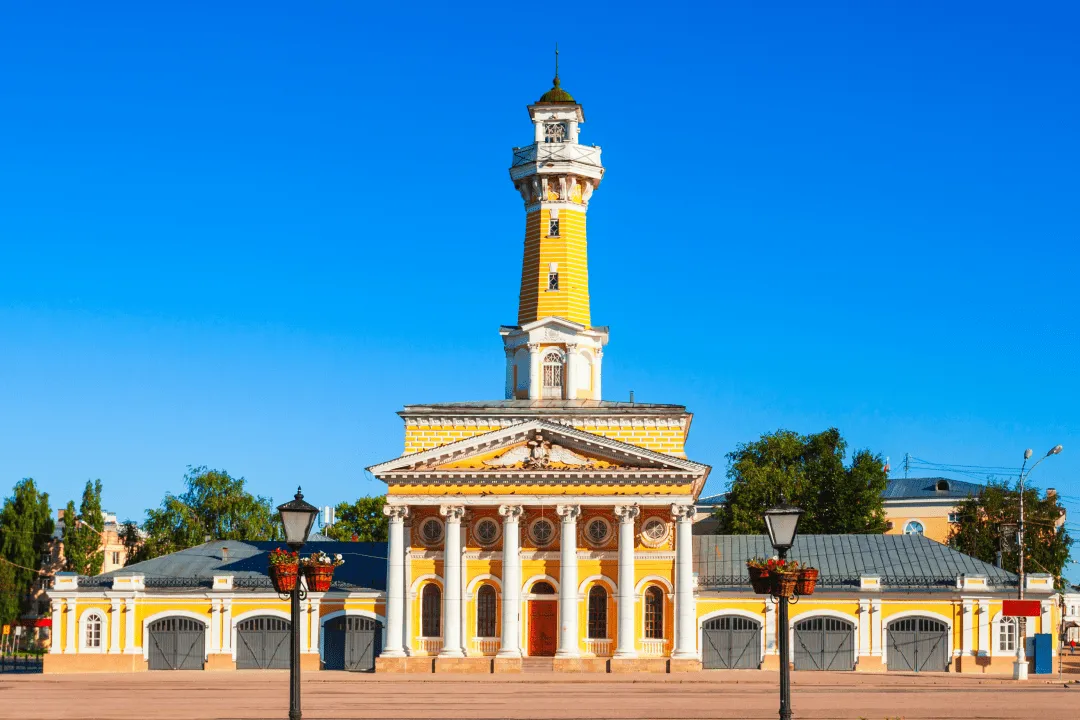
Most excursions start right here — Susaninskaya Square is considered the city center, and before the fire of 1773, the Kostroma Kremlin was located here. From above, the square resembles an open fan, each ray pointing to one of the nine city streets (locals call this place “the frying pan”). In warm weather, it turns into a blooming public garden where you can sit and plan your further route. However, there's not much to think about for long: Susaninskaya Square is surrounded by Kostroma's main attractions, so you can go in any direction from here. For example, to the Fire Tower — perhaps the city's second most important landmark (after cheese, of course: Kostroma is often called the cheese capital of Russia).
- Monument to Yuri Dolgoruky
The five-meter-tall founder of the city looks imposing and strict, but seems indifferent, if not benevolent, towards selfies. The bronze monument has stood in the square on Sovetskaya Street since 2003: a year before that, Patriarch Alexy II granted the people of Kostroma a handful of earth from Yuri Dolgoruky's grave, so this monument has not only symbolic significance.
- Romanov Museum
The museum's opening was timed to coincide with the celebration of the 300th anniversary of the Romanov dynasty — even members of the imperial family were present at this event. Currently, the museum combines several local history, historical-architectural, and art museums of Kostroma, so its collection is quite extensive. Descriptions of current exhibitions can be found on the museum's website — https://kosmuseum.ru. Don't forget to pay attention to the addresses of the branches: the museum has several buildings (the central and most famous one is on Prospekt Mira).
- Planetarium
Even if you're not a fan of space, the Kostroma Planetarium is worth seeing just for its appearance: the white-stone building, where planets are now explored, once belonged to a church. The Planetarium opened in 1951, and in 1998, its staff restored the astronomical observatory, so now you can observe celestial phenomena here. The scientific and educational program will find fans among people of all ages: regularly changing exhibitions, olympiads, lecture courses for adults and children.
- Museum "Kostroma Sloboda"
A trip to Karelia is postponed — Kostroma has its own "Kizhi". The "Kostroma Sloboda" open-air museum-reserve features monuments of wooden architecture brought from all over the region: churches, peasant houses, windmills (a hut on chicken legs is also present). You can walk around the reserve independently, or take a guided tour or a full interactive program with tea drinking and a lecture on peasant life. We recommend visiting in the warmer months to better soak in the atmosphere.
Monasteries, temples, and churches
- Holy Trinity Ipatiev Monastery
Those very golden domes from Mikhail Krug's song (we sang it, did you?). You don't have to go far — the monastery stands on the bank of the Kostroma River, next to the "Kostroma Sloboda" museum. The monastic complex is divided into two parts: Old and New Town. The territory of the New Town is inaccessible to visitors (the brethren live and serve there), but entry to the Old Town is free — the Church Historical and Archaeological Museum is located here. However, you don't have to limit yourself to the museum exhibition: in appropriate attire, you can also attend a church service.
- Resurrection Church on Debre
The Church of the Resurrection of Christ has undergone numerous reconstructions: initially, a wooden church stood on its site, then a stone posad church, which fell into disrepair during World War II. Currently, the church belongs to the Znamensky Women's Monastery and is actively being reconstructed. It's worth visiting at least for the view of the Volga River that opens up from the church.
- Epiphany-Anastasiin Monastery
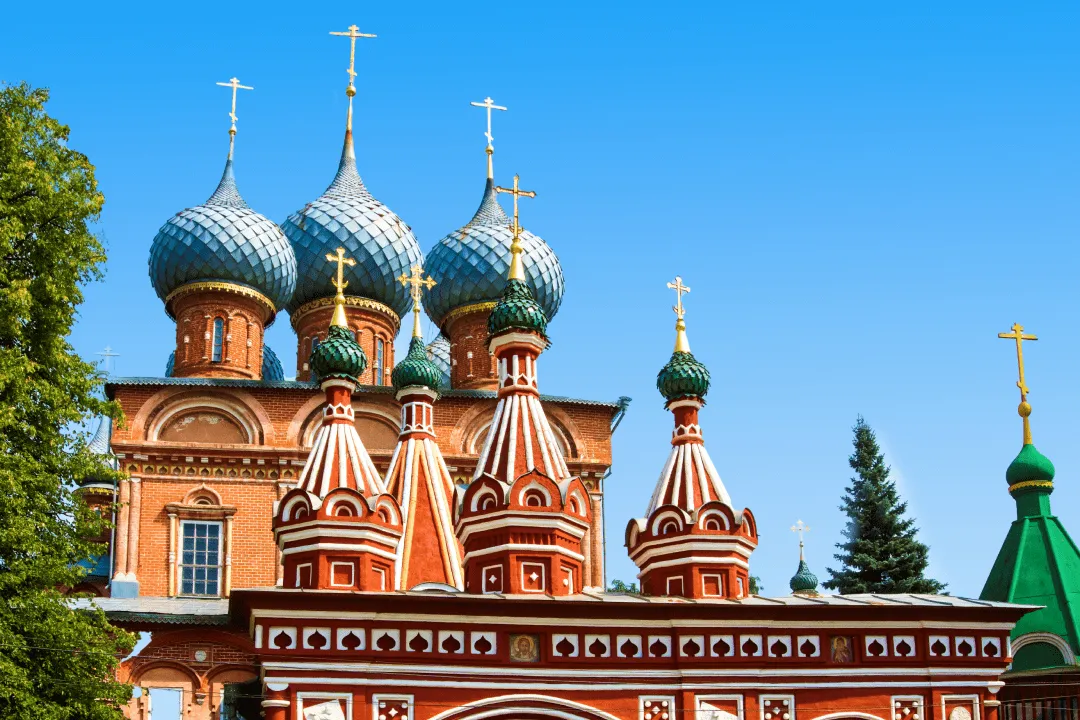
Golden domes again, but here they are juxtaposed with black ones — such a contrast makes a powerful impression. In the 15th century, this place was founded by Saint Nikita, a disciple of Sergius of Radonezh, and functioned as a male monastery until 1847 (now the Epiphany-Anastasiin Monastery is a female one). You cannot view the inner territory of the monastery, but you can attend a service in the temple: one of the main icons revered in the Russian Orthodox Church, the Feodorovskaya Icon of the Mother of God, is kept here.
- Church of Saint Alexius, Man of God
A distinctive feature of this church is the crown atop its green dome — according to legend, it was placed there in honor of Catherine II's visit to Kostroma in 1767. The church's appearance itself resembles a lighthouse in the Russian Baroque style: the entire mass of the white-stone structure strives upwards, towards the sky. The church is located near the city center and is open to visitors.
- Spaso-Zaprudnenskaya Church
The Spaso-Zaprudnenskaya Church is located on the bank of the Zaprudnya — one of the tributaries of the Kostroma River. Previously, a monastery of the same name stood on this site, which Prince Vasily Yaroslavich commissioned to found. The church is active: services are held here, a Sunday school operates, and there is a library for parishioners. We recommend visiting for the relics significant to the Orthodox Church — the Icon of the Savior Not Made by Hands and particles of the relics of Blessed Augustine.
Take a photo next to this column
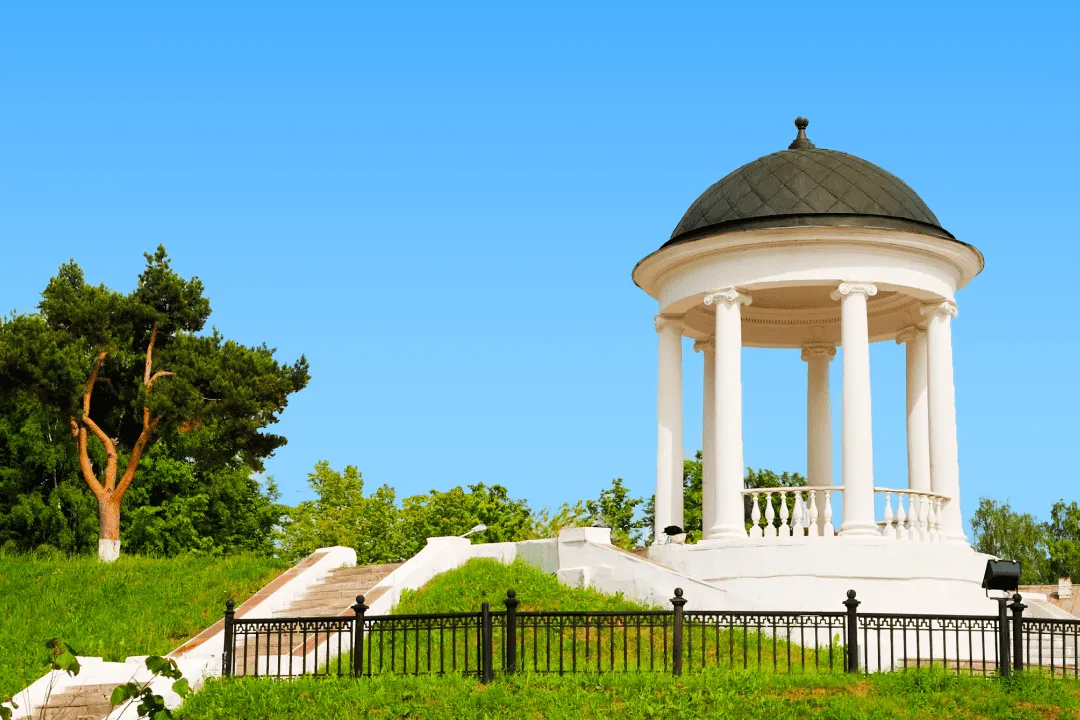
No comments needed: we've compiled a top 5 list of places where you can take photos in the style of ancient deities. All attractions (except Borshchov's Mansion) are located near Susaninskaya Square, so all you have to do is find a good angle.
- Shopping Arcades
- Ostrovsky's Gazebo
- Guardhouse Building
- Noble Assembly
- Borshchov's Mansion
What about with kids?
- Cheese Museum
If your child is tired of bell towers and snow-white facades, take them to this gastronomic museum — though you don't need to be a child to appreciate all types of Kostroma cheese. Visiting the museum is only possible as part of an excursion, so it's best to book tickets in advance: everyone who comes to Kostroma wants to earn the title of cheese expert. The museum's program is diverse and includes interactive excursions, tastings, the history of cheesemaking, and even children's quests.
- Sumarokovskaya Moose Farm
If you've explored all of Kostroma and are craving another tasting — head to the Sumarokovskaya farm for moose milk. You'll have to go out of town for this, but what won't you do for a passion for experimentation (or the happy eyes of your child who really wants to pet a moose). Milk is available from May to September, but the moose are there all year round: ready for photo shoots, petting, and carrot treats.
- Birch Bark and Linen Museum
A word of warning: visiting this place risks increasing your luggage several times over. The Birch Bark and Linen Museum offers not only excursions and master classes on making birch bark products but also a whole collection of woven and textile souvenirs ready for sale. If you don't plan to buy anything, the museum's engaging program will still keep you entertained: see growing flax, learn all about thread production and methods of working with birch bark.
- Snegurochka's Terem (Snow Maiden's Tower)
We don't know what Snegurochka does in the summer, but you can visit her and tell us all the details. Snegurochka doesn't live alone in the terem, but with friends: a married couple of house spirits and a cat named Bayun. There's an ice room, puppet shows, and playgrounds; especially devoted fans of Russian fairy tales can even celebrate a wedding in the terem. It's best to book excursions in advance — Snegurochka is very popular among Kostroma tourists.
- Museum "Petrovskaya Toy"
The museum invites visitors to delve into the history of Russian toy crafts, but the main star of the program remains the Petrovskaya toy. Petrovskoye is a village in the Kostroma region where potters made clay whistles. Now, the most outstanding of these whistles are part of the museum's collection, and in a master class, you can sculpt your own clay masterpiece. Note that the complete creation of a whistle takes several days (firing in a kiln and subsequent cooling), so if you only have one day, you'll have to stick to the excursion program.
- "Berendeevka" Park
The full name of "Berendeevka" is a park-hotel, but you don't necessarily need to book a room here to appreciate all the benefits of outdoor recreation. What can you do here? Wander through the "Terem Berendeya" museum and exhibition complex, listen to lectures about the beliefs and dialects of our ancestors, go boating and horseback riding (you can book a photo session), or take a guided tour. A bath complex is also available for visitors — with a banya, stove, and plunge tub. So don't worry and enjoy a steam (or at least feed the ducks).
I want a route, I need a hand
Kostroma is indeed a small city — you can open a map and mark the attractions that interest you, then connect them in any order. We recommend starting your route from the city center: walk around Susaninskaya Square, stopping at the Fire Tower, the Shopping Arcades, and the Guardhouse Building, then proceed to the Romanov Museum and the Noble Assembly. Next, you can head towards the embankment — past the monument to Yuri Dolgoruky, the Planetarium, and the Cheese Museum. On the embankment, Ostrovsky's Gazebo will be waiting for you, where you can relax and consider which way to go next — towards the Kostroma Bridge or the "Petrovskaya Toy" museum. Near the Kostroma Bridge is the Resurrection Church on Debre, and from the "Petrovskaya Toy" museum, you can reach Ipatievskaya Sloboda with its monastery and museum-reserve.
If you find it hard to decide, it's worth taking a guided tour — local guides will pick out Kostroma's main must-sees for you. You can also consider a riverboat cruise along the Volga, accompanied by stories about Kostroma's attractions. We recommend this option only if you have several days at your disposal. Or if you're wearing speed-bast shoes from the Birch Bark and Linen Museum.
Well, we've outlined a route for you. Shall we go?


