UNESCO World Heritage Sites in Russia
When someone tells us, “Oh, that's a UNESCO site,” we usually imagine something very cool and very foreign. But that's far from the truth. Russia is also rich in World Heritage Sites. Even more so: some of them are much closer than we think.

What is UNESCO and what are these sites?
Now, a quick educational moment. In short, it's an international organization that addresses issues of education, science, and culture. These guys include various cultural, historical, and natural attractions in the list of World Heritage Sites. In total, there are 962 such sites in the world (to be precise, not in the entire world, but in 157 countries), including 745 cultural, 188 natural, and 29 mixed. In Russia, you can see 30 such monuments of human history: 19 cultural and 11 natural. We will tell you more about them now.
Cultural and Historical World Heritage Sites in Russia
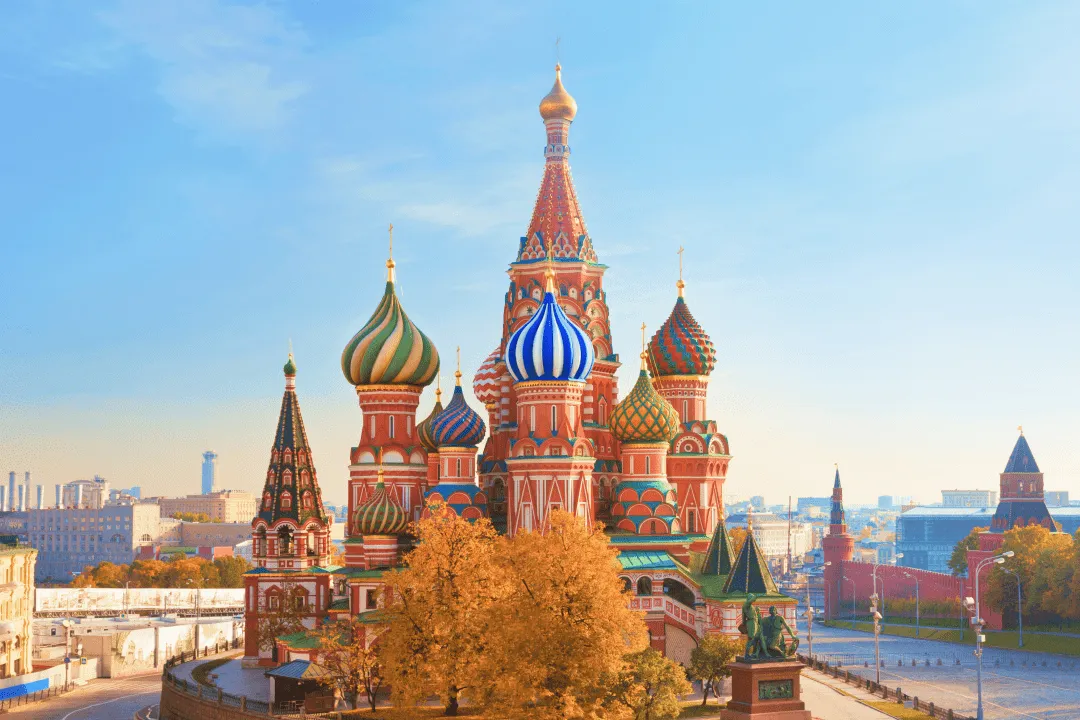
Moscow Kremlin and Red Square
The favorite spot for all tourists arriving in Moscow is not just a backdrop for beautiful capital photos. The architectural ensemble of the Kremlin was formed over 500 years, with the first wooden fortifications built as early as 1156, so it houses unique monuments from various historical eras. For example, Russian rulers were crowned in the Assumption Cathedral. And in the Armory Chamber, you can see Monomakh's Cap and Ivan the Terrible's throne. An interesting fact: during restoration work in 2017–2018, a section of the oldest frescoes on the vaults of the Kremlin churches was found here. By the way, excavations in the center of Moscow are still periodically ongoing, with archaeologists discovering an 11th-century hiding place or a key lost by someone in the 13th century.
How to get there: Fly to Moscow and go to its very heart — Red Square.
Historic Centre of Saint Petersburg and Related Groups of Monuments
With such a complex description, all the iconic sights of St. Petersburg were added to the UNESCO list in 1990. These include the Peter and Paul Fortress, the Admiralty, the Winter Palace, St. Isaac's and Kazan Cathedrals, the Alexander Column, the Bronze Horseman, Peterhof, Pavlovsk, the center and forts of Kronstadt, Oreshek Fortress, Lindulovskaya Grove, and the Sestroretsk Arms Factory. In short, gather your must-see locations and go, for tickets to Saint Petersburg. If you fly in summer, you can catch the White Nights, which, as you know, hold a special romance of St. Petersburg.
How to get there: Fly to Saint Petersburg, explore the locations in the city center, and then head to the suburbs.
Kizhi Pogost
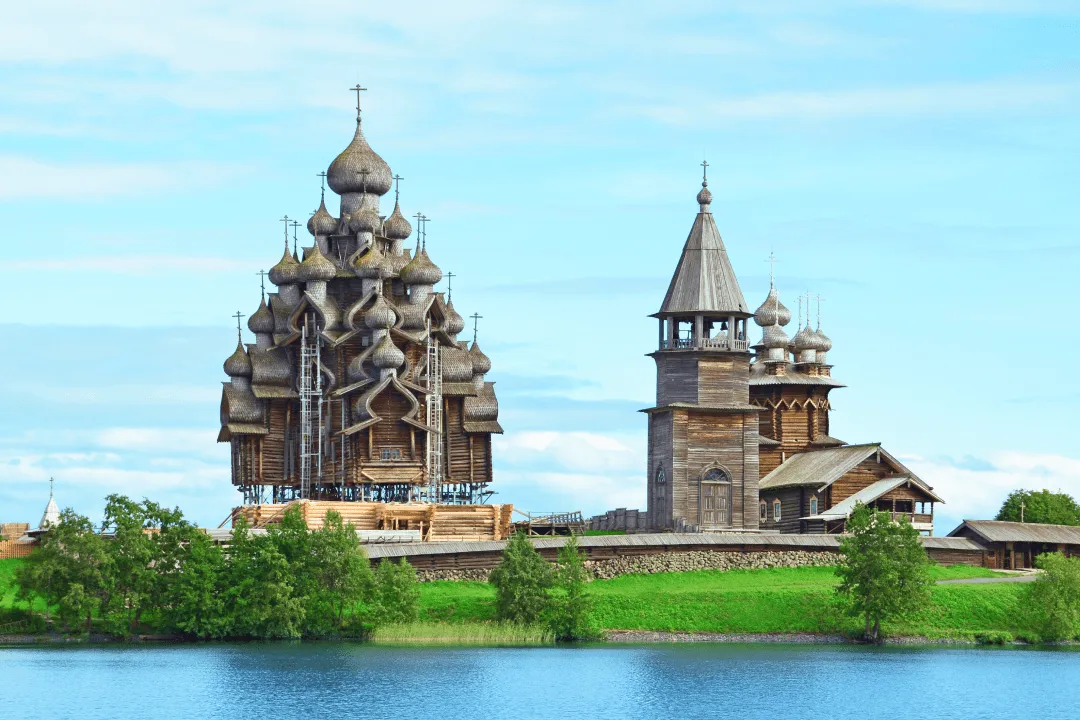
One of the largest open-air museums in Russia. Just imagine: on Kizhi Island in Lake Onega, there are 69 monuments of Russian wooden architecture from the 18th–19th centuries. For example, ancient chapels, houses, barns, windmills, and so on. At the center of this famous architectural ensemble is the Church of the Transfiguration. It was built in 1714. Its main feature is that no nails were used in its construction. None at all. Such was the craftsmanship of the architects of that time.
How to get there: Fly to Petrozavodsk. From there, take a hydrofoil or an excursion boat to Kizhi.
Historic Monuments of Novgorod and its Environs
In 2002, one of the oldest Russian cities, Veliky Novgorod (not to be confused with Nizhny Novgorod), was also added to the UNESCO list. Architectural monuments from the 11th–17th centuries have been preserved there: St. Sophia Cathedral, the Church of Saints Peter and Paul, the Church of the Twelve Apostles, the Church of St. John, the Church of the Transfiguration of the Savior (where you can see frescoes by the famous artist Theophanes the Greek, completed in 1378). In fact, by the number of temples, cathedrals, and churches, one can guess why Novgorod is called the birthplace of Russian Orthodoxy (seriously, Christianity was adopted here earlier than in other regions of Rus').
How to get there: You can reach Veliky Novgorod by train.
White Monuments of Vladimir and Suzdal
These two cities played a crucial role in the formation of Old Russian architecture. They house buildings from the 12th–13th centuries. In Vladimir, we recommend visiting the Assumption Cathedral — frescoes by Andrei Rublev have been preserved there. Don't miss the Demetrius Cathedral: it is famous for its white-stone carvings. The Church of the Intercession on the Nerl is also worth a visit — it is considered an outstanding monument of Vladimir-Suzdal architecture. By the way, in Suzdal, you must see the Suzdal Kremlin, the Cathedral of the Nativity of the Theotokos, the Saviour-Evfimiev Monastery, and the Church of Boris and Gleb.
How to get there: A train runs to Vladimir, and from Vladimir to Suzdal, you can take a bus.
Historical and Cultural Complex of the Solovetsky Islands
In 1992, six islands of the Solovetsky Archipelago in the White Sea (Arkhangelsk Oblast) were included in the UNESCO heritage list. This is due to the preserved religious and burial structures. They confirm that the Solovetsky Islands were inhabited as early as the 5th century BC. Much, much later, in the 15th century, the Solovetsky Transfiguration Monastery was built here, which at one time became the spiritual center of the Russian North. In total, ten secluded sketes and hermitages have been found on the islands. Getting to the Solovetsky Archipelago is not easy, but it is definitely worth it.
How to get there: First, take a train to the town of Kem in Karelia, then proceed to the pier in the neighboring village of Rabocheostrovsk. From there, sail for about two hours by boat to the Solovetsky Islands.
Architectural Ensemble of the Trinity Lavra of St. Sergius in Sergiev Posad
The first association with the city of Sergiev Posad is the Lavra. One of Russia's most famous monasteries, the Trinity Lavra of St. Sergius, was founded in 1337 by Saint Sergius of Radonezh. Today, it is the largest active monastery in Russia. The Lavra is not just one temple, but more than 50 architectural structures built by the country's best architects in the 15th–19th centuries. The oldest surviving building is the Holy Trinity Cathedral itself, erected in 1422–1423. Famous icon painters Andrei Rublev and Daniil Chyorny created frescoes for it. Unfortunately, these original paintings have not survived to our days, but in 1635, monumental paintings were created for the cathedral, reproducing the iconography of that era. Another interesting fact: it was for the Trinity Lavra of St. Sergius that Andrei Rublev created the most famous Russian icon — “The Trinity.”
How to get there: (Yaroslavsky railway station), take an electric train to Sergiev Posad.
Church of the Ascension in Kolomenskoye
Long ago, in 1532, in the village of Kolomenskoye, by order of Tsar Vasily III, the first stone tent-roofed church was erected. This project was approached very seriously, even involving the Italian Pietro Francesco Annibale in its construction. Thanks to him, the Church of the Ascension combined the traditions of Russian wooden architecture with the aesthetics of the Italian Renaissance. And now, several centuries later, we can admire the snow-white tower-church, about 60 meters high, which features a polyhedron instead of a traditional dome. The church itself greatly influenced the further development of Russian church architecture, which is why it was included in the UNESCO list in 1994.
How to get there: Fly to Moscow, then take the metro to “Kolomenskaya” station on the Zamoskvoretskaya (green) line, then walk for about 15–20 minutes along residential buildings to the entrance of the museum-reserve.
Curonian Spit
Russia shares this World Heritage site with Lithuania. Here's why: the Curonian Spit is a narrow strip of land that separates the freshwater Curonian Lagoon from the Baltic Sea. It stretches from the Russian town of Zelenogradsk (not to be confused with Zelenogorsk) to Klaipėda in Lithuania. That's why the site is included in UNESCO from both countries: Russia and Lithuania. The spit's width ranges from 400 to 4,000 meters, and its length is almost 100 km. An interesting fact: the Curonian Spit is called a “museum of natural zones”; an ancient migratory route for birds flying to Southern Europe and North Africa passes along it.
How to get there: First, fly to Kaliningrad. From there, bus No. 593 will take you to the Curonian Spit. You can also always rent a car.
Ensemble of the Ferapontov Monastery
In 1398, the Ferapontov Belozersky Monastery appeared in the Vologda region. Until 1798, it was a male monastery. Today, it is a unique monument of history, architecture, and mural painting from the 15th–17th centuries. It includes four churches, bell towers, the Treasury and Refectory Chambers, the oldest stone temple of the Russian North, the Cathedral of the Nativity of the Theotokos with the only surviving frescoes by Dionysius, the main Russian painter of the turn of the 15th–16th centuries. They number about three hundred subjects and cover almost all surfaces of the walls, ceiling, and columns of the cathedral. In general, history lovers will definitely enjoy it here.
How to get there: First, get to Vologda, and from there, take bus No. 713 Kirillov — Vologda to the “Emishevo” stop. Then, walk 30–40 minutes to the Ferapontov Monastery.
Historic and Architectural Complex of the Kazan Kremlin
When in Kazan, be sure to visit the Kremlin. It originated during the Golden Horde and the Kazan Khanate. Despite many centuries having passed, many architectural monuments have been preserved here. For example, the “leaning” Suyumbike Tower — the Russian version of the Leaning Tower of Pisa (presumably built in the 16th–17th centuries), the Annunciation Cathedral, founded in the 16th century by Pskov masters. There are also newer objects on the Kremlin territory — the Presidential Palace (from the 1840s) and the main mosque of Tatarstan, Kul Sharif, which was erected in 1996–2005.
How to get there: It's simple — fly to Kazan. The Kremlin is located in the very center of the city.
Ensemble of the Novodevichy Convent
In 2004, the oldest (and why be modest — the most beautiful) monastery in Moscow was added to the UNESCO list. It was built during the 16th–17th centuries. Previously, it was one of the links in a chain of monastic ensembles that were united into the city's defense system. No joke: the monastery is surrounded by fortress walls with twelve towers, and access to its territory was only possible through gates. At the center of the ensemble is the Smolensky Cathedral. It was built following the example of the Assumption Cathedral of the Moscow Kremlin. Another iconic architectural monument is the bell tower in the Moscow Baroque style, which was erected in 1690.
How to get there: Fly to Moscow and take the metro to “Sportivnaya” station. From there, you can reach the monastery by buses No. 64 or 132, or you can walk for 5–7 minutes.
Historical Centre of the City of Yaroslavl
Paradox: the main attraction of this Golden Ring city of Russia is the Yaroslavl Kremlin, which in reality... does not exist. The thing is, the Spaso-Preobrazhensky Monastery is called the Kremlin in Yaroslavl; that's how it historically happened. Currently, a museum-reserve is open there (entrance to the territory, by the way, is paid). As for the real Kremlin (or, as it was called, the “Chopped City”), it was built by decree of Yaroslav the Wise a little further from the site of the future monastery — at the confluence of the Volga and Kotorosl rivers. Alas, in 1658, a large fire occurred in Yaroslavl, which completely destroyed the wooden Kremlin. Thus, the Spaso-Preobrazhensky Monastery became the “successor” of the Kremlin, although it was founded a couple of centuries later. The entire historical center of Yaroslavl is considered a World Heritage site. It includes 140 preserved architectural monuments: the Spaso-Preobrazhensky Monastery, the Church of Elijah the Prophet, and the fifteen-domed Church of John the Baptist in Tolchkovo.
How to get there: You can reach Yaroslavl by train . Also, planes fly there from the Northern Capital.
Struve Geodetic Arc
A bit of history: once, in the first half of the 19th century, astronomer Friedrich Struve had an interesting idea: to create a chain of 265 points, consisting of stone cubes embedded in the ground. Why? All to create accurate maps and measurements of our planet Earth. This is how the Struve Geodetic Arc appeared, stretching 2,820 km across ten European countries: from northern Norway to the Black Sea. 34 objects of the Struve Arc have been preserved, two of which are located in Russia on Hogland Island in the Baltic Sea.
How to get there: To reach Hogland Island in the Gulf of Finland (180 km ), you will have to sail by boat from Sosnovy Bor or Primorsk.
Bolgar Historical and Archaeological Complex
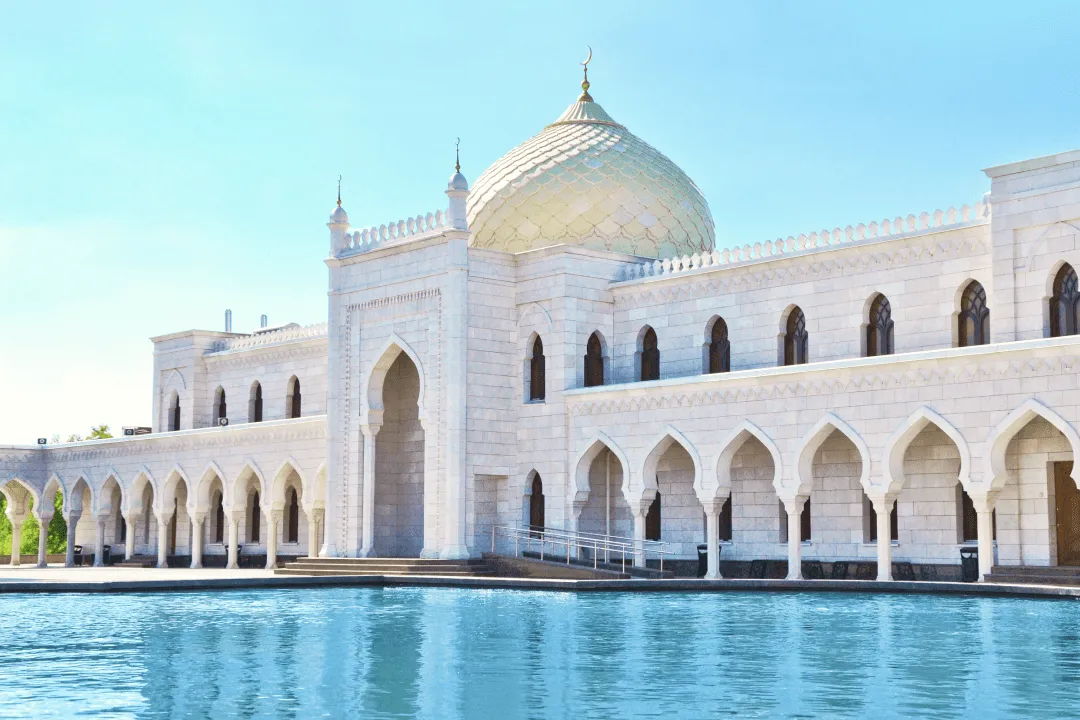
For those who want to feel like an archaeologist, we recommend going to Bolgar. It is located not far from Kazan. Once, it was the capital of medieval Volga Bulgaria, which from the end of the 8th century connected Ancient Rus' with the East. Active trade was conducted here with countries of Western Europe, Asia Minor, Persia, Egypt, India, and China. Now, from the center of Volga Bulgaria, the Cathedral Mosque, the Small Minaret, the Khan's Tomb, 14th-century mausoleums, and so on have been preserved. There are also new (yet significant) structures here: the White Mosque and the Memorial Sign “Adoption of Islam” (a symbol of the adoption of Islam by the Volga Bulgars in 922). By the way, the building of the Memorial Sign houses the largest printed Quran in the world.
How to get there: From Kazan to Bolgar, you can get by bus from the Central Bus Station in two and a half hours.
Assumption Cathedral and Monastery of the Island-town of Sviyazhsk
Another important historical site near Kazan. But if Bolgar tells the story of the adoption of Islam, Sviyazhsk is an important location for Christians. It was here in 1555 that the Bogoroditse-Uspensky (Assumption of the Mother of God) Male Monastery was founded. It subsequently became a spiritual and educational center for the missionary program developed by Ivan the Terrible. Other ancient churches of Sviyazhsk are no less famous: the Assumption Cathedral, which preserves a complete cycle of frescoes from the era of Ivan the Terrible, and the Nikolskaya Refectory Church with its bell tower.
How to get there: From Kazan to Sviyazhsk, you can take a bus, electric train, or boat.
Churches of the Pskov School of Architecture
When we talk about the Pskov School of Architecture, we mean not an art school, but church architecture with its characteristic cubic volumes, domes, and bell towers. Moreover, the Pskov school developed its own unique style, combining the traditions of Novgorod and Byzantine masters. To get acquainted with it, it is enough to look at ten medieval churches in the historical center of Pskov: the Cathedral of John the Baptist of the Ivanovsky Monastery, the Transfiguration Cathedral of the Mirozhsky Monastery, the Cathedral of the Nativity of the Theotokos of the Snetogorsky Monastery, the Church of Michael the Archangel with a bell tower, the Church of the Intercession of the Theotokos from Prolom, the Church of Saints Cosmas and Damian from Primostye, the Church of St. George from Vzvoz, the Church of the Epiphany with a belfry, the Church of St. Nicholas from Usokha, and the Church of St. Basil on the Hill. Each of them preserves unique relics within its walls, and the oldest — the Cathedral of the Nativity of John the Baptist — served as the burial place for Pskov princesses.
How to get there: You can reach Pskov by train .
Petroglyphs of Lake Onega and the White Sea
Oh, this mysterious Karelia. It is known not only for the beauty of its nature but also for its petroglyphs. There are, for a minute, 4,500 of them. Just imagine: our Neolithic ancestors carved such drawings into the rocks six to seven thousand years ago. How cool is that! But even cooler is that the petroglyphs of Lake Onega and the White Sea are one of the largest such monuments in Europe.
How to get there: You can reach the most famous group of sites on Besov Nos through the district center of Pudozh. Buses run there , Petrozavodsk, and Vytegra.
Natural Sites in Russia Recognized as World Heritage
Virgin Komi Forests
Just imagine: over three million hectares of forest… This includes not only trees, but also rivers, swamps, mountains, lowland and mountain tundras. In short, all the harsh beauty of untouched nature. This entire territory belongs to the Yugyd Va National Park, which means “clear water” in Komi. By the way, this is the largest array of primary boreal (northern) forests in Europe, preserved in an almost undisturbed state. Komi is home to over 600 plant species, 40 mammal species, 200 bird species, and over 1,000 invertebrate species. Many of them are listed in the Red Book.
How to get there: The journey will be difficult. First, fly to Ukhta, from there you need to get to Troitsko-Pechorsk. This can be done by train, car, bus, or taxi. Then you need to get to the village of Yaksha, where the central estate of the reserve is located.
Volcanoes of Kamchatka
These are probably some of the most difficult-to-reach places in Russia included in the UNESCO list. Yet, the number of people dreaming of visiting the volcanoes of Kamchatka is growing every year. And no wonder: such experiences are sure to last a lifetime. In general, the World Heritage list includes about four million hectares with natural parks and the famous Valley of Geysers, as well as Bystrinsky, South Kamchatka, Nalychevo, Klyuchevskoy natural parks, and the “South Kamchatka” sanctuary.
How to get there: First, fly to Petropavlovsk-Kamchatsky. Remember: climbing volcanoes requires preparation. It will be even better if you go on a hike with a guide.
Lake Baikal
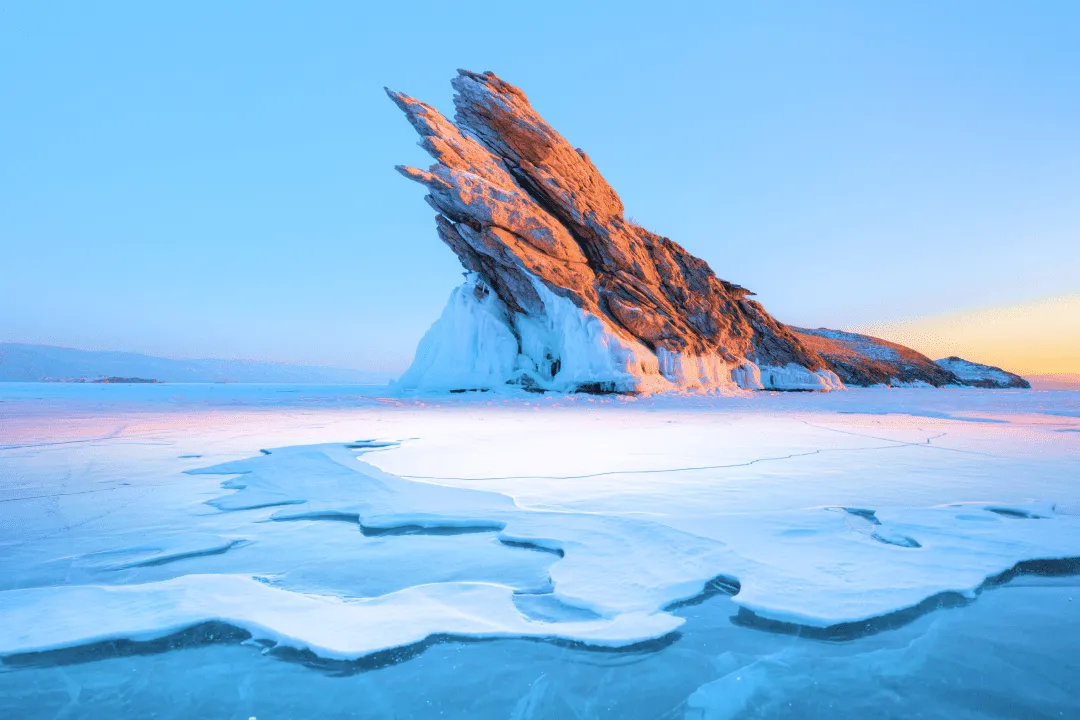
You can't just talk about the UNESCO list without mentioning Baikal. It is the deepest, the cleanest, and the oldest. No, seriously, the age of “Grandfather Baikal” is 25 million years. It's not surprising that during this time, a unique ecosystem has formed here, which is still being studied to understand how the evolution of life on Earth proceeded.
How to get there: Fly to Ulan-Ude or Irkutsk. From there, head to Baikal. Tickets to Irkutsk are already waiting on our website.
Golden Mountains of Altai
Actually, if you think about it (you can open a window at this phrase), this subheading contains a tautology. “Altai” simply translates from Turkic languages as “Golden Mountains.” We don't know about precious metals, but in terms of natural beauty, Altai is truly a treasure. It is not only a significant mountain system in Central Asia and Southern Siberia but also a unique territory. Alpine and subalpine vegetation zones alternate here. This is why rare and endangered animal species inhabit Altai: snow leopard, Siberian ibex, Altai argali. Do you want to see the beauty of Altai with your own eyes? Then go ahead, for tickets Moscow — Gorno-Altaysk on the Kupi.com website.
How to get there: First, fly to Gorno-Altaysk, then take a bus from Gorno-Altaysk to the village of Artybash (mouth of Lake Teletskoye).
Western Caucasus
Another location in Russia where nature has not been significantly affected by anthropogenic influence. A vast territory of approximately 300 thousand hectares includes the Caucasian State Nature Biosphere Reserve, Sochi National Park, the “Bolshoy Thach” Natural Park, and natural monuments “Buyny Ridge,” “Upper reaches of the Tsitsa River,” “Upper reaches of the Pshekha and Pshekhashkha Rivers.” Travelers are drawn here by the mountains, alpine and subalpine meadows, and breathtaking views.
How to get there: Fly to Sochi, Nalchik, or Mineralnye Vody (depending on which specific site interests you).
Ubsunur Hollow
So, imagine: a lake basin surrounded by mountains. Don't want to just imagine? Then we suggest you Google photos of the Ubsunur Hollow. This is the northernmost large enclosed water basin in Central Asia. It is located on the southern border of Tuva and the northwestern part of Mongolia. The uniqueness of the Ubsunur Hollow lies in the fact that it contains almost all natural zones: glacial zone, tundra, taiga, steppe, semi-desert, and desert. At the same time, the hollow covers an area of 258.6 thousand hectares — a rather small territory for such a number of zones. Besides nature, it is worth coming here for anthropology: monuments of ancient settlements have been found in these places: kurgans, steles, rock carvings, traces of ancient human settlements.
How to get there: We recommend taking any excursion to the hollow. All of them start in the city of Kyzyl. You can fly there from Irkutsk, Moscow, Krasnoyarsk, Novosibirsk, or drive from Abakan.
Central Sikhote-Alin
The Sikhote-Alin Nature Reserve is one of the most beautiful places in Russia, known to few. This is not surprising, as it is a specially protected natural area. The reserve is located near the city of Dalnegorsk in Primorsky Krai. But for those who decide to reach Central Sikhote-Alin, the pristine beauty of the Ussuri taiga will open up. These places are home to Amur tigers, of which fewer than a thousand remain in the world. Therefore, places like Central Sikhote-Alin must be protected and preserved.
How to get there: First, fly to Vladivostok. From there, transfer to bus No. 515 and go directly to the reserve.
Natural System of Wrangel Island
Russia's northernmost reserve is located on Wrangel and Herald Islands, as well as the adjacent waters of the Chukchi and East Siberian Seas. There, you can truly enjoy the harsh beauty of Arctic nature. But be careful: local inhabitants are quite dangerous. Wrangel Island is home to polar bears and a favorite hauling-out site for walruses.
How to get there: This is a “hard” level route. You can only fly to the island by helicopter (unfortunately, there are no scheduled flights). The nearest passenger airport is in the city of Pevek in Chukotka.
Putorana Plateau
Sounds like a tongue twister, doesn't it? In reality, it's a hard-to-pronounce and very difficult-to-access place beyond the Arctic Circle. The plateau remained untouched by civilization for a reason. It is located 323 km from Norilsk and is a giant massif of frozen lava and a complete set of subarctic and arctic ecosystems. Several natural zones pass through here: taiga, forest-tundra, tundra, arctic desert; there is even a pristine lake with cold water and river systems. If you are a seasoned traveler, visiting the Putorana Plateau is definitely worthwhile. For example, you can go on a warm summer trip in July-September or take a winter tour (from March to April) to see the unique Taimyr icefalls.
How to get there: First, fly to Norilsk. Then difficulties begin, as there are no roads to the plateau itself. Therefore, you can only get there in three ways: by catamaran, helicopter, or snowmobile.
Lena Pillars Nature Park
The main feature of this place is its unique rock formations, which stretch for 80 km along the Lena River in the central part of the Sakha Republic (Yakutia). The rocks themselves are separated by deep ravines filled with rock fragments. This natural phenomenon arose due to erosion. The formation of these rocks began 560–540 million years ago. Over time, the rocks began to collapse and acquire the most bizarre shapes.
How to get there: Fly to Yakutsk. Then you can drive along the Vilyuysky Tract to a base in the settlement of Bestyakh, and from there, travel by boat on the water.
Landscapes of Dauria
That could be the name of some fantasy saga… But in real life, it's a steppe that begins in eastern Mongolia and stretches through Russian Siberia all the way to the northeastern border of China. Dauria is, for a moment, one of the most extensive and well-preserved arrays of steppe landscapes in the world. Many species of rare birds live here, 15 of which are listed in the Red List of globally endangered species. The Landscapes of Dauria are included in the UNESCO list from both Russia and Mongolia.
How to get there: You can only enter the reserve's territory through the village of Nizhny Tsasuchey, which is located 240 km from the regional center, the city of Chita. Bus No. 524 runs from Chita bus station to Nizhny Tsasuchey; its final stop is a five-minute walk from the administration building of the “Daursky” Reserve.
These are some of the World Heritage sites in Russia. Many of them can and should be visited: it's always useful to learn something new from our country's history or to escape from civilization for a while. And some items on the UNESCO list are much closer to us than they seem (literally in a neighboring city).
We wish you great travels this summer!