Byzantine chroniclers said: “In Thessaloniki, every foreigner forgets their homeland.” The northern capital is considered the second-largest city in Greece. Locals often compare it to a swan that has taken a liking to the coast of the Thermaic Gulf.
The picturesque view and favorable climate attracted the Macedonian king Cassander to this place as early as 315 BC. He founded a city here and named it after his wife, Thessalonike. This was the only trace the queen left behind, which cannot be said for her half-brother, the legendary Alexander the Great.
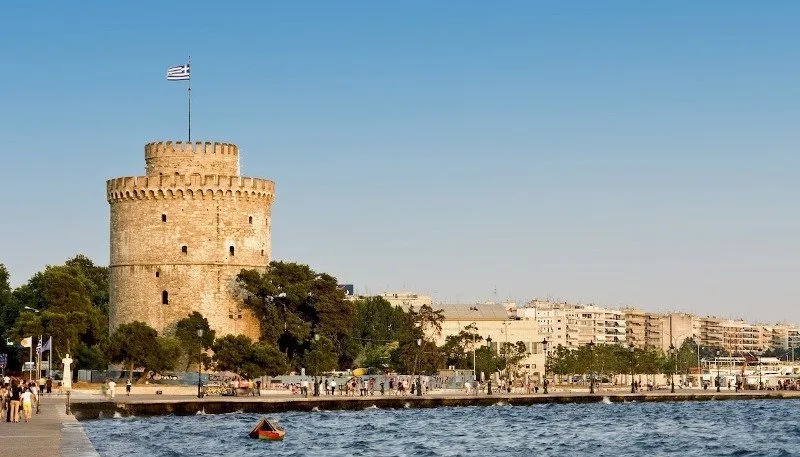
This diverse chorus does not at all prevent one from feeling the harmony of the world while sitting in one of the thousands of local taverns. By the way, most establishments' menus do not feature tea, as Greeks consider it not a drink but a remedy for a sore throat. Instead, they gladly drink iced frappe coffee – the best salvation from the heat.
I dare to bestow upon the city the title of “motorcyclists' mecca.” This is the most convenient transport for navigating the narrow streets. Don't be surprised if you see… a dog as a second passenger on a motorcycle. I almost jumped in surprise when I saw a driver carrying his huge furry friend on the back seat. They were speeding so fast that I couldn't even capture this endearing sight.
Cars are doomed to stand in traffic jams, so another alternative to a car could be the metro. However, it is unknown when the underground artery will open. Construction has been ongoing for about a hundred years.
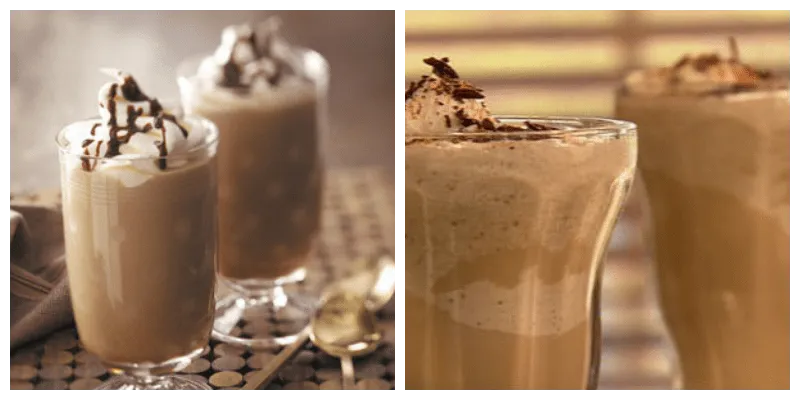
Workers are digging tunnels with great caution, as the earth's depths have revealed an amazing cultural layer. It turns out that the underground hides thousands of burials, the oldest of which dates back to the 1st century BC.
Along with the remains, artifacts of immense historical value were found. The city authorities decided to display ancient necklaces with precious stones, rare coins, and exclusive antique items directly in the metro stations.
When the project is finally completed, every tourist will want to visit the local underground. And why not? It's pleasant to wait for a train while examining the exhibits of an archaeological museum, which could eventually claim the title of the city's main attraction.
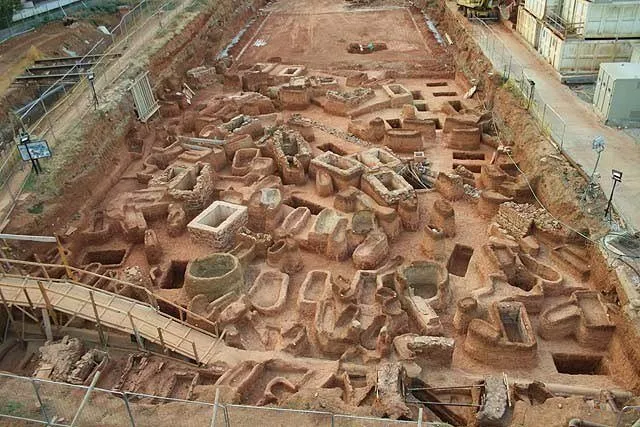
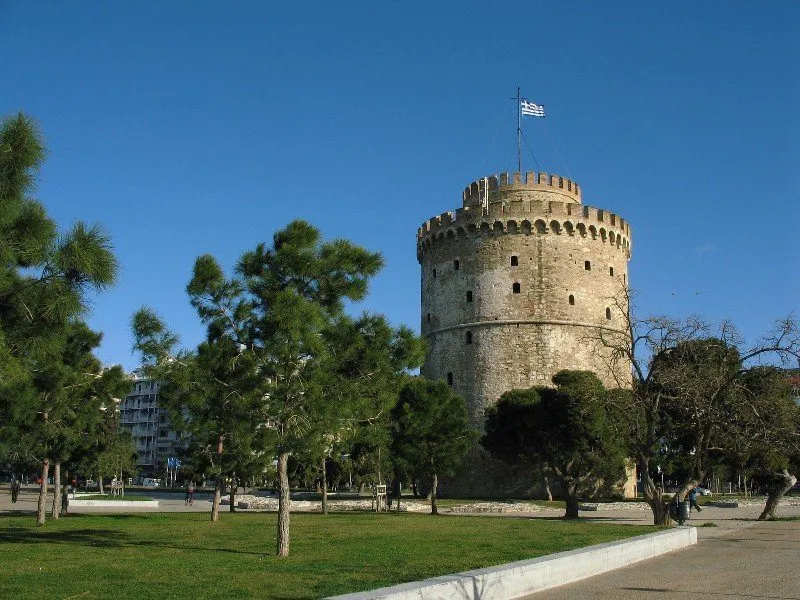
The heart of Thessaloniki beats in the White Tower. Once, a round Byzantine tower stood on this site, damaged during the city's capture by the Turks, who then built a new structure in 1490, inviting the best Venetian masters.
In the 19th century, the building was dubbed the “Bloody Tower” because it served as a prison, and anyone who entered it faced inevitable execution. Prisoners were beheaded, and the entire outer wall was drenched in blood. In 1890, the Turkish invaders painted the tower with white lime to cover their tracks. The Turks sensed that the rightful owners of Thessaloniki were about to drive them out.
The bustling quarters led me to the main street — Egnatia, where I was met by the Arch of Emperor Galerius. This is all that remains of the magnificent residence. The ruler also built a mausoleum for himself here, but ironically, he was buried thousands of kilometers away.
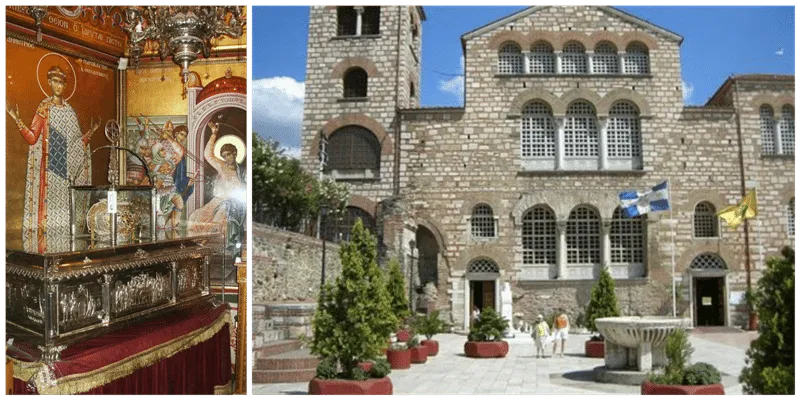
Galerius was a pagan, and the officer Demetrius of Thessaloniki, who secretly propagated Christianity in Thessaloniki, was not to the emperor's liking. In 303, Demetrius was imprisoned in an improvised jail located in the Roman baths, where, by the emperor's order, the young man was killed by legionaries.
Later, believers would turn this place into the first Christian basilica. The structure has no domes. Nothing strange, they simply hadn't learned how to build them yet in the 5th century!
In 1185, the Normans occupied Thessaloniki and stole the sarcophagus with Demetrius' relics; however, its contents were of little interest to them; rather, the invaders were more interested in the cost of the sarcophagus itself. The relic could not be found until 1971, when researchers discovered it in the Italian monastery of San Lorenzo. The Roman Pope unhesitatingly allowed the remains to be returned to their historical homeland.
The city center is adorned with low-rise buildings featuring large arches and ornate balconies entwined with exotic plants. At the beginning of the last century, wooden houses stood here, but in 1917, olive oil tanks caught fire in the port.
The wind-fueled flames spared no wooden structures, so after the tragedy, almost all areas of the city had to be rebuilt. This task fell to the French architect Ernest Hébrard, who largely shaped the appearance of modern Thessaloniki. He managed to preserve the Byzantine element, which is a characteristic feature of this area.
Greece never experienced socialist dominance, so in 1975, after the fall of the “Black Colonels” junta, residents of Thessaloniki were allowed to build their own homes on the sites of structures that were technically unfit for habitation. The only condition was not to change the size and to execute the facade using elements of Balkan style.
From time immemorial, Greeks built fortress walls to protect their cities from external encroachments. By the 19th century, the descendants of the Ottoman Empire had destroyed almost the entire fortress wall in Thessaloniki, leaving only the eastern part.
It is there, in the upper part of the city, that an observation deck is located, offering a magnificent view of ships departing from the port, the rooftops where citizens sunbathe, and even the spire of the radio tower, whose outlines are almost indistinguishable from the Ostankino Tower.
In this part of Thessaloniki, not only tourists but also locals can be found, playing backgammon, slowly sipping coffee, and contemplating the grandeur of the ancient city.