Skis or Snowboard – What to Choose for a Beginner
 Polina
Winter is getting closer, which means that the snow caps on the mountains are getting thicker, and ski resorts are preparing to open. It's time to check equipment, plan a vacation, and, of course, get tickets on Kupi.com to the mountains.
If you enviously watch happy skiers and snowboarders speeding down the slopes, maybe now is the time to join them! But before you manage to buy tickets to Sochi on Kupi.com or any other mountain region, the main question arises: snowboard or skis?
This is an eternal debate, similar to choosing between a cat and a dog, tea and coffee. There is no single right answer, but there are objective differences in learning, sensations, and physical exertion. We have analyzed the experiences of beginners and instructors to help you make this important choice.

What's easier – skis or a snowboard?
The most frequent question from beginners is – what's easier to master? And here lies the main paradox of the ski world. The answer to what's easier, skis or a snowboard, completely depends on which stage of learning we are talking about.
Skis: Easy to start, hard to master
- First day: you are a winner. The instructor puts you in a “snowplow” stance (the famous “pizza” or “wedge”), and you can almost immediately (!) descend the training slope in a controlled manner. You have two independent legs, you stand facing forward (which is natural for a human), and you have poles for balance. The first day on skis almost always gives a feeling of quick success.
- First week: but this is where it gets difficult. The “snowplow” is a dead end. To ski beautifully and confidently (with parallel skis), you will have to completely retrain, fight reflexes, and make your legs work synchronously but differently. Progress after the first day slows down sharply.
Snowboard: Hard to start, easy to progress
- First day: welcome to the “day of pain.” Your feet are strapped to one board, you stand sideways (which is unnatural), and you need to balance with your whole body. For the first few hours, you will constantly fall – on your tailbone, knees, and wrists (protection is mandatory!). You will learn to slide “falling leaf” on one edge, but there's no talk of turns yet. The first day on a snowboard is disappointment and bruises.
- First week: after enduring the first couple of days, you catch that very moment – the transition from one edge to another. And then magic happens. As soon as you master a linked turn, your progress skyrockets. In just 3-4 days, you start confidently descending blue and even simple red runs, getting that “surfing on snow” feeling.
Conclusion: skis give an immediate but deceptive sense of control. Snowboarding requires more patience at first but rewards you faster with the true feeling of riding.
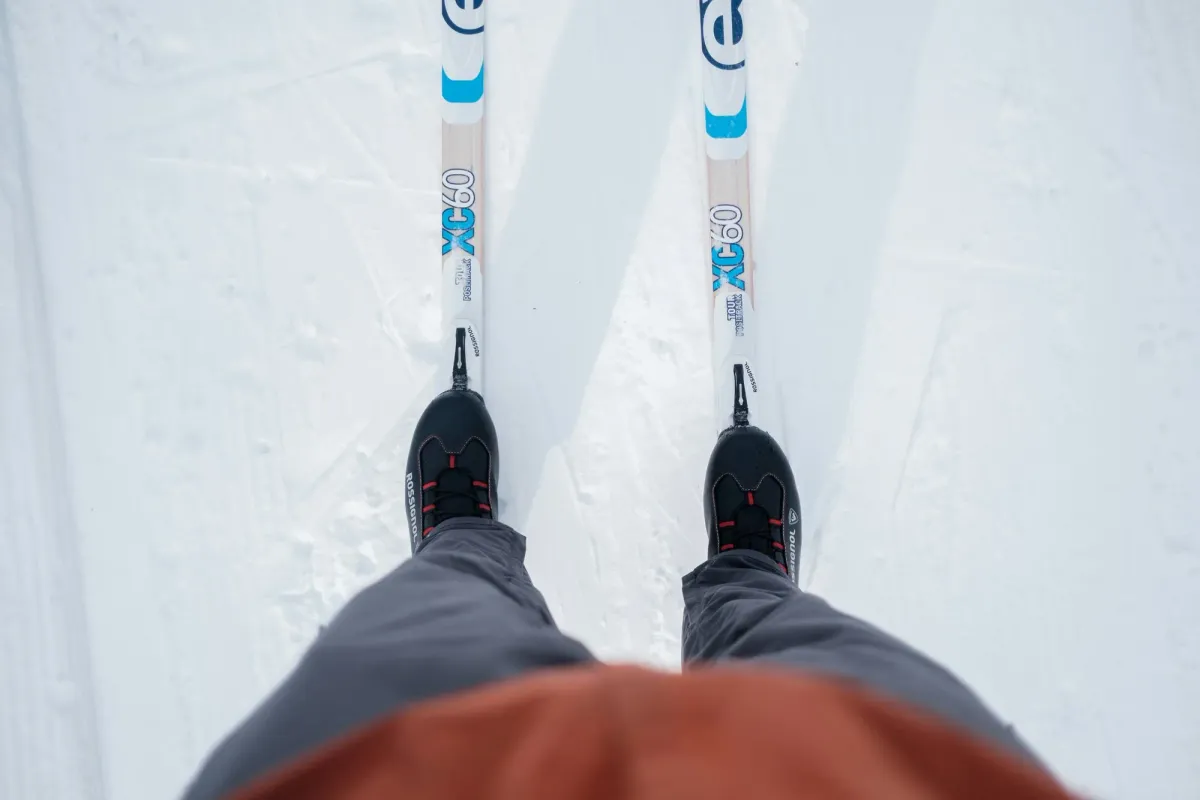
Snowboard or alpine skis – what about the physical load?
Physical fitness is an important aspect. Different equipment loads different muscle groups.
Alpine Skis
- Main load: quadriceps (front of the thigh) and knees. Static tension in a semi-squat is the basis of the ski stance.
- Muscles: thighs, glutes, calves are actively engaged. The shoulder girdle and arms (due to poles) are also involved.
- Symmetry: the load is symmetrical, which is more natural for the body.
Snowboard
- Main load: core (abdominal and back muscles) and ankles. You constantly balance using your whole body.
- Muscles: stabilizer muscles, abs, back are actively engaged. The front leg often gets more tired than the back leg.
- Asymmetry: you always ride with one side forward (you are a goofy-footer or a regular-footer). This creates an asymmetrical load on the spine and muscles.
Conclusion: if you have weak knees but a strong core, snowboarding might be easier for you. If you have great legs but a weak core, skis will feel more comfortable.
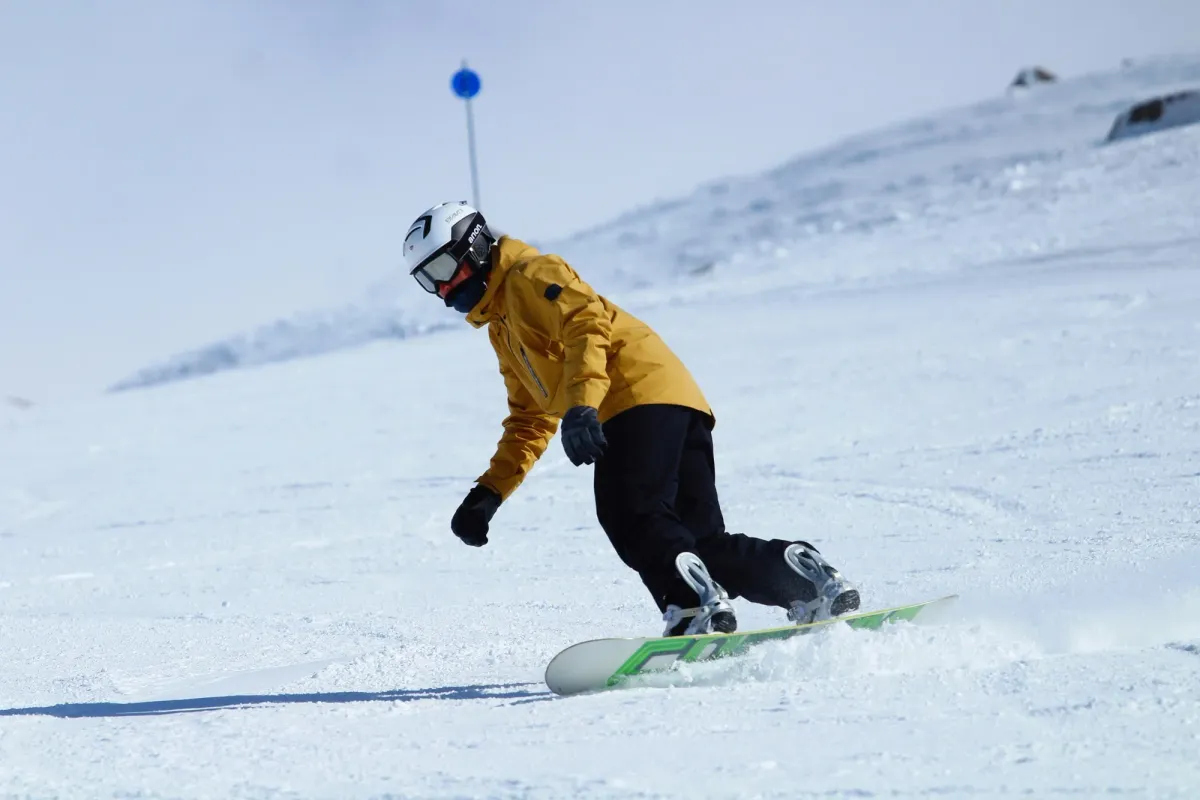
Equipment: Comfort vs. Practicality
The question of “what to ride – skis or a snowboard” also comes down to equipment. And here there is a clear winner in terms of comfort.
Alpine Skis
- What you need: skis, boots, poles, bindings.
- Boots: the main drawback. Stiff plastic “Spanish boot.” Walking in them (especially from the parking lot to the lift or to a cafe) is real torture.
- In hand: you always carry two skis and two poles.
Snowboard
- What you need: board, bindings, boots.
- Boots: the main advantage. They are soft, warm, and comfortable, similar to regular winter boots. It's comfortable to walk, sit in a cafe, or drive a car in them.
- In hand: only one board, which is convenient to carry under your arm.
Conclusion: a snowboarder is a pedestrian “king.” A skier is a pedestrian “robot.” In terms of off-slope comfort, snowboarding wins by a huge margin.
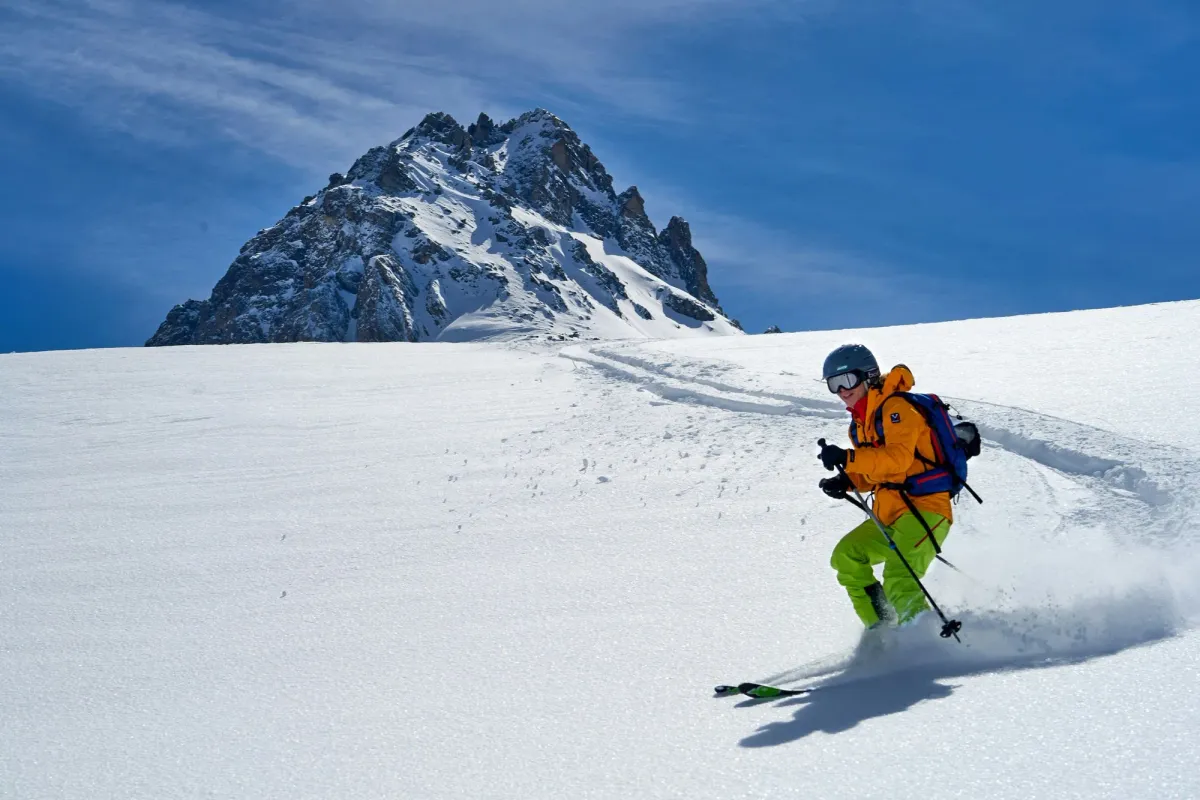
Safety and Injuries
Both sports are extreme, and injuries happen. But the nature of the injuries differs.
Alpine Skis
- Type of injuries: since the legs are independent and the boot rigidly fixes the ankle, all the impact during a fall goes to the knee. The most common and severe injuries are knee ligament tears (especially ACL). Such injuries require long and expensive recovery.
Snowboard
- Type of injuries: you fall with your whole body, while your legs remain together. Beginners instinctively put out their hands when falling, which leads to bruises and wrist fractures. Tailbone and shoulder bruises are also very common.
- Protection: for a beginner snowboarder, a helmet, protective shorts (for the tailbone), and wrist guards are not a recommendation, but a mandatory set.
Conclusion: on a snowboard, beginners fall much more often and get more minor injuries (bruises, contusions). On skis, falls are less frequent, but the consequences of a single fall can be much more serious (knee injury).
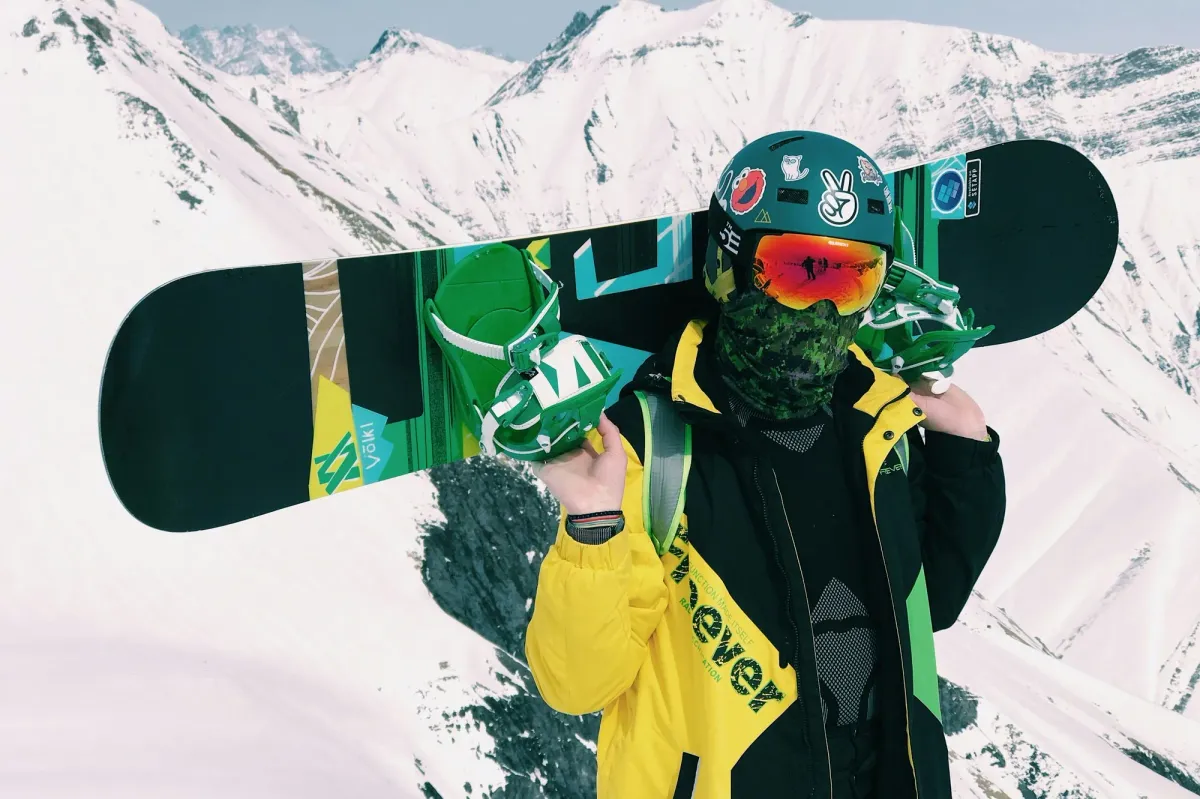
Life on the mountain: Lifts and flat sections
How does the equipment behave not only on the slope but also on the way to it?
Alpine Skis
- Lifts: getting on and off a chairlift is very easy.
- Flat sections: you are the king of the situation. If the slope becomes gentle or you need to go 100 meters to a cafe, you simply push off with your poles.
Snowboard
- Lifts: before getting on the lift, you need to unstrap one foot (the back one). Riding the lift with one foot strapped in and getting off is a real quest for a beginner.
- Flat sections: your personal hell. You'll either have to unstrap a foot and push with it like on a skateboard (which is uncomfortable in deep snow), or hop on the board.
Conclusion: in terms of on-mountain logistics, a skier has it incomparably easier.
So what to choose: skis or a snowboard?
There is no single answer to the question of whether to ride skis or a snowboard. But here's a brief summary to help you decide.
Choose alpine skis if:
- You want to get quick results on the very first day.
- You prefer to stand facing the direction of travel.
- You have experience rollerblading or ice skating (similar mechanics).
- You are intimidated by the prospect of constantly falling in the first few days.
- You value convenience on flat sections and lifts.
Choose a snowboard if:
- You are ready to “suffer” for 2-3 days for rapid progress later on.
- You have experience surfing or skateboarding (ideally).
- You are attracted to the “free” feeling of gliding, similar to a dance.
- You hate uncomfortable footwear and want to walk comfortably in cafes.
- You want to look stylish (though this is subjective).
- You have healthy wrists and a tailbone, but you are concerned about your knees.
Perhaps you are already looking for tickets Saint Petersburg – Kirovsk, to start your journey. Whatever you choose, remember the main thing: both of these activities give an incredible feeling of freedom, speed, and unity with the mountains. The biggest mistake is not trying at all.

