How to keep children busy on a train
 Polina
For many parents, a train journey with children seems like a test of endurance: a confined space, neighbors craving silence, and a little person's energy with nowhere to go. However, unlike a plane or a car, a train is the most convenient mode of transport with a child. Here you can walk, lie down, look out a huge window, and play board games.
The secret to a peaceful journey lies not in a tablet with endless cartoons, but in proper preparation. We've gathered proven ideas that will turn the road into an exciting adventure, even if you decided to buy tickets to Anapa on Kupi.com and you have to spend more than a day on the road.
The novelty effect and the 'magic backpack'
The main rule for experienced parents: don't show your child all the toys at once. Pack new, inexpensive little things they haven't seen before into a separate backpack. Psychologists call this the novelty effect.
To prolong the fun, wrap each small item in foil or gift paper. The unwrapping process itself can keep a child occupied for 15-20 minutes. Such a set can include:
- Reusable stickers. These are an absolute hit for children aged 2 to 6. They can be stuck in an album, on a table, and even on a window (they leave no marks).
- Magnetic games. Checkers, puzzles, or 'dress-up' games on a magnetic base. They won't scatter from the train's shaking or get lost under the shelves.
- Chenille wire (fuzzy). You can twist figures, bracelets, glasses from it – this perfectly develops fine motor skills and doesn't create mess, unlike plasticine.
- Water coloring books. A brush with a water reservoir and a special album. No paints, spilled cups, or stained clothes, and the pictures turn out bright.
Games without props: observe and imagine
When toys get boring, verbal games and observing the world come to the rescue. The train window is a television that shows reality.
Try playing 'Roadside Bingo'. Draw or print a list of items you might see along the way: a cow, a tractor, a bridge, a red car, a water tower. The child's task is to find them outside the window and cross them off. This turns passive contemplation into an exciting hunt. If you're traveling a short distance, for example, you managed to buy tickets to St on Kupi.com. Petersburg, such a game will take up almost half the journey.
Another great option is 'Guess Who's Coming'. You listen to footsteps in the corridor and try to guess who will pass by the compartment: the conductor with tea, a man, a woman, or a child.
Strategic snack
Food on a train is not just about satisfying hunger; it's a full-fledged entertainment. Children love the 'carriage romance': food from containers, tea in cup holders, and the clinking of a spoon against a glass.
The main rule: avoid sugar. Chocolate, sweet juices, and cookies cause a sharp surge of energy, which in a confined compartment will turn into running around on the ceiling. It's better to take things that can be chewed and examined for a long time:
- Vegetables cut into sticks (carrots, cucumber, bell pepper).
- Dried apples or fruit chips (sugar-free).
- Nuts (for older children).
- Small canapé sandwiches.
Gadgets and audiobooks: heavy artillery
It's best to save a tablet or phone for the very last resort, when both children and parents are tired. To protect eyesight (train shaking is harmful to eyes when reading from a screen) and not overload the nervous system, opt for audio format.
Download audio fairy tales, children's podcasts, or radio plays to your phone. Be sure to bring children's headphones. While listening to a story, a child can simultaneously draw or build a constructor. This calms and induces a trance-like state, which is especially useful before bedtime. If you’re on a long scenic train journey, where the landscape outside the window changes from plains to mountains, an audio guide or stories about cities along the way can be an excellent addition to the trip for schoolchildren.
The train as a big toy
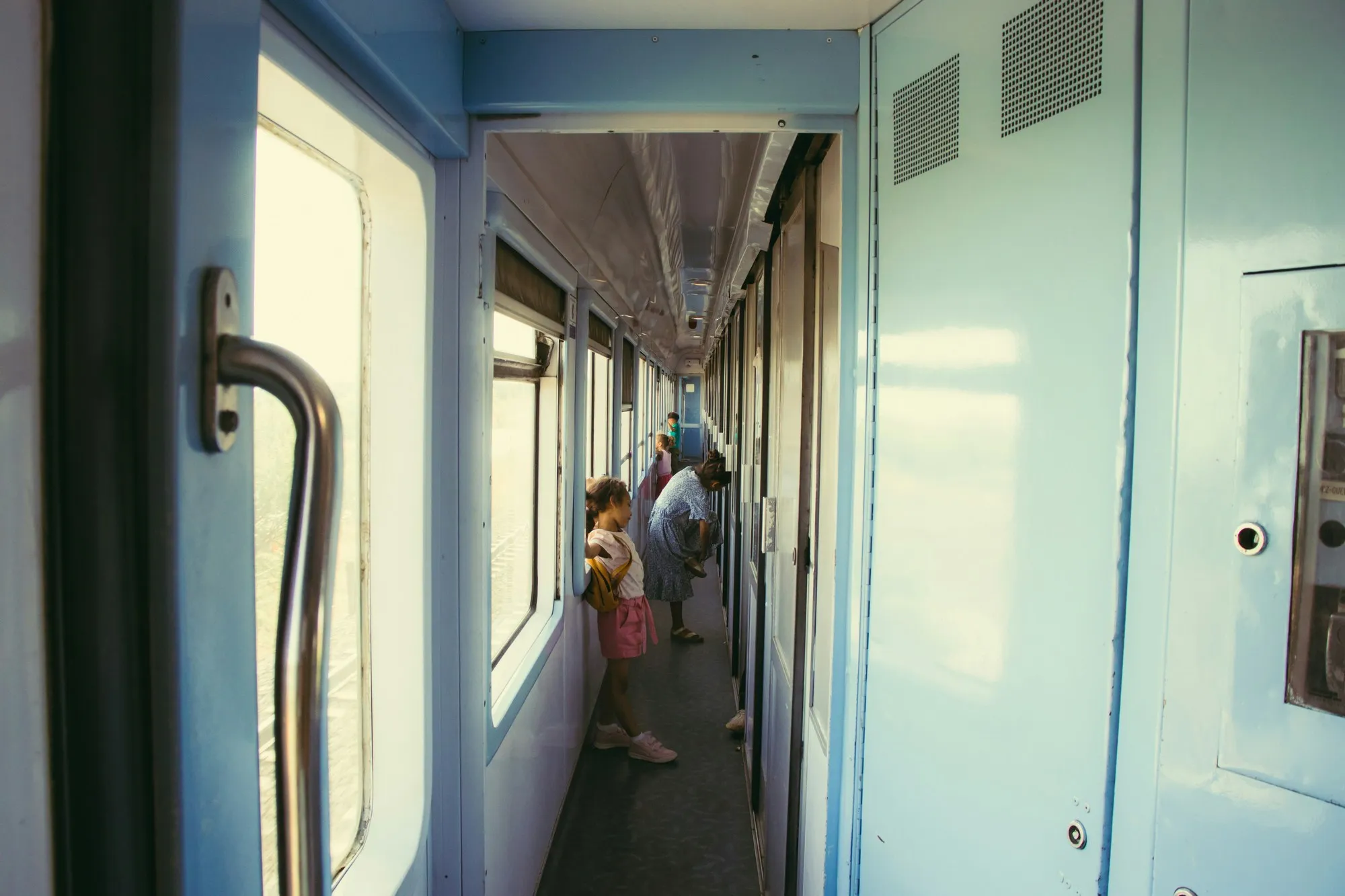
Don't confine your child to the compartment. The train itself is a huge, interesting mechanism.
- Excursion to the titan. Go see where the conductor gets boiling water. For a city child, this 'shiny samovar' looks like a spaceship.
- Studying the schedule. If the child can already read, give them an important mission: to monitor the route. Print out the stop schedule. Let them check if the train is delayed, how many minutes are left until the station, and what the next city is called.
- Walks at stations. During long stops, be sure to get some fresh air. Running along the platform, counting carriages, or just breathing – this is necessary for a change of pace.
A train journey is a time when parents belong entirely to their children. No one is cooking dinner, no one is rushing to work. Use this time for communication, and then the clatter of wheels will become for the child not a symbol of boredom, but the music of adventure.