Currency Conversion Features When Paying with a Card Abroad
Traveling with a bank card has its peculiarities that are better to know in advance. In this article, we will discuss them.
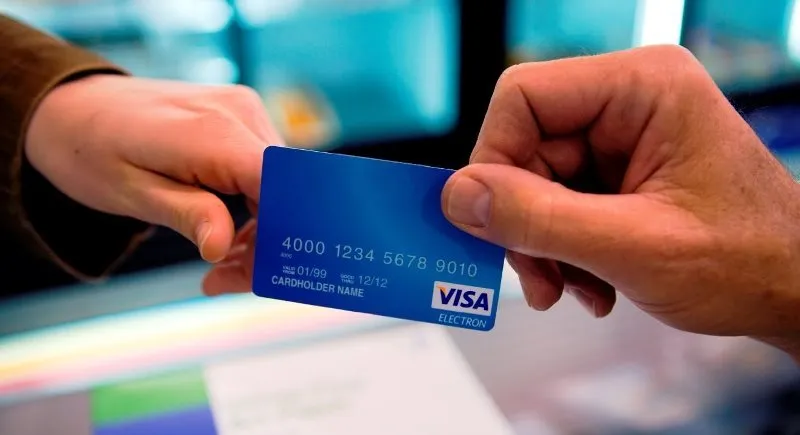 Payments abroad are made in local currency, and if your card's currency does not match the local one, the bank or payment system charges you a percentage for currency conversion.
Let's take a closer look at how bank cards work.
Look at your card, what do you see on it? At a minimum, it's your bank's logo and name, and the payment system's logo.
Currently, two payment systems are common in Russia: Visa and MasterCard.
Three currencies are involved in the card payment process:
Payments abroad are made in local currency, and if your card's currency does not match the local one, the bank or payment system charges you a percentage for currency conversion.
Let's take a closer look at how bank cards work.
Look at your card, what do you see on it? At a minimum, it's your bank's logo and name, and the payment system's logo.
Currently, two payment systems are common in Russia: Visa and MasterCard.
Three currencies are involved in the card payment process:
Payments abroad are made in local currency, and if your card's currency does not match the local one, the bank or payment system charges you a percentage for currency conversion.
Let's take a closer look at how bank cards work.
Look at your card, what do you see on it? At a minimum, it's your bank's logo and name, and the payment system's logo.
Currently, two payment systems are common in Russia: Visa and MasterCard.
Three currencies are involved in the card payment process:
- Transaction currency - this is the currency you use to pay for goods. In Great Britain - it's pounds, in Thailand - baht, etc.
- Settlement currency - the currency of the payment system.
- Card account currency - the currency in which your card is issued, i.e., the currency in which the money is held in your account.
Example #1: You have a dollar account and a Visa card. You decided to buy ice cream for $3 in New York.
In this case, the transaction currency (dollars) matches the card account currency (also dollars), so exactly $3 will be debited from your account.Example #2: You have a ruble account and a Visa card. You decided to buy ice cream for $3 in New York.
In this case, the transaction currency (dollars) does not match the card account currency (rubles). At what exchange rate will the money be debited? Here you'll need to remember the settlement currency, which is the currency your payment system operates in. For Visa, the primary settlement currency is dollars; for MasterCard, it's euros. Since in the example above we have a Visa system card, whose settlement currency is dollars, and our debit currency is also dollars, the conversion will be carried out at the card-issuing bank's exchange rate. Typically, the issuing bank charges 1.5-1.7% of the transaction value.Example #3: You have a dollar account and a Visa card. You decided to buy ice cream for 100 baht in Bangkok.
In this case, the transaction currency (baht) is not equal to the settlement currency (dollars), but the settlement currency is equal to the card currency (dollars). The conversion from baht to dollars will occur at the payment system's exchange rate, in this example, at Visa's rate. In addition, the bank may charge a small commission.Example #4: You have a ruble account and a Visa card. You decided to buy ice cream for 100 baht in Bangkok.
In this case, the transaction currency is not equal to the settlement currency, and the settlement currency is not equal to the card currency. Therefore, the conversion from baht to dollars will occur at Visa's rate, and from dollars to rubles at your bank's rate. You probably think that to find out exactly how much money the bank will debit, it's enough to check your bank's or payment system's conversion rate? But that's not the case. It's much more complicated. The thing is, when you buy something, money is not debited from your account instantly. Often, the actual debit occurs several days later, and the exchange rate may change significantly by then. There's nothing you can do about it, just keep it in mind.