5 Russian Cities Where You Can See Graffiti
 Yasya
YasyaIt's time to stop treating wall paintings as vandalism: today global street art has moved beyond old boundaries and is no longer the "cave painting" of troubled teenagers. Large-scale murals adorn cityscapes, create new points of attraction, and individual small drawings turn city walks into treasure hunts. Major cities like Dubai have long caught on to this trick and use graffiti to attract tourists, and now the trend has reached Russia. Already, in some cities, the density of art per square meter is so high that street art guides are becoming more popular than classic "look right, look left" tours. We tell you exactly where to go to see contemporary art in its natural habitat. Street naturalists, get your smartphone cameras ready!
Ekaterinburg
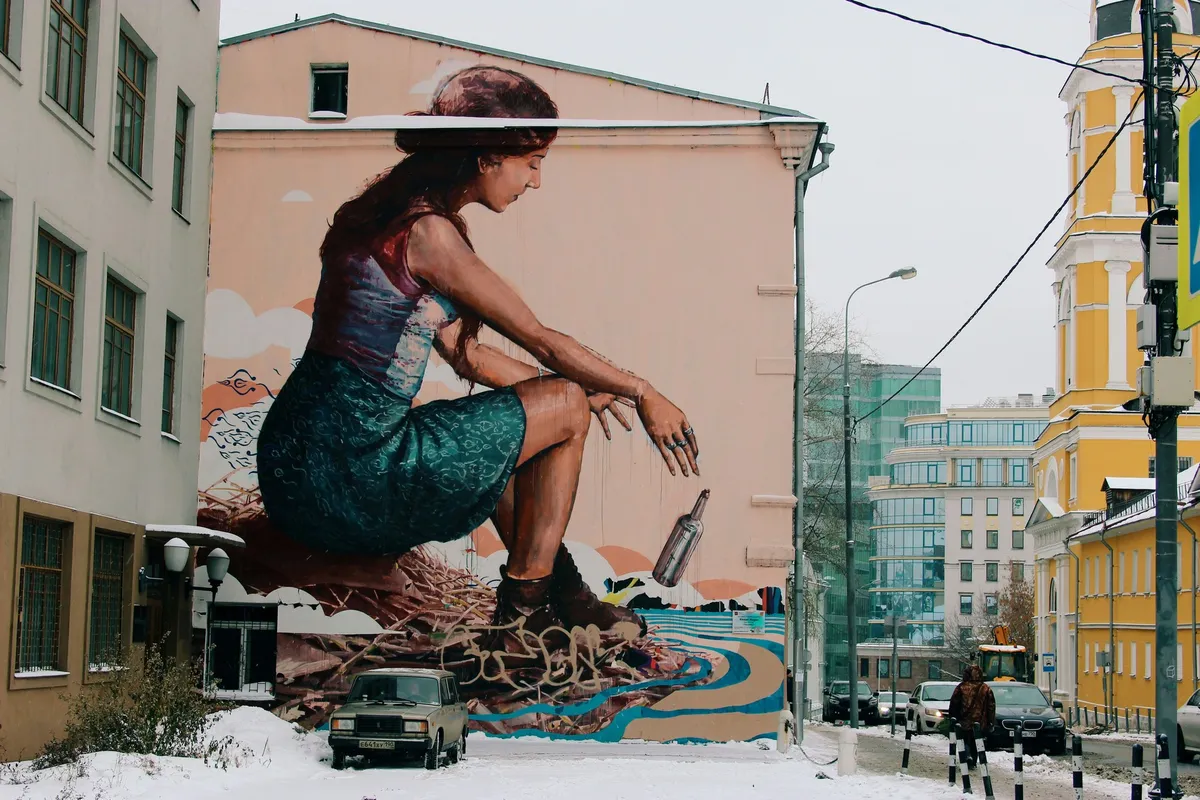
Ekaterinburg rightfully holds the title of the capital of Russian street art, and it's not just about the number of drawings. A unique community of artists has formed here, who know how to negotiate with authorities at the "Stenograffia" festival and boldly capture urban spaces within the illegal "Carte Blanche" framework. In Ekaterinburg, art is a way of communication between the city and its residents. The drawings can be ironic, acutely political, or philosophical, but they are never boring. Here you can stumble upon a tiny character hidden behind a downspout, or a giant mural covering the facade of a five-story building – both are valuable.
What you should definitely see:
"Can of Condensed Milk" and "Campbell's Soup" (Samolyotnaya St., 55): this is not just a drawing, but a whole statement on the theme of mass culture. Artists transformed two ordinary concrete reservoirs in the industrial zone into giant tin cans. One is native Soviet condensed milk, the other is Andy Warhol's pop art object. An ideal place to grasp the scale of Ural humor.
Yard at Popova, 2: a real "Berlin in miniature." A closed yard whose walls resemble a multi-layered cake of tags, stencils, and full-fledged murals. Here you can find works by almost all the city's iconic artists. The main thing is to go inside and not be afraid to turn a corner: the most interesting details are hidden there.
"This inscription was made in Ekaterinburg": the work of the legendary Timofey Radya on the roof of the instrument-making factory. It has become so important for the city that it has not been painted over for many years. It is a declaration of love for the place, made with huge white letters that glow at dusk.
Nurov Garden (Chapaeva St., 1): here street art coexists with environmental activism. Volunteers restored an old garden, and artists decorated its walls with works that emphasize the connection between nature and the city. The place is very atmospheric, quiet, and ideal for having coffee surrounded by art.
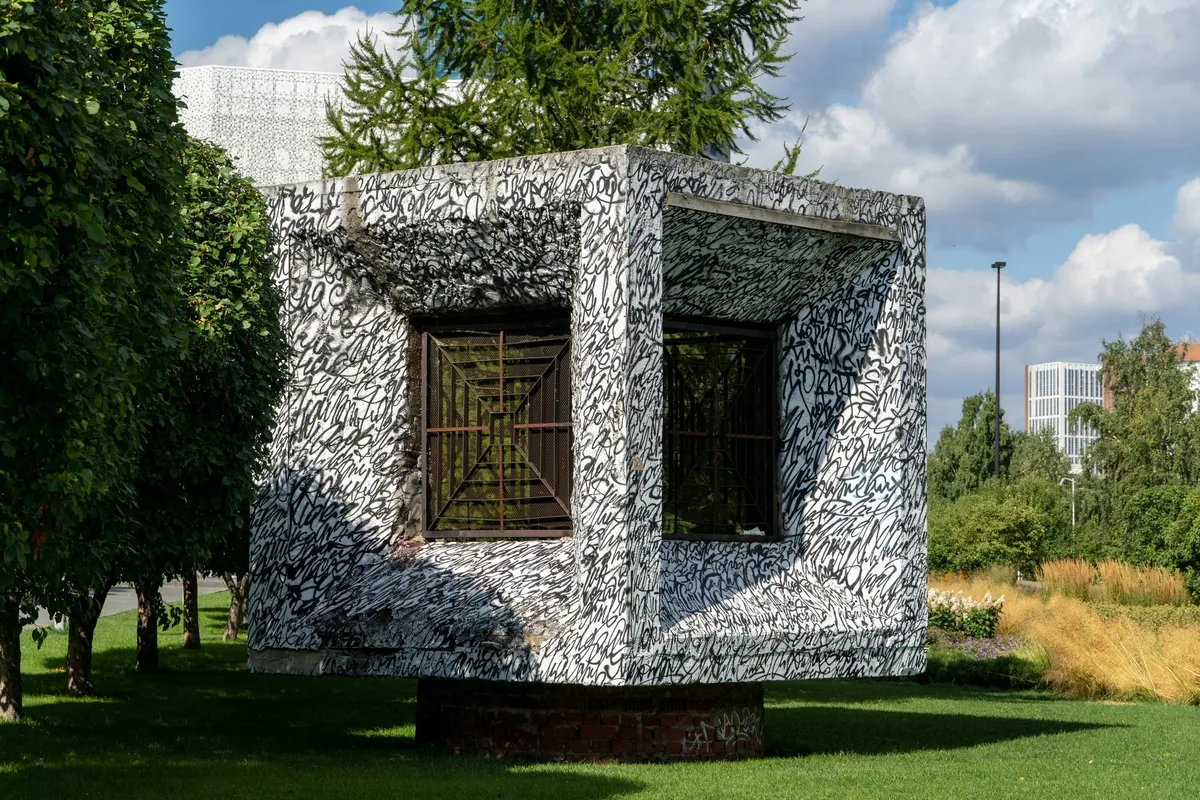
Pokras Lampas' "Suprematist Cross" (First Five-Year Plan Square): this is arguably the most talked-about work in the history of Ural street art. A giant calligraphy covering 6,600 square meters, into which a quote from Kazimir Malevich is inscribed. The work had a difficult fate: road workers tried to pave over it, believers protested against it, but in the end, Pokras returned and restored the art object, slightly changing its geometry. Now it is the main point of attraction in Uralmash – to appreciate its scale, it's best to view it from above or through a drone's lens, but walking among the letters themselves is no less impressive.
To not miss a single new tag this season, we advise you to buy tickets from Moscow to Ekaterinburg in advance – the city is especially good for walks in late spring.
Nizhny Novgorod
Nizhny Novgorod has chosen its own path: here, street art is maximally tactile and careful. Instead of obscuring architecture, local artists work in dialogue with it. The city has preserved many old wooden houses, and they have become canvases for the "Nizhny Novgorod wave." This is art that doesn't shout but invites reflection. Authors often use natural materials, wood, and even old window frames, creating the effect of something ancient and magical being present in a modern metropolis. This is an ideal place for those who love details and slow walks through historic quarters hidden from the eyes of mass tourists.
What you should definitely see:
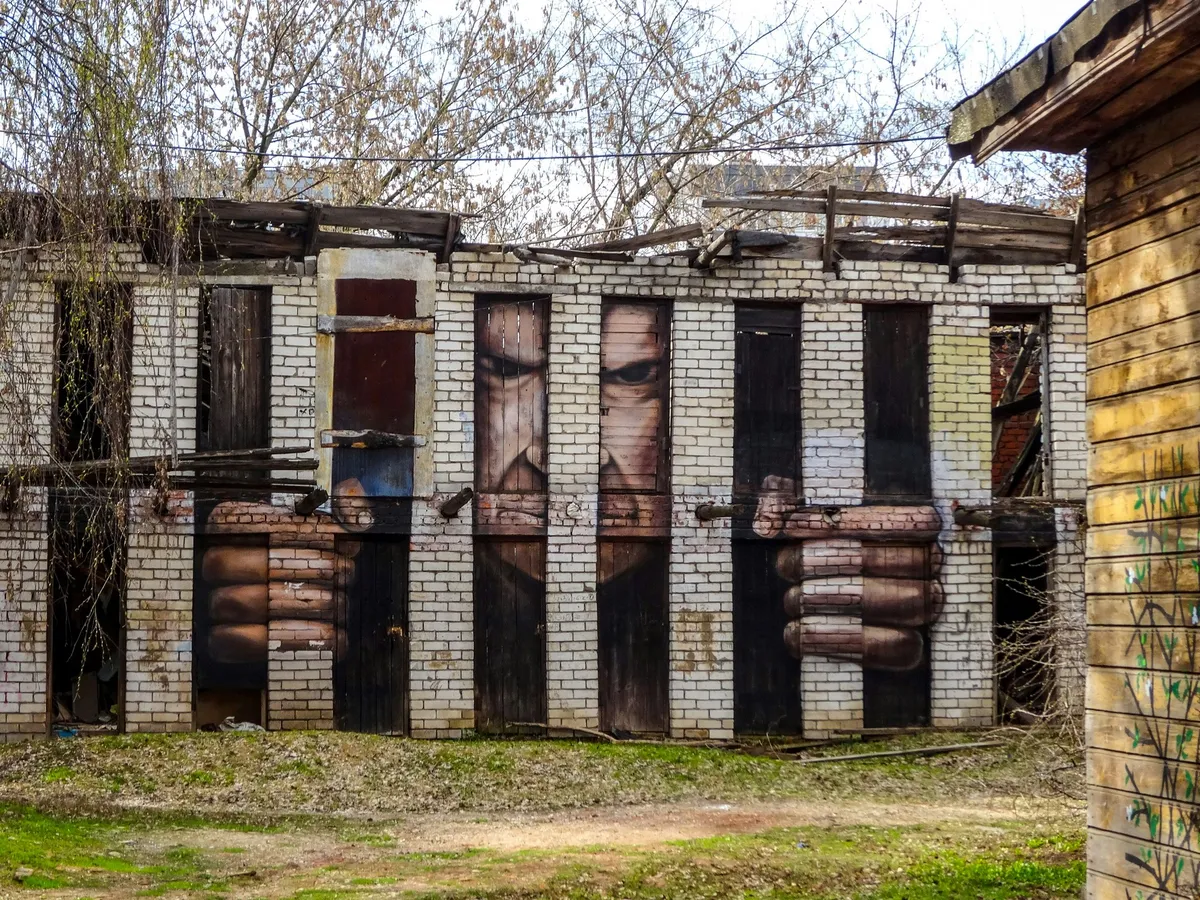
Quarter of the Three Saints (area of Korolenko and Slavyanskaya streets): this is a protected area where antiquity meets modernity. Artists (e.g., Nikita Nomerz) create works here that literally "grow" through cracks in wood or brick. Look for the city's famous "eyes" that gaze at passersby from the empty window openings of old estates.
"Drink of the Gods" on Ilyinskaya Street: a large-scale and ironic work depicting a person drinking from a huge tap embedded in the wall of a house. This is a classic of Nizhny Novgorod style – a bright spot in the historic buildings that doesn't spoil the view but adds character to it.
Abandoned Cinema "Elektronika": a place for those who love the aesthetics of decay. The walls of the former cinema have become a legal and illegal testing ground for experiments. Here you can see how styles and fonts change almost in real time.
Arch on Oktyabrskaya: a small but very art-dense spot. Here you can always find fresh stickers, posters, and quick sketches from local teams. An excellent place to feel the pulse of the city's street life.
If you are planning a complex route through two capitals, check tickets for the Saint Petersburg – Nizhny Novgorod route – high-speed trains will make your trip as comfortable as possible.
Kazan
Kazan has made a huge leap in the development of visual culture in recent years. Street art here is often supported at the republic level, allowing artists to create truly large-scale canvases (murals) on the ends of high-rise buildings. The peculiarity of Kazan lies in how skillfully authors weave Tatar ornaments, folklore plots, and images of national heroes into the modern visual language. This transforms ordinary residential areas into galleries that are no less expressive than the city center. Here, street art is a bridge between the past and the future, a way to tell about one's identity in a language understandable to the whole world.
What you should definitely see:
Mural "Girl with a Watering Can" (Khakima St., 33): a huge work created as part of one of the festivals. It depicts a little girl "watering" a living tree growing next to the house with a watering can. This is one of the kindest and most recognizable symbols of new Kazan, uniting architecture and nature.
Extreme Park "Uram" under the Millennium Bridge: the heart of Tatarstan's youth culture. Under the huge concrete supports of the bridge, a legal graffiti site is located. Everyone draws here – from beginners to pros. The picture is updated every week, so this place never gets boring.
Yard of the "Werk" art space (Akhtyamova St., 82): a place for industrial lovers. Former factory premises are now occupied by clubs and studios, and the walls are decorated with conceptual street art. Graphic design, abstraction, and dark colors prevail here, which perfectly matches the aesthetics of the old factory.
Old Tatar Settlement: look for works here that reinterpret national identity. For example, murals inspired by Gabdulla Tukay's Tatar fairy tales. This is an example of how graffiti can be patriotic, yet modern and stylish.
Right now you can buy tickets from Moscow to Kazan to make it for the upcoming weekend and eat the best kystybyy of your life against the backdrop of vibrant murals.
Saint Petersburg
Petersburg street art is always a bit of a struggle. Due to strict regulations on monument protection, works in the city center don't last long – they are painted over by utility services ("yellow men"), which has given rise to a whole culture of fleeting art. For example, the portrait of Daniil Kharms on the wall of a house on Mayakovsky Street, created by artists Pasha Kas and Pavel Mokich, disappeared. In Petersburg, graffiti often carries a literary or philosophical subtext: Brodsky's quotes, portraits of classics, or biting satire on current events. You should look for them in the famous courtyard-wells, behind the heavy doors of парадные (grand entrances), or in former industrial outskirts that have turned into trendy clusters. Petersburg art is for those who are ready to look into every archway and not afraid to get lost in the labyrinths of Petrogradka.
What you should definitely see:
Sevkabel Port (Kozhevennaya Line, 40): perhaps the most accessible and trendy location. On the territory of the former cable factory, you can find huge murals that are perfectly integrated into the seascape. Pay special attention to the works on the ends of the brick workshops – they have become the port's hallmark.
Pushkinskaya, 10: the city's oldest art center. This is not just a courtyard, but an entire ecosystem where memorial plaques to rock stars, psychedelic paintings, and classic graffiti coexist on the walls. The place is imbued with the spirit of freedom of the 90s and continues to attract creative people.
Friendship Garden on Liteyny: portraits of famous personalities (from Viktor Tsoi to Sergey Bodrov) regularly appear here. Although utility workers often paint them over, artists return again and again. This place is a true barometer of popular love.
"Berthold Centre" (Grazhdanskaya St., 13-15): a creative space with a cozy courtyard. The graffiti here is more decorative and "Instagrammable," but no less high-quality. Look for the huge metal staircase – from its platforms, excellent angles for wall paintings open up.
If your path lies further east, check tickets for the Saint Petersburg – Ekaterinburg route to trace how the artists' style changes from the banks of the Neva to the Ural Mountains.
Vyksa
Vyksa is a unique example of how one metallurgical plant can change the fate of an entire city. Thanks to the "Vyksa-fest" festival, the small town has become a point of attraction for artists from all over the world. Here, they don't just draw on walls – they change the landscape. Huge murals on active factory workshops, floating installations on ponds, and conceptual bus stops have turned Vyksa into a vast open-air museum. Here, street art reaches its maximum in terms of size: Vyksa is home to some of the largest wall paintings in Europe, executed by professional teams.
What you should definitely see:
"Stop – Go" by Erik Bulatov: the most important object in the city. The work of one of the founders of Sots Art is located on the wall of the pipe-electric welding shop of the OMK plant. These are two huge words that intersect each other, creating an optical illusion. The scale (2,500 sq. m) is simply breathtaking.
Mural "Evolution-2" by Misha Most: another giant (10,000 sq. m). The factory wall depicts themes related to the development of science, technology, and humanity. This is the largest wall painting in Europe, created by a single artist. To see it in its entirety, you'll have to step back a considerable distance.
Art Ravine in the central park: street art goes into the third dimension. The park features pavilions and installations that are not technically graffiti but conceptually continue the theme of street art. Look for the famous "Unicorn" and mirrored objects.
Art courtyards in the Central microdistrict: here, artists worked together with residents of the houses. The result is cozy and very personal murals that tell the story of specific people and families living in these buildings.
The most convenient way is to fly or travel to Nizhny Novgorod, and from there, order a transfer. This trip is definitely worth the time spent.
Street art is an unstable substance. Today a work exists, and tomorrow it's covered by a new masterpiece or a layer of plaster. Therefore, the main advice is: if you see it, photograph it.
