Support

Fort Smith National Historic Site

About

Located on the banks of the scenic Arkansas River is the Fort Smith National Historic Site — a place where legends of the Wild West and the harsh justice of the frontier come to life. This site in the city of Fort Smith is a unique open-air museum complex that preserves the heritage of two 19th-century military forts and the famous federal court.
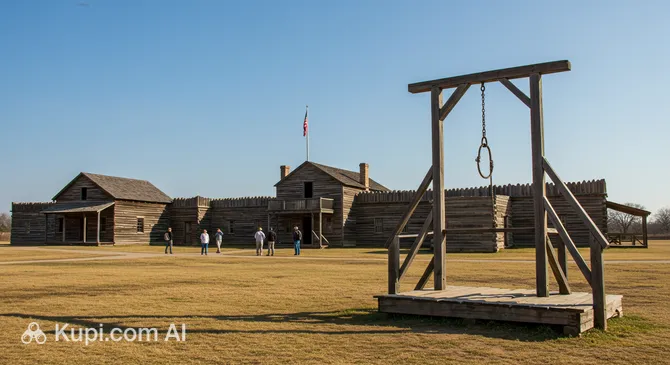
Fort Smith National Historic Site. Illustration.
Source: Kupi.com AI

Traveler photos:

Here in the USA, visitors can see the foundations of the very first fort, established back in 1817, and restored buildings from a later period. The site is listed as a National Historic Site and is carefully managed by the National Park Service, ensuring a high degree of authenticity in all exhibits.

The former barracks building, which later became the court of the "Hanging Judge" Isaac Parker, gives this location special significance. Fort Smith's history is closely intertwined with the tragic "Trail of Tears" and the tumultuous events of the Civil War, turning a simple walk into a deep immersion into the cultural and military chronicles of the American West.

Contacts

To check for current event information or inquire about group tours, you can use the official communication channels. National Park Service staff are always ready to assist tourists in planning their visit.

How to contactContact
Address301 Parker Ave, Fort Smith, AR 72901, USA
Phone+1 479-783-3961
Websitewww.nps.gov

What to Do

The main adventure begins at the visitor center, located in the building that served as the former barracks and courthouse. Here, you can peek into a cell of the infamous "Hell on the Border" jail and see the courtroom where the famous Judge Parker presided. Interactive exhibits tell gripping stories of marshals, desperate outlaws, and soldiers who served on the edge of civilization.

Be sure to walk the grounds to the reconstructed gallows — a grim reminder of an era when order in the Indian Territory was maintained with an iron fist. Outdoors, you can explore the foundations of the first fort and the 1838 Commissary building, which has been preserved in its original state. The Riverfront Trail along the Arkansas River offers not only beautiful views but also important informational panels dedicated to the relocation of indigenous peoples.

For a deeper immersion, consider using the audio guide or joining the educational programs frequently held on-site. Thanks to its high ratings among tourists, this place is famous for its atmosphere: you can practically feel the spirit of the past as you stand on the parade ground where troops once marched before being deployed to the Mexican War.

Getting There

The National Historic Site is located at 301 Parker Ave, Fort Smith, AR 72901. The city is situated in western Arkansas, right on the border with Oklahoma. If you are traveling by car, the site is easily accessible via interstates I-40 and I-540, which provide convenient connections to neighboring regions.

For those arriving by air, the nearest hub is Fort Smith Regional Airport (FSM). The trip from the terminal to the historic center by taxi or rental car takes only 10–15 minutes. Since public transportation in this part of the city is limited, experienced travelers recommend using Uber or Lyft services.

The historic park provides free parking, which is very convenient for tourists in personal cars or RVs. Additionally, the monument is within walking distance of the city center's main blocks, where major hotels and restaurants are concentrated, allowing you to combine a historical tour with a pleasant stroll.

Nearest city: Fort Smith

History & Facts

The history of this site began on Christmas Day 1817, when Major William Bradford established the first fort. The garrison's primary goal was to maintain peace between the Osage and Cherokee tribes who were migrating west. Interestingly, the soldiers here were more involved in road building and gardening than in combat, eventually succeeding in fostering diplomatic agreement among the Native American tribes.

The second stage of development began in 1838 in connection with the Indian removal policy. Under the command of future president Zachary Taylor, the fort was transformed into a powerful stronghold and supply depot. The site gained somber notoriety as one of the key points on the "Trail of Tears" — the route of forced relocation of indigenous peoples that passed along the Arkansas River.

The most colorful period in Fort Smith's history is associated with the name of Judge Isaac C. Parker, appointed in 1875. For 21 years, his court struck terror into the hearts of Wild West outlaws. Parker, who earned the nickname "The Hanging Judge," handed down death sentences to dozens of bandits in an attempt to establish law in the harsh Indian Territory.

In 1961, President John F. Kennedy designated the site as a National Historic Site, and three years later, it was formally dedicated by First Lady Lady Bird Johnson. Today, it is not just ruins, but a living testament to the transformation of the frontier from a wild land into a space governed by law.

Time Needed

To leisurely explore all the key features of the monument, a typical visitor will need 2 to 3 hours. This is enough time to visit the exhibits in the main building, walk to the foundations of the first fort, and view the reconstruction of the famous gallows.

If you plan to study every display in detail, use the audio guide, or walk the entire length of the Riverfront Trail along the riverbank, you should set aside about 4 hours for your visit. This site invites thoughtful exploration, so take your time and let history unfold before you in full.

Working Hours

The Fort Smith National Historic Site welcomes visitors daily. This makes it easy to fit a visit into any travel schedule, whether on a weekend or a weekday.

The site is open according to the following schedule:

  • Monday — Sunday: 09:00 AM – 5:00 PM
Please note that operating hours may change on holidays, so it is recommended to check the official park website before your visit.

9:00 – 17:00

Nearby

Exploring the surroundings of Fort Smith will allow you to dive deeper into the atmosphere of the Wild West and the history of American settlement. Unique monuments and scenic parks are located very close to the fort and make excellent additions to your itinerary.

NameDistance
Miss Laura's Brothel Museum0.4 km
Old Town Grain & Feed0.4 km
Prima Italia0.6 km
Harry E. Kelley River Park0.7 km
906 Cocktail and Cigar Lounge0.8 km
United States Marshals Museum1.2 km
El Olvido Mexican Restaurant2 km

Reached the end of the page?

That means the route is fully explored