Support

Boca Negra Canyon

About

Imagine a rugged yet mesmerizing landscape where ancient legends come to life on black basalt boulders. Boca Negra Canyon is the most accessible and popular part of the Petroglyph National Monument, located in Albuquerque, USA. This site serves as a living testament to centuries of history, where thousands of images carved by the ancestors of modern Pueblo Indians are preserved on volcanic slopes.
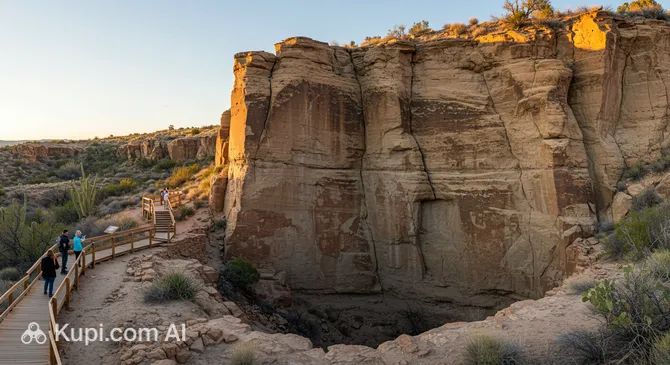
Boca Negra Canyon. Illustration.
Source: Kupi.com AI

Traveler photos:

The uniqueness of this location lies in its geological origin: about 200,000 years ago, volcanoes erupted here, forming a 17-mile cliff. Over time, a dark coating known as "desert varnish" appeared on the light basalt, which ancient masters used to create their works. Although less than 5% of the monument's total petroglyphs are concentrated here, Boca Negra contains the most striking and recognizable symbols.

Today, the canyon is managed jointly by the National Park Service and the city. It is not just an open-air museum but a sacred space for indigenous peoples, which has preserved its pristine atmosphere and biodiversity. Here, you can encounter rare desert plants and enjoy views of the western volcanic cones, immersing yourself in the spiritual heritage of ancient America.

Contacts

To plan your visit to this unique archaeological park, you can use the official contact details of the administration.

How to contactContact
Address6900 Atrisco Dr NW, Albuquerque, NM 87120, USA
Phone+1 505-873-6620
Websitewww.nps.gov

What to Do

The main adventure in the canyon is a walk along three specially equipped trails. The Mesa Point route will delight you with panoramic views of the surroundings, Cliff Base offers a more detailed study of rock art, and the Macaw trail allows you to test your strength on a steeper climb. Each path is accompanied by plaques that help decipher the meanings of the mysterious symbols.

Looking closely at the rocks, you can distinguish figures of dancers, masks, the famous flutists, and images of animals: from mountain lions to snakes and birds. In addition to archaeology, the canyon is interesting for its natural world. Here, you can watch lizards basking on the rocks and rare birds soaring over the basalt plateau.

This place is ideal for family outings and educational walks. Short and convenient routes allow even inexperienced tourists to touch history without significant physical exertion. Don't forget your camera—the play of light and shadow on the dark stones creates stunning conditions for artistic photography, especially in the morning hours.

Getting There

The easiest way to reach this archaeological site is by car. The route from central Albuquerque usually runs along Unser Blvd NW or Coors Blvd NW, transitioning into Atrisco Vista Blvd. The drive from Albuquerque International Airport (ABQ) takes about 20–25 minutes. Convenient parking is available on-site, with a fee of approximately 2 USD for adults (children are usually free).

For those who prefer public transport, the ABQ RIDE bus system has routes to stops on Coors Blvd. However, please note that you will need to walk about 3 kilometers from the stop to the canyon entrance or use a taxi service. A trip by taxi or rideshare from the city center is fast and comfortable, as the site is located within city limits.

Thanks to the paved trails starting right from the parking area, the location is accessible to most tourists. For precise navigation, it is recommended to use the GPS coordinates: 35.1620911, -106.7184827.

Nearest city: Albuquerque

History & Facts

The history of these lands is rooted in deep antiquity, spanning over 10,000 years of human presence in the Rio Grande Valley. Initially inhabited by nomadic hunter-gatherers, they were succeeded around 1000 AD by the ancestors of modern Pueblo Indians, who built multi-room above-ground settlements. This period marked the flowering of petroglyph art in the Rio Grande style.

In the 16th century, the region became an arena for the first contacts between indigenous peoples and Europeans. In 1540, the expedition of Francisco Vázquez de Coronado arrived here, and later, in 1598, Juan de Oñate established the first colonies. After the famous Pueblo Revolt of 1680 and the subsequent return of the Spanish, the lands were divided into grants, including the Atrisco grant. Interestingly, on the canyon walls, you can find not only ancient indigenous symbols but also marks from Spanish shepherds—crosses and livestock brands.

The name "Boca Negra" translates from Spanish as "black mouth", poetically describing the dark opening of the volcanic canyon. Before becoming part of the Petroglyph National Monument in 1990, this territory held state park status. Today, this place remains sacred to indigenous peoples and an important cultural heritage site for the entire country.

Time Needed

For a standard introduction to the main attractions of the canyon, most travelers need between 1 and 2 hours. This is quite enough time to leisurely walk all three main trails, study the information panels, and take high-quality photographs.

If you are short on time, you can choose the easiest trail, which takes about 20–30 minutes. However, if you are an archaeology or photography enthusiast, it is worth allowing a bit more time for thoughtful contemplation of the ancient drawings, as the lighting at different times of day highlights the details of the petroglyphs in different ways.

Working Hours

The attraction welcomes guests daily. The canyon is open for visiting from 08:30 to 16:30 from Monday to Sunday.

It is recommended to arrive early to avoid the midday heat and enjoy the calm atmosphere before the arrival of large tourist groups. Please note that on holidays or due to extreme weather conditions, operating hours may change, so it is worth checking the official National Park Service website before your trip.

8:30 – 16:30

Nearby

After a stroll among the ancient petroglyphs, it's worth exploring other interesting locations in the city. The surroundings offer a rich variety—from historical quarters to modern amusement parks—allowing you to make your day as full as possible.

NameDistance
Rio Grande Nature Center State Park4.8 km
Los Poblanos Historic Inn & Organic Farm5.1 km
Petroglyph National Monument5.2 km
Indian Pueblo Cultural Center7.9 km
Sawmill Market8.2 km
ABQ BioPark Aquarium8.4 km
El Vado Motel8.4 km

Reached the end of the page?

That means the route is fully explored