Support

Castle Of Old Wick

About

On the rugged North Sea coast in the county of Caithness stand the majestic ruins of the Castle of Old Wick. Located south of the town of Wick, this historic site is one of the oldest castles that Great Britain takes pride in. The fortress is perched on a narrow rocky promontory surrounded by steep cliffs, which once made it virtually impregnable from the sea.
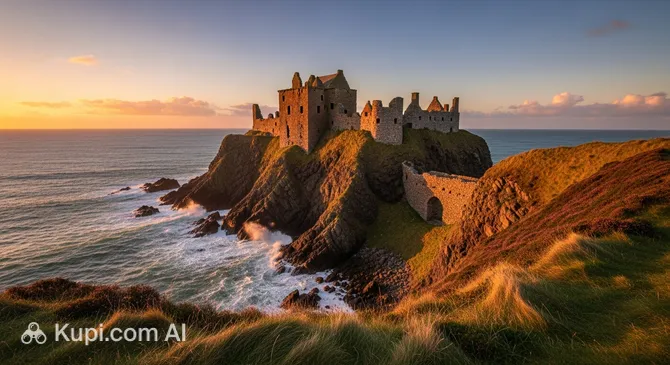
Castle of Old Wick. Illustration.
Source: Kupi.com AI

Traveler photos:

Locals often refer to the castle as "The Old Man of Wick." It earned this nickname thanks to its dominant four-story tower, which served as a landmark for sailors for centuries. Although time and coastal erosion have partially destroyed the walls, today you can still see the deep ditch cut directly into the rock and the remains of the earthworks that once protected the entrance to the citadel.

This site represents a unique blend of medieval architecture and wild nature. Today, the Castle of Old Wick is under the care of Historic Environment Scotland. For tourists, it is a wonderful opportunity to touch history for free by exploring the open plateau at the top of the promontory, where stables and workshops once stood, and admiring the natural harbor in the northern geo.

Contacts

The Castle of Old Wick is managed by Historic Environment Scotland. Visitors can find official information on their website to check current visiting recommendations.

How to contactContact
AddressMarch Rd, Wick KW1 5TY, Великобритания
Websitewww.historicenvironment.scot

What to Do

Visiting the Castle of Old Wick is, above all, a chance to feel like an explorer of ancient mysteries. You can walk right up to the walls of the four-story tower and examine the stonework, where niches for hearths and traces of old wooden beams are still visible. Keen-eyed tourists often find historic graffiti on the stones—for example, the carved date "1884," left by a traveler over a century ago.

The path to the ruins leads through the remains of an ancient ditch, and walking across this rugged terrain allows you to fully appreciate the strategic genius of the builders. In the summer months, the area is covered in lush greenery that softly hides the outlines of former outbuildings, adding a sense of mystery and romance to the site. It is an ideal location for landscape photography: the contrast of gray stones, vibrant green grass, and azure waves crashing against the rocks looks truly dramatic.

History buffs will be interested in finding a fragment of the original alder beam in the wall, which still bears the marks of a medieval axe. Beyond that, it is simply pleasant to enjoy the panoramic views of the North Sea and observe the colonies of seabirds. We recommend wearing comfortable shoes with good grip, as the paths can be uneven and the wind on the cliffside can be quite strong.

Getting There

Reaching this historical location is quite straightforward if you are already in the town of Wick. The fortress is situated approximately 2–3 kilometers south of the town center. If traveling by car, take the A99 south and then turn onto March Road, following the signs for Historic Environment Scotland. A small parking area is available near the start of the walking trail.

For those who prefer walking, the journey from the town takes about 40–50 minutes. The route follows the picturesque coastline along Old Wick Road, offering magnificent sea views along the way. You can also take a taxi from central Wick or a local bus to the nearest stop on the A99 highway, followed by a 1–2 kilometer walk to the castle itself.

When planning your trip, keep in mind that the final section of the path crosses uneven grassy terrain with a slight incline. The trail can be slippery in rainy weather, so it is best to choose dry, sunny days for your visit. For precise navigation, you can use the GPS coordinates: 58.4231789, -3.0817693.

Nearest city: Wick

History & Facts

The history of the Castle of Old Wick is rooted in the Middle Ages, though the exact date of its founding remains a subject of debate. Some historians link its origins to the 12th century and Harald Maddadson, the Norse Earl of Orkney and Caithness. It is believed he used this inaccessible rock as his primary residence on the mainland during the era of strong Norse influence in Scotland.

However, architectural studies of the stone tower point to a later period—the late 14th century. It is likely that the stone structure replaced earlier wooden or earthwork fortifications. Over the centuries, the castle changed hands many times: in the early 1300s, it was owned by Sir Reginald le Chene, and it later passed to the influential Sutherland and Oliphant clans, who defended these northern lands from raids.

One of the most dramatic episodes in the life of the fortress was the siege of 1569. The Sinclair clan surrounded the castle and held the siege for eight days. The defenders were forced to surrender not because of military defeat, but due to simple hunger and a lack of water. This event highlighted both the strength of the castle's position and its vulnerability during prolonged isolation.

Interestingly, modern research methods, such as dendrochronology, helped find a fragment of an alder beam within the tower walls. Analysis showed the tree was felled in the late 13th century. This discovery suggests the castle either took longer to build than expected or that materials from older structures were reused during its construction or renovation. The castle ceased to be inhabited only in the 18th century, gradually becoming the majestic architectural monument we see today.

Time Needed

To tour the ruins of the Castle of Old Wick themselves, take some atmospheric photos, and read the information boards, 30–60 minutes is usually sufficient. It is a compact attraction, with access limited to a safe perimeter around the tower.

However, we recommend setting aside 1–2 hours for this location. The extra time will allow you to take a leisurely stroll along the sea cliffs, watch the seabirds, and simply soak in the powerful energy of the North Sea. It is an ideal spot for those seeking solitude and wanting to absorb the spirit of wild Scotland without the crowds.

Working Hours

Since the Castle of Old Wick consists of freely accessible outdoor ruins, it is open to visitors 24/7. Visitors can come here at any time to watch the sunrise or sunset over the North Sea in an atmosphere of complete solitude.

Please note that there is no artificial lighting on the grounds, so it is best to plan your visit during daylight hours for safety reasons. Before heading out, it is recommended to check the official website of Historic Environment Scotland to ensure there are no temporary restrictions due to restoration work.

Open 24 hours

Nearby

The surroundings of the Castle of Old Wick offer tourists many opportunities to further explore the rugged northern nature and the industrial heritage of the region. A walk along the coastline reveals unique rock formations and hidden caves that served as shelters for sailors and locals for centuries.

Just a few minutes' walk from the fortress ruins are impressive natural sites, and a bit further, closer to the town limits, you can discover the traditions of famous Scottish whisky production or pay respects at local memorials. Below is a list of interesting places nearby:

NameDistance
Old Pulteney Distillery1.3 km
Wick Heritage Museum1.9 km
Wickers World1.9 km
Mackays Hotel2.1 km
Bord De L'Eau2.2 km

Reached the end of the page?

That means the route is fully explored