Support

Pull's Ferry

About

Located on the picturesque banks of the River Wensum, Pull's Ferry is one of the most photographed and recognizable historical buildings for which Norwich is famous. This unique site in the United Kingdom once served as an important watergate through which building materials for the cathedral were delivered to the city.
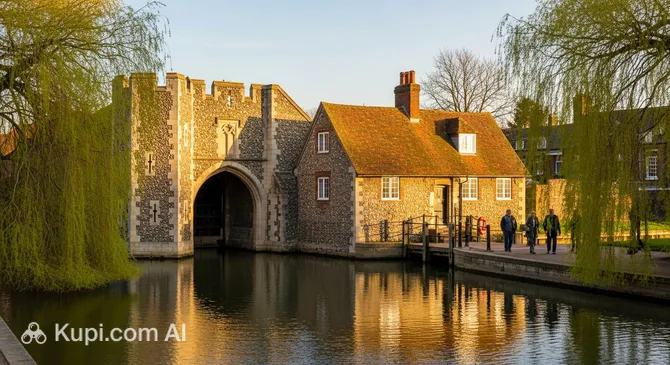
Pull's Ferry. Illustration.
Source: Kupi.com AI

Traveler photos:

The building is constructed from traditional flint and stands out with its wide stone arch, under which a canal flowed during the Middle Ages. Today, the site is recognized as a significant architectural monument, combining rugged medieval strength with the charm of a 17th-century country house.

Many tourists appreciate this site for its atmospheric feel and the opportunity to see living history without unnecessary pomp. The combination of ancient walls reflecting in the river water and the well-kept green area around it makes "Pull's Ferry" a must-visit point on any traveler's itinerary through East Anglia.

Contacts

For those planning to visit this historical location, it will be useful to know its exact position on the city map. Although the site is an open-air architectural monument, it has an official postal address for easy navigation.

You can use the details provided below to easily plan your route during a walk along the embankment or when taking a taxi.

How to contactContact
Address29 Ferry Ln, Norwich NR1 4DZ, Великобритания

What to Do

The main pleasure of visiting this place is a leisurely stroll along the embankment. Visitors can examine the medieval masonry of the watergate in detail and imagine how barges laden with stone once sailed under the massive arch. This is an ideal location for photography enthusiasts: views of the river and the old ferry house are beautiful at any time of year.

During the summer months, cozy outdoor tea parties are sometimes organized here, allowing you to relax in the shade of century-old walls. The location also serves as an excellent base for exploring the surroundings: pleasant paths lead from here to Norwich Cathedral and toward the Mousehold Heath woodland park.

For organized groups, such as youth organizations, room rentals inside the house itself (Watergate Room) are sometimes available for meetings or themed events. For the average tourist, however, it is primarily a quiet corner for reflection, where you can simply sit on the bank, watching the flow of the Wensum and the local wildlife.

Getting There

Reaching this picturesque spot is easy, as it is within walking distance of key transport hubs. Norwich Railway Station is just a 5-minute walk away — simply follow the banks of the River Wensum south, enjoying the views along the way.

If you prefer to travel by car, follow the main A11 or A47 routes leading into the city, then use your satnav for 29 Ferry Ln. You can leave your car in city center parking lots or near the station, as vehicle access directly at the gates may be limited.

From the city center, for example, from Norwich Castle or the Cathedral, the site can be reached on foot in 15–20 minutes. You can also always use a local taxi, which will quickly take you to the start of the pedestrian riverside zone.

Nearest city: Norwich

History & Facts

The history of this site dates back to the 15th century when the majestic watergate was built. It was intended for transporting stone brought from the French city of Caen, which was used for the construction of the monumental Norwich Cathedral. Monks specially dug a canal under the arch so that boats could unload directly onto the monastery grounds.

The monument took its current name from John Pull, who for 45 years, from 1796 to 1841, not only ferried people across the river but also ran a small inn here. Before that, in the 17th century, the building was known by the name of its previous owner—Sandling.

The ferry service officially ceased operations only in 1943. In the post-war period, the architectural complex was under threat of destruction but was saved thanks to the will of Camilla Doyle and the efforts of the local Girl Guides. In 1948–1949, under the guidance of architect Cecil Upcher, a large-scale restoration was carried out, returning the building to its historical appearance.

Time Needed

For a quick look at the architecture, photographing the famous arch, and a short walk by the water, 30–60 minutes will be quite enough. It is an excellent spot for a quick stop during an extensive city tour.

If you decide to stay longer to enjoy the silence, watch the river flow, or have a small picnic in a historical setting, it is worth allowing about 1–2 hours. This time will let you feel the slow pace of life in the old city and examine the ancient masonry of the building in detail.

Working Hours

As the site is outdoors and part of a public walking route along the river, it is accessible for viewing 24 hours a day. You can come here early in the morning to catch the mist over the water or late in the evening when the building is illuminated by city lights.

If you are interested in visiting the interior or participating in special events, we recommend checking information on the official resources of local historical societies in advance, as access inside the building is usually limited.

Open 24 hours

Nearby

The monument's location on the banks of the River Wensum makes it an ideal starting point for further exploration of the city. A stroll through the surrounding streets will allow you to immerse yourself deeper in the atmosphere of a medieval English settlement.

In the immediate vicinity are other important historical sites, including defensive structures and ancient gates that harmoniously complement the architectural ensemble of this part of the city.

NameDistance
Norwich Cathedral0.4 km
Gravity0.5 km
Voodoo Daddy's0.7 km
The Halls0.8 km
Turtle Bay0.8 km
Norwich Castle0.8 km
No33 Exchange Street0.9 km

Reached the end of the page?

That means the route is fully explored