Support

Pórtico del Foro Municipal de Augusta Emérita

About

In the heart of the historic center that Mérida is so proud of lies a stunning monument of antiquity — the Portico of the Municipal Forum of Augusta Emerita. This site is a beautifully preserved fragment of an ancient Roman forum dating back to the 1st century AD. In those times, it served as the ceremonial entrance to a temple or a significant public building in the capital of Lusitania, which ancient Spain was known as back then.
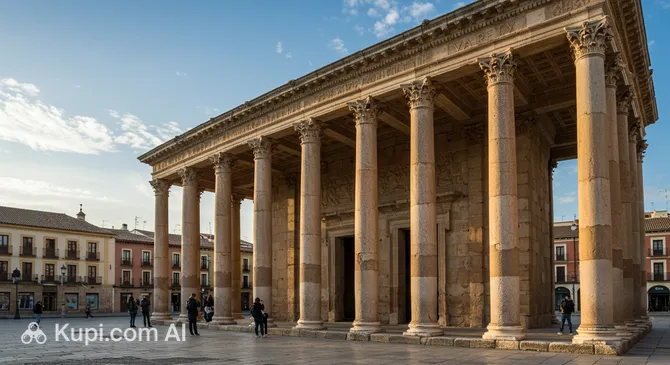
Portico of the Municipal Forum of Augusta Emerita. Illustration.
Source: Kupi.com AI

Traveler photos:

The attraction consists of the ruins of a wall with architectural niches where statues were once placed. Today, the portico is part of the city's rich archaeological heritage and is unique because it is located right on Sagasta Street, amidst modern residential buildings. This makes it accessible for free viewing at any time, allowing tourists to feel a living connection across the centuries.

As an important element of the forum, the portico emphasizes the grandeur of Roman architecture. Thanks to its high state of preservation and integration into the urban environment, it consistently receives high praise from travelers and is a must-see on any itinerary through ancient Mérida.

Contacts

For more information about the Portico of the Municipal Forum and other archaeological sites in the city, you can visit the official tourism portal. The site is freely accessible, but background information will help you better plan your route.

How to contactContact
Address06800 Mérida, Badajoz, Spain
Websiteturismomerida.org

What to Do

The main pleasure of visiting this site is the opportunity to leisurely admire the ancient architectural details in their original surroundings. You can stroll along the portico, examining the Corinthian columns and the niches where statues of prominent citizens once stood. It is a wonderful location for thoughtful contemplation and for capturing atmospheric photos, especially given the striking contrast between the Roman stones and modern buildings.

Since the portico is located on a busy street, a visit is often combined with a walk through the city center. Take note of the statues in the niches: guides often tell fascinating stories about why many of them lost their heads and how archaeologists restored this ensemble. Thanks to 24/7 free access, you can come here early in the morning or late in the evening when the ruins are beautifully illuminated by streetlights.

After finishing your tour, it's worth popping into the nearby shops selling traditional ceramics and mosaic crafts. If your visit falls during the summer months, look up at the roofs of neighboring buildings — you can often see the nests of white storks, which have become a kind of living symbol of Mérida's archaeological zones.

Getting There

Finding the Portico of the Municipal Forum is easy, as it is located in the heart of Mérida's historic center on Calle Sagasta. This area is perfect for walking: from iconic sites like the Roman Theatre or the Amphitheatre, you can reach the portico in just 5–10 minutes.

If you are coming from other parts of the city or arriving by train, the walk from Mérida's railway station takes about 15–20 minutes. The bus station is also within walking distance. For those who prefer comfort, a taxi ride from the main transport hubs to the city center takes no more than 5 minutes.

For travelers by car, there are paid parking zones nearby. The coordinates (38.9168139, -6.3430139) will help you easily find it using navigation apps. Most walking routes through Mérida pass through this area, so the portico is practically impossible to miss.

Nearest city: Merida

History & Facts

The history of the Portico of the Municipal Forum began in the 1st century AD, during the golden age of Augusta Emerita. At that time, the city was the majestic capital of the Roman province of Lusitania, founded by Emperor Augustus. The forum was the religious and administrative heart of the city, and this portico served as a monumental entrance to one of the complex's main public buildings or temples.

The architectural design of the portico reflected the city's wealth and status: it was richly decorated with columns and niches containing statues of emperors and noble citizens. Remarkably, the structure has survived to this day in its historical location, despite the modern city growing around it over the centuries. Many fragments were discovered during archaeological excavations, revealing that the ruins were literally built into later urban structures.

Today, this site, along with the nearby Temple of Diana (late 1st century BC), forms a unique archaeological ensemble. It vividly demonstrates the skill of Roman engineers and urban planners who created enduring monuments that continue to define the city's character two millennia later.

Time Needed

A visit to the Portico of the Municipal Forum itself usually requires very little time — about 15–30 minutes. This is quite enough to examine the surviving columns, study the niches with statues, and take a few photos against the backdrop of the ancient ruins.

However, experienced travelers suggest setting aside about 1–2 hours for this area. This allows you to leisurely explore not only the portico but also the adjacent Temple of Diana, and soak up the atmosphere of the old town, where Roman heritage is found at every turn.

Working Hours

Visiting this attraction does not require following a complex schedule, as the Portico of the Municipal Forum is available for viewing 24 hours a day. This allows tourists to enjoy the view of the ancient ruins at any convenient time, whether it's early morning before a main tour or a late evening promenade.

The site is open to everyone daily, with no days off or breaks, making it one of the most accessible monuments of Roman heritage in the city.

Open 24 hours

Nearby

The convenient location of the Portico of the Municipal Forum in the city center allows tourists to see many other ancient monuments within walking distance. Exploring these sites will help you get a complete picture of the scale of ancient Augusta Emerita and its significance to the Roman Empire.

Below are the most interesting attractions located in the immediate vicinity:

NameDistance
Temple of Diana0.1 km
Shangri-La Vegetarian Bar0.1 km
Roman Theatre of Mérida0.3 km
Sybarit Gastroshop Restaurant0.3 km
Braseria ChapaTapa0.3 km
National Museum of Roman Art0.3 km
Jazz Bar Merida0.3 km

Reached the end of the page?

That means the route is fully explored