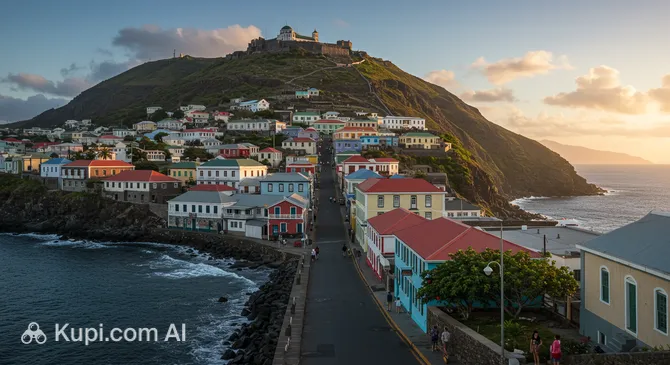
Jamestown is a unique settlement located in the vastness of the South Atlantic, serving as the administrative and cultural center of Saint Helena. The city, also known among locals as the Garrison, was founded by British sailors in the early 19th century and still maintains the atmosphere of a secluded outpost. Despite its remoteness, life here follows a special rhythm: from sports competitions at the local stadium to leisurely strolls through historic streets.
The city's geographical position on a volcanic island defines its rugged yet mesmerizing landscape. With a population of about 7,500 people, Jamestown serves as a key hub for the entire territory. The city's architecture is a blend of colonial heritage and functional buildings, creating a unique look for this "edge of the world."
Jamestown. Illustration.
Source: Kupi.com AI
Among the main features are the historic buildings, including the Church of St. Mary, and the city's modern role as an important logistical hub. A visit to this place is an invitation to a world where time seems to slow down, giving way to pristine nature and the sincere hospitality of the islanders.
Weather Overview
Jamestown is characterized by a tropical desert climate, making it one of the driest places in this region of the Atlantic. The weather remains consistently warm and dry throughout the year. The average air temperature usually fluctuates in a pleasant range from +21°C to +25°C, occasionally reaching the +30°C mark during the hottest months.
Precipitation in the city is extremely rare—totaling less than 200 mm per year. October and November are considered the driest months, when there is practically no rain. From June to October, constant trade winds blow on the island, bringing pleasant coolness but they can be quite strong.
Thanks to these conditions, the city's climate is ideal for outdoor activities at any time of the year. The ocean water temperature also remains comfortable; however, due to high humidity and the active sun, tourists should always use UV protection.
Interesting Facts
Garrison City: Jamestown is informally called the Garrison, as its modern layout and key buildings were shaped by British Marines in the 19th century.
Aviation Heritage: During World War II, a critically important runway was built here, which still makes the island a strategic point for transatlantic flights.
Historical Ruins: Many of the city's first buildings from the 1820s lie in ruins today, creating a picturesque contrast with the preserved barracks and church buildings.
Space Connection: A tracking station has been operating in the city's vicinity since the 1960s, having been used in various space programs.
Sporting Spirit: Despite the small population, Jamestown boasts a full-sized stadium, which serves as the epicenter of all social activity on the island.
How to Get There
Given Jamestown's remote location in the middle of the ocean, transport accessibility is very limited and requires careful planning. The primary link to the outside world is by air. Regular flights connect the local airport with the UK and other islands in the region.
The key facility is Ascension Island Airport (IATA: ASI), also known as Wideawake. It is located just a few kilometers from the city center. This airfield serves not only for passenger transport but also as an important refueling point for transatlantic routes. Travel time from London is usually about 6 hours.
The sea route to Jamestown is currently considered more of an exotic option. There are no regular passenger ferries, but private yachts and expedition vessels occasionally call at the port. Travelers should remember that due to the territory's special status, a special entry permit must be obtained from the administration in advance.
Main Attractions
The main architectural and historical landmark of Jamestown is the Church of St. Mary. Built in 1861 in the Neo-Gothic style, it is recognized as the spiritual and historical core of the city. The church is located in close proximity to the old barracks, creating a complete ensemble of the colonial era.
Equally interesting to visit are the Old Marine Barracks, erected in the 1830s. This massive structure, with its characteristic clock tower added later, serves as a vivid reminder of the settlement's military past. Walking nearby, you can see the ruins of early fortifications that literally breathe the history of the first settlers.
For those who prefer active recreation and getting to know the local culture, the local stadium is a must-visit. It is the center of all significant holidays and sporting events on the island. The volcanic landscapes surrounding the city, deserted beaches, and sheer cliffs complete the list of attractions, offering tourists unforgettable routes for ecotourism and wildlife watching.
Local Cuisine
The gastronomic character of Jamestown is inextricably linked to the riches of the surrounding ocean. The local menu is based on fresh fish such as tuna and barracuda. These are served as juicy steaks, grilled, or prepared as traditional fish cakes. Tropical vegetables and fruits grown on fertile plots of the island often serve as side dishes.
The food culture here is simple and soulful. Locals and tourists typically gather in small eateries and cafes near the Garrison. Outdoor barbecues are especially popular, where seafood is cooked right in front of you. Due to the military presence, you can also find familiar fast food on the menu—burgers and fries prepared in a homemade style.
Among drinks, it is worth trying fresh mango and papaya juices, as well as local beer and rum. The atmosphere in the establishments encourages leisurely relaxation, and the use of the freshest local products makes even the simplest dishes truly exquisite.
Travel Tips
A trip to Jamestown requires a special approach and preparation. These tips will help make your journey to the edge of the Atlantic comfortable and safe.
Documents: An online permit from the territory's administration, obtained in advance, is mandatory for a visit. Do not leave this matter until the last moment.
Finance: The official currency is the British Pound (GBP). Cards are rarely accepted, and ATMs may not be readily available, so always have a supply of cash with you.
Sun Protection: Due to high humidity and strong UV radiation, be sure to use protective creams, wear hats, and drink plenty of water.
Clothing: Bring light clothing made of natural fabrics and comfortable shoes for walking on volcanic trails. When visiting the church, a modest dress code is recommended.
Connectivity: Wi-Fi is only available in some hotels and cafes. You should take care of buying a local SIM card immediately upon arrival, but be prepared for slow internet speeds.
Etiquette: The islanders are very friendly. It is customary to greet passers-by and observe quietness in the evenings.
What to Avoid: It is strictly forbidden to touch endemic animals or remove natural objects without a special permit. This can result in heavy fines.
Planning: Always keep an eye on flight schedules, as they are infrequent, and any changes can significantly affect your plans.
Jamestown is a place for those seeking peace and solitude. Enjoy every moment in this amazing corner of the planet!
Entertainment & Nightlife
Entertainment in Jamestown is predominantly quiet and community-oriented. The main center of social life is the local stadium, where track and field competitions and football matches regularly take place, drawing almost the entire population. These events often turn into public festivities with live music and dancing, allowing tourists to dive deep into the local culture.
Traditional nightlife with loud clubs is virtually non-existent here. Evenings are usually spent in cozy bars at cafes or small eateries in the Garrison area. The crowd here is friendly and open, and the atmosphere encourages long conversations over a glass of a local drink. Prices in the establishments are moderate, and there is no strict dress code—casual style is preferred.
During the day, the city offers boat trips and fishing in the Atlantic waters. Safety in Jamestown is at the highest level: you can safely walk here at any time of the day or night. For traveling at night, it is better to arrange a ride with local taxi drivers in advance, as their numbers are limited.
Parks & Museums
Due to the specific volcanic landscape, you won't find classic city parks in Jamestown. However, their absence is more than compensated for by natural areas of incredible beauty. The city's surroundings are a natural open-air museum where solidified lava flows sit alongside areas where you can observe endemic bird species and turtles.
Historical buildings fulfill the role of museums in the city. The Old Barracks and the Church of St. Mary hold the history of colonization and the British military presence in this region within their walls. Tours of the old town ruins allow you to visualize the daily life of 19th-century Marines and learn about the challenges of settling these lands.
For those interested in science and technology, the area around the tracking station will be of interest, reflecting the island's contribution to the history of space exploration. All significant sites are within walking distance or require a short drive, turning every walk around Jamestown into an educational journey.
Getting Around
The transport system of Jamestown is extremely simple. Due to the city's compactness and small number of roads, regular public transport such as buses or trams is absent. The main way to get around for tourists is on foot, as all key sites are concentrated within walking distance of each other.
For trips outside the city, for example, to the airport or remote natural areas, you can use taxi services. Also, car or motorcycle rental options are available in the Garrison, which is an excellent solution for independent explorers. It is worth noting that the number of rental vehicles is limited, so it is better to book them in advance.
Locals often get around on bicycles, which can also be rented. This is a convenient and eco-friendly way to explore the surroundings via deserted trails. The road from the airport to the city is paved and can be covered in just a few minutes by car.
Accommodation
The choice of accommodation in Jamestown is quite limited due to the city's small size and the specific nature of its infrastructure. The bulk of the tourist accommodation consists of cozy guesthouses and small hotels concentrated in the Garrison area. Most of them offer basic comfort and a homely atmosphere geared towards long stays.
Pensions located near the stadium and administrative buildings are popular. These are convenient spots for those who want to be in the center of things. There are no luxury chain hotels here, but the local accommodation wins you over with its authenticity and views of the ocean or volcanic hills.
Given the infrequent flights and limited number of rooms, it is necessary to book accommodation in Jamestown well in advance. Housing prices remain at a medium level, and owners often help guests with organizing transport and excursions around the island.
Nearby Cities
Thanks to its location, Jamestown can serve as a starting point for exploring this secluded corner of the Atlantic. Although the city has few land neighbors, each direction offers a unique experience of exploring pristine nature.
One available destination is the settlement of Jamestown on Saint Helena itself, which can be reached via organized flights. Also within Ascension Island, Edinburgh of the Seven Seas is of interest, located approximately 10 kilometers away. A trip there will allow you to see other facets of the volcanic landscape and get acquainted with the life of remote settlements.
Exploring the surroundings of Jamestown is primarily a journey along ecological trails. We recommend taking the time to explore the coastline and hills, which offer breathtaking views of the ocean.
Shopping & Souvenirs
Shopping in Jamestown is a modest but fascinating activity. There are no giant shopping malls in the city, and all trade is concentrated in small shops and stalls in the Garrison area. Here you can buy essential goods as well as unique items that reflect the spirit of the island.
As souvenirs, tourists most often choose model airplanes, reminding them of the important role of the local airport, and shell crafts. Postcards depicting historic buildings and local products, such as canned tuna or volcanic stone crafts (the latter may require a permit for export), are especially popular.
Shops usually operate on a set schedule with a lunch break, and British Pounds (GBP) are accepted for payment. Cards do not work everywhere, so it is extremely important to have a sufficient supply of cash. Note that the Tax Free system does not apply here, but the purchases themselves will be a pleasant reminder of this rare journey.